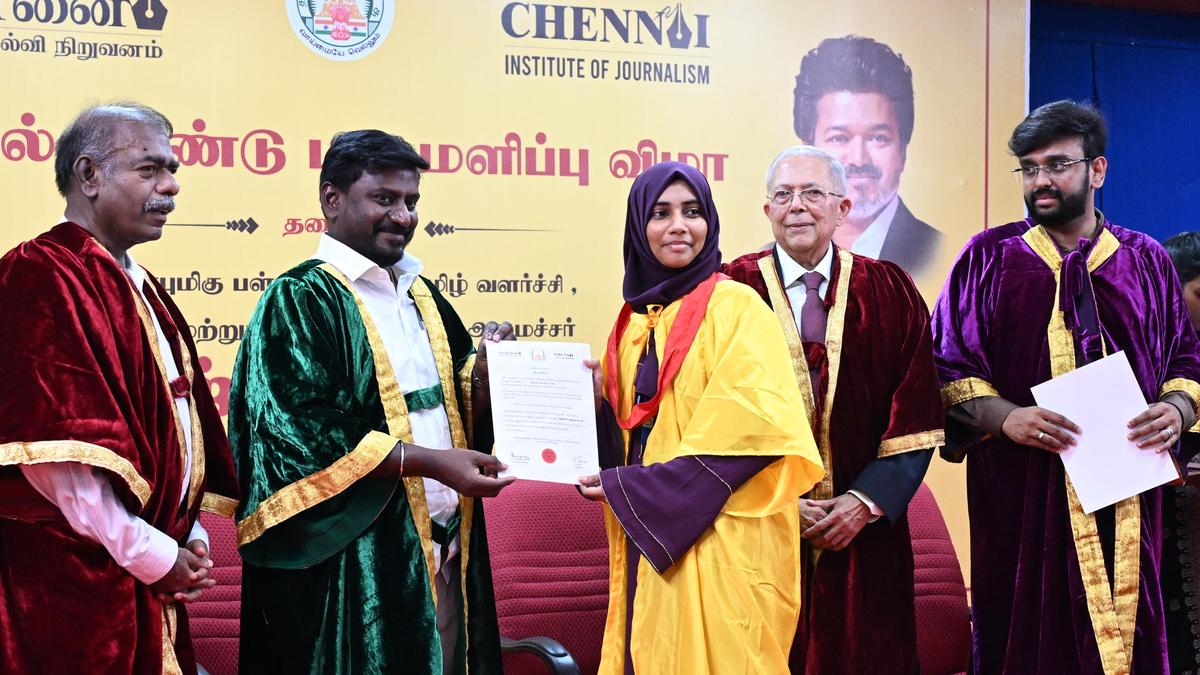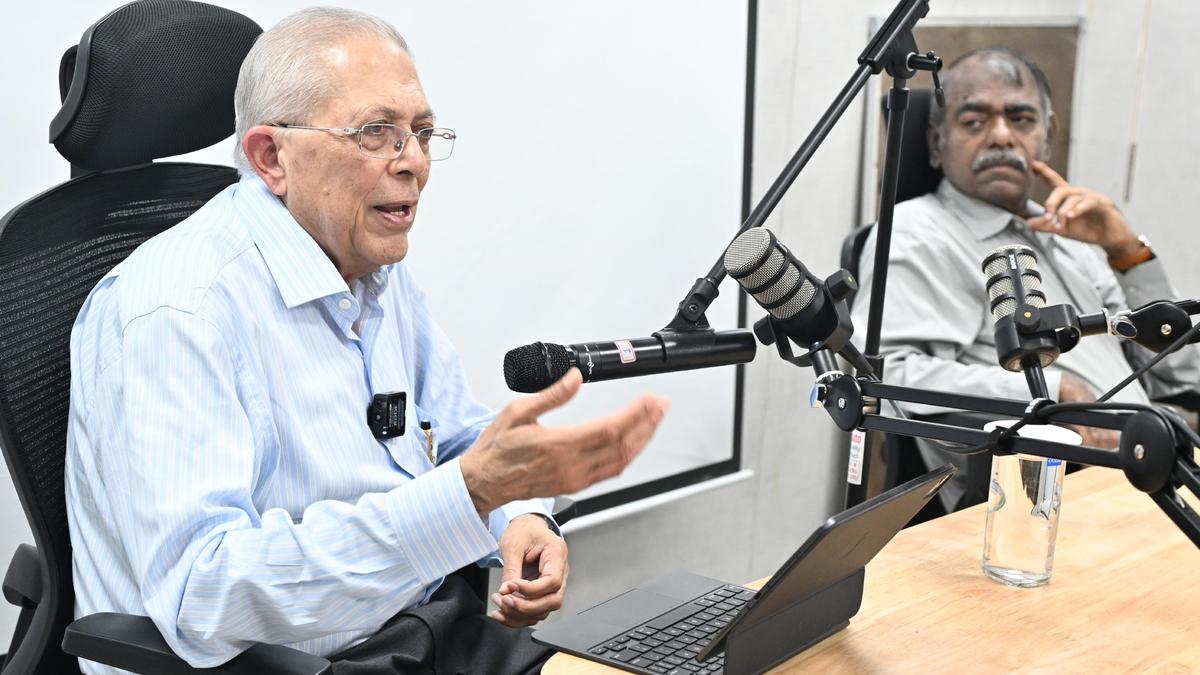
N. Ravi, Chairman, Chennai Institute of Journalism, and Director, Kasturi and Sons Limited, delivering a lecture at the CIJ on Monday. CIJ Director-General A.S. Panneerselvan is also seen.
| Photo Credit: R. RAGU
There is a danger of people being manipulated by social media with its vast reach, said N. Ravi, Chairman, Chennai Institute of Journalism (CIJ), and Director, Kasturi and Sons Limited.Delivering the 2026 batch commencement lecture at the CIJ on Monday, Mr. Ravi said: “It (social media) may also divide society into smaller and smaller groups, each functioning within its own echo chamber, hearing only the voices of its members, and cut off from diverse voices outside. Some groups may build up resentment over some issue or the other that may break out into violence, as the group that thought Donald Trump had won the American presidential election and stormed the U.S. Capitol.”He said tweets and social media posts, put out in all innocence to express one’s views freely, could be turned against a person in a very different context. “For instance, a tweet by someone on a country or politician may become a ground in a cancel culture for denying the person a position in a university. The United States immigration authorities sometimes make students open their Facebook, Instagram or X accounts to check for posts they consider inimical to the United States. For all the dangers, social media, with its undoubted utility, are very much with us,” Mr. Ravi said. “There was a time when people depended on the first news from newspapers, and then from television, which were marked by periodicity, either daily or a few times a day. Now, news comes in every minute on one social media platform or another, such as X, WhatsApp, and YouTube and through email alerts. There is a virtual deluge of news, and viewers generally stick to one or two of these channels that become their favourites either because they think they are reliable or because they tend to agree with its orientation or bias, or because they like the way the news is presented.”This proliferation of information, he says, makes it difficult to verify everything that is put out on social media. “There could be false and misleading political information leading to distortion of the real situation and even voter manipulation. At times, disinformation could turn out to be harmful, as with the false reports about COVID vaccination and the futility of wearing masks. There is also hate speech and incitement to rioting and violence and conflict among communities. There is also the danger of people getting caught in echo chambers, where they hear only voices like their own and views that they agree with, not a diversity of voices and viewpoints,” he said.Pointing to the task of journalists when fake news is all too common across platforms, Mr. Ravi said: “You all would be using social media to gather information and put out viewpoints of your own. Let me talk about using social media to gather information. Very often, the very first account of any happening comes out on X or another version of it, which is Truth Social, WhatsApp, Instagram, Facebook, YouTube or online media sites and email alerts, before it reaches the television channels and newspapers. At the outset, you need to choose your preferred app or medium or website carefully so that you can trust it for authenticity. Always remember that your primary task as a journalist is to have your feet on the ground, and go in person to gather news first-hand. All accounts you get second-hand are just to alert you to follow up.”CIJ Director-General A.S. Panneerselvan also spoke. Published - August 10, 2026 11:53 pm IST