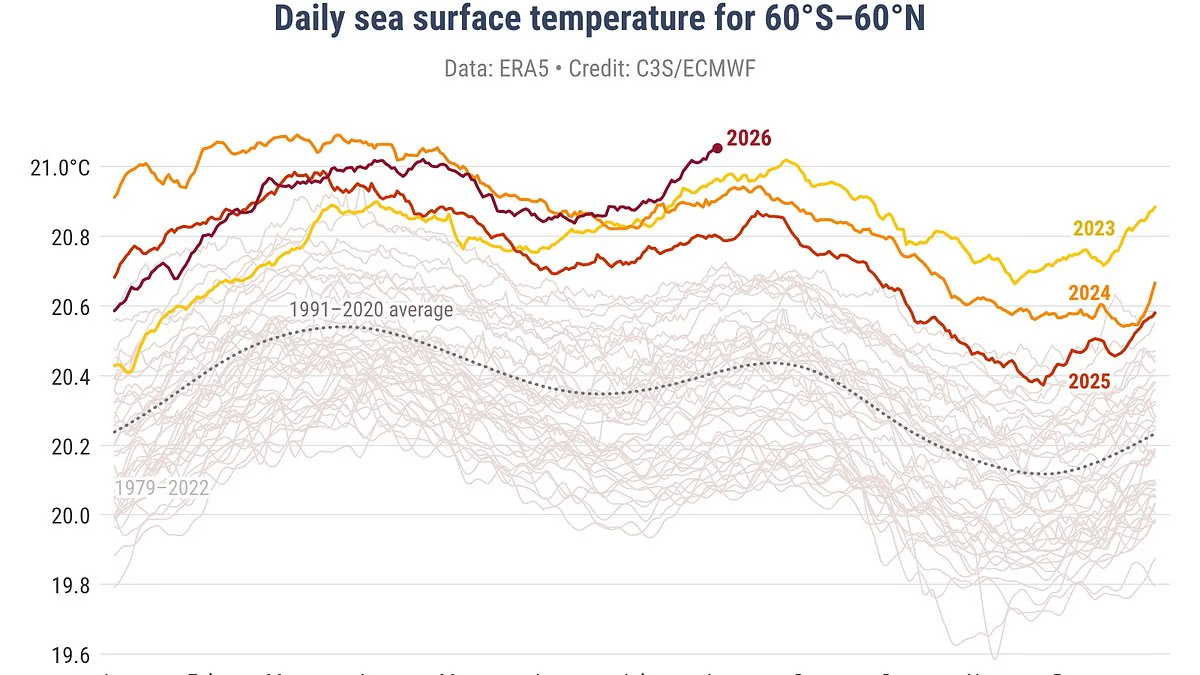
Global ocean temperatures have hit a record high, in a worrying sign that Super El Niño is strengthening, new data reveals.The latest data from the EU's Copernicus Climate Change Service (C3S) shows that last month saw the hottest sea surface temperatures (SST) ever recorded for July.Much of that record heat is due to the exceptionally high temperatures found across the Tropical Pacific, the area where an El Niño weather phenomenon begins.C3S says that the super El Niño is already fuelling extreme ocean heating, and conditions are now forecast to strengthen further over the coming months.Average global SST soared to 20.96°C (69.7°F), surpassing the previous record for July set in 2023.Around Europe, these record–breaking temperatures are driving widespread strong or severe marine heatwaves that are causing havoc for local ecosystems.Meanwhile on land, Western Europe experienced its hottest June–July period on record, with average temperatures sitting at a sweltering 21.62°C (70.9°F).That is a whopping 2.79°C (5°F) above the monthly average, shattering the previous record set in 2022, as the continent reels from its fourth successive heatwave. Global ocean temperatures have hit a record high in a worrying sign that the Super El Niño is strengthening Last month was the hottest July in Western Europe ever recorded, with average air temperatures sitting at 21.62°C (70.9°F)The El Niño Southern Oscillation is a naturally occurring weather cycle that alternates between hot and cold – La Niña – phases once every two to seven years.During the hot – El Niño – phases, the trade winds that normally carry warm waters away from South America towards Australia slow or even reverse.This prevents cold water from welling up and leads to a buildup of hot water near the surface in the equatorial and tropical Pacific Ocean.Eventually, that hot water spreads out and raises global average temperatures, leading to severe weather disruption around the planet.Scientists are now reporting that the SST in the Pacific and around the world is hotter than it has ever been for this time of the year.And, the developing Super El Niño pattern shows no sign of slowing down.Recently, the World Meteorological Organisation (WMO) predicted that El Niño is expected to steadily strengthen into a 'strong' event between August and October.The WMO's latest data forecasts that SST is likely to exceed 2.9°C (5.2°F) above the seasonal average in key regions. Temperatures in Western Europe were a whopping 2.79°C (5°F) above the monthly average, shattering the previous record set in 2022 This comes as the latest climate models (pictured) show that the growing El Niño weather pattern continues to strengthen The UK's hottest days on record 40.3°C – 19 July 2022 in Coningsby, Lincolnshire38.7°C – 25 July 2019 in Cambridge, Cambridgeshire38.5°C – 10 August 2003 in Faversham, Kent38.2°C – 18 July 2022 in Pitsford, Northamptonshire37.8°C – 31 July 2020 at Heathrow, London This could make the growing weather pattern the most intense El Niño ever recorded.El Niño only has an indirect effect on the UK's weather, but global effects on this scale will have knock–on impacts.The weather cycle triggers significantly enhanced global temperatures, with the worst effects usually being felt in the early months of next year.This will also have a big impact on rainfall patterns between August and October this year.Parts of the world, including the Horn of Africa, western North America, and parts of Central Asia, will see much wetter conditions and considerable risk of flooding.Meanwhile, Northern Europe, most of Australia, the Indian subcontinent, and southern Central America will see much lower rainfall than average.That warning comes as Europe and Asia are already facing one of the hottest and driest summers on record.Samantha Burgess, Strategic Lead for Climate at the European Centre for Medium–Range Weather Forecasts (ECMWF), says: 'July 2026 was the third consecutive month of exceptional heat in western Europe, bringing the combined temperature for June and July to a new record for the region.
Ocean temperatures hit high in ominous sign El Niño is strengthening
Global ocean temperatures have hit a record high in a worrying sign that the Super El Niño is strengthening, new data reveals.
1,170 words~5 min read