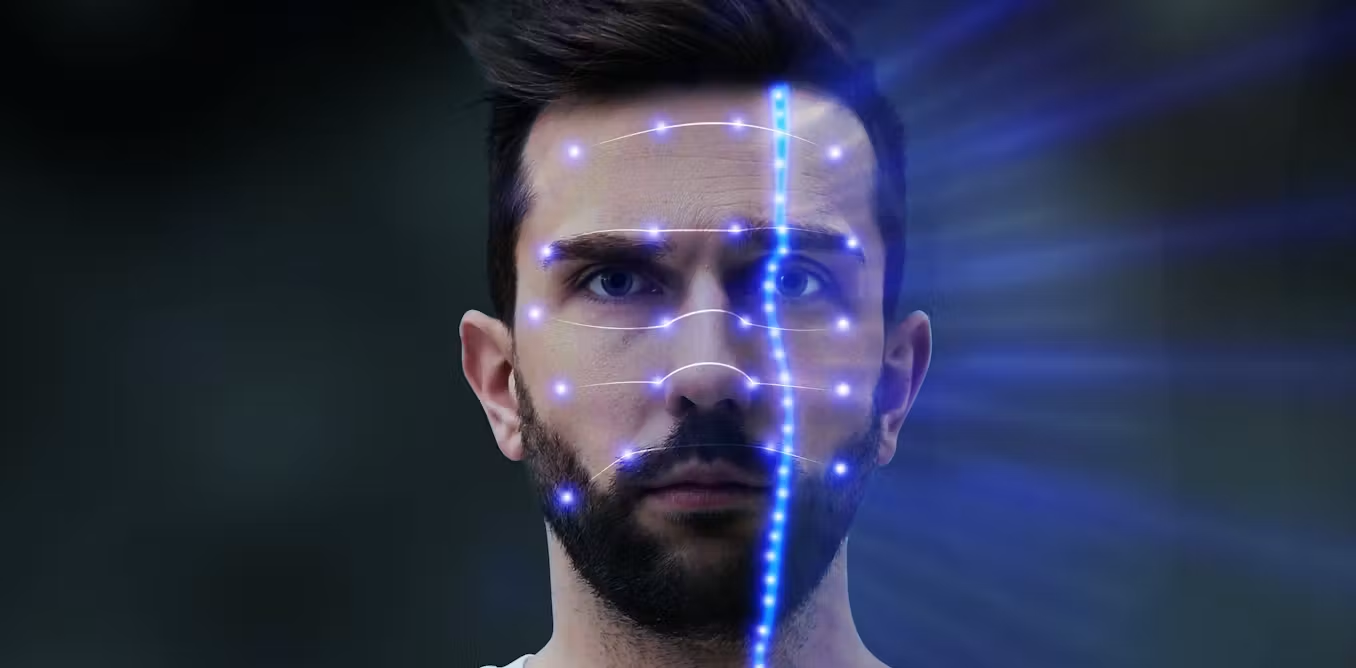
A teenager joins an online video chat. Within seconds, artificial intelligence analyses their face and gives them a score out of ten for “attractiveness”. They are compared in real time with another user who scores higher and is declared the winner. The game is live-streamed, and the audience ridicule the loser in the chat.
This is one example from a growing number of websites and apps that rate people’s faces – sometimes comparing users, identifying supposed flaws or recommending ways to improve their score.
AI appearance-rating platforms present attractiveness as though it can be measured with scientific precision. But beauty cannot be captured by a mathematical calculation or a fixed set of programmed rules. What people find attractive varies between cultures and individuals.
AI systems also reflect the assumptions and biases in their training data and design. A critical comment from another person can often be recognised as an opinion. A precise score from a computer may carry an illusion of authority or objective fact.
AI appearance-rating tools form part of a wider online culture in which appearance is treated as something to measure, rank and optimise. This is particularly visible within the “looksmaxxing” subculture, where users share advice intended to make them more “conventionally attractive”.