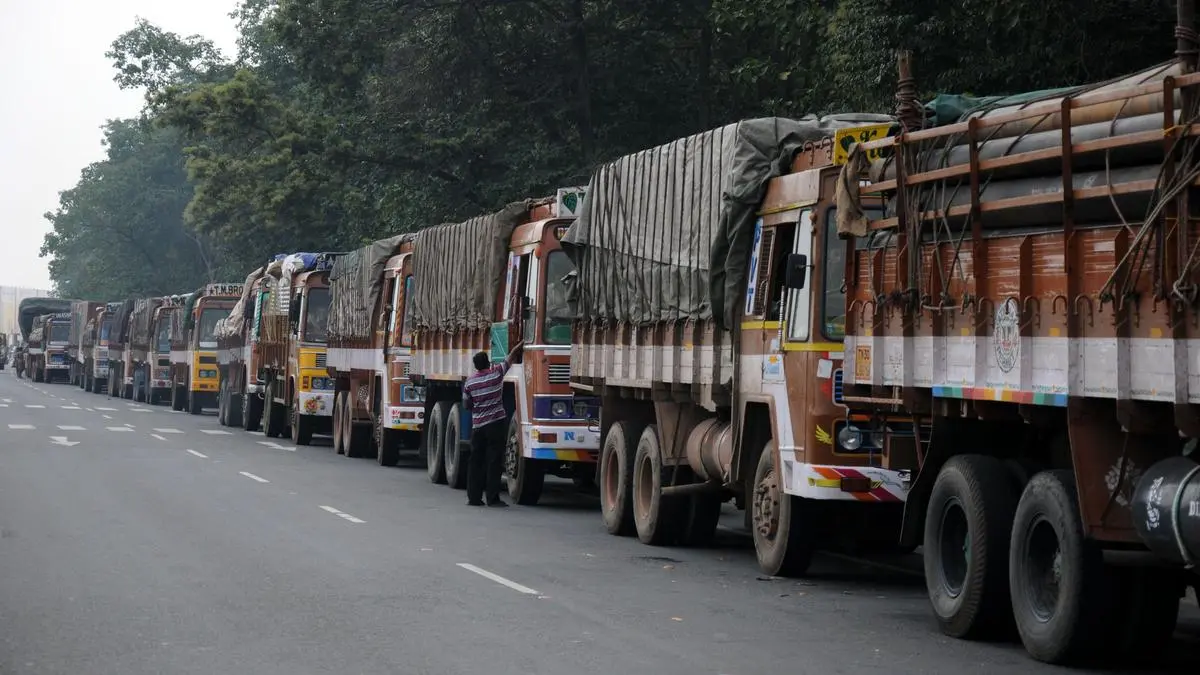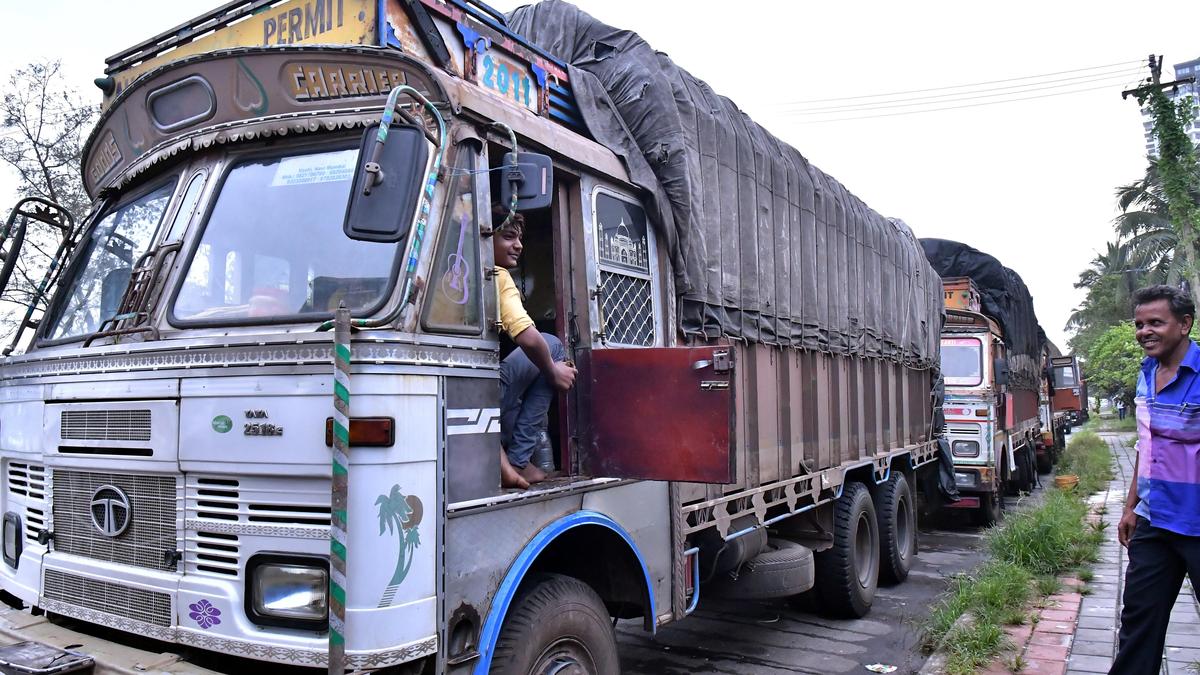
An e-way bill is an electronic document generated on a portal, evidencing the movement of goods
| Photo Credit:
Demonstrating economic resilience despite geopolitical headwinds, e-way bill generation surged to a near-record 13.98 crore in July, according to GST Network data.E-way bill generation does not directly transfer into GST collection. But it is good for the economy and tax administration. Actual collection depends on higher consumption as GST is destination-based consumption tax. Also, services and movement of goods beyond a certain threshold are not included in e-way bill generation. Yet, some impact can be seen in the GST collection in August, for which data will be out on September 1.According to Saurabh Agarwal, Tax partner at EY India, the sustained uptick in e-way bill generation is a strong proxy for economic momentum, reflecting robust movement of goods across the supply chain. “Equally significant is what this signals on the tax administration front — the combination of rate rationalisation and tighter compliance enforcement appears to be translating into meaningful expansion of the taxable base, a trend worth watching as GST collections evolve through the year.”An e-way bill is an electronic document generated on a portal, evidencing the movement of goods. It also indicates whether tax has been paid for the moving goods. As per Rule 138 of the CGST Rules, 2017, every registered person involved in the movement of goods (which may not necessarily be on account of supply) of consignment value of more than ₹50,000 (can be lower for intra-state movement) is required to generate an e-way bill.According to a research report by SBI, the overall GST revenues (including the compensation cess) have declined to 5.6 per cent for FY26, compared to 9.4 per cent in FY25. The collection in first four months of FY27 has seen a growth of over 10 per cent and situation appears to be improving. Going forward, “we expect a rebound in the GST collections and yearly growth in the range of 8-9 per cent and the moderation in collection is due to rate rationalisation, which is on expected lines,” the report said. Post the discontinuation of compensation cess, it is being argued by some researchers that the States’ share in overall GST has reduced and States are now facing losses in the range of ₹15,000-20,000 crore annually. “We believe that this argument is completely fallacious and in truth the States may be receiving ~₹1.43 lakh crore more in FY27 as compared to FY26,” the report added.Published on August 10, 2026