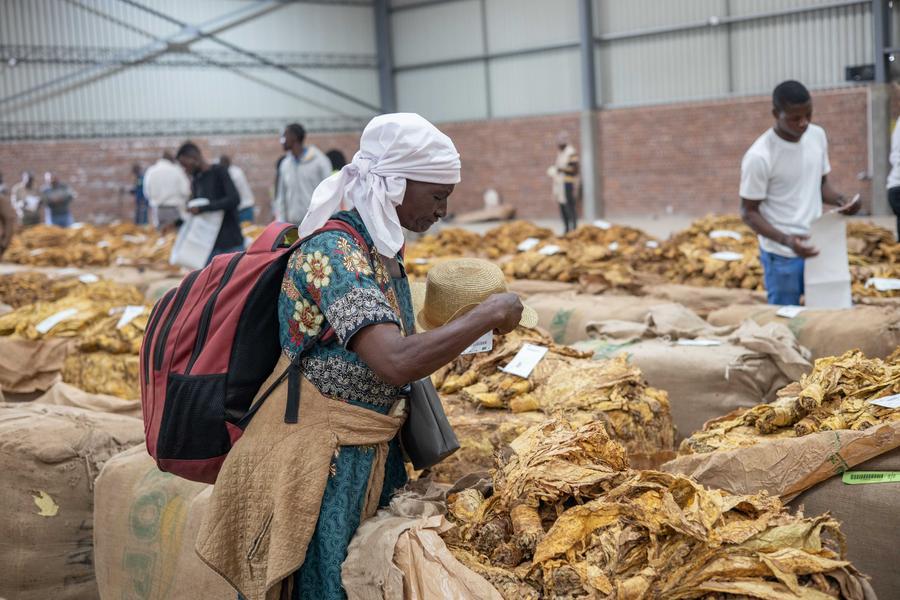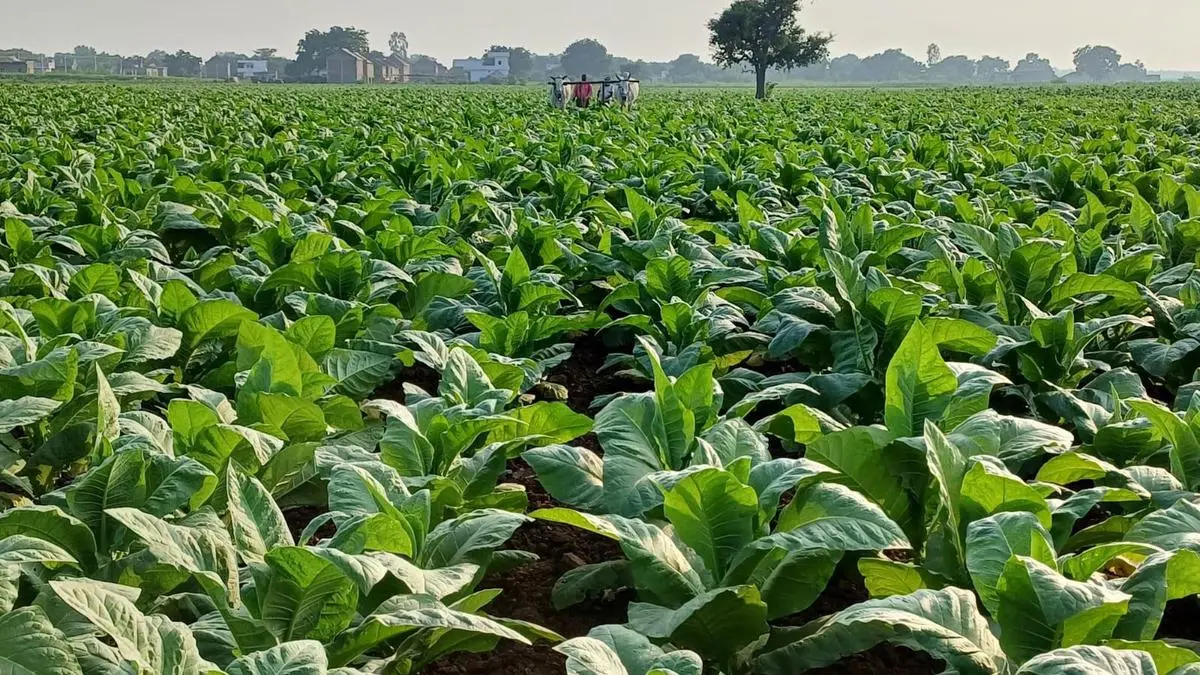
The association noted that India’s growers face intense competition from major producing countries such as Zimbabwe, Brazil, Zambia and Malawi, which have expanded production despite weakening international prices
| Photo Credit:
The Federation of All India Farmer Associations (FAIFA) has expressed concern over the Tobacco Board’s decision to reduce the authorised Flue-Cured Virginia (FCV) tobacco crop size by 43 per cent for the upcoming season. FAIFA said that crop rationalisation might be a market necessity, but its implementation must remain farmer-centric. A carefully calibrated approach that combines production discipline with financial support and export expansion against unauthorised cultivation and protection of the legal market, can safeguard livelihoods while reinforcing India’s position as a leading supplier of premium FCV tobacco.“The objective should not simply be producing less tobacco but producing the right quantity, for the right markets, at remunerative prices,” it said.Financial shock“While we acknowledge the need to correct the present demand-supply imbalance, a reduction of this scale could impose a fresh financial shock on farmers who are still recovering from unsold stocks, weak price realisation and mounting debt,” PS Murali Babu, President, FAIFA, said.He pointed out that the costs of maintaining curing barns, labour, and other farm infrastructure would not decline in proportion to the crop allocation, making smaller holdings potentially unremunerative. “The majority of the growers can’t shift to alternative crops quickly. The low rainfall and specific agro-climatic conditions in many FCV-growing belts sharply limit the range of crops that can offer comparable and dependable returns,” he said.Impact of unauthorised crop“Crop diversification must therefore be supported only where it is agronomically suitable, economically viable and backed by assured markets,” he pointed out.The association noted that India’s growers face intense competition from major producing countries such as Zimbabwe, Brazil, Zambia and Malawi, which have expanded production despite weakening international prices.The association said that unauthorised cultivation has significantly contributed to the current demand-supply imbalance. Published on August 10, 2026