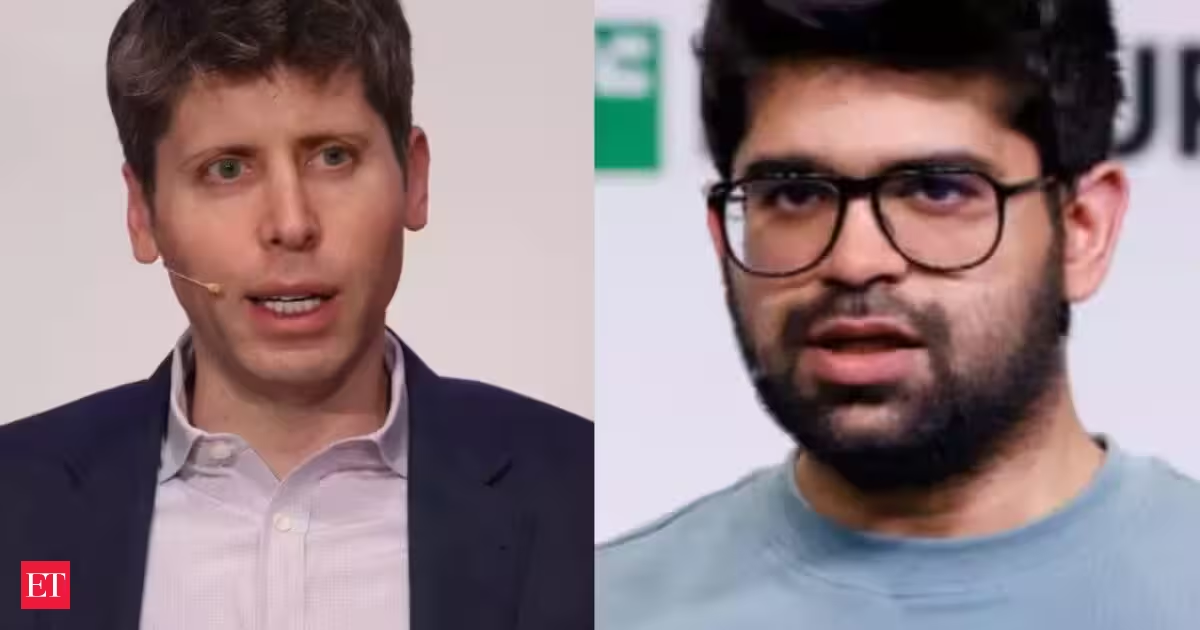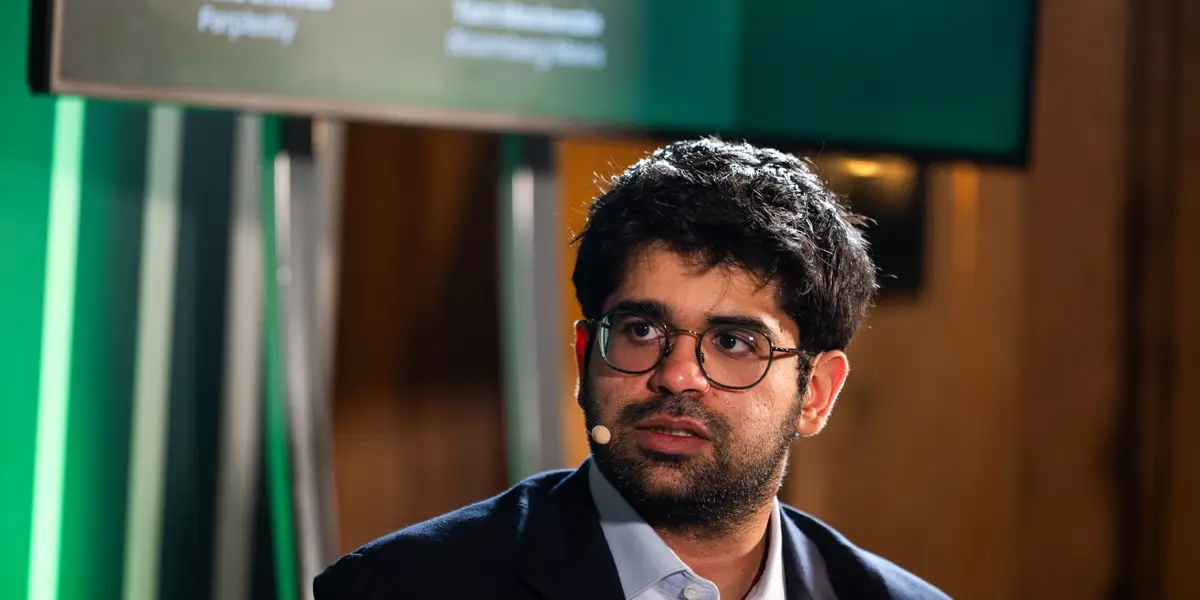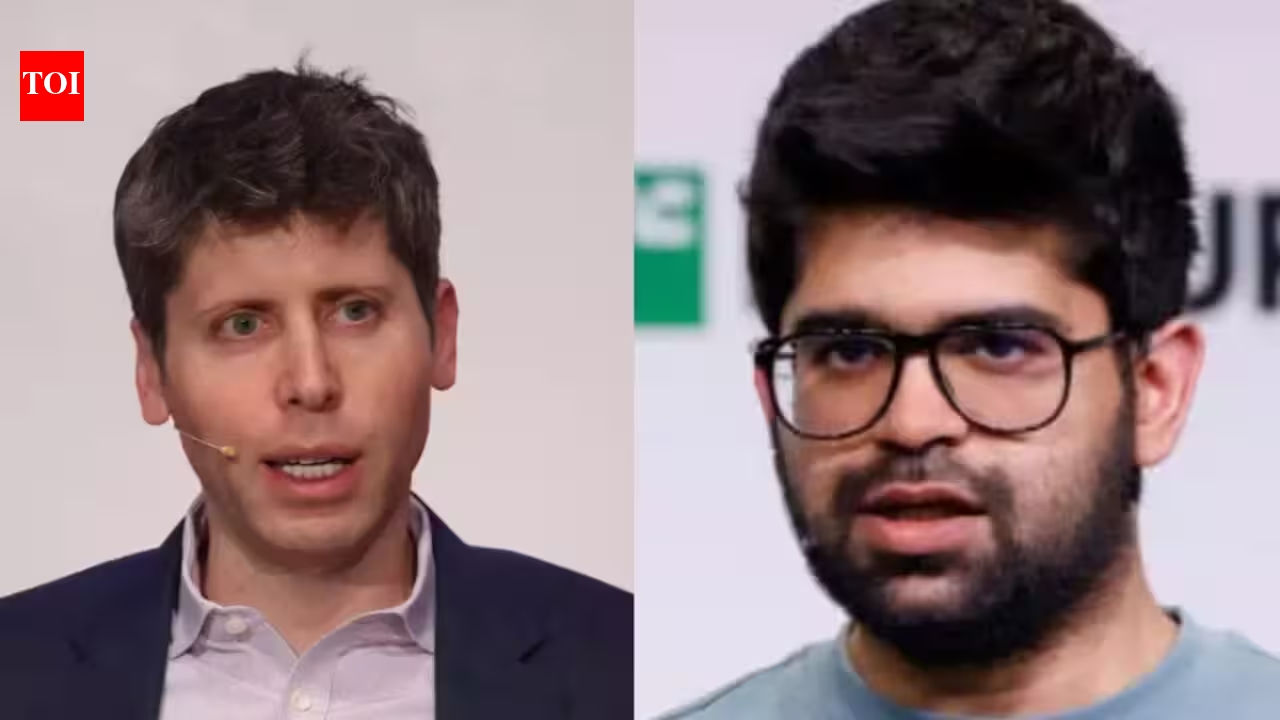
Perplexity AI founder Aravind Srinivas reveals the Sam Altman career advice that helped him identify his strengths.Aravind Srinivas remembers the exact question he once asked Sam Altman. Not what to build, or which model to bet on, but something more basic: how do you actually figure out what you are good at.Altman's answer was to pursue whatever comes easy to you but seems hard to other people. Srinivas has repeated that line in interviews and podcasts since, and in a recent conversation that went viral on X, he explained why it landed the way it did. It was not new information to him. It put language to something he had already lived through, years before OpenAI existed and years before Perplexity, the artificial intelligence (AI) company he would go on to build, did too.The question behind the questionMost career advice tells people to follow their passion. Altman's version skips that step. Instead of asking what you love, it asks what costs you less effort than it costs everyone around you. The distinction matters because passion is subjective and hard to measure, while relative ease is something people can observe in themselves, usually only after they have already done the thing that revealed it."Whatever comes easy to you...but seems hard to other people," is how Srinivas recalled Altman's reply. He called it a reliable way to identify a person's real strengths, as opposed to their preferred ones.A contest, not a classroomSrinivas traces his own version of this back to his undergraduate years at Indian Institute of Technology (IIT) Madras. A friend mentioned a data science competition, structured much like Kaggle, with an internship on the line for whoever won. Srinivas had no formal grounding in machine learning at the time. He did not know what Random Forests or Decision Trees were.What he had instead was the scikit-learn library and a willingness to try approaches until one of them worked. No theory first, no completed course, just iteration against a hidden test set until a model held up. He won."It was not even called AI at that time, it was called OCR or something," Srinivas recalled, describing how undefined the field still felt when he first touched it, well before Optical Character Recognition (OCR) work of that kind was folded into the broader AI conversation.What the advice actually rewards1. It treats resistance as information. When something takes visibly more effort for other people than it takes for you, that gap is not a coincidence. It is a signal most people miss, because they are taught to read effort as virtue rather than as a measurement. Srinivas did not walk into that contest already sure he understood machine learning. He walked out with evidence that he did, gathered through result rather than study.2. It favours doing over knowing. The advice quietly demotes credentials. Srinivas did not win the contest because he had read the right textbook. He won because he tried more things, faster, than the problem could resist. That kind of brute-force iteration looks undisciplined from the outside. It produced a result that theoretical preparation alone could not have guaranteed.3. It compounds quietly. One contest win does not build a company. What it built for Srinivas was conviction, a sense that this particular kind of problem-solving was his to keep returning to. That conviction carried him through a Doctor of Philosophy (PhD) at University of California (UC) Berkeley, research roles at DeepMind and OpenAI, and eventually into founding Perplexity AI in 2022. Each step added credentials on top of a belief that had already been settled years earlier, in a contest that was not even framed as an AI competition at the time.From a hostel room to a $20 billion valuationSrinivas, now Chief Executive Officer (CEO) of Perplexity AI, has since built the company into one of the more closely watched names in the industry. Its valuation has climbed past $20 billion through 2026, on the back of fast-growing revenue and a widening set of enterprise tools. Srinivas was named India's youngest billionaire on the Hurun India Rich List at 31.None of that was visible from inside a data science contest with an internship as the prize. What was visible, at least to him, was that the problem in front of him felt lighter in his hands than it did in everyone else's.The real takeawayAltman's advice was never really about machine learning. It was about paying attention to the gap between what is hard for you and what is hard for the room. Srinivas noticed that gap once, in a competition that barely had a name for the field it belonged to. He has spent the years since building a company on the same observation.
'Whatever comes easy to you..': Sam Altman gave Perplexity CEO Aravind Srinivas one line of advice that changed his career
Aravind Srinivas remembers the exact question he once asked Sam Altman. Not what to build, or which model to bet on, but something more basic: how do you actually figure out what you are good at.
783 words~4 min read