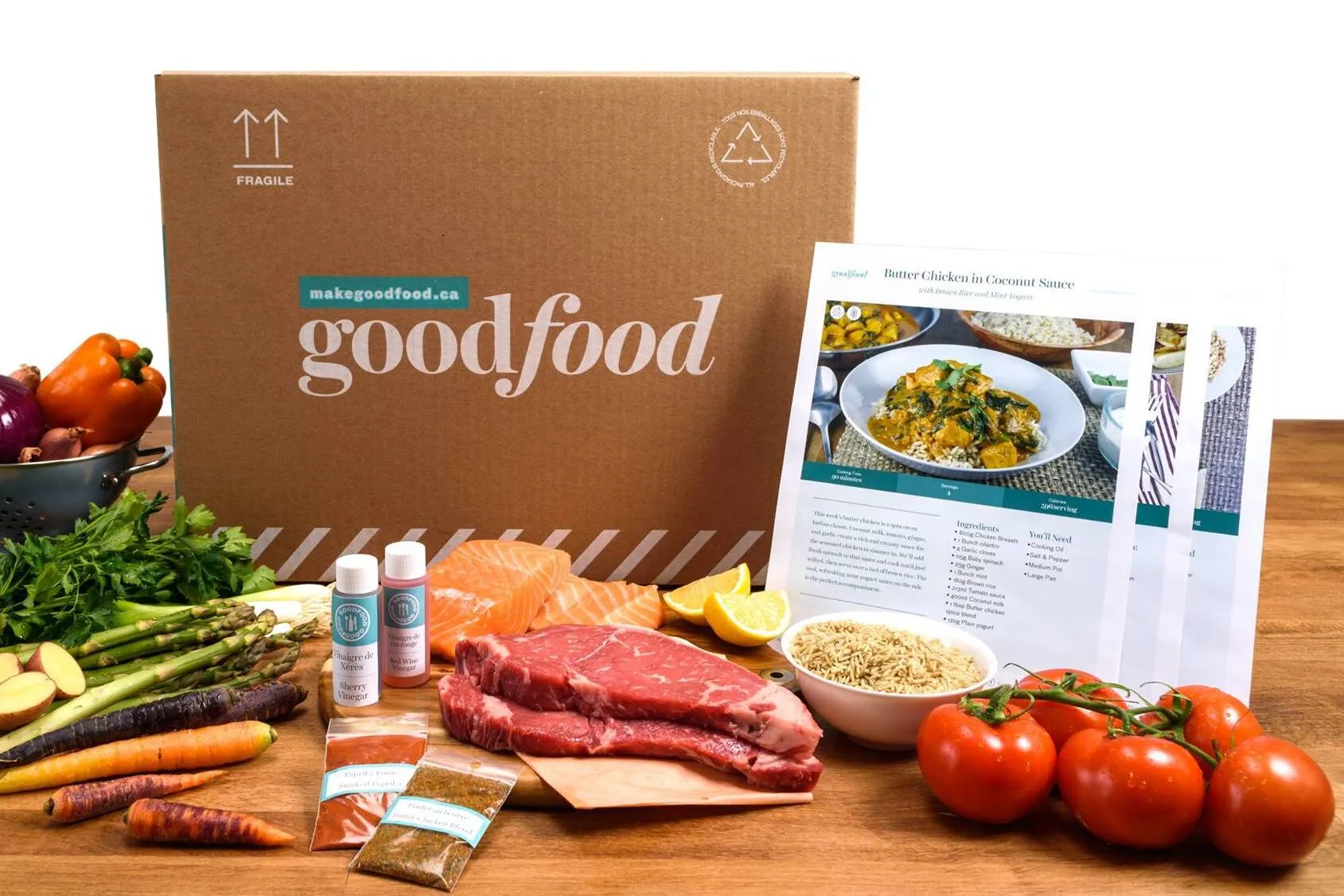
Skip to Content News Archives Economy Energy Oil & Gas Renewables Electric Vehicles Mining Commodities Agriculture Real Estate Mortgages Mortgage Rates Finance Banking Insurance Fintech Cryptocurrency Work Wealth Smart Money Wealth Management Investor Personal Finance Family Finance Retirement Taxes High Net Worth FP Comment Executive Women Puzzmo Newsletters Financial Times Business Essentials More Innovation Information Technology FP500 Podcasts Small Business Lives Told Tails Told Shopping Financial Post Store Obituaries Place a Notice Advertising Advertising With Us Advertising Solutions Postmedia Ad Manager Sponsorship Requests Classifieds Place a Classifieds ad Working Profile Settings My Subscriptions Saved Articles My Offers Newsletters Customer Service FAQ News Economy Energy Mining Real Estate Finance Work Wealth Investor FP Comment Executive Women Puzzmo Newsletters Financial Times Business Essentials HomeNewsHow Goodfood went from a $1-billion pandemic darling to a three-cent stockThe Monteal-based meal-kit company has been granted bankruptcy protectionLast updated 3 days ago You can save this article by registering for free here. Or sign-in if you have an account.GoodFood meal kit box. FacebookAt the height of the pandemic, Goodfood could barely expand fast enough. Canadians shunning grocery aisles and unable to dine out paid to have the answer to a nightly question — what is for dinner? — delivered to their doors.Subscribe now to read the latest news in your city and across Canada.Exclusive articles from Barbara Shecter, Joe O'Connor, Gabriel Friedman, and others.Daily content from Financial Times, the world's leading global business publication.Unlimited online access to read articles from Financial Post, National Post and 15 news sites across Canada with one account.National Post ePaper, an electronic replica of the print edition to view on any device, share and comment on.Daily puzzles, including the New York Times Crossword.Subscribe now to read the latest news in your city and across Canada.Exclusive articles from Barbara Shecter, Joe O'Connor, Gabriel Friedman and others.Daily content from Financial Times, the world's leading global business publication.Unlimited online access to read articles from Financial Post, National Post and 15 news sites across Canada with one account.National Post ePaper, an electronic replica of the print edition to view on any device, share and comment on.Daily puzzles, including the New York Times Crossword.Create an account or sign in to continue with your reading experience.Access articles from across Canada with one account.Share your thoughts and join the conversation in the comments.Enjoy additional articles per month.Get email updates from your favourite authors.Create an account or sign in to continue with your reading experience.Access articles from across Canada with one accountShare your thoughts and join the conversation in the commentsEnjoy additional articles per monthGet email updates from your favourite authorsSign In or Create an AccountorAs the Montreal meal-kit company shot to unicorn status, worth about $1 billion, Goodfood bet the habit would last.It didn't.The company's shares closed Tuesday at just three cents, valuing it at about $3 million. The next day, Goodfood filed for and won protection from its creditors in Quebec Superior Court.Like the rest of the industry, it suffered a post-pandemic hangover.Breaking business news, incisive views, must-reads and market signals. Weekdays by 9 a.m.By signing up you consent to receive the above newsletter from Postmedia Network Inc.A welcome email is on its way. If you don't see it, please check your junk folder.The next issue of Posthaste will soon be in your inbox.We encountered an issue signing you up. Please try againBut it also made a costly mistake of its own: a push into one-hour grocery delivery, launched just as restaurants reopened, shoppers drifted back to stores and inflation drove up the cost of almost everything.It struggled to be profitable, too, even during its boom, leading to growing financial difficulties, which even dumping a Bitcoin-linked investment to raise money couldn't solve.The story began in 2014. Jonathan Ferrari and Neil Cuggy, then two former RBC Capital Markets analysts in their 20s, decided to stake their careers on recipe cards and insulated boxes. Based in Montreal, they called the service Culiniste, before renaming it Goodfood in 2016.Meal kits were still a young industry, though attracting serious investment. The idea was essentially that customers would pay to skip the planning, the shopping and the measuring, as long as they still got to cook. HelloFresh had already got going in Berlin in 2011, followed by Blue Apron in New York the next year.Going public in 2017, and raising about $21 million, Goodfood quickly counted about 200,000 active subscribers by 2019, controlling 40 to 45 per cent of the Canadian meal-kit market.Then COVID-19 hit, which actually spelled good news for Goodfood.As restaurants closed while trips to grocery stores were curtailed, the change of habits drove even more subscribers to the Montreal-based company. Announcing a new Toronto facility and 300 planned hires in May 2020, Ferrari called the shift in consumer habits "here to stay."By early 2021, the company had 319,000 active subscribers and quarterly revenue of $100.7 million, up 71 per cent from a year earlier. On Jan. 8, 2021, its shares — once trading below $2 — had climbed above $13.“We are still in the early days of digitizing one of Canada's largest industries,” Ferrari told investors that spring.But Goodfood was growing without earning.Record annual revenue of about $379 million in 2021 came with a net loss of almost $32 million.Still, filled with confidence, the company sank part of its pandemic windfall into an even bigger gamble. Goodfood On-Demand promised some urban customers groceries within an hour.This meant stashing food close to customers in a costly web of small warehouses, with staff and couriers standing by to move orders fast. In January 2022, Goodfood said it would double the number of these centres, from three to six. An investor presentation vowed the company would “profitably dominate Toronto and Montreal.”In the end, however, the timing could hardly have been worse.Along with restrictions lifting and Canadians returning to offices, inflation also drove up the price of food, packaging, fuel and labour.So suddenly households had more options but less room in their budgets.Management pressed on, still pitching rapid delivery as the way back to growth. Six centres were running in Toronto, Montreal and Ottawa by April.But in the latter half of 2022, it was over. Goodfood scrapped rapid grocery delivery. Analysts pegged the reversal's cost at $45 million to $50 million and said the venture had pulled management's focus from the meal-kit business at the company's core. The stock dropped 24 per cent the day of the announcement, closing at just 45 cents.So Goodfood turned back to meal kits and prepared foods. That decision meant closing some facilities and cutting jobs, which lifted its underlying earnings but did nothing to reverse the slide in revenue and customers.Since March, it has laid off about 122 employees and still owes roughly $970,000 in severance to 20 former workers. Those payments are now frozen under the creditor-protection order.In June, Goodfood counted 48,000 active customers, 85 per cent fewer than at its pandemic peak. Quarterly revenue had fallen 30 per cent from a year earlier, to $21.5 million.Goodfood held just $4.7 million in cash and net debt of $35.8 million. About $29 million in convertible debt was due in March 2027, leading the company to warn there was significant doubt about its ability to remain in business.One creditor is Investissement Québec, the provincial government's investment arm. It’s owed $10 million.According to the creditor filing, Goodfood in mid-July also “sold its investments in an exchange-traded fund indexed to the performance of Bitcoin, in order to provide additional liquidity for its operations.”But most pressing of all proved to be the short-term debt.One interest payment of $950,200, in fact, fell due the day after Goodfood filed. The company told the court it could not pay without risking the business.Few familiar faces remained at court this week. The founders were long gone. The finance chief had left in April and his replacement quit two months later. Selim Bassoul, who took the top job in February, resigned on Monday, leaving operations chief Najib Maalouf to step up and lead the hunt for a rescuer.Goodfood said it will keep operating while it pursues a court-supervised sale or investment. It does not expect the filing itself to cost jobs among its roughly 230 employees, though it has not ruled out targeted cuts."We have made important progress in strengthening our business," said Donald Olds, the lead independent director, "but our near-term liquidity pressures require a more comprehensive solution."Do you have a story? Write to me at hnorth@postmedia.com. Join the Conversation This website uses cookies to personalize your content (including ads), and allows us to analyze our traffic. Read more about cookies here. By continuing to use our site, you agree to our Terms of Use and Privacy Policy.
How Goodfood went from a $1-billion pandemic darling to a three-cent stock
The Monteal-based meal-kit company has been granted bankruptcy protection
1,442 words~7 min read