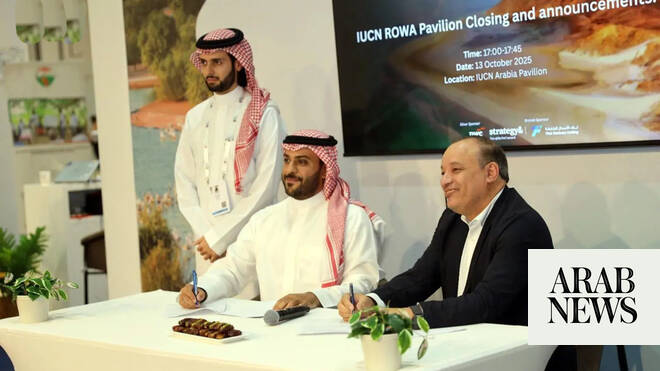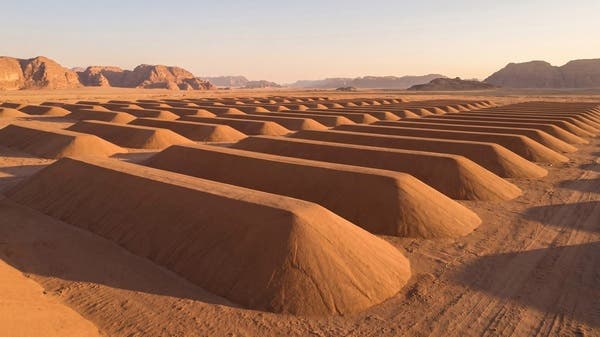
A startup is quietly pursuing an ambitious goal: Helping transform Saudi Arabia into the world’s largest hub for durable carbon removal.Sequest is working with partners across the Kingdom to leverage the country’s unique geography and infrastructure to store carbon at scale.For all the latest headlines follow our Google News channel online or via the app.At first glance, Saudi Arabia may seem an unlikely location for such a project. But the Kingdom’s vast hyper-arid landscapes, among the driest on Earth, provide ideal conditions for low-cost carbon storage. Limited rainfall and humidity prevent plant material from decomposing, creating a natural environment for long-term carbon sequestration.Combined with advanced logistics networks, available agricultural residue streams, and the government’s commitment to decarbonization under Vision 2030, Sequest argues that Saudi Arabia is uniquely positioned to become a global leader in carbon removal.While carbon removal technologies have gained significant attention in recent years, scaling them has proven difficult.“Carbon removal has a delivery problem. The climate does not benefit from a ton contracted, only from a ton delivered,” Sequest co-founder and CEO Gary Ganz told Al Arabiya English.According to industry data, buyers have signed long-term contracts for nearly 50 million tons of durable carbon removal, yet fewer than 2 million tons have actually been delivered.Major companies, including Google and Anthropic, have helped drive demand through Frontier, an advance market commitment, which now totals approximately $1.8 billion.One of the industry’s biggest obstacles is cost. Many carbon removal technologies require significant upfront capital investment and are highly energy-intensive.Sequest’s approach is designed to avoid those challenges.Globally, agriculture generates more than 7 billion tons of crop residue each year, much of which is either burned or left to decompose, both of which release carbon back into the atmosphere.Sequest instead intercepts that cycle by storing suitable agricultural residue in patent-pending, engineered above-ground chambers. In Saudi Arabia’s dry desert climate, the biomass remains preserved because there is insufficient moisture for the microbes responsible for decomposition to survive.The company says the process relies on relatively simple operations, including biomass handling, trucking, earthworks, and environmental monitoring, rather than energy-intensive industrial systems.“Our inputs are trucking, earthworks and monitoring, which enables massive scale at a low cost per ton without needing to wait for a cost curve to decline,” Ganz said.Sequest announced that its inaugural facility in Saudi Arabia, named Horizon, has passed a preliminary assessment by Puro.earth, one of the world’s leading certification standards for engineered carbon removal.Sequest has also partnered with the Regional Voluntary Carbon Market Company to distribute carbon removal credits within the Kingdom and signed a memorandum of understanding with Red Sea Global on land access for its projects.The Horizon facility is expected to begin operations later this year with a target of removing 1,000 metric tons of carbon dioxide on a net basis, roughly equivalent to the annual emissions of about 500 passenger vehicles in the United Kingdom.“And we intend to ramp up significantly in the Kingdom from there,” Ganz said.Read more: Saudi Arabia’s budget revenues reach $90.3 billion in Q2 2026
Startup aims to turn Saudi Arabia into global hub for carbon removal
A startup is quietly pursuing an ambitious goal: Helping transform Saudi Arabia into the world’s largest hub for durable carbon removal.Sequest is working
499 words~2 min read