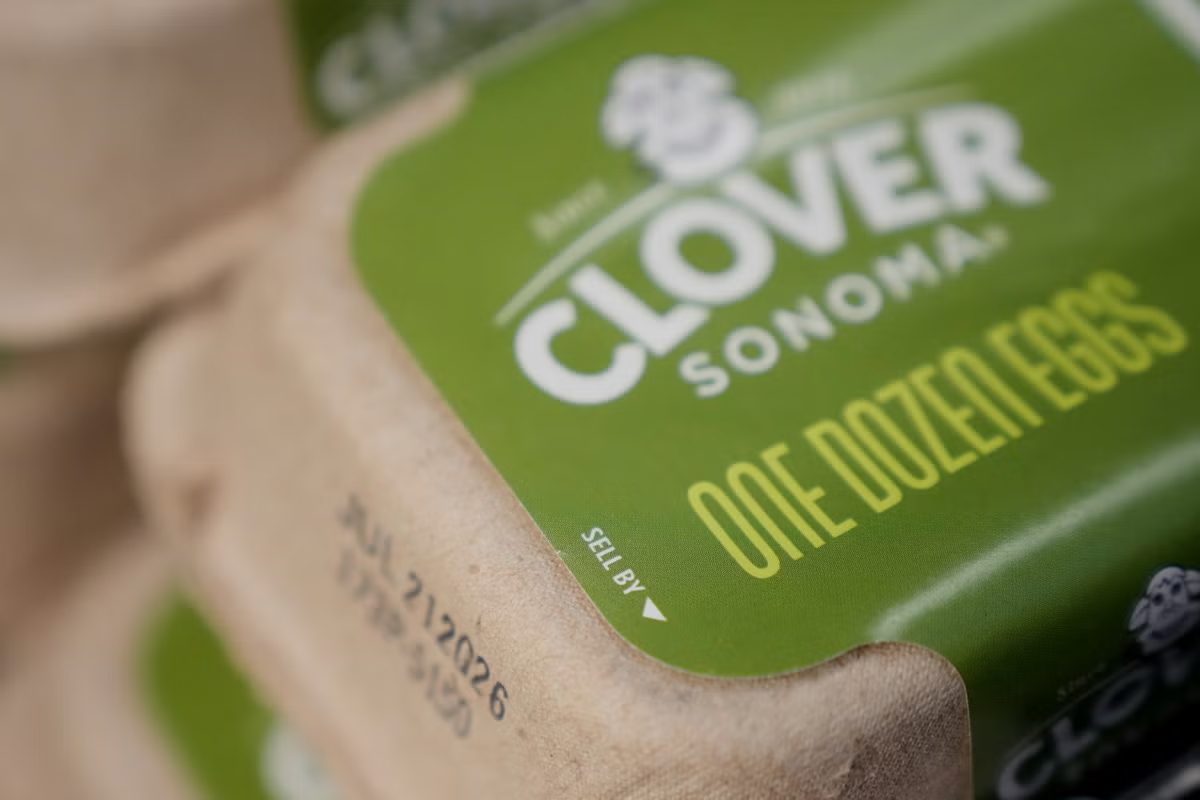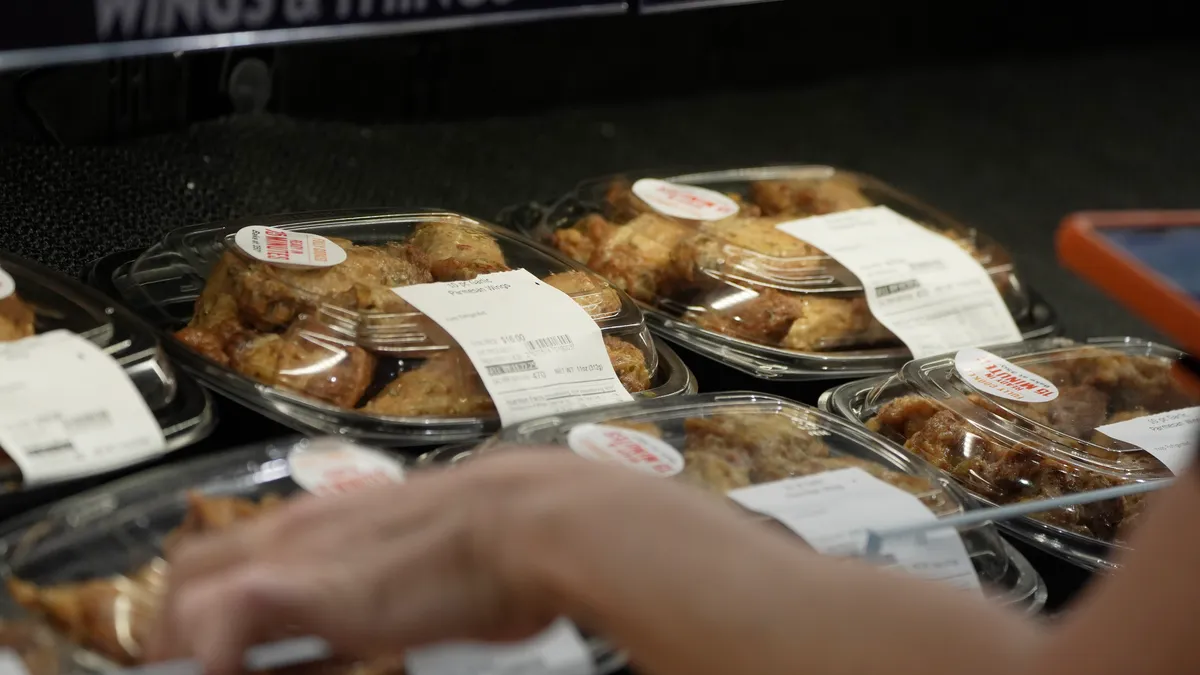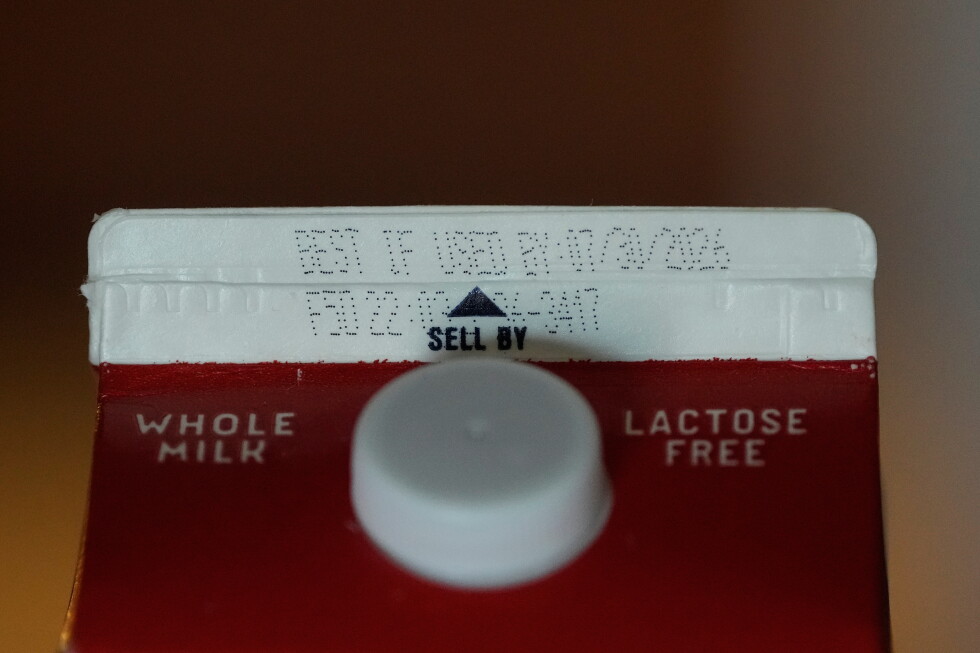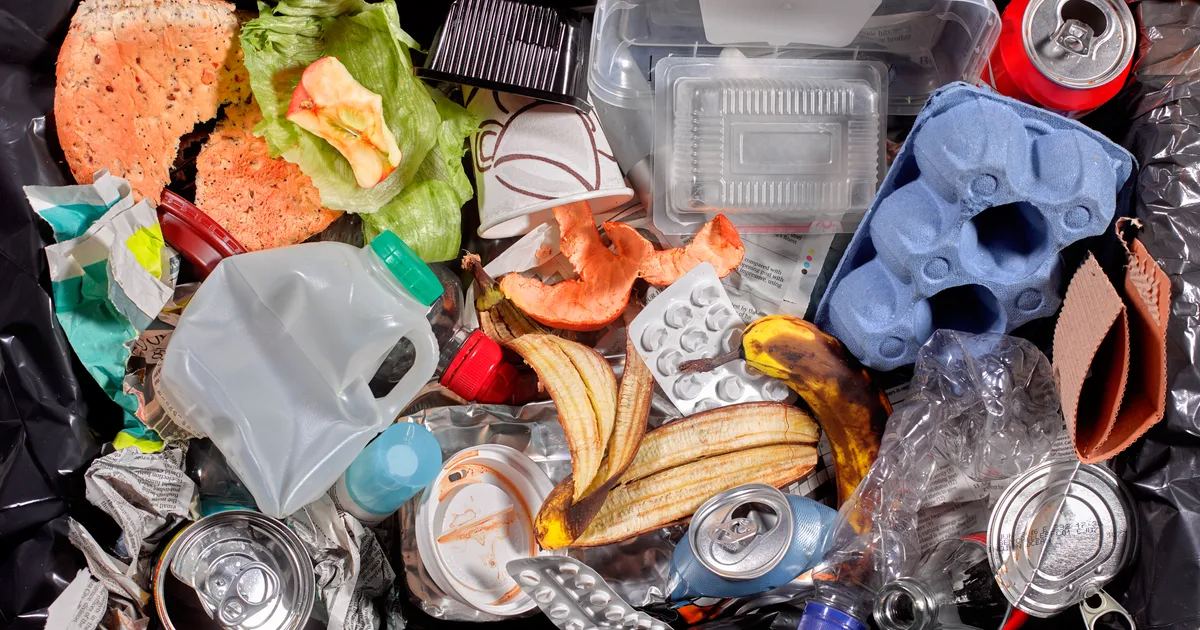
Somewhere in your kitchen right now is a carton, a jar or a bag of food or drink that you’re going to throw out this week for the wrong reason. Not because the food has gone bad, but because a printed date has passed, and you read it as a deadline. You would have company. By one estimate, fewer than half of Americans understand what a “use by” date means. The U.S. Food and Drug Administration says 30 to 40% of the food supply goes uneaten, with label confusion contributing to the problem.The labels that send food to the bin are “sell by,” “best by” and “use by,” but only the last has anything to do with safety.“Sell by” isn’t intended for customers.Let’s start with “sell by,” which is not written for you at all. “It tells stores how long to display a product for sale and was never intended to help consumers determine whether food is safe,” said Melissa Vaccaro, a senior food safety program specialist at the National Environmental Health Association who trains regulators nationwide. “Best by” labels are quality estimates.“Best by,” “best before,” and “best if used by” are quality estimates, nothing more. “After this date, the food may begin to lose some of its freshness, flavor or texture, but it may still be safe if it has been stored and handled properly,” said Destini Moody, a board-certified dietitian who has worked with the San Francisco Giants and the NBA. “Use by” doesn’t mean what you think, either.“Use by” is the one people are most likely to treat as a hard stop. ”‘Use by’ dates can provide a false sense of food safety because they assume proper temperature control throughout the supply chain, which cannot always be guaranteed,” said Dr. Jared Ross, a board-certified emergency medicine physician. The only food where the federal government requires that date to mean something is infant formula, where the manufacturer must be able to guarantee the nutrients on the label up until then.photograph by dorisj via Getty ImagesThe only food that the U.S. government requires the "use by" date to mean something is infant formula.Here’s how to think of these labels:The thread connecting all three labels is simple, said Joan Salge Blake, a dietitian and nutrition professor at Boston University. “The dates on the label, other than infant formulas, don’t refer to food safety, but rather the suggested date to consume the food so you can enjoy it at peak quality.” Vaccaro sees the same gap from the regulator’s side. “A printed date is not a magic line where food becomes unsafe at midnight,” she said.Chip Carter has visited more than 4,500 farms and food operations as host of the show “Where The Food Comes From,” now part of a USDA classroom program, and he has watched the supply chain closely enough to distrust the print. “Very few foods are lethal just because they’re old,” he said. “They just don’t taste good and aren’t as nutritious.” “A printed date is not a magic line where food becomes unsafe at midnight.- Melissa Vaccaro, senior food safety program specialist at the National Environmental Health AssociationEggs are the most common mistake. “Refrigerated eggs in their shells will usually keep for three to five weeks,” Moody said, well beyond the carton date. Canned goods are not far behind. “I think most of us discard canned goods after the label date and most often unnecessarily,” Carter said. Carter has tested that conviction in his own kitchen. “I made an amazing risotto this weekend with arborio rice that was 11 years and 3 months beyond the package date,” he said. “It smelled and looked fine, so we cooked it up almost as an experiment.”Not every food gets the same pass. “Most date labels are not a countdown to danger,” said Danielle Smiley, a registered dietitian who counsels clients on food waste. “They’re often a manufacturer’s estimate of peak quality.” But a smaller group of foods breaks that rule, and the reason is what you can’t see or smell.Here’s where you need to pay extra attention:Ross explains why. “It is critical to distinguish food spoilage from microbial contamination,” he said. Bacteria are the part you can’t catch by looking. “Food may contain dangerous bacteria even if it looks and smells normal,” Moody said.The clearest example is deli meat. “Deli meats and sliced meats are the highest-risk food category, accounting for more than 80% of listeria cases in the United States,” Ross said. “Listeria is especially concerning to pregnant women, as it can cause fetal defects with lifelong neurological consequences.”Peter Dazeley via Getty Images“Don’t let the date on the label scare you,” said Joan Salge Blake, a dietitian and nutrition professor at Boston University. For deli meats, smoked fish and soft cheeses, the printed date is a real deadline, not a guideline, and the safest move is to respect it. “Perishable foods should not be left at room temperature for more than one to two hours,” Ross said. “Leftover cooked foods should be discarded within 72 hours.”California is the first state to act on food label confusion. Under Assembly Bill 660, “Best if Used By” will mark quality and “Use By” will mark safety, and consumer-facing “Sell By” dates will come off packaging. The change applies to food made on or after July 1, 2026. No other state has a law like it.The fix is real but partial. “California’s law addresses one of the biggest sources of consumer confusion by simplifying date-label language,” Vaccaro said. “However, labels alone will not solve food waste or food safety challenges. Consumers often confuse quality, freshness and safety as interchangeable concepts when they are not.” Blake sees a way to use them to your advantage. “Don’t let the date on the label scare you,” she said. “Oftentimes, supermarkets will put the foods that are near their ‘sell by’ date on sale with a reduction of as much as 50% of the original price. In these food inflationary times, these foods can be a bargain and stretch your food dollar.”She also tells shoppers to keep the refrigerator at “40 degrees F or slightly below,” to move milk and eggs off the warm door and into the colder back, and to check the ”FoodKeeper App on FoodSafety.gov” when they are unsure.Smiley said it comes down to a simpler question than the one printed on the package. “The real safety question is what the food is, how it was stored, and who is eating it,” she said. Carter agreed, “About half of all food safety incidents lead right back to the home kitchen.” So keep the fridge cold, respect the date on the few foods that can hurt you, and on everything else, trust what is in front of you. If you are brave enough, you can even try an 11-year-old risotto.
You're Probably Throwing Away Food That's Perfectly Safe. Experts Explain The Date Label Myth
"Sell by," "best by" and "use by" probably don't mean what you think they do.
1,136 words~5 min read