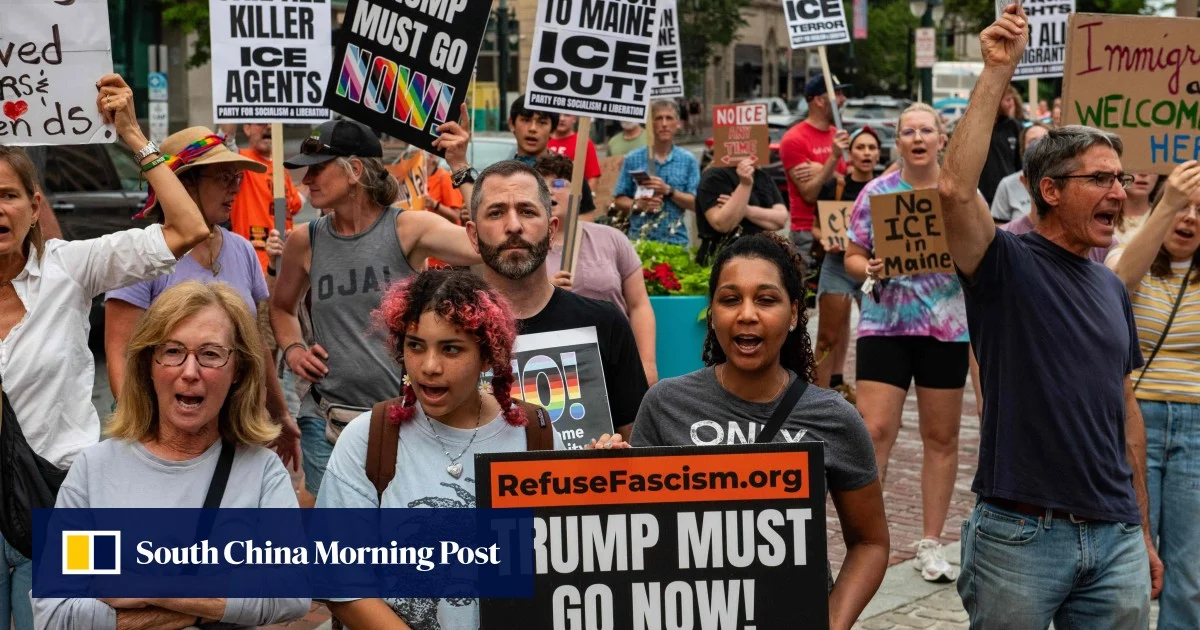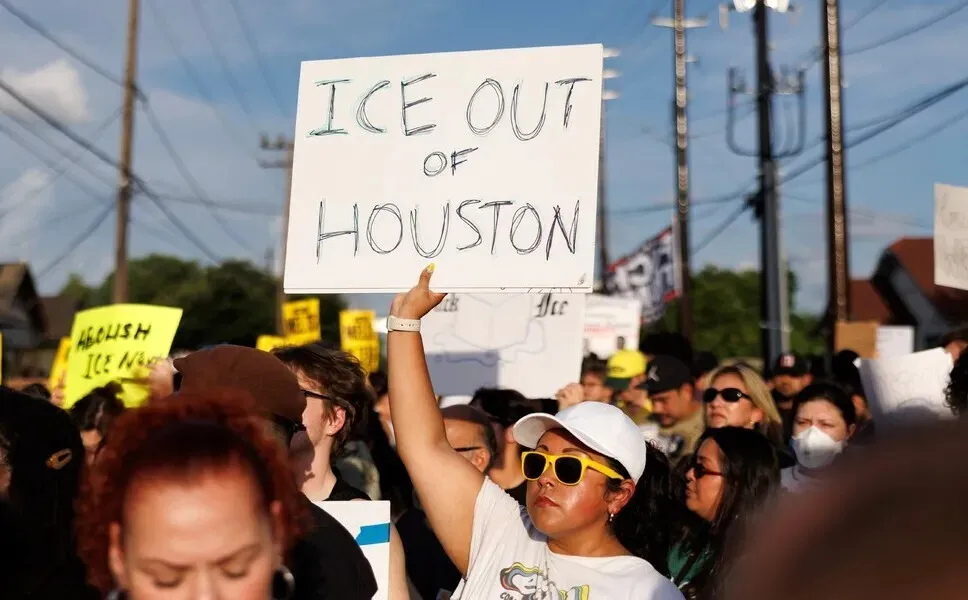
A person holds up a sign protesting US Immigration and Customs Enforcement at a rally on July 8, 2026, commemorating a Mexican person shot and killed by an ICE officer in Houston, Texas. (AP/Yonhap)
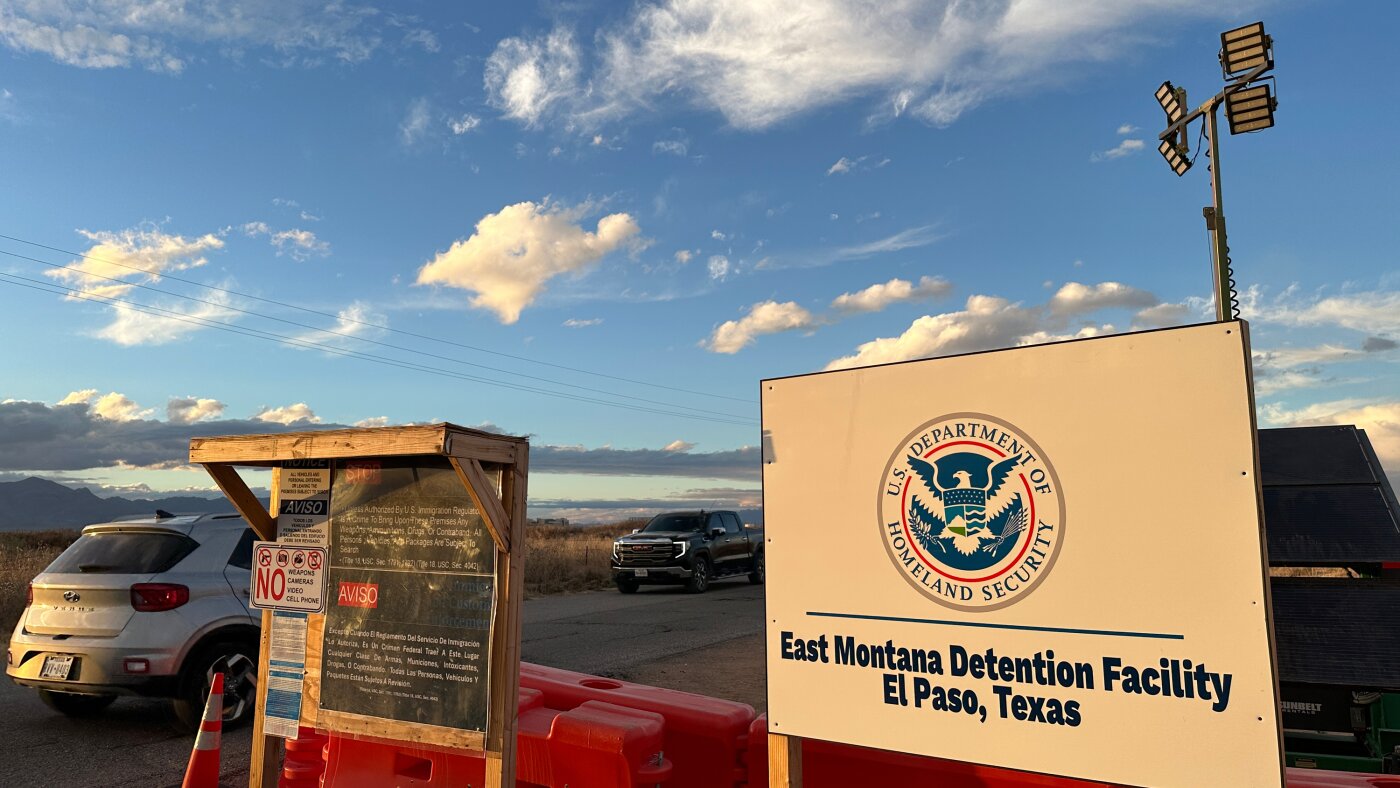
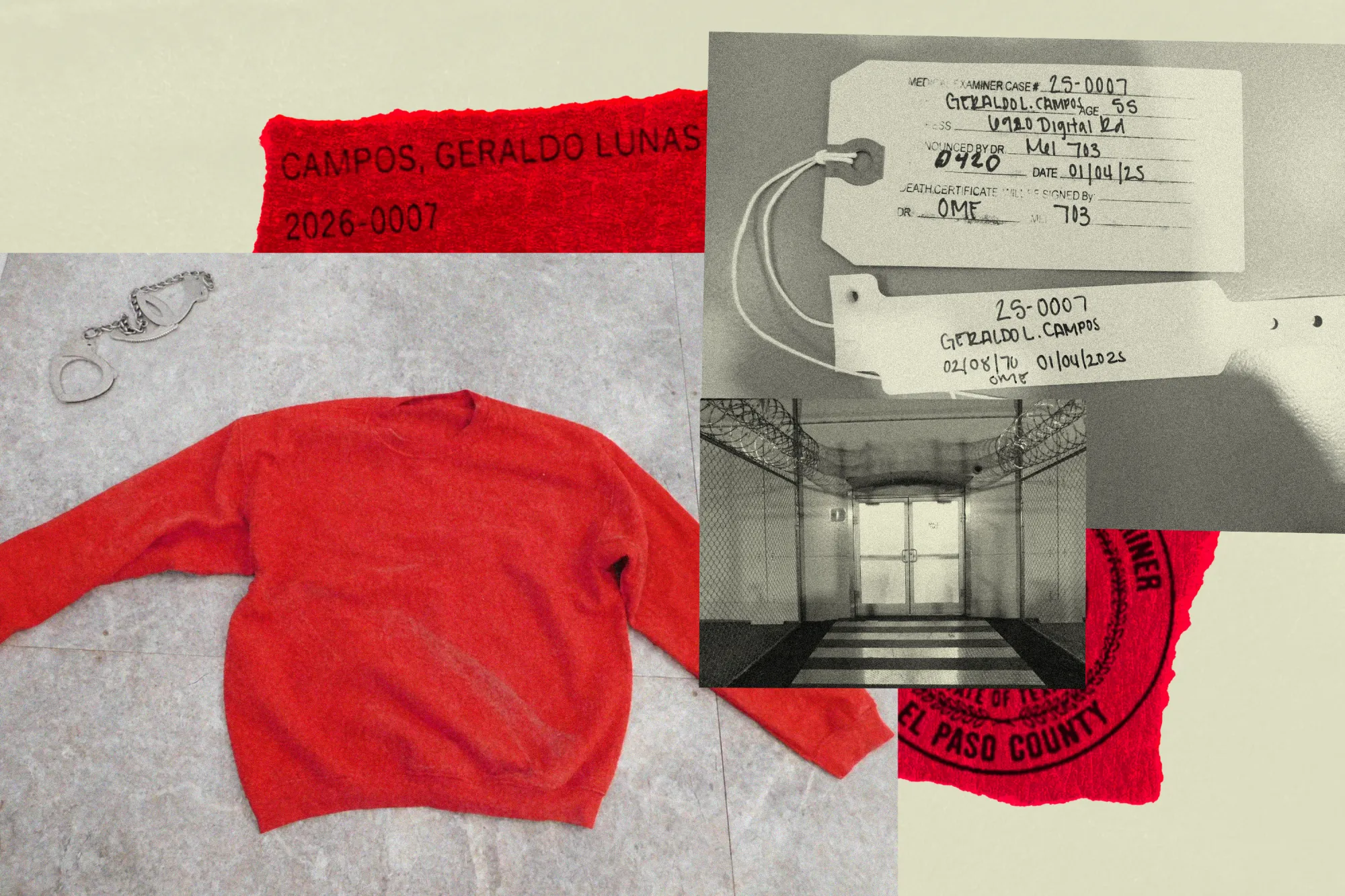
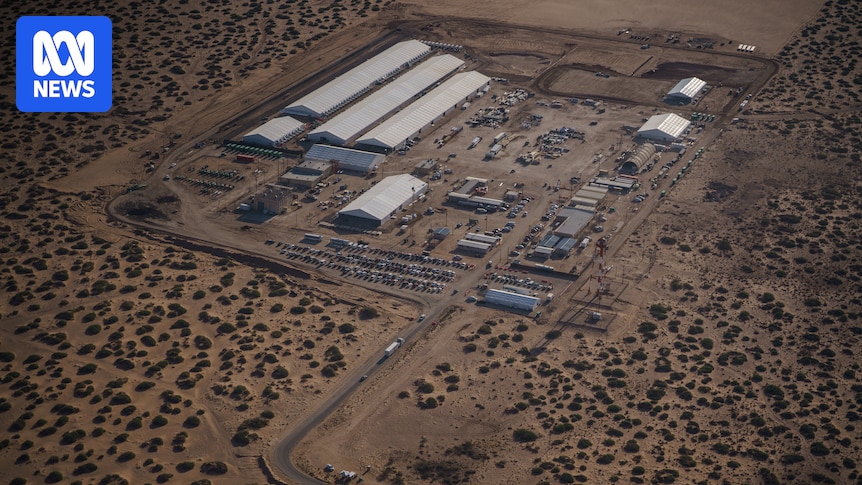
“When you get to El Paso, Texas, there’s no going back. You’re only getting out deported or dead.”This was one of the first things that Javier heard from a guard when he arrived at Camp East Montana, an immigration detention facility in El Paso, Texas. The immigrant told a US human rights organization that he had never experienced racism the way he had in that facility. Opened in the middle of the Texas desert in August last year, this center is notoriously the largest and most substandard Immigration and Customs Enforcement (ICE) facility not only in Texas but across the US.This is borne out in the complaint from a class action lawsuit filed by the Texas Civil Rights Project against the camp and others, which was viewed by the Hankyoreh. A detainee named Navdeep testified that he had to wear the same dirty clothes for three weeks and that sewage from the toilet flowed into his sleeping quarters. He was forced to drink dirty water without even a cup.Another prisoner, Ivan Rodriguez Flores, said he spent 23 hours a day confined to a windowless tent.Deaths also occurred at the facility. Lunas Campos from Cuba died on Jan. 3 this year and Victor Manuel Diaz from Nicaragua on Jan. 14.ICE’s fatality report did not specify the cause of Campos' death but noted psychological distress, including multiple attempts at self-harm. Diaz was said to have died by suicide.Charlotte Wiess, the lawyer leading the class action lawsuit, told the Hankyoreh that those trapped daily in such an environment start to mentally break down and no longer feel human, adding that suicidal thoughts can emerge in the absence of proper and consistent psychological support.The report published by Human Rights Watch and the American Civil Liberties Union on Camp East Montana backs up this account. Ismael, a 28-year-old from Honduras, testified that he experienced depressive episodes and suicidal thoughts because of the inhuman conditions he was subjected to during his five-month detention. According to him, there were times in which he went “a month without seeing the sun.” The facilities lacked adequate ventilation, and detainees were not provided with basic hygiene supplies, including soap. “I sometimes look at my bed sheets, and I wonder if it would be easier to hang myself instead of trying to survive this torture. I don’t know how to describe what I’m feeling. I feel forgotten,” he said.Camp employees routinely beat detainees and also denied them the medical attention they needed. The tents used to house detainees were divided into pods, with each pod holding up to over 70 people, despite being incredibly cramped and unhygienic. Some testified that water from the toilets and showers would often flow into the eating area.