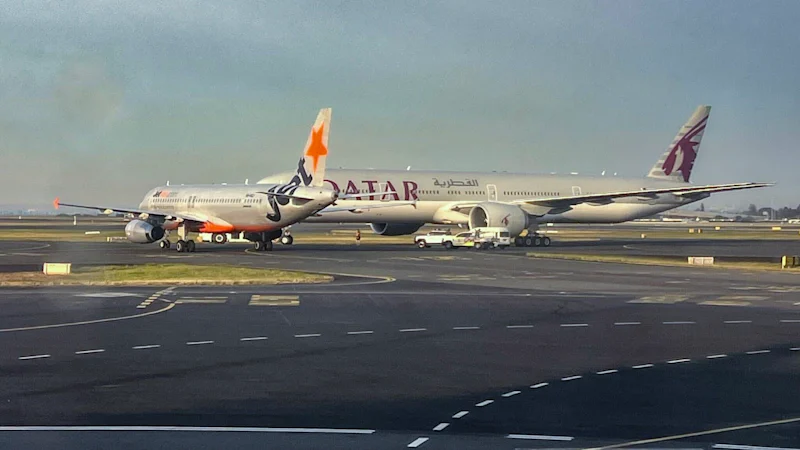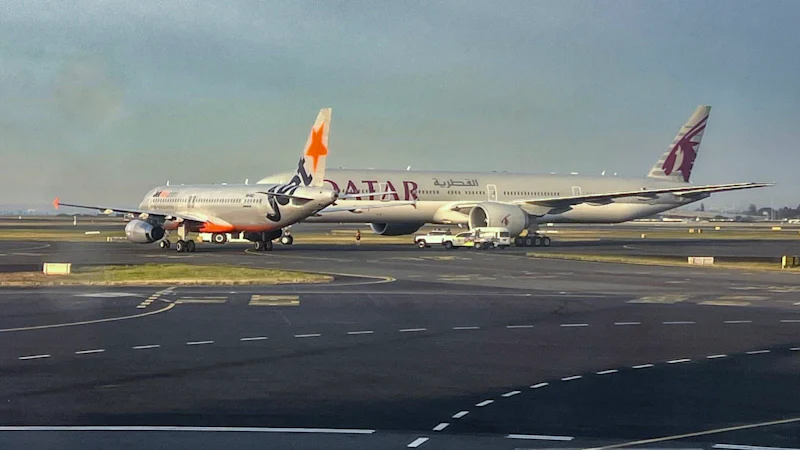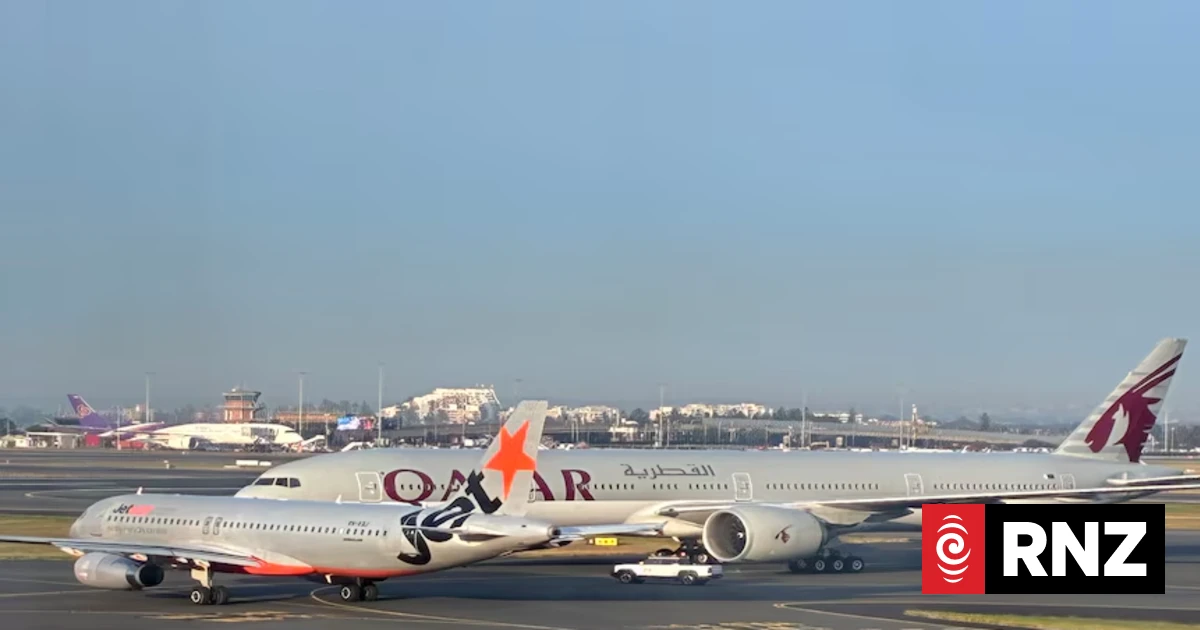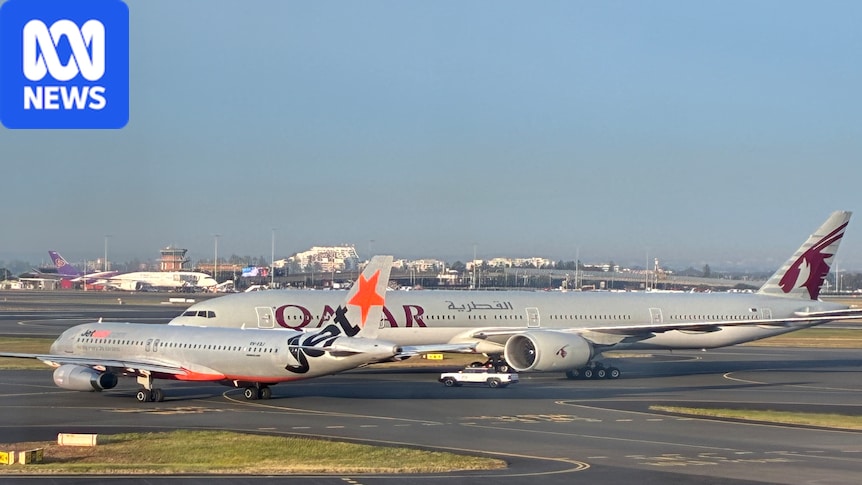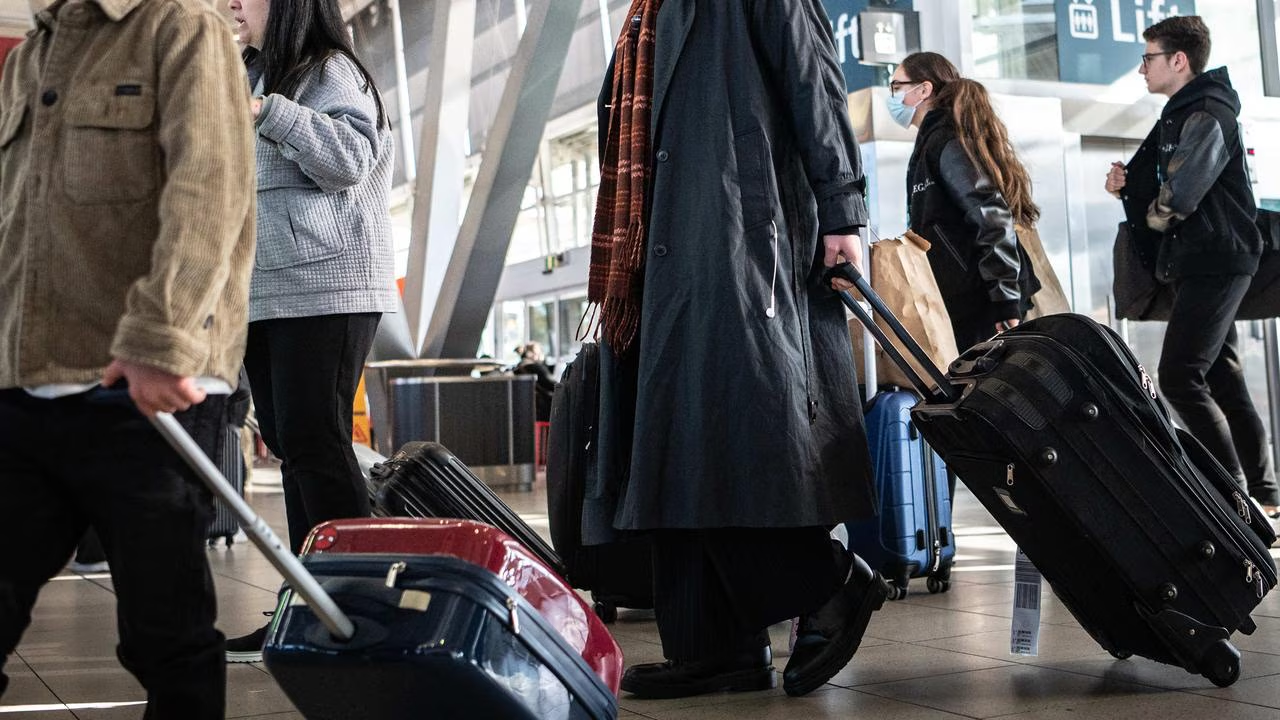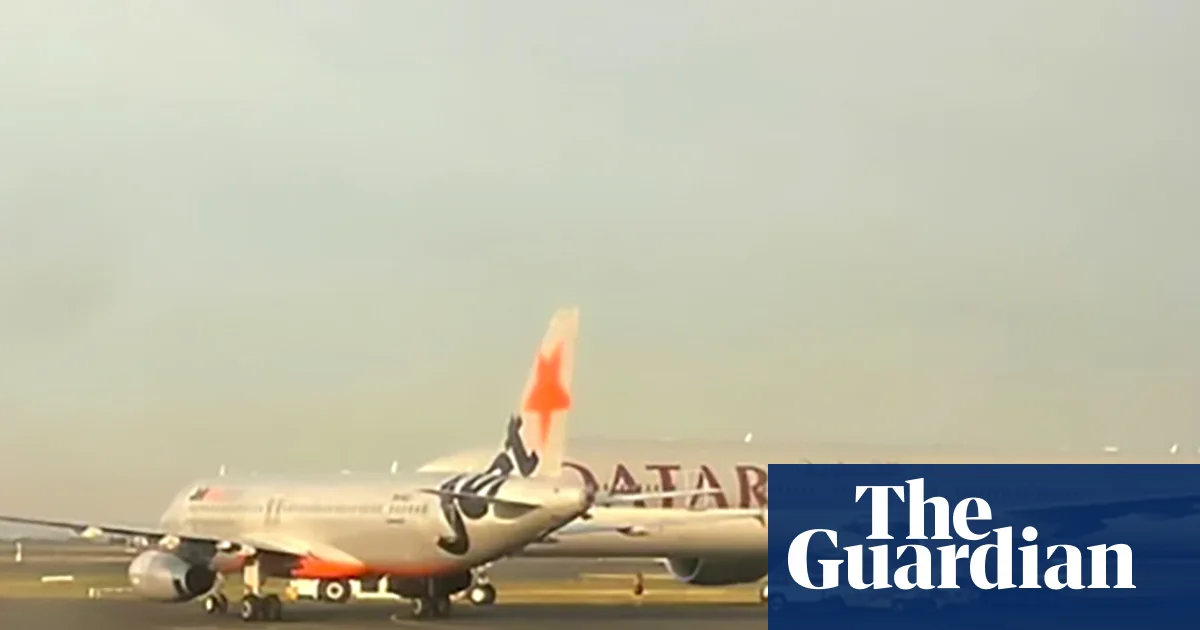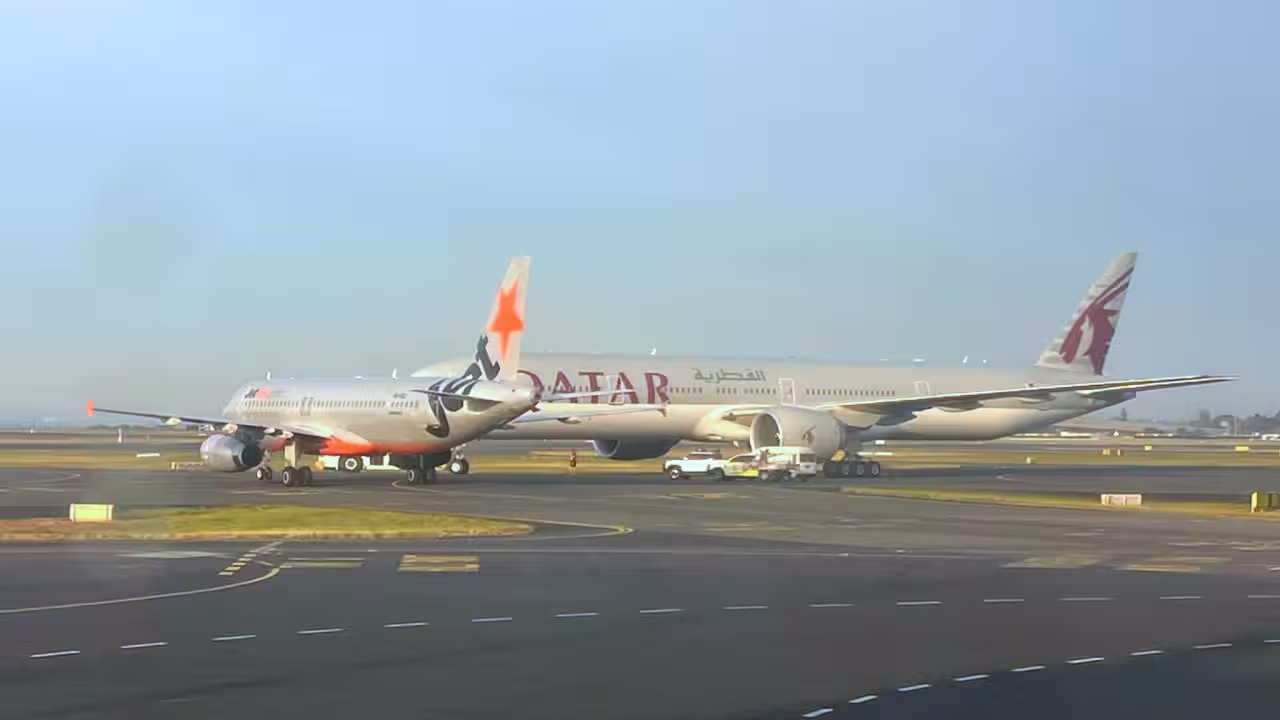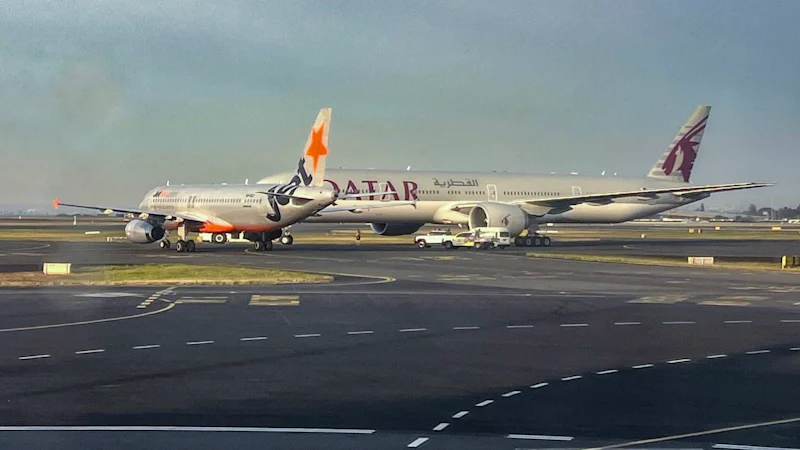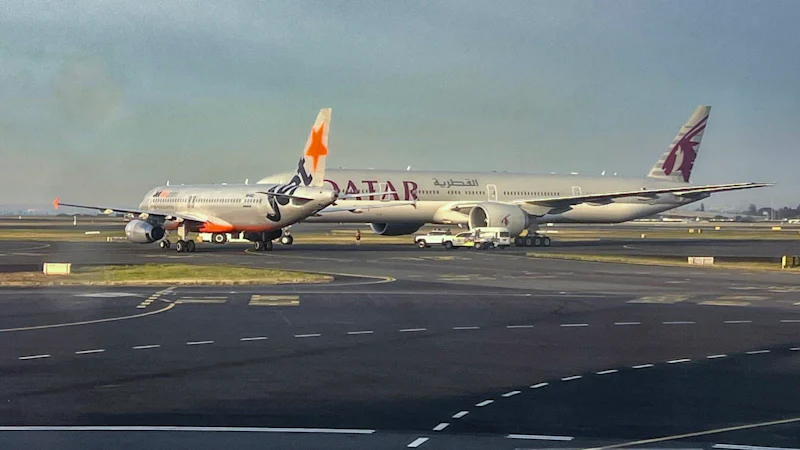
Updated August 10, 2026 — 3:50pm,first published August 10, 2026 — 9:38amTwo airport workers have been stood down and the chief of Australia’s air traffic control agency has been warned that delays at Sydney Airport have become “unacceptable” as investigators probe the second near-collision between planes on the tarmac in the past two weeks.But passengers, who have had to deal with the delays caused by a shortage of air traffic controllers, will have to wait weeks before a new roster comes into effect in September that Airservices Australia hopes will improve reliability.A Jetstar plane and a Qatar Airways plane on the runway at Sydney Airport on Sunday morning.Nine NewsAn air traffic controller and a ground worker involved in an incident on Sunday have been stood down under their employers’ policies while authorities determine how a Jetstar plane got within metres of striking a Qatar jet.The stand-downs, which are common after an incident, come as Transport Minister Catherine King criticised the delays and disruptions after meeting with Airservices Australia chief executive Rob Sharp.“The delays and disruptions we have seen at Sydney Airport over the last three days have been unacceptable and have caused significant disruption to passengers, staff and airlines,” King said.Airservices committed to implementing “improved rostering practices” for Sydney’s air traffic controllers that will be in place from early September, King said.“I have made my expectations clear that Airservices must carefully manage the situation at Sydney for the rest of August,” she said.Sharp apologised for the impact “on flight delays” and the effect that has on people’s travel plans.“I want to assure the public that safety is not compromised when issues with staffing levels occur,” he said, noting that safety measures can lead to flight delays.The Sunday near miss came just weeks after a similar incident in which planes had been given contradictory instructions by controllers at Sydney Airport. The Australian Transport Safety Bureau is now investigating. Its chief commissioner, Angus Mitchell, said the incident occurred at low speed but still had the potential to be “very significant”.“Those two aircraft should not have come as close as they did,” he said on Seven’s Sunrise. He would not prejudge his organisation’s investigation, but signalled that the traffic control system had been under significant stress.Airservices has repeatedly reduced flight frequencies at Sydney Airport over the past week due to shortages of air traffic controllers, leading to major delays.One former Airservices controller told this masthead: “This seems to happen a couple of times a year where...staffing issues directly impact their ability to handle flow.“So you might have one controller working two positions and to manage that, they have to slow down departures/arrivals.”Adding to the difficulty, it can take about 18 months to train a new controller to manage a specific piece of airspace or part of the airport. Airservices has been dogged by capacity since a mass retirement of controllers in 2021, as COVID shut down the aviation sector. Aviation safety specialist Geoff Dell said a shortage of air traffic controllers risked reducing “redundancy” in the system to deal with incidents.“The reality is that if they are short people, it puts stress on the service, and it puts stress on the individuals,” said Dell, a former airport operations safety manager for Qantas.“If you have a lot of aircraft on the ground because of delays, it becomes a chessboard trying to shuffle them around so you don’t have them conflicting where one aircraft is closer than it should be.”Sydney Airport has about 70 aircraft coming and going every hour during morning and evening peak periods, putting it near the cap of 80 an hour. A further five movements are permitted to help the airport recover from cascading delays caused by bad weather or other disruptions.NSW Premier Chris Minns expressed concern that the major disruptions at the airport could affect Sydney’s reputation as a global city.“The onus is on everybody associated with the airport to get it done [to resolve the situation] ASAP,” he said.The airlines’ peak body said it had repeatedly raised the performance issues with Airservices.“Airservices Australia management needs to provide greater transparency about the causes of these ongoing disruptions and, importantly, set out a credible plan to immediately resolve them,” Airlines for Australia and New Zealand chief executive Stephen Beckett said.“These operational disruptions are now occurring multiple times a week.”Australian Travel Industry Association chief executive Dean Long said the number of delays caused by Airservices had jumped in comparison to the period before the COVID pandemic.Long said that the rest of the travel sector had restored performance since the pandemic, but “Airservices, for whatever reason, does seem to be really struggling to get their performance where it needs to be”.The Business Briefing newsletter delivers major stories, exclusive coverage and expert opinion. Sign up to get it every weekday morning.Chris Zappone is a senior reporter covering aviation and business. He is former digital foreign editor.Connect via X, Facebook or email.Matt O'Sullivan is transport and infrastructure editor at The Sydney Morning Herald.Connect via X or email.From our partners
‘Unacceptable’: Air traffic agency warned over Sydney airport chaos
There have been days of delays at the airport and two near misses within a fortnight after planes were given contradictory instructions by air traffic controllers.
834 words~4 min read