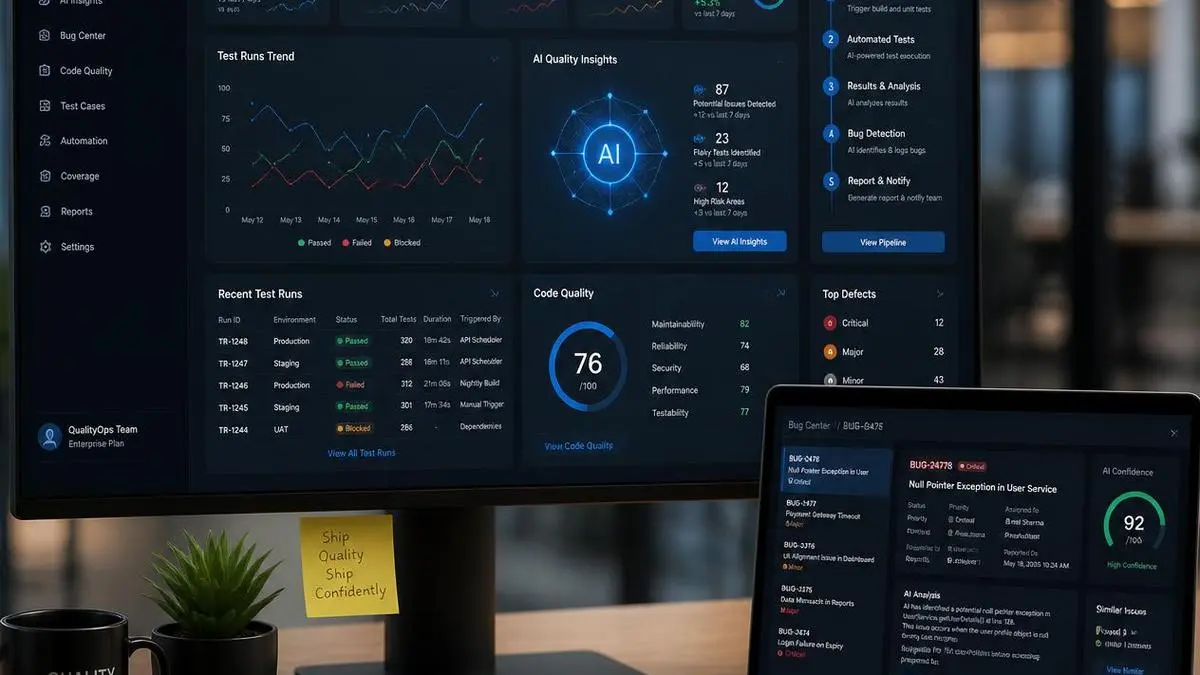
The rapid adoption of AI coding tools is increasing the volume of machine-generated software, creating fresh challenges around testing, reliability and accountability while opening new opportunities for quality engineers.
The rapid adoption of artificial intelligence (AI) in software development is creating a new challenge of ensuring that code generated by machines actually works as intended for clients.AI systems can generate multiple responses to the same input, with some responses potentially correct. AI is also challenging a fundamental assumption underlying conventional software testing that identical inputs should produce identical outputs.Testing AI-generated codeTestMu AI aims to address this challenge with its AI-powered testing tools. Its KaneAI test agent can create and maintain tests from plain-language specifications rather than traditional scripts.The company’s Kane CLI tool brings the testing agent into the developer’s terminal. It records the autonomous test process, enabling engineers to review the decision-making behind a test result.Mudit Singh, co-founder and head of growth at TestMu AI, notes that while repetitive test-writing tasks are increasingly automated, engineers need to define correct system behaviour and build assurance frameworks for AI agents, particularly in regulated industries such as banking.AI is expected to change rather than eliminate quality engineering jobs, he said.India’s large pool of quality engineering talent could benefit from the shift if companies invest in reskilling, he said.Quality engineering jobs in focusSingh said the biggest risk was not software that visibly failed, but code that appeared to work while quietly producing incorrect outcomes. The issues will be discussed at TestMu Conference 2026, a free online event scheduled from August 19 to 21.By 2028, 90 per cent of enterprise software engineers will use AI code assistants, up from less than 14 per cent in early 2024, according to Gartner. The research firm has separately forecast a 25-fold increase in software defects by 2028, driven partly by the use of prompt-to-app tools by citizen developers.The rise of ‘validation debt’The growing gap between the volume of AI-generated code and the industry’s ability to verify it is creating “validation debt”, said Singh.“Everyone is focused on how fast AI can write code. Very few are asking who is checking it,” he added.Published on August 10, 2026