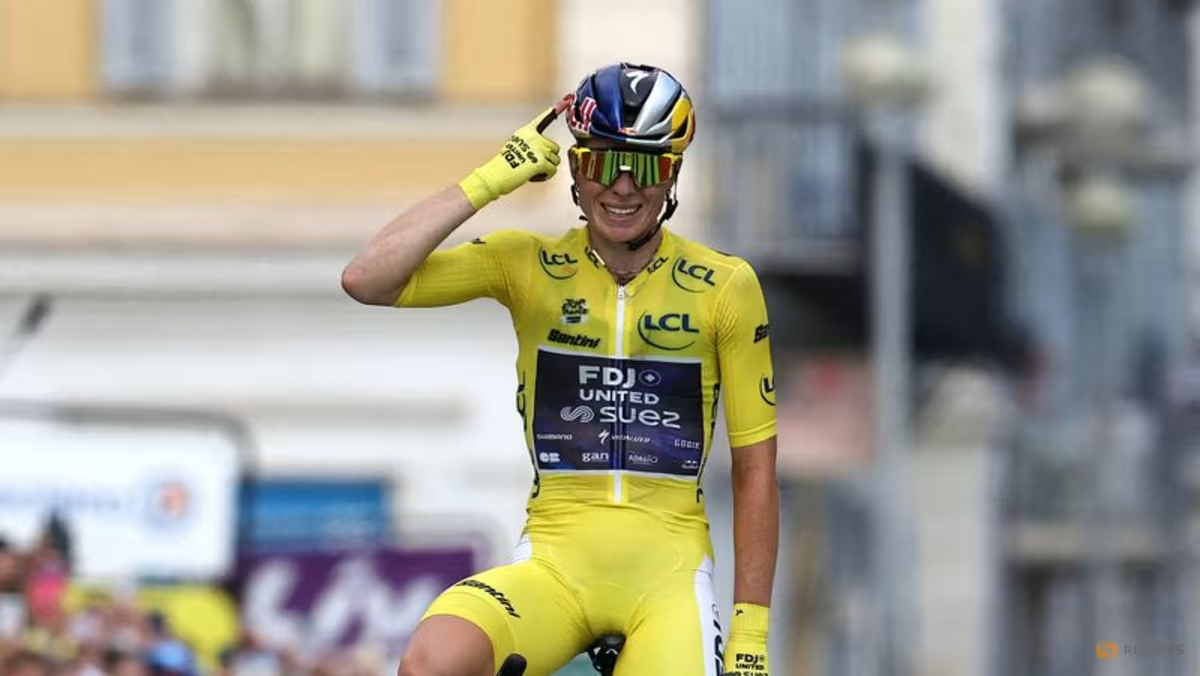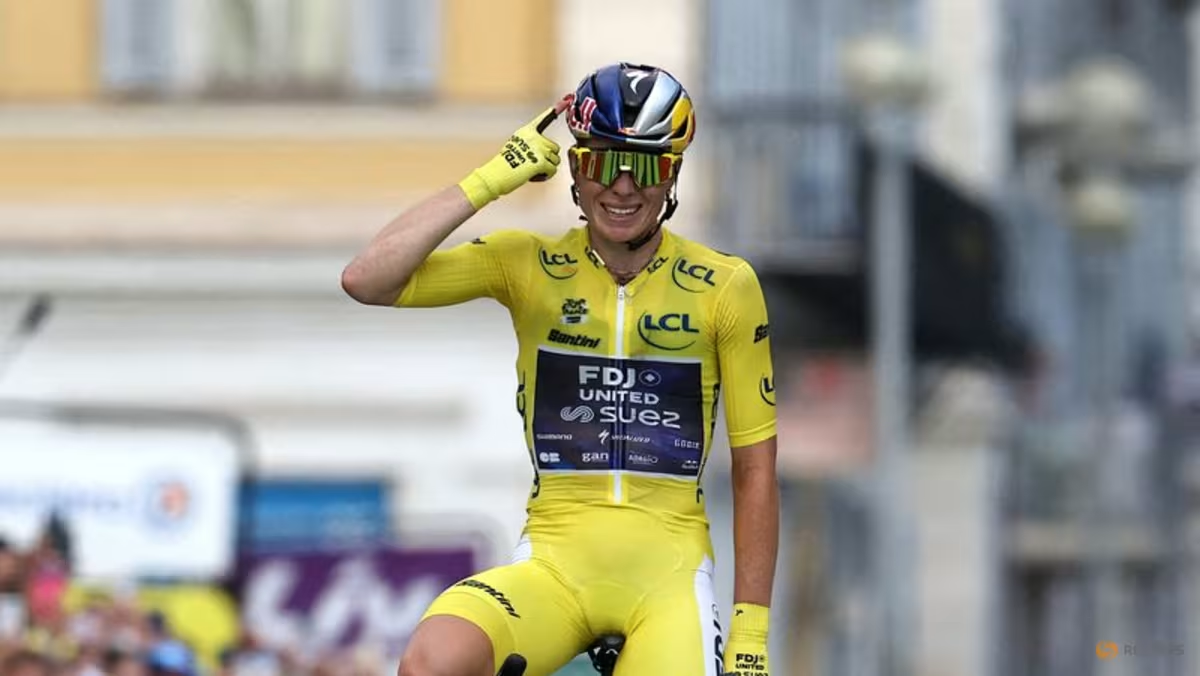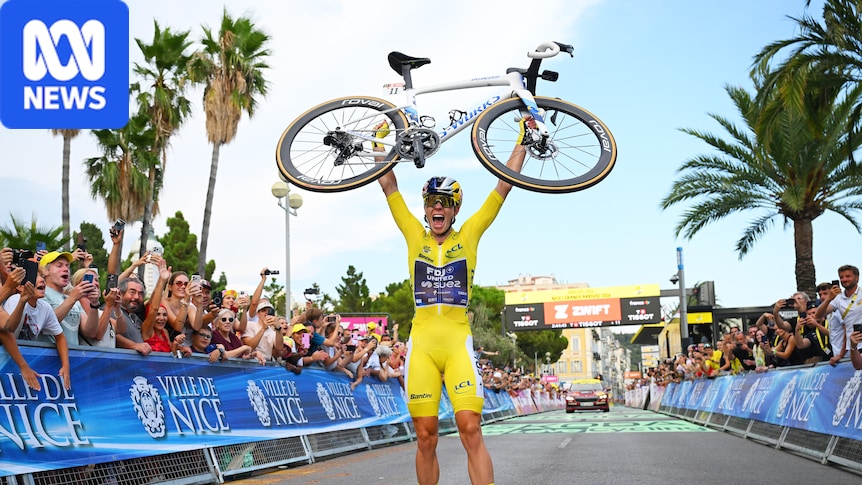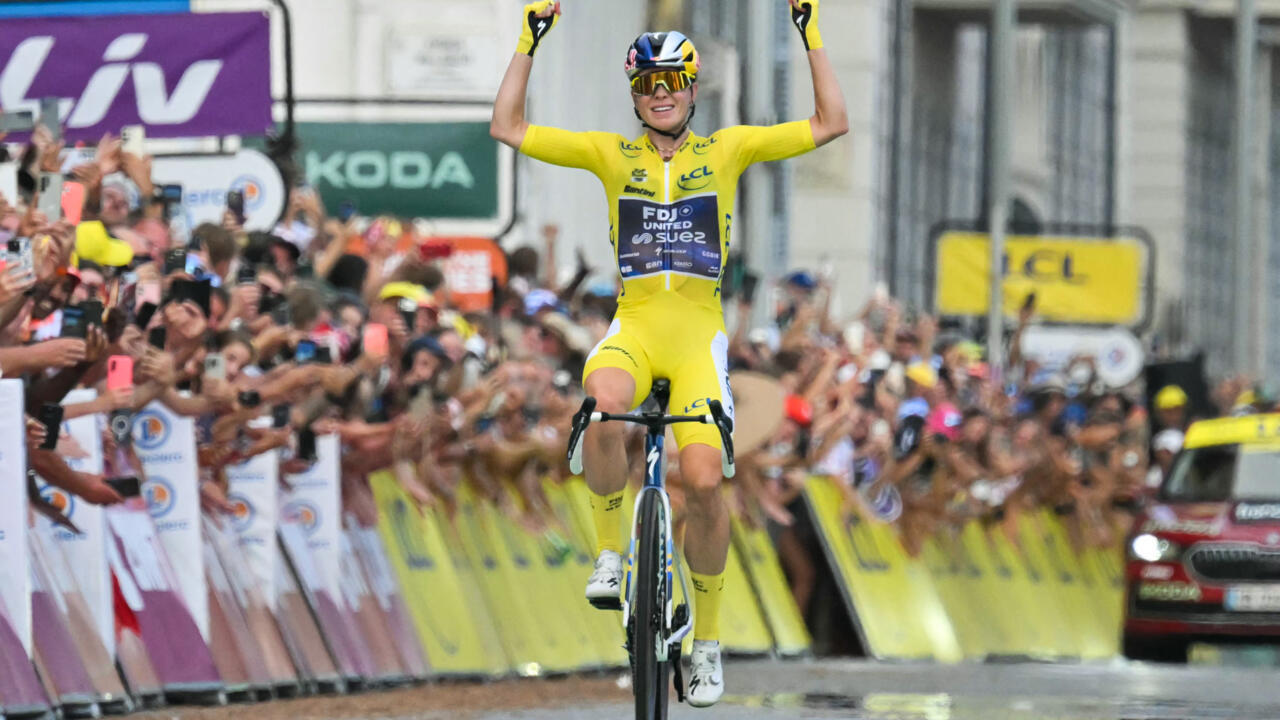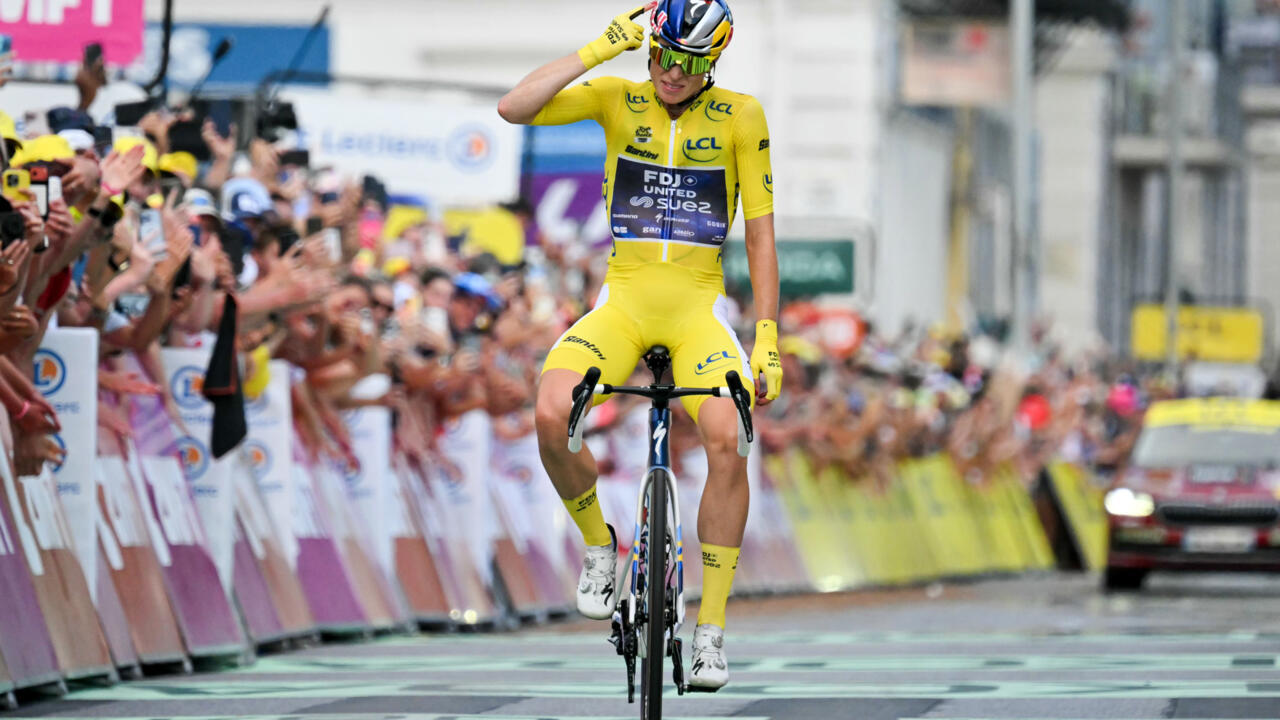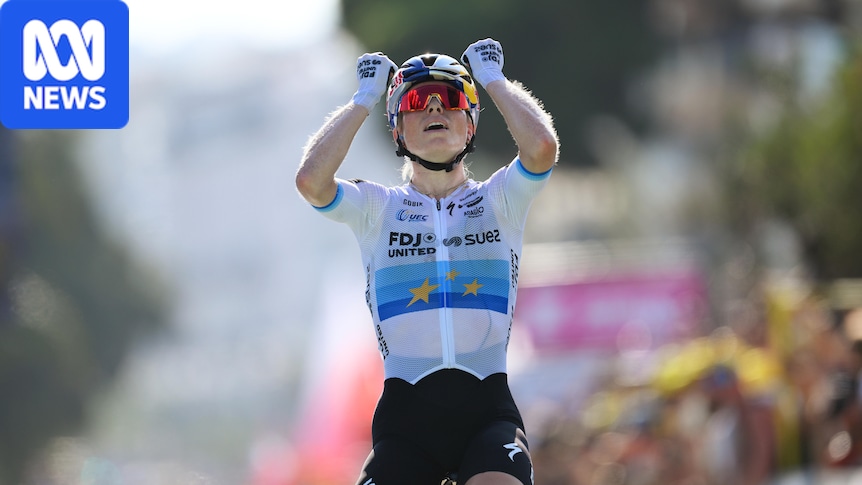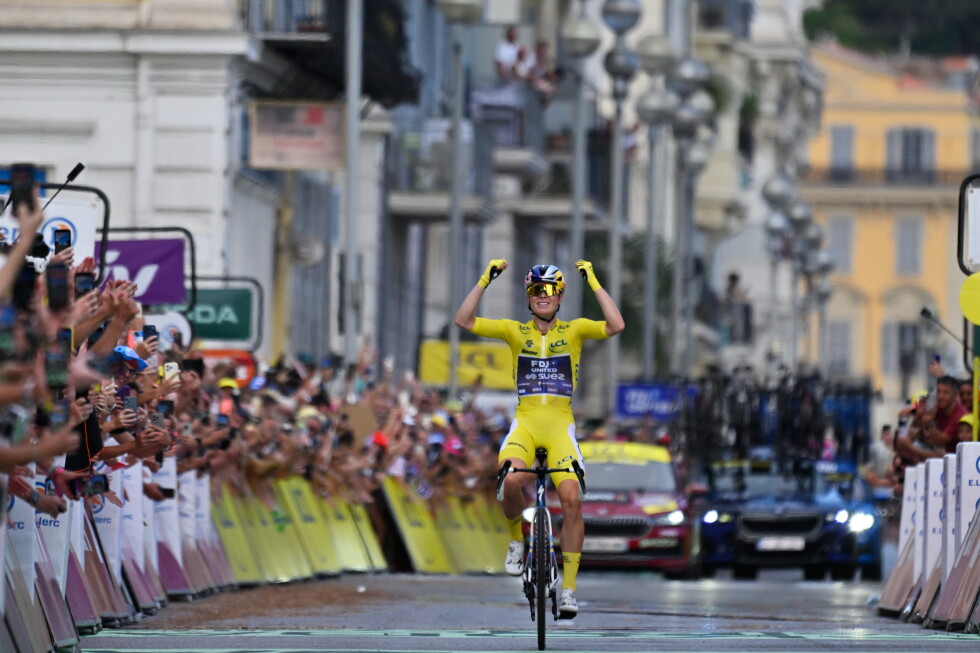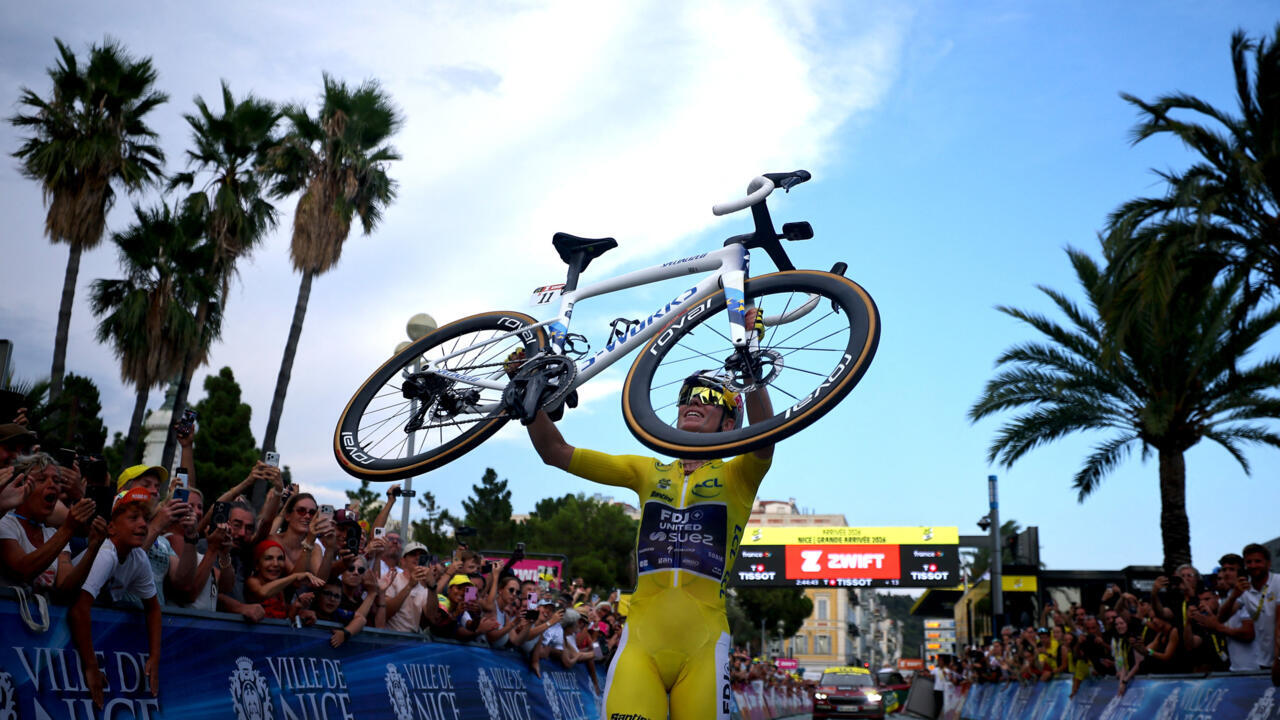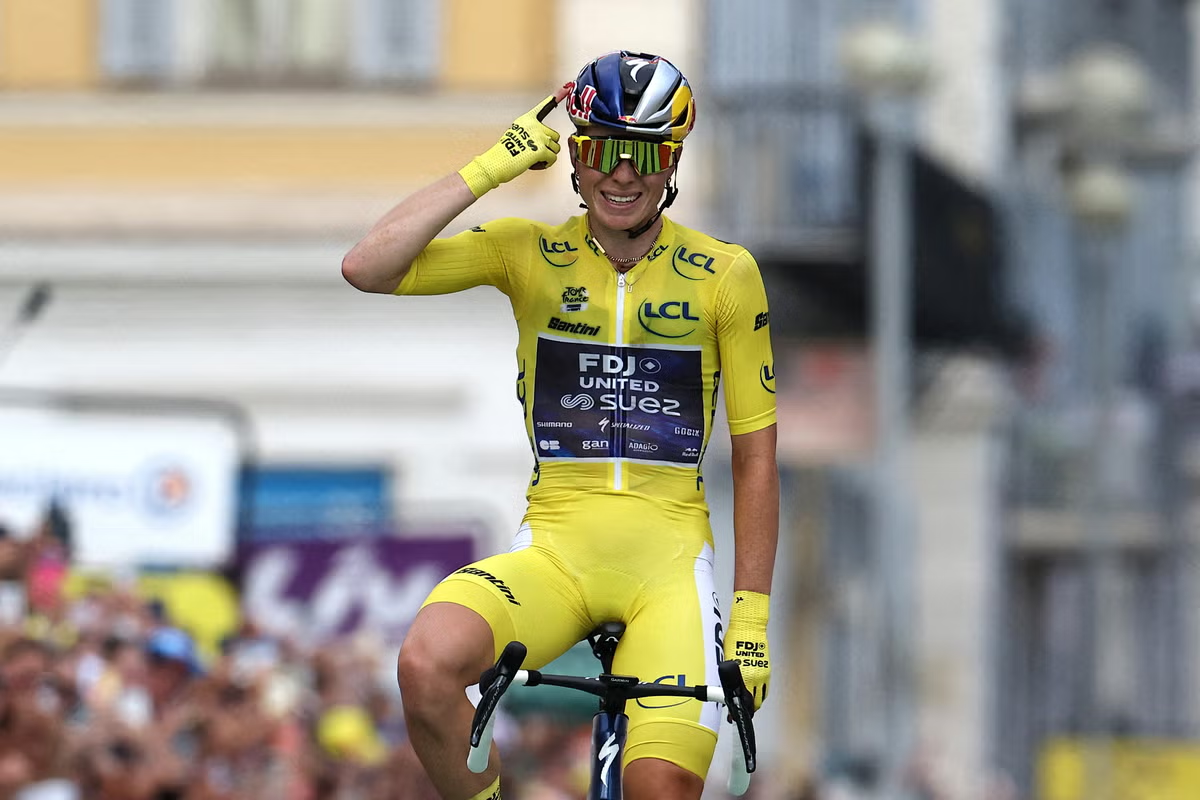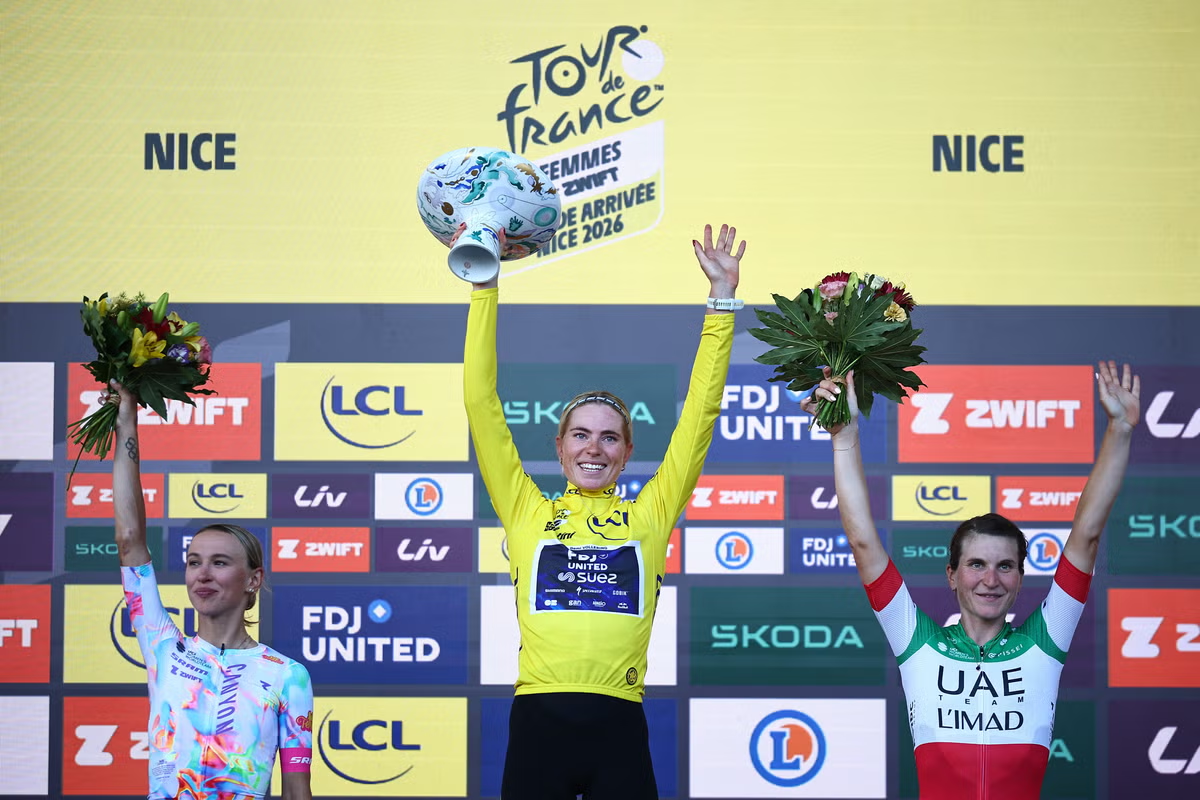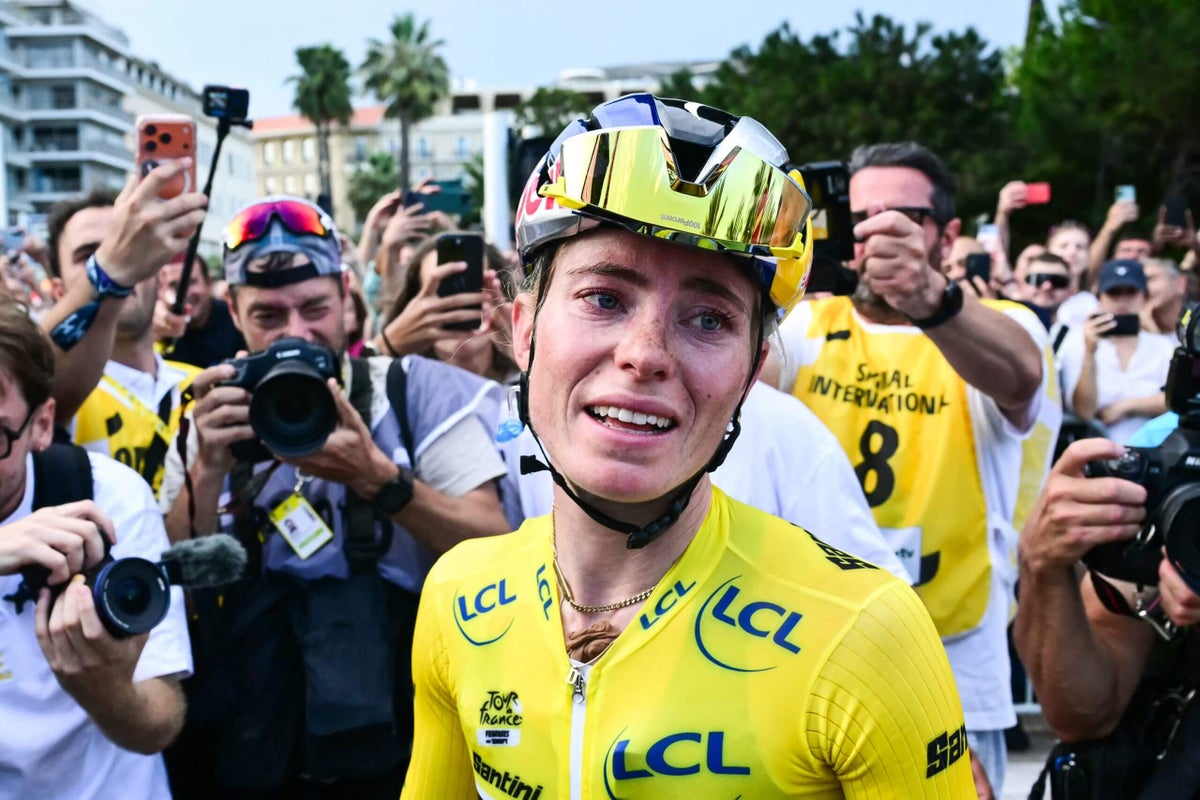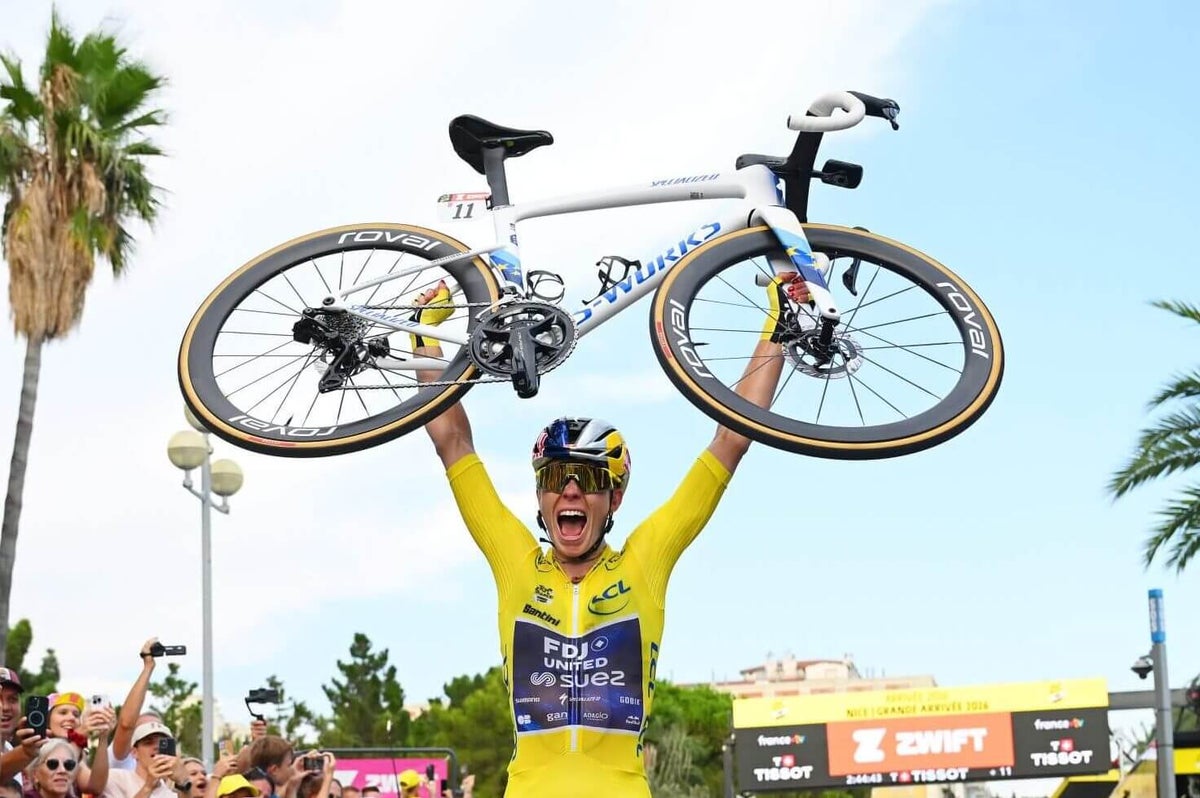
Demi Vollering lifts her bike above her head in delight.She has just crossed the line to win her second Tour de France Femmes title in Nice, doing so in the yellow jersey without her competitors in sight.Back at the FDJ United Suez bus, the team were donning special jerseys of their own. In between a cacophony of horn beeps, high-fives and hugs the staff members were changing into custom-made winners T-shirts with yellow embroidery.For the French team, the nine days of racing ended in elation but likely also relief. While an emphatic win, with Vollering eventually carving out a 1 minute 18 second lead over her opponents, it had no shortage of challenges along the way.This is how FDJ won an electrifying edition of the biggest race of the year.“If we want to win the yellow, we need to be 100 per cent dedicated, we need to accept to suffer a lot.”After the Tour’s penultimate stage on Saturday — in which Vollering moved into the leader’s jersey for the first time — Stephen Delcourt, the team’s general manager and CEO came out fighting. FDJ Suez were going all in for the final stage.Even before the start line in Lausanne, for the first of nine stages across Switzerland and France, the French team stood up to be counted. Each rider arrived at the team presentation with a Red Bull helmet, revealing a new major partnership.Given the energy drink company’s extensive sporting network, including across the men’s peloton — owning team Red Bull-Bora-Hansgrohe and sponsoring Tom Pidcock — their financial backing could prove invaluable for the team’s progression.On the bike, Vollering was already attacking. In a stage destined for Lorena Wiebes, the 29-year-old attacked in the final kilometers, reflecting on Sunday she had felt “good feelings already”.Demi Vollering attacking during stage eight on Saturday. (Tim de Waele / Getty Images)The ambition was clear, but almost immediately they were threatened with a roadblock. Riders emerged to speak to the media with surgical masks on, and a staff member told The Athletic they were not allowed to shake hands.Illness had struck.“We were not lucky,” Delcourt said to TNT Sports after the final stage. “At the beginning of the Tour de France, we fell one rider sick, another rider sick, third rider sick, everybody in a single room.”One of the major challenges in a grand tour is staying healthy. With riders in close proximity a bug can easily spread — such as the one which afflicted UAE Team Emirates in the men’s Tour.FDJ Suez were a man down after an ill staff member had left to go home with a fever, while their riders were struggling with the same stomach virus. The measures taken by the French team were strict but effective as Vollering lived to compete another day — taking third in the individual time trial on day four.The return of the ITT was the first signal of an evolved route, one this year that demanded the GC favourites to be able to compete on a wider variety of terrains.It was the perfect balance for Vollering, who won four times in the punchier one-day spring season — proving her abilities as one of the most powerful riders.The route also eliminated one of the Dutchwoman’s biggest rivals, last year’s winner Pauline Ferrand-Prévot. The Frenchwoman had beaten Vollering emphatically on the Col de la Madeleine but the ITT and first truly hilly stage left her an insurmountable five minutes behind.Pauline Ferrand-Prévot during the fourth stage. (Nicolas Tucat / AFP via Getty Images)Looking back, that fifth stage was the changing of the guard. As Ferrand-Prévot told reporters her title defence was “over”, Vollering was double fist-pumping a first stage win.Despite her winning form heading into the Tour, Delcourt said it was the races Vollering didn’t attend that made the difference.“We decided to stop a lot of races and to delay a lot of dreams for Demi,” he said. “ It’s really not easy because when we decide, for example, you will not participate in the Tour de Suisse at home, you won’t go to the national (championship).“I really hate me when I call the coach to say she needs time at home and she needs to arrive fresh mentally for the training camp in Tignes. We changed things like this.”Beyond Vollering’s own strength, what really animated the race was the quality of competition, sweetly demonstrated by the historic first ascent of Mont Ventoux.FDJ Suez’s relationship with Canyon-SRAM, crucially the rivalry between Vollering and Kasia Niewiadoma-Phinney, evolved into the race’s engine — driving whirlwind performances that swept the peloton with them. The pair’s rivalry had been fostered since the 2024 Tour de France Femmes, in which the Pole won on the final day by only four seconds after Vollering was involved in a crash earlier in the race.Entering stage seven, Marlen Reusser had been in yellow since her ITT win. Only 12 seconds ahead of Vollering, the pair were preoccupied with each other, drawing themselves into a Tour-defining error — they disregarded Niewiadoma-Phinney.The Pole unleashed a phenomenal ride up Ventoux, capitalizing on her rivals’ hesitation to win by 1:16 and leapfrog into the yellow jersey.(Nicolas Tucat / AFP via Getty Images)Delcourt called it an “amazing performance for women’s cycling” and “really beautiful,” but behind his composed words before the next stage hid a chaos that had been unleashed the night before.FDJ Suez had been aiming for the yellow jersey since Lausanne and couldn’t hide their frustration at it evading them. With only two stages left to race and 15 seconds to close on a fierce rival — something had to change.The next day the stage profile was engineered towards a breakaway, and there were very few climbs where a GC battle could take place. The route gradually ascended with two categorised climbs in the first half, but the final 95km were largely downhill.“Yesterday (Friday) night I was really a pain in the ass for the sports director and the coach,” Delcourt said. “ I said to them, ‘We need to search something, we need to analyze every meter of the f***ing final’.“I searched all the info about the last steep part because I was thinking that it’s not on the route, but there is something. I called all the people that I know on that, who told me, ‘Oh there is that, it’s dangerous’. I called the organizers to be sure they can guarantee the safety part.“And after I said to the coach, ‘Tell me how we can do this with strategy and data’. We put all in every corner, who we need to be at this place, how many we need to push.”(Nicolas Tucat / AFP via Getty Images)It was a military operation, and the gloves were off. “It was the first time from the beginning that I spoke during the briefing, I told them that I want no limits, I want 100 percent dedication and everything to raise up,” he said. “Because if we stay at these levels, we have no chance to win. That’s it. We need to really, really step up.”And they did. Vollering tested Elisa Longo Borghini and Niewiadoma-Phinney with multiple attacks from 6.7 km out. The pair initially responded, but with 5.5 km to go the Dutchwoman went solo.“But that is Demi Vollering, she needed to (attack) a third time and when she has one meter, two meters, she’s on a mission,” Delcourt said. “You can look at her face, she is not the same. It’s like she has 14 legs.”FDJ Suez had driven themselves into the yellow jersey for the first time, but that was when the rivalry took flight beyond the roads. Niewiadoma-Phinney approached domestique Célia Gery at the finish line to accuse her of boxing her into the barriers, leaving her unable to follow Vollering’s attack.“She (Gery) got a lot of nasty messages, that makes me always very angry, especially because she’s such a young girl still and we should always protect young people,” the FDJ Suez leader said.Enter 2024, as Vollering pulled up a crucial moment in Niewiadoma-Phinney’s Tour de France Femmes win to compare fair play — when the Pole capitalized on the Dutchwoman crashing in the yellow jersey.“Two years ago when I was on the ground in this crash she was the one who pulled full gas with her teammate to the finish line and I never blamed her for that because that’s racing,” Vollering told reporters. “I was very disappointed as well and I also lost in that moment my respect.”If there was not enough action on the roads, the edge provided by the teams’ dispute stoked the final stage’s jeopardy — it had turned personal. Only eight seconds stood between the pair, with Reusser close by at 1:12 down.The Swiss rider, however, crashed on the second of four Col d’Èze descents — ruling her out completely of contention. By Canyon-SRAM’s measure, at least, this changed the stage.“(It was) not good for the race and the tactics, and not for Marlen but also not good for us,” directeur sportif Rolf Aldag said. “We wanted to have a hard race start to finish but the third lap stalled a little bit, UAE (Team L’Imad) was on the podium (with Longo Borghini) so there was no need to make it hard to drop somebody because Marlen — who deserved a spot on the podium — was not there anymore.”After a side-by-side attack and defence between the remaining top two contenders, Vollering pounced and Niewiadoma was relegated to the chase group — one of the most compelling Tours de France Femmes was over.(Nicolas Tucat / AFP via Getty Images)Vollering said during the week she wanted to write a “beautiful story”. Bringing a yellow jersey to a French team, it doesn’t get much better than that.
How Demi Vollering won the Tour de France Femmes: ‘It’s like she has 14 legs’
Vollering said she wanted to write a "beautiful story". Bringing a yellow jersey to a French team, it doesn't get much better than that
1,695 words~8 min read