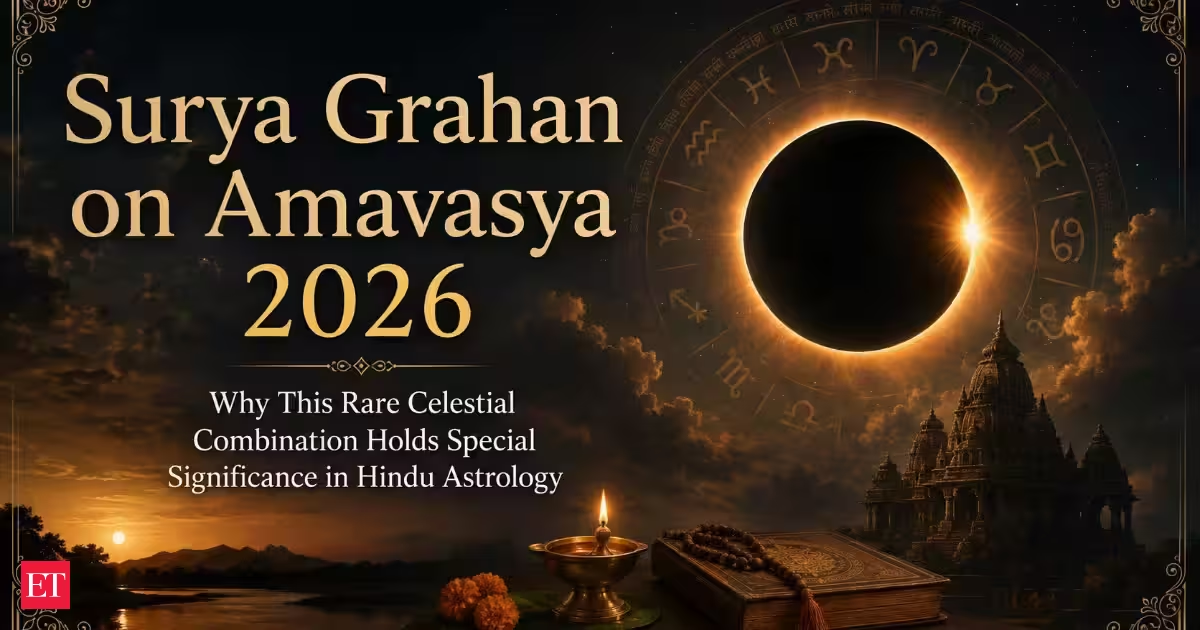
SynopsisOn August 12, 2026, a remarkable solar eclipse will take place, coinciding with the Amavasya phase. This unique alignment of the Sun and Moon is particularly significant in Hindu astrology, symbolizing transformation. The interplay of the eclipse with Amavasya and lunar nodes indicates a cycle of endings and fresh starts. Astrologers view this time as ideal for introspection and meaningful personal evolution, signaling profound spiritual shifts.ET OnlineSurya Grahan on Amavasya 2026 brings together the symbolism of a solar eclipse and the New Moon in Hindu astrology (AI Image)A powerful Solar Eclipse will occur on Amavasya in August 2026, creating a rare Sun–Moon alignment that holds deep significance in Hindu astrology. Here’s what the combination means, who may feel its effects and what traditions recommend during this period.The Surya Grahan (Solar Eclipse) of 2026 will take place on August 12, 2026, coinciding with Amavasya, the New Moon day in the Hindu lunar calendar. Astronomically, a solar eclipse can only occur around the New Moon because the Sun and Moon must align closely enough for the Moon to pass between Earth and the Sun. In Hindu astrology, however, this alignment is considered much more significant because Amavasya itself is traditionally associated with endings, introspection and spiritual practices.When Amavasya coincides with a Surya Grahan, astrologers often interpret the period as an intensified time for transformation, closure and new beginnings. The eclipse is also connected with the lunar nodes Rahu and Ketu, which are considered important karmic influences in Vedic astrology.Also Read: How to Prepare for the Solar Eclipse 2026: Astrological Rituals, Do's & Don'ts Before the Year's Most Anticipated Cosmic EventWhy Is the Combination Considered Powerful?The significance comes from the convergence of three symbolic factors:Amavasya: completion and closure of a lunar cycleSurya Grahan: temporary obscuring of solar energyRahu/Ketu influence: karmic transformation and unexpected developmentsTogether, these themes can make the period particularly important for reflection and reassessment, according to Hindu astrological traditions.Quick DetailsDetailInformationSurya Grahan 2026 DateAugust 12, 2026DayWednesdayEclipse TypeTotal Solar EclipsePeak/TotalityLess than 2.5 minutesMain PathGreenland, Iceland, northern Russia, Spain, PortugalIndia VisibilityNot visible across most of IndiaSutak in IndiaGenerally not applicable if the eclipse is not visibleAstrological ThemeTransformation, identity, new beginningsAlso Read: A Rare Cosmic Alignment Is Coming on 12 August, 2026 - Here's Why Skywatchers Around the World Are ExcitedWhy Surya Grahan on Amavasya May Feel Like a ResetOne of the strongest interpretations of this combination is the idea of a cosmic reset. Amavasya marks the end of a lunar cycle. The solar eclipse temporarily obscures the Sun. Symbolically, this creates a sequence:Closure → Darkness → Reflection → Transformation → New BeginningThis is why astrologers may recommend using the eclipse period for reflection rather than making impulsive decisions. The emphasis is less on predicting a specific event and more on recognising which areas of life may be ready for change.FAQsWhen is the Surya Grahan in 2026? The Surya Grahan 2026 will occur on August 12, 2026, and it coincides with Amavasya, or the New Moon day.Why is the August 12, 2026 solar eclipse significant? The eclipse is considered significant in Hindu astrology because it coincides with Amavasya, creating a powerful Sun–Moon alignment associated with closure, transformation and new beginnings.Is the August 12, 2026 solar eclipse visible in India? The total solar eclipse will not be visible across most of India. Therefore, its astronomical visibility and traditional observances such as Sutak may differ from locations where the eclipse is visible.Will Sutak Kaal apply in India for the 2026 solar eclipse? According to traditional practices, Sutak is generally considered applicable when an eclipse is visible at a particular location. Since the August 12 eclipse is not visible across most of India, Sutak observance may generally not apply there.Disclaimer Statement: This content is authored by a 3rd party. The views expressed here are that of the respective authors/ entities and do not represent the views of Economic Times (ET). ET does not guarantee, vouch for or endorse any of its contents nor is responsible for them in any manner whatsoever. Please take all steps necessary to ascertain that any information and content provided is correct, updated, and verified. ET hereby disclaims any and all warranties, express or implied, relating to the report and any content therein.Read More News onRead More News on
Surya Grahan on Amavasya 2026: August 12 Significance
Surya Grahan on Amavasya 2026 falls on August 12. Know its Hindu astrology significance, spiritual meaning, effects and traditions.
705 words~3 min read