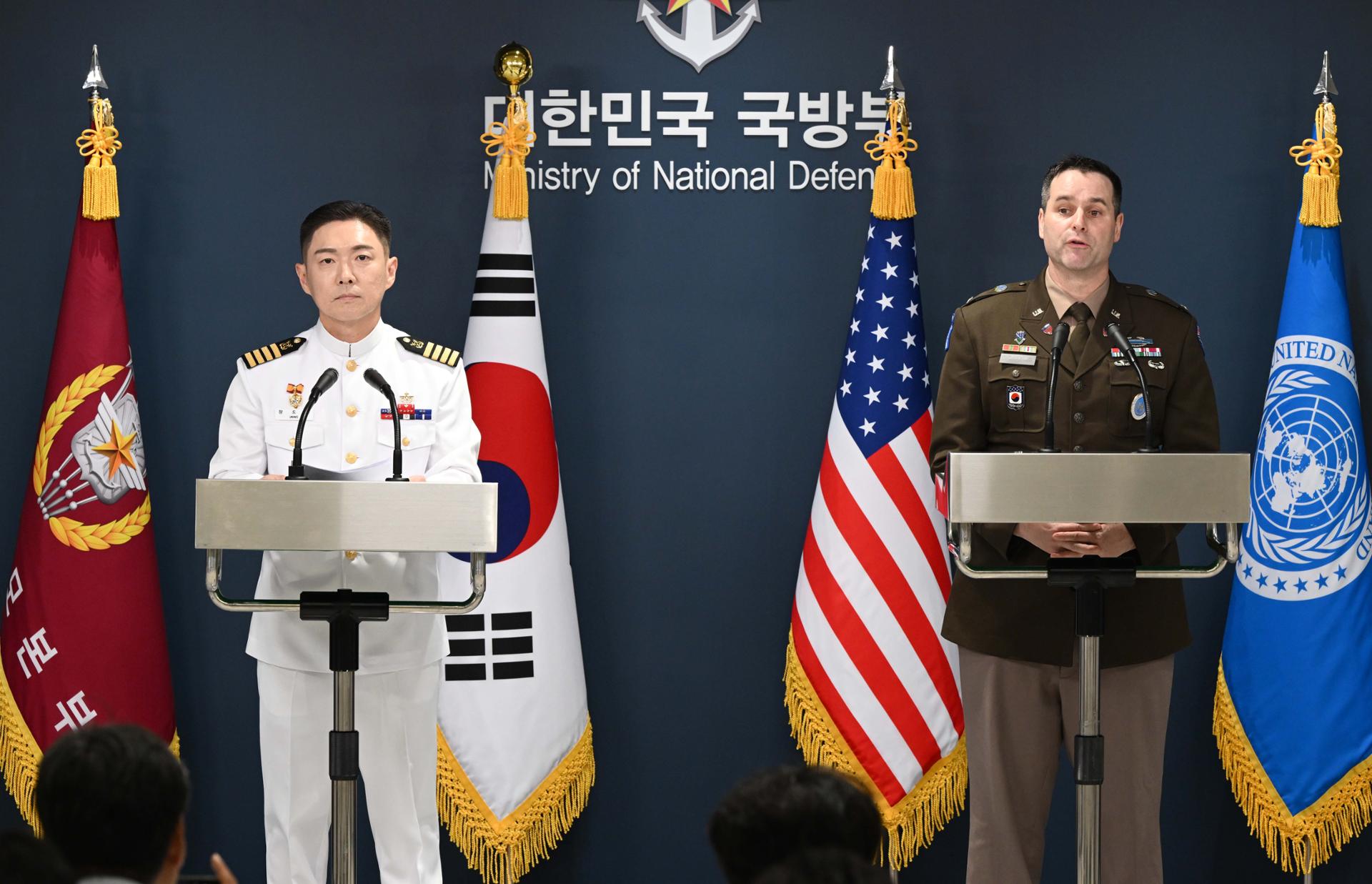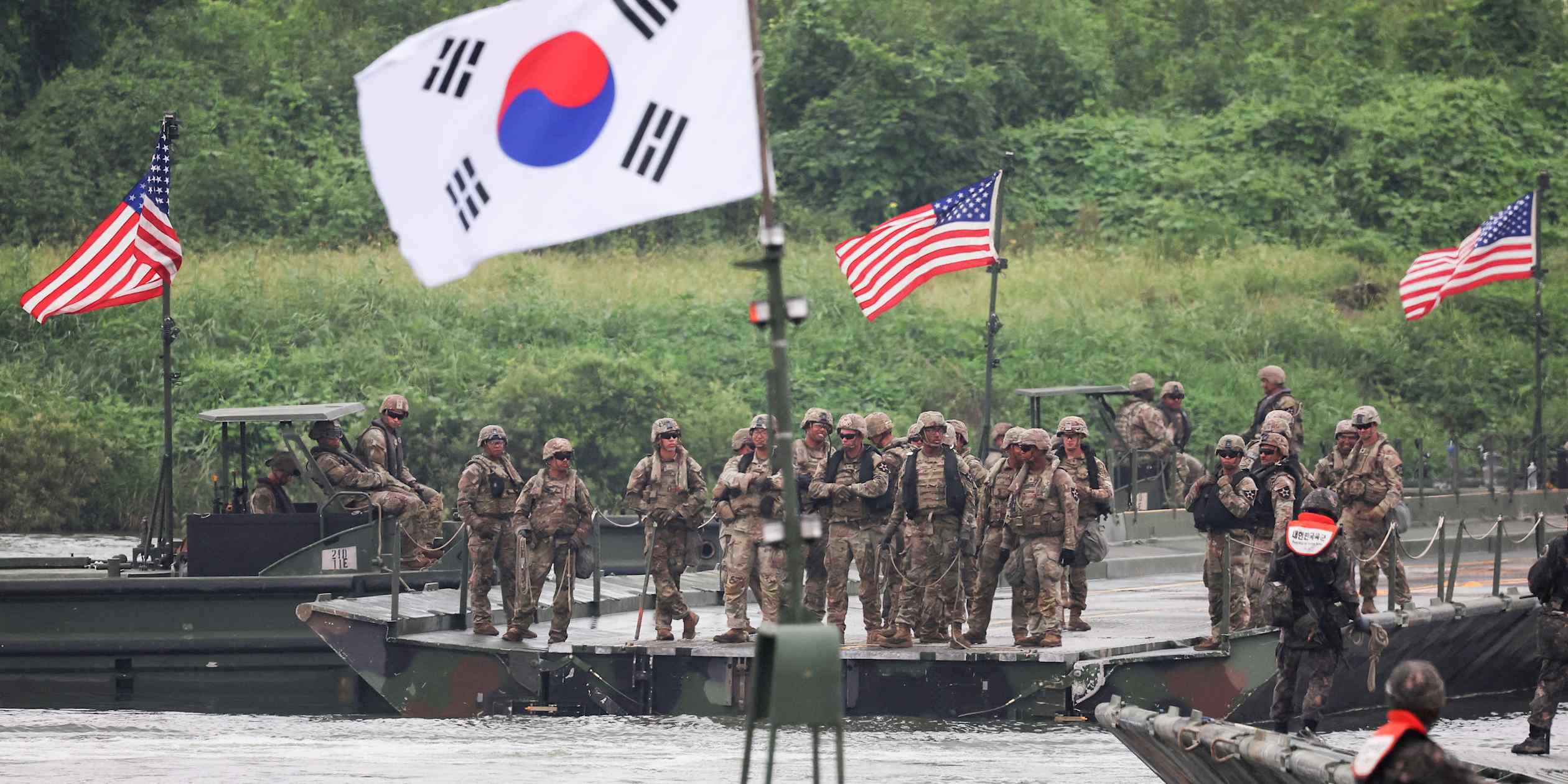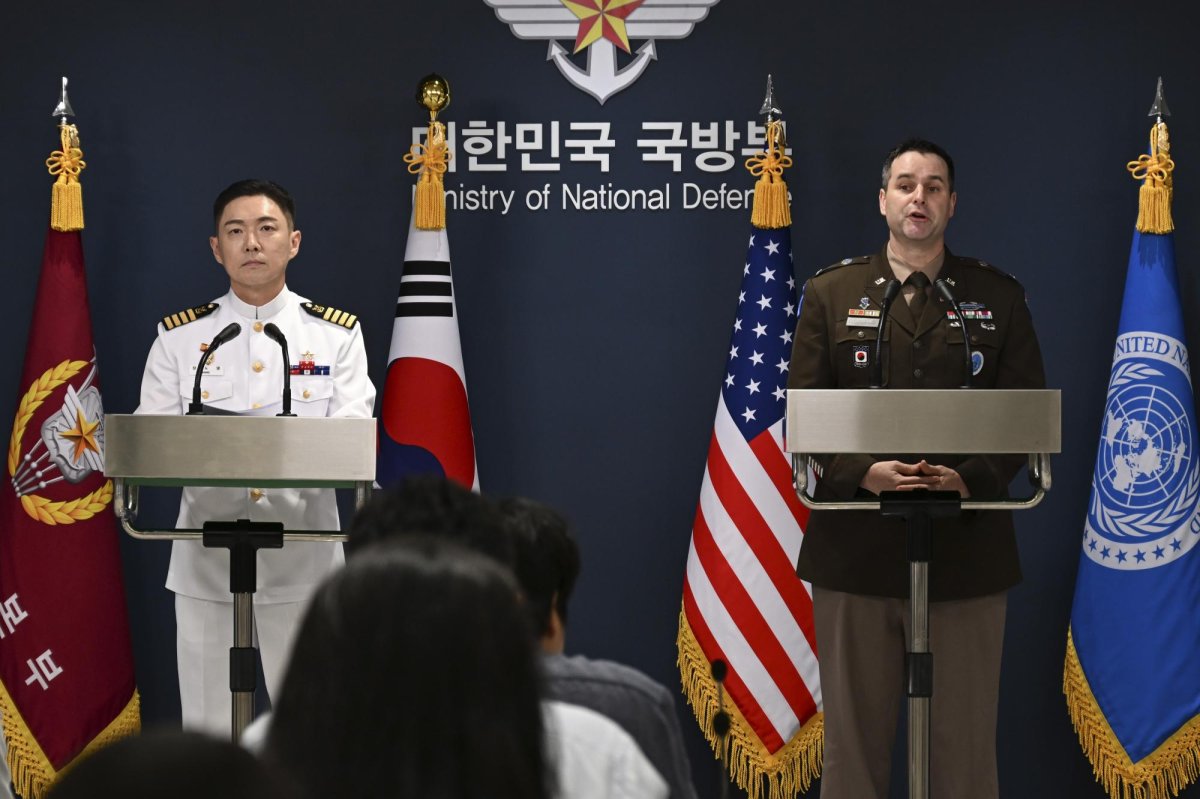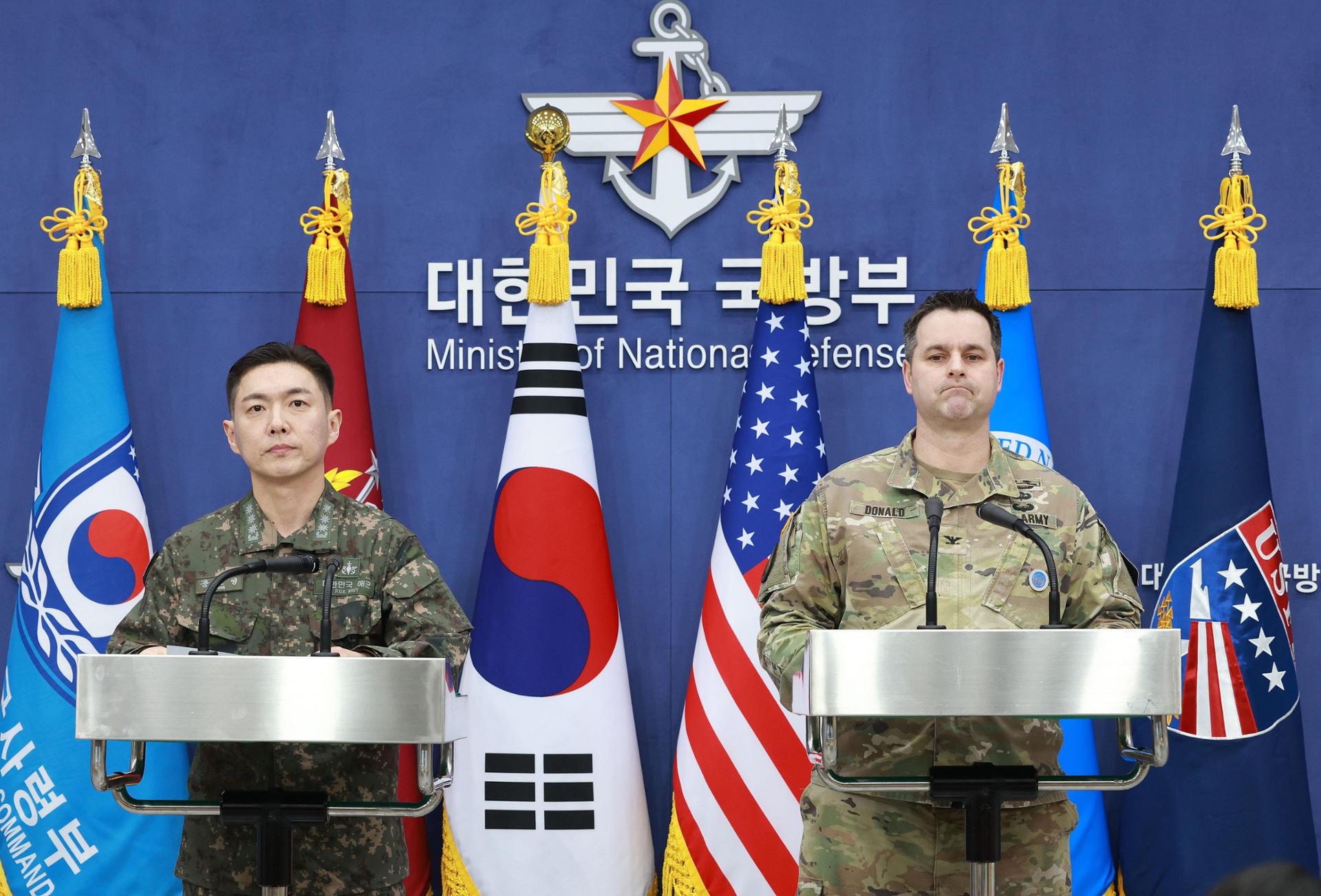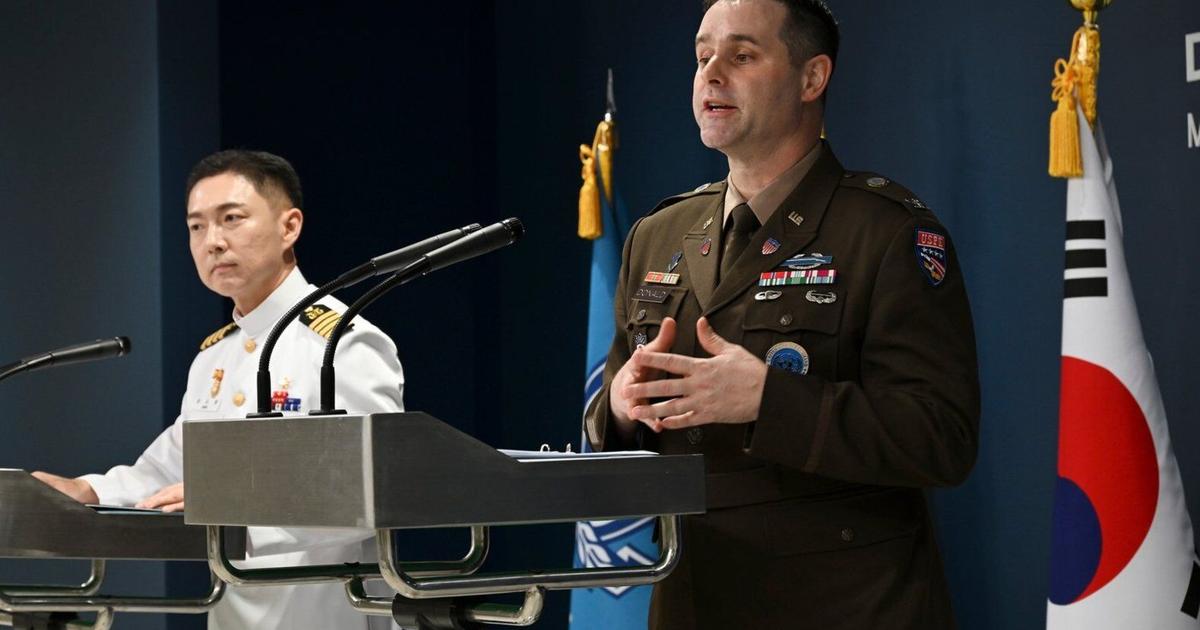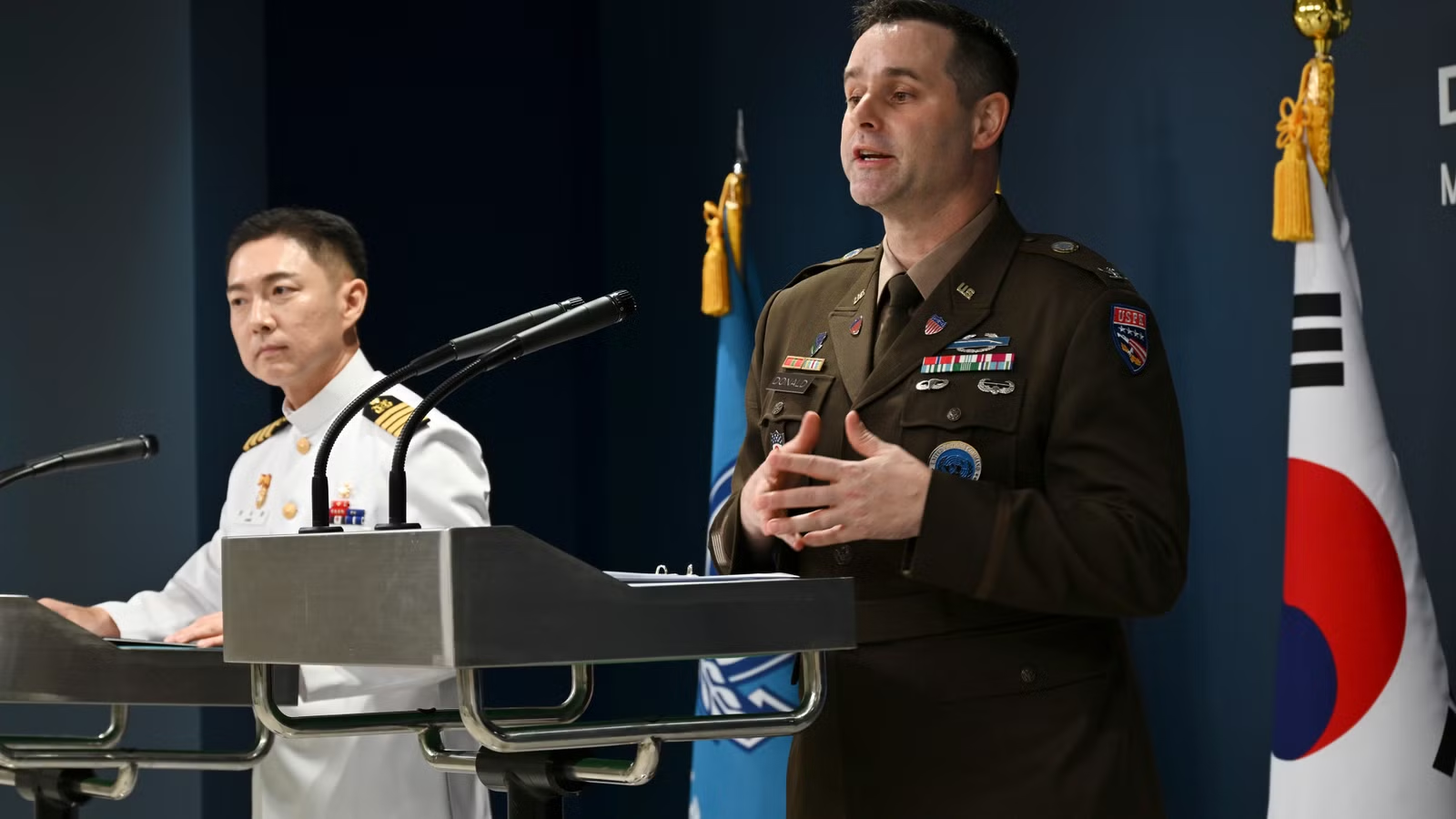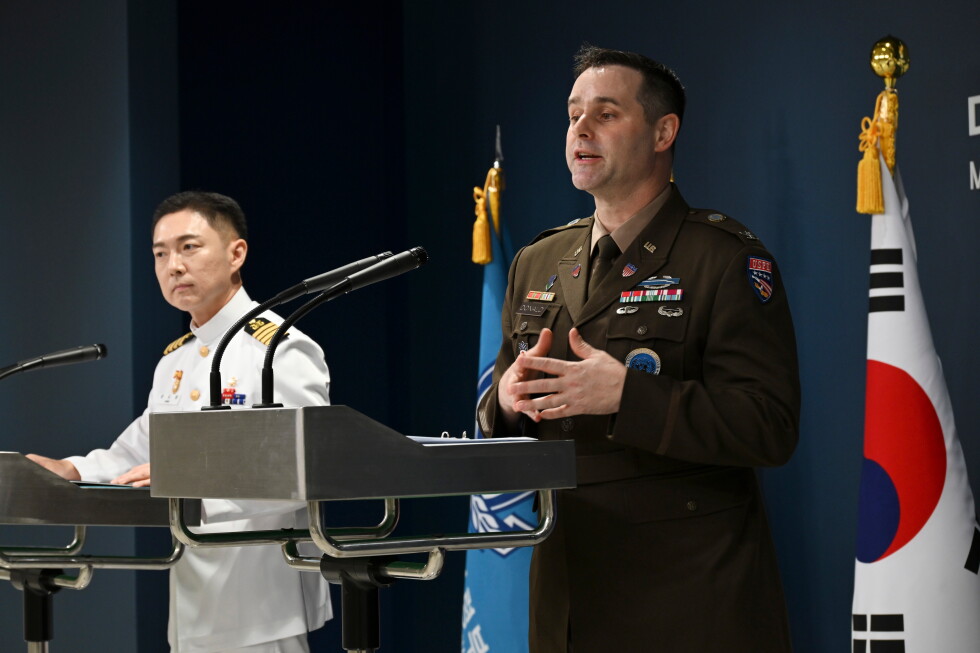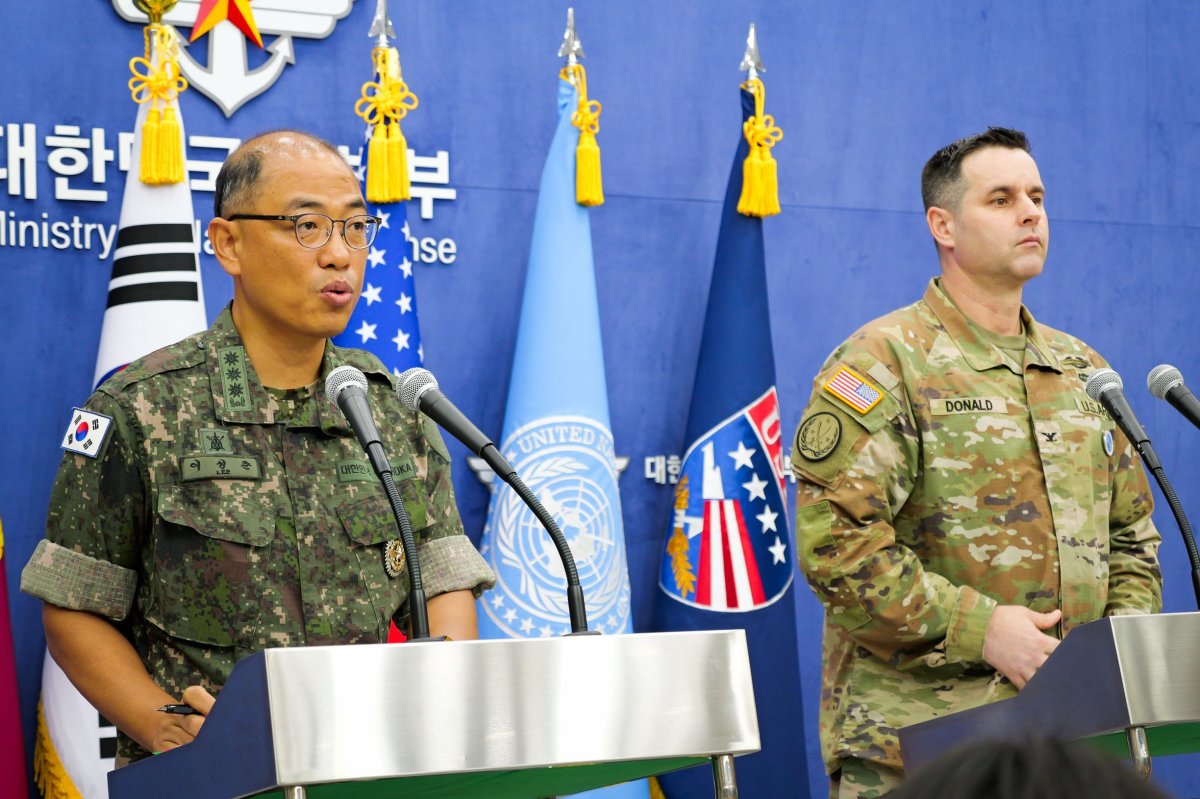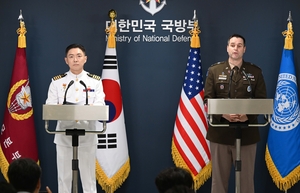
Navy Capt. Jang Do-young (left), spokesperson for South Korea's Joint Chiefs of Staff, speaks alongside Col. Ryan Donald, director of public affairs for US Forces Korea, during a joint South Korea-US briefing on the Ulchi Freedom Shield exercise at the Defense Ministry in Yongsan-gu, Seoul, Monday. (Joint Press Corps via Yonhap) South Korea and the United States will conduct their annual Ulchi Freedom Shield exercise from Aug. 17-27 to strengthen their defense posture against potential contingencies on the Korean Peninsula, the allies announced at a press conference Monday.South Korea's Joint Chiefs of Staff and the South Korea-US Combined Forces Command announced the schedule for this year's UFS, describing it as an "annual exercise of a defensive nature."The exercise will incorporate realistic scenarios reflecting lessons drawn from recent conflicts and aims to strengthen the allies' defense posture through combined and joint multidomain operations, they said.During UFS, the allies will also conduct Warrior Shield field training exercises linked to command post exercise scenarios to enhance realism and combat readiness.South Korea and the US plan to conduct 14 combined field training events at the battalion level or above during the UFS period, according to military officials.The figure is slightly lower than last year's UFS, which held 17 combined field exercises at the battalion level or above and 22 exercises at the company level or above.During the previous Yoon Suk Yeol administration, the allies tended to concentrate combined field exercises around the Freedom Shield and UFS periods. Under the Lee Jae Myung administration, however, such drills have increasingly been distributed throughout the year."We are conducting combined field training exercises at the battalion level or above in a balanced manner throughout the year," a JCS official said."The exercises were closely coordinated between South Korea and the US from the planning stage, and during UFS we plan to focus on essential training linked to the exercise scenarios."The allies said UFS will also support government ministries' wartime preparedness exercises and field drills aimed at establishing a national emergency response posture and protecting public safety.The efforts are intended to strengthen the government's ability to conduct a whole-of-government national defense response during wartime, they added.FOC absent from statementThe allies said the exercise would provide an opportunity to "continue preparations for the conditions-based transition of wartime operational control agreed upon by South Korea and the United States."However, the allies' joint announcement did not mention a Full Operational Capability assessment, which is essential to OPCON transfer. An exercise led by a South Korean four-star general acting as commander of the future CFC will also not take place during this year's UFS."We are closely consulting with the US side to periodically conduct combined exercises led by the future Combined Forces Command under a South Korean four-star general," the JCS said. "We will review the timing of such an exercise after completing FOC verification this year."Seoul seeks to complete an FOC assessment of the future Combined Forces Command at the annual Security Consultative Meeting this fall. The CFC would lead wartime combined operations after the OPCON transfer.Under Seoul's envisioned process, the South Korean and US defense chiefs would approve the results of the FOC assessment and recommend a target year for the OPCON transfer to their respective commanders in chief.The allies conduct the FS command post exercise every March and UFS in August. Both rehearse a full-scale conflict on the Korean Peninsula and serve as opportunities to assess and verify whether conditions for the OPCON transfer have been met.A joint South Korea-US assessment under the conditions-based OPCON transition plan is also expected to take place in part during this year's UFS.Assessments conducted through the SCM will be used to determine whether South Korea has reached the required level of capabilities before the allies seek to formally complete the FOC verification.UNC role in focusThe United Nations Command will also bring personnel from member states to participate in the UFS, and the Neutral Nations Supervisory Commission will observe whether the drills comply with the Korean Armistice Agreement.According to UNC officials, 12 member states, including the US, are expected to contribute more than 70 additional personnel to this year's exercise, a level similar to previous years.UNC Deputy Commander Australian Army Lt. Gen. Scott Winter recently said the command is particularly interested in examining how it can contribute in emerging operational domains."There is a great deal of interest in how the United Nations Command can contribute in new domains such as intelligence, cyber and space," Winter told reporters.
Allies set to kick off annual joint exercise
South Korea and the United States will conduct their annual Ulchi Freedom Shield exercise from Aug. 17-27 to strengthen their defense posture against potential
742 words~3 min read