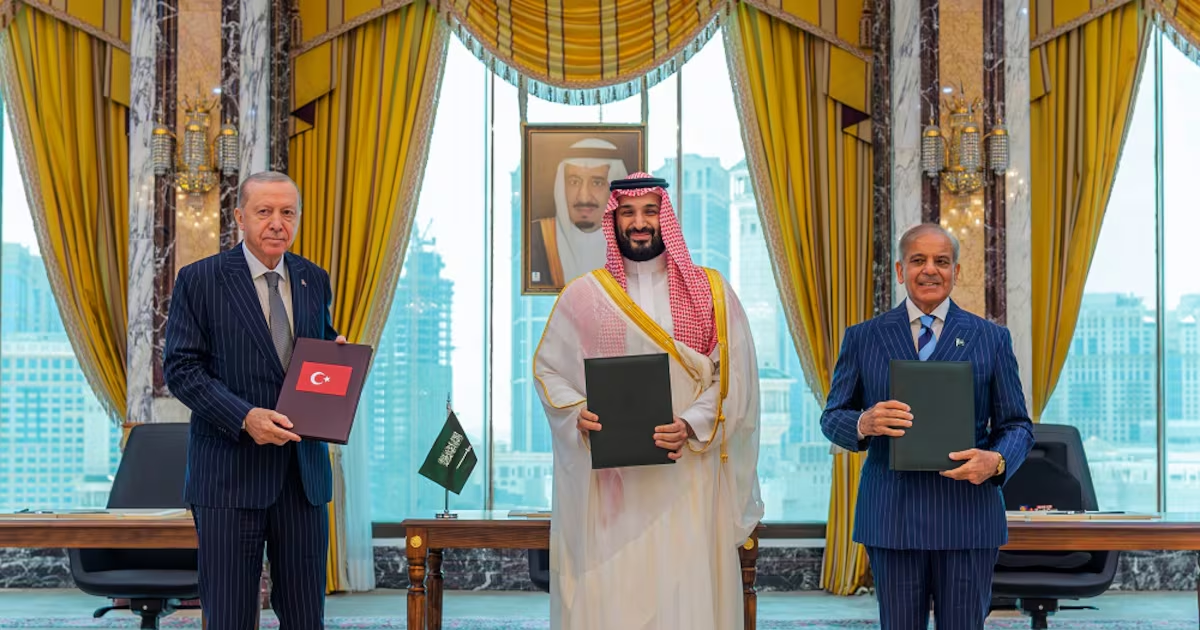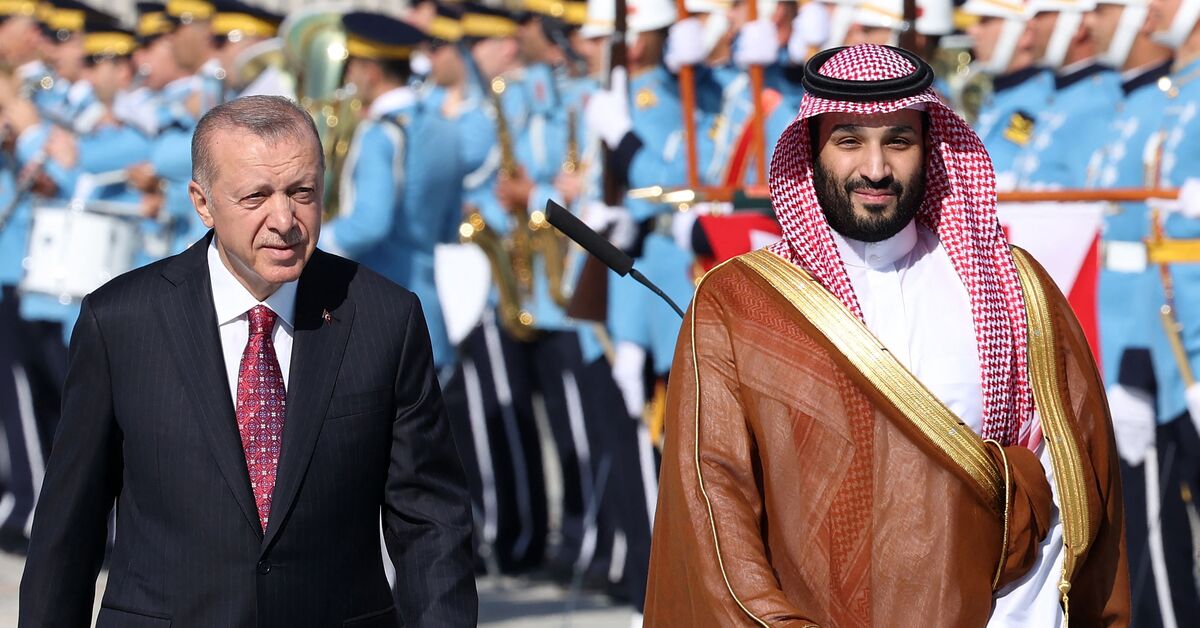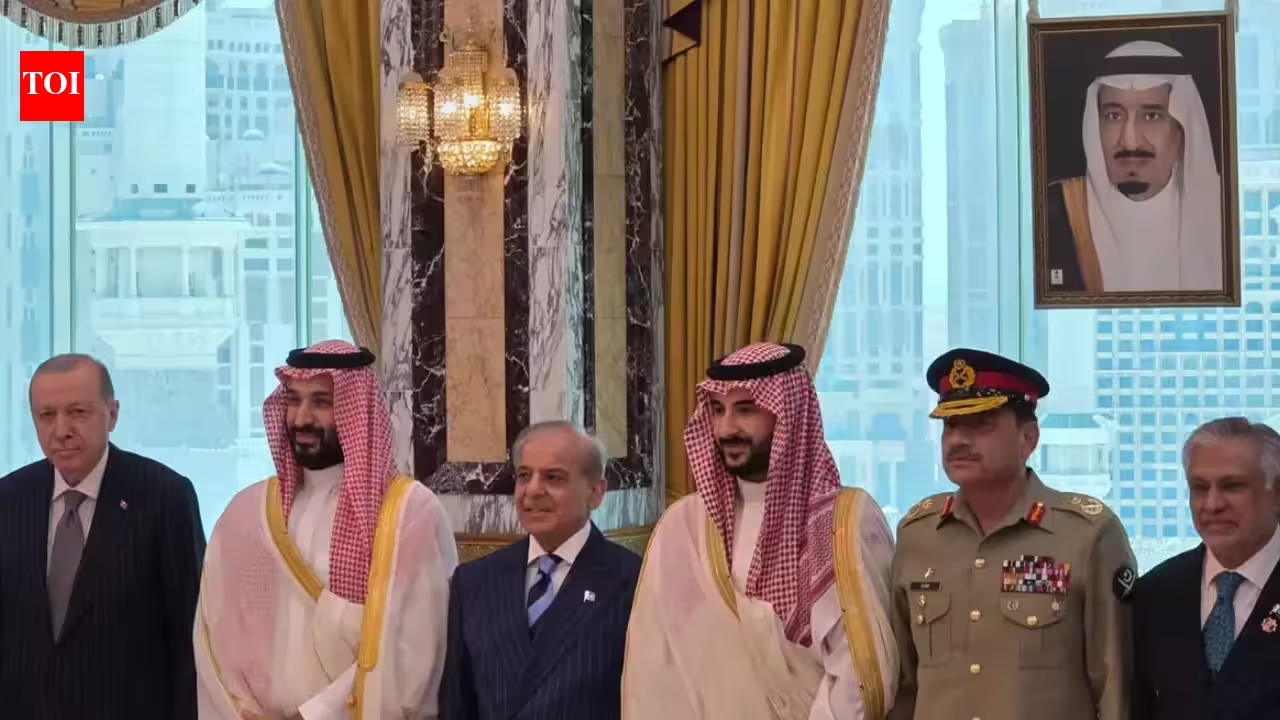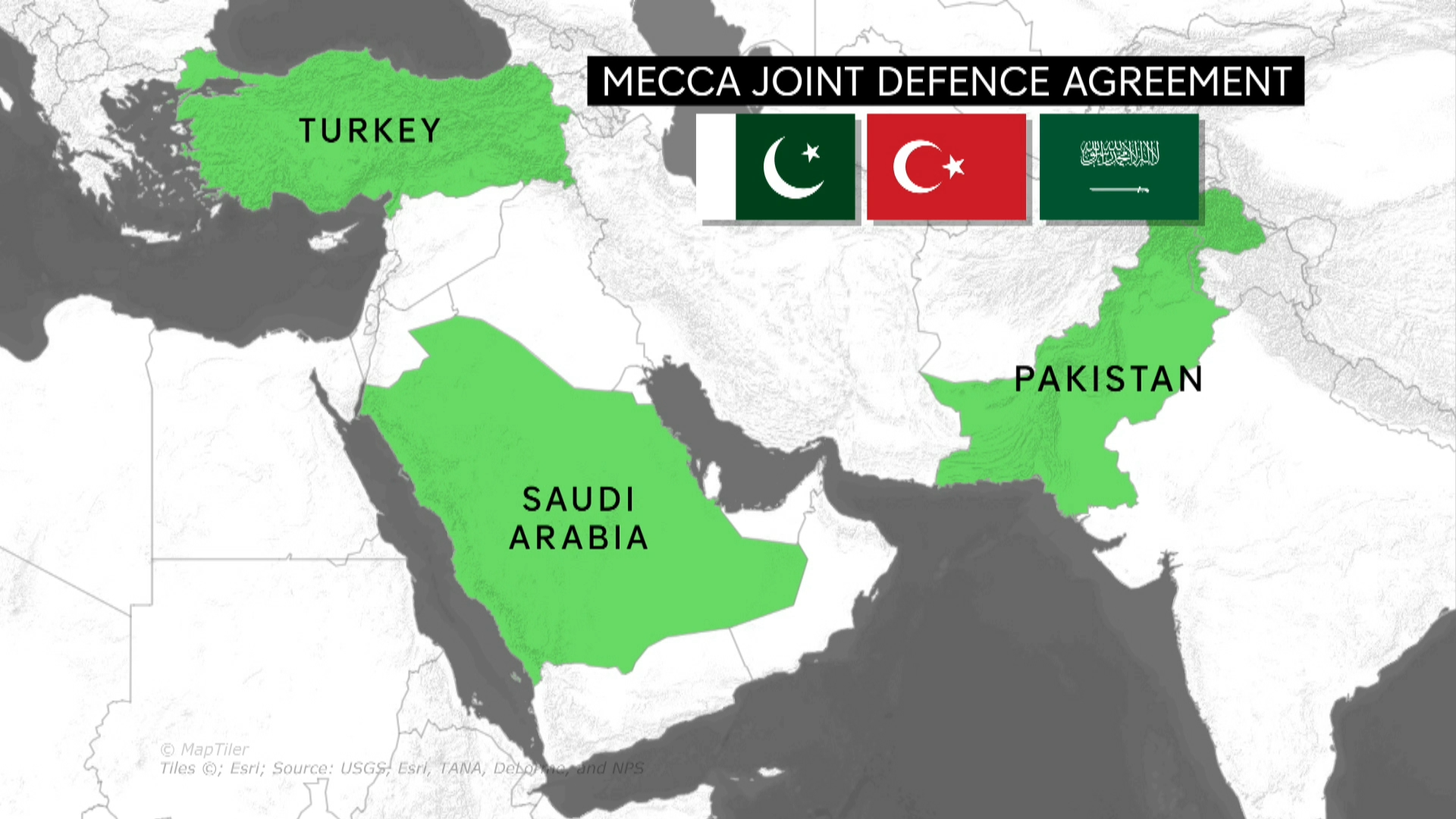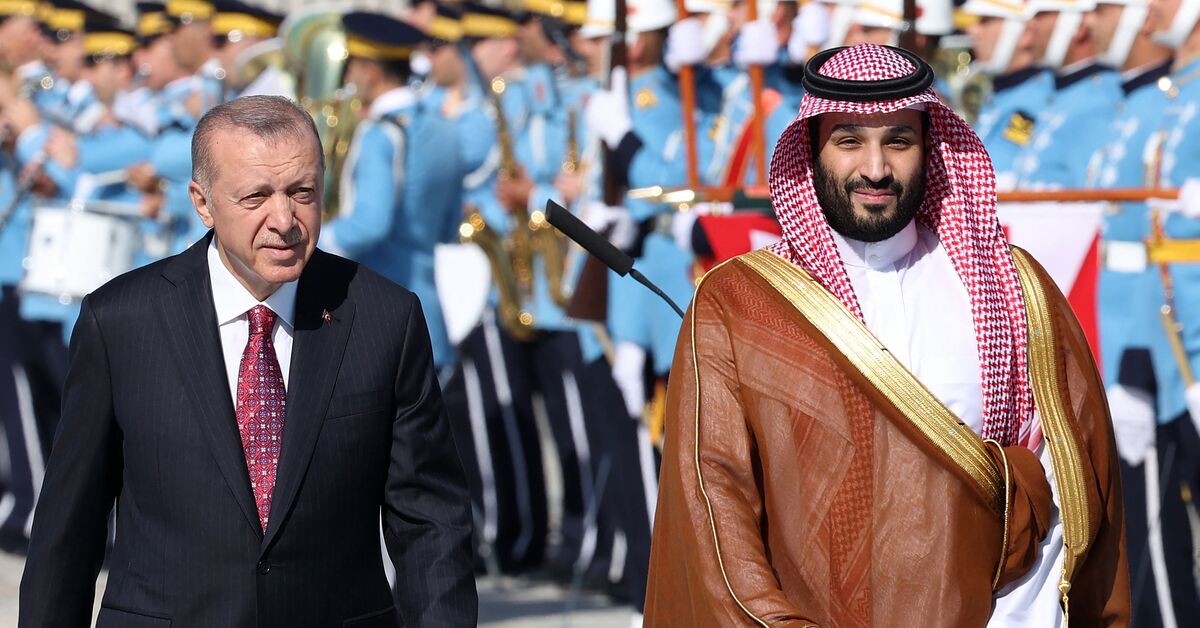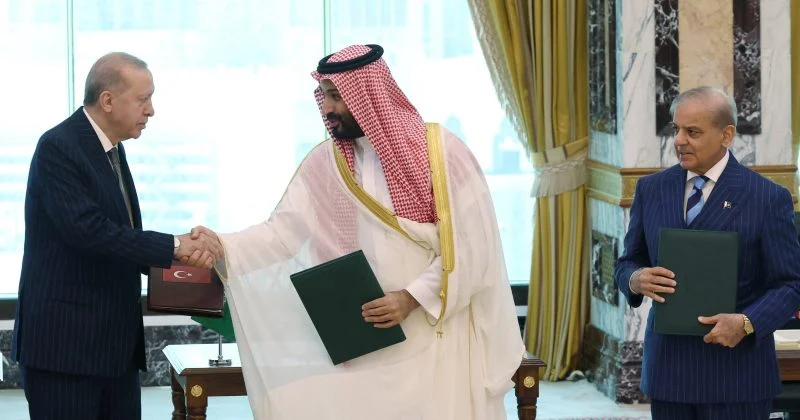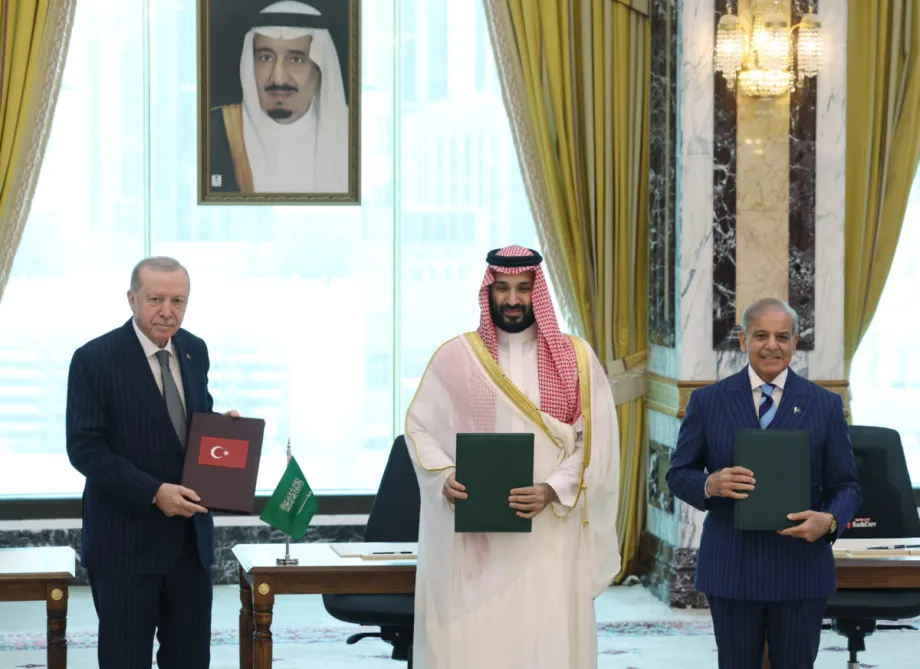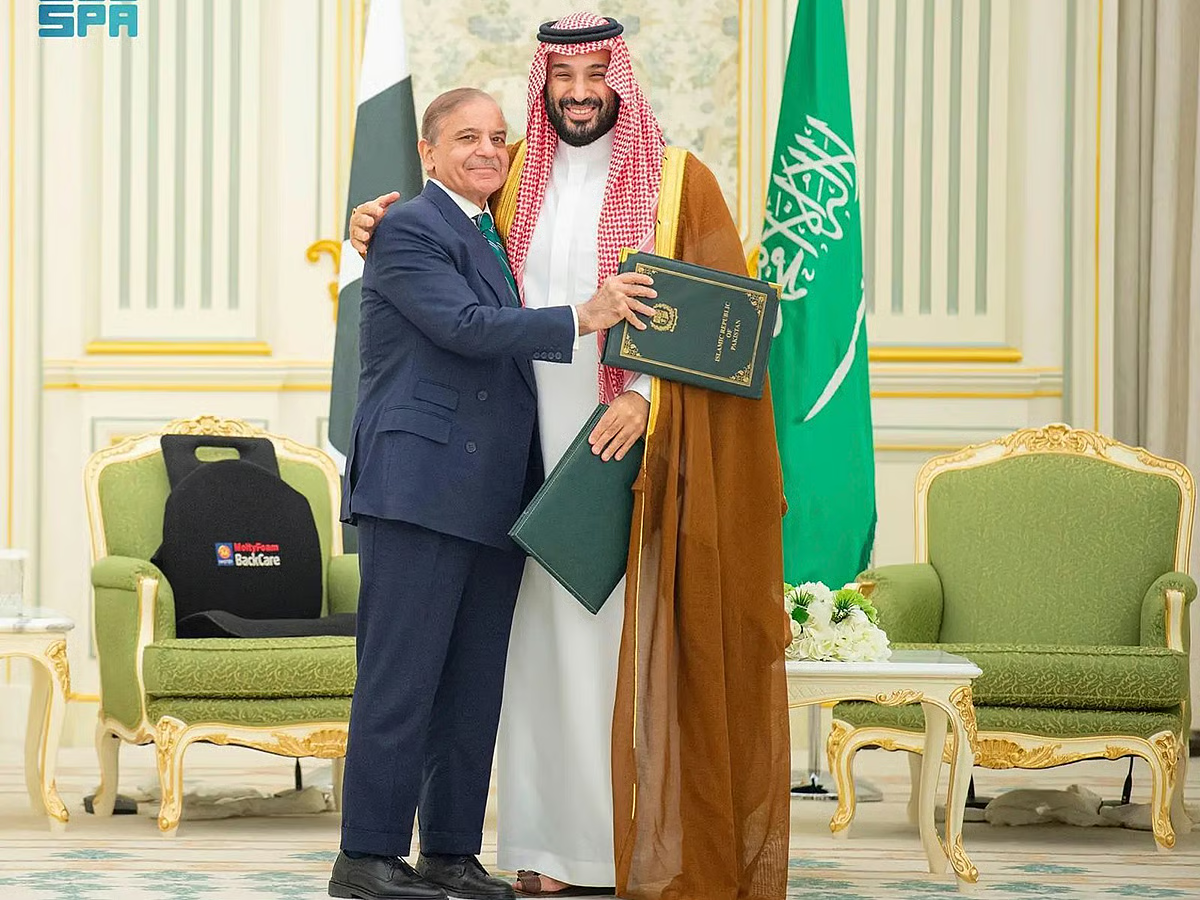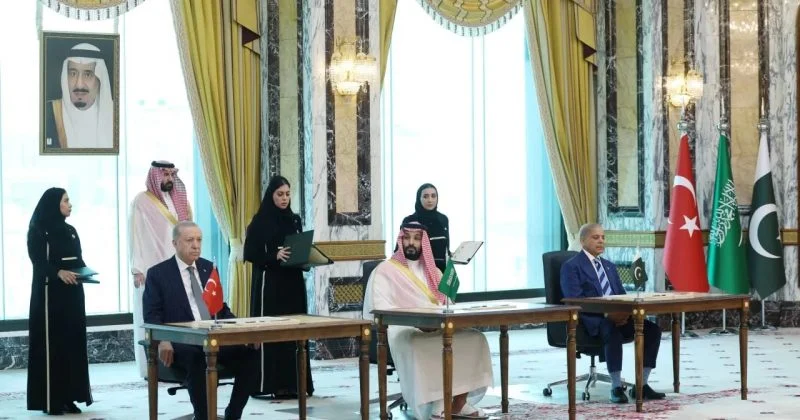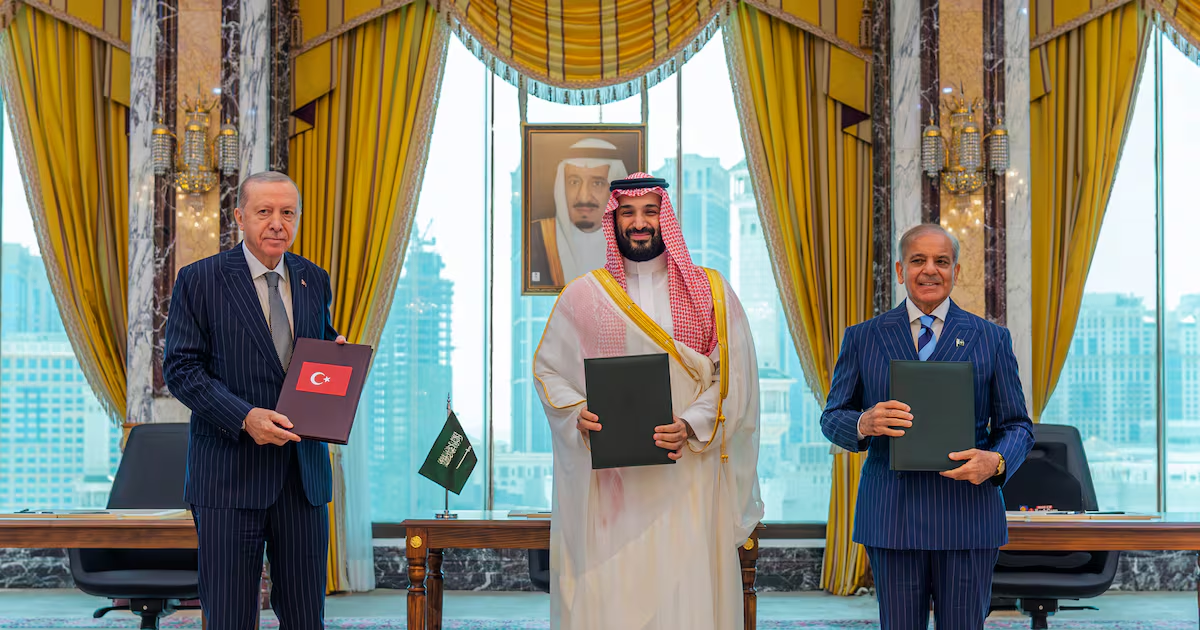
Saudi Arabia, Pakistan and Turkey have signed a mutual defence pact that echoes Nato’s article 5 in saying they will treat an attack on one as an attack on all. But will they?A major moment in MeccaThe defence agreement signed in Mecca last Friday brings together the Gulf’s richest and most powerful state, the world’s only majority-Muslim nuclear power, and a Nato member state with a big defence industry and growing regional ambitions. But Saudi Arabia, Pakistan and Turkey have been at pains to say that their alliance has been more than a year in the making is not necessarily directed against Iran or Israel.“We don’t have anything written down, nothing we’ve signed, that defines a common threat,” Turkey’s foreign minister Hakan Fidan told the state-run Anadolu news agency. “Any country that does not attack us is not a target for us.”The text of the agreement has not yet been published but Saudi crown prince Mohammed bin Salman, Pakistani prime minister Muhammad Sharif and Turkey’s president Recep Tayyip Erdogan issued a joint statement in Mecca. They described the pact as a reflection of their shared commitment to strengthen their collective security and to promote peace and stability.“The agreement is intended to strengthen collective deterrence against any act of aggression and stipulates that any armed attack against any one of the three states shall be regarded as an attack against them all. It further provides for the enhancement of all aspects of defence co-operation among the three states,” they said.The agreement is an extension of a bilateral defence agreement between Saudi Arabia and Pakistan in September 2025, which also includes a mutual defence clause. But Islamabad did not come to Riyadh’s aid when it was attacked by Iran and the Houthi militias, and the Saudis have not assisted Pakistan in its military conflict with the Taliban in Afghanistan.To be fair, Nato’s article 5 offers a vaguer guarantee of mutual assistance than is commonly understood and does not oblige member states to join in a war if one of them is attacked.“If such an armed attack occurs, each of them ... will assist the Party or Parties so attacked by taking forthwith, individually and in concert with the other Parties, such action as it deems necessary, including the use of armed force, to restore and maintain the security of the North Atlantic area,” it says.What distinguishes Nato and has made its deterrent power successful is not so much the size of its military forces as its integrated command structures, intelligence sharing, joint command and interoperability. The value of its article 5 mutual defence clause is as a political commitment to bring this collective power to bear on a potential adversary rather than any legal obligation it imposes on any of its member states.Saudi Arabia, Pakistan and Turkey have no plans to develop integrated command structures but in deepening their defence co-operation, they have a lot to work with. Turkey has the second biggest armed forces in Nato and an advanced, self-reliant defence industry; Pakistan is a nuclear-armed state with very large, battle-weathered armed forces; and Saudi Arabia has vast capital resources, energy and diplomatic influence.All three countries are allies of the United States and the new agreement is in some ways consistent with Washington’s ambition for its partners to take more responsibility for regional security. But for the Saudis, the pact with Turkey and Pakistan is also a hedge against the diminishing value of a US security guarantee that has failed to protect them from attacks by Iran and the Houthis.The agreement offers Turkey a bigger market for its defence industry as well as an opportunity to deepen its regional ties at a time when it has entered Israel’s crosshairs as a potential military adversary. Pakistan, which depends on financial assistance from Saudi Arabia, also hopes for new opportunities for its arms industry and to enhance its international diplomatic standing.Islamabad has long enjoyed good relations with both Riyadh and Ankara but the Saudis have had a difficult relationship with Turkey since at least 1819 when Sultan Mahmud II beheaded Abdullah bin Saud in a square in Constantinople. More recently, the Saudis murdered the journalist Jamal Khashoggi inside their consulate in Islamabad, dismembering his body afterwards, and Riyadh and Ankara are on opposing sides in a number of regional conflicts, including in Libya.The Mecca agreement, as it is called, is open to other states and Qatar and Kuwait, which have also suffered attacks from Iran in recent months, are the most likely to join. The choice of the holy city of Mecca is illuminating and the pact could form the basis of a new, Pan-Islamic security identity with the potential to supplant the current architecture anchored by the US and its closest regional ally in Israel.Please let me know what you think and send your comments, thoughts or suggestions for topics you would like to see covered to denis.globalbriefing@irishtimes.com
A major moment in Mecca
Saudi Arabia, Pakistan and Turkey have been at pains to say their alliance is not necessarily directed against Iran or Israel
816 words~4 min read