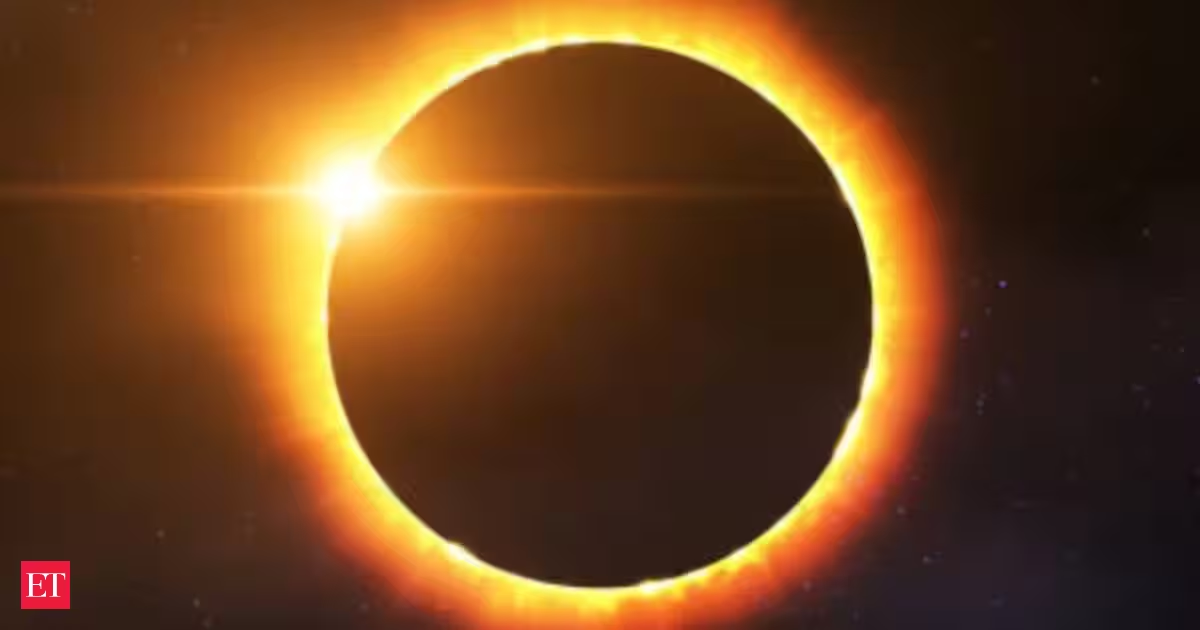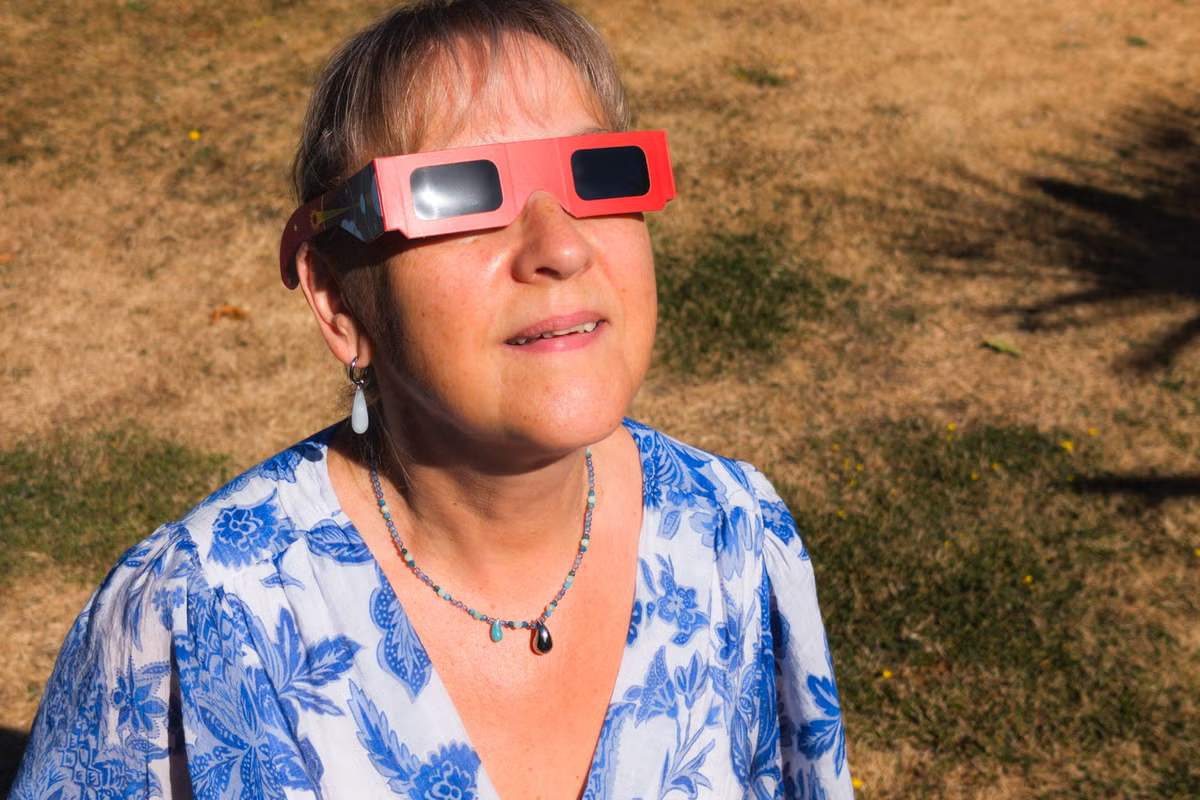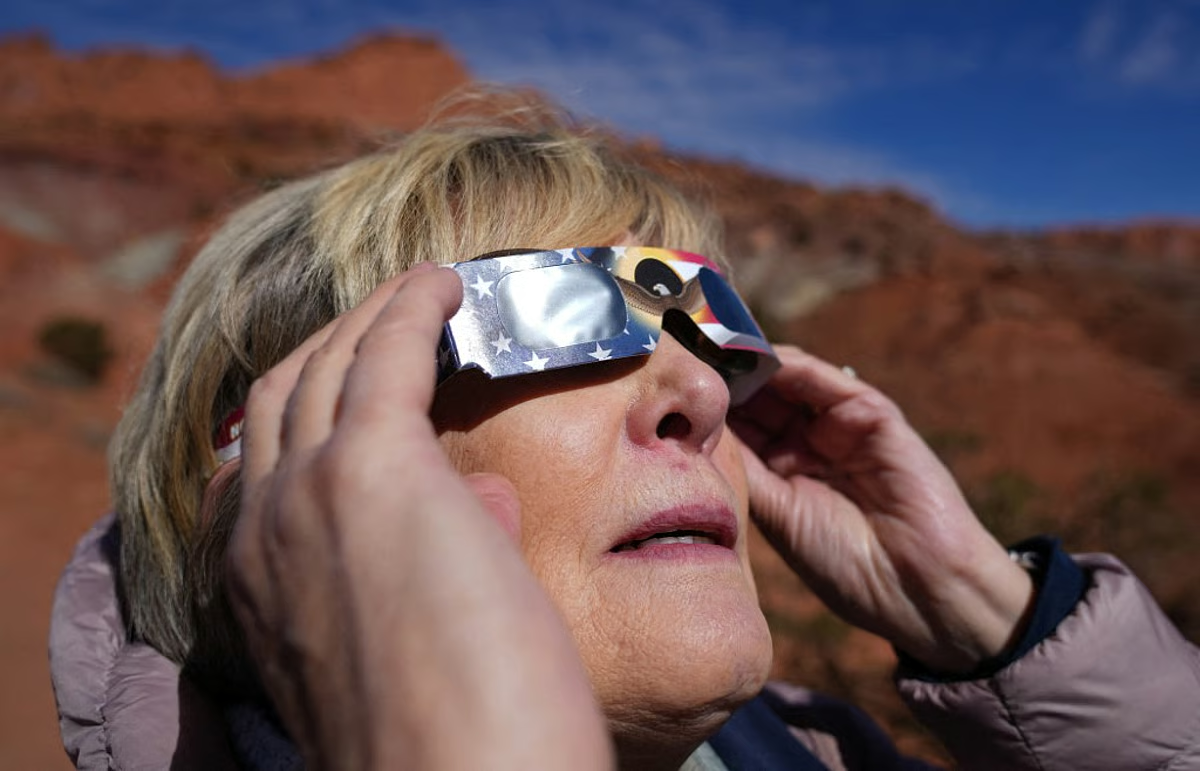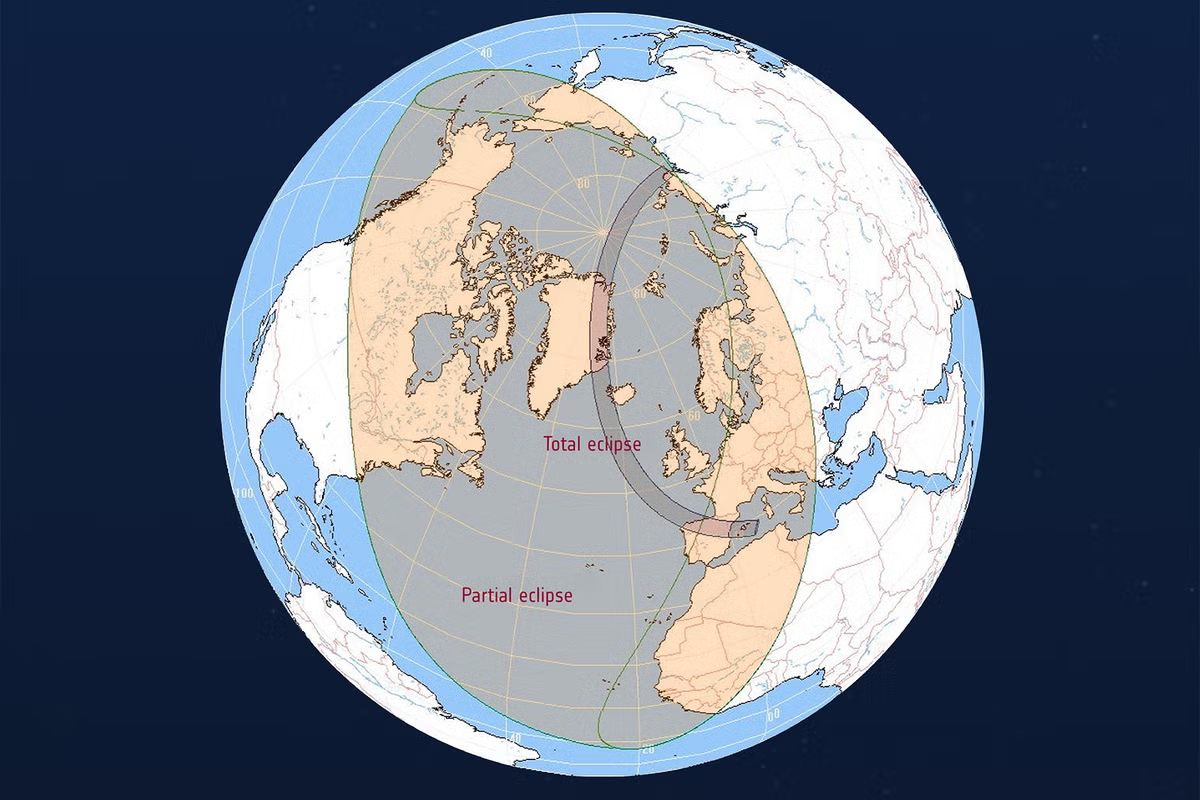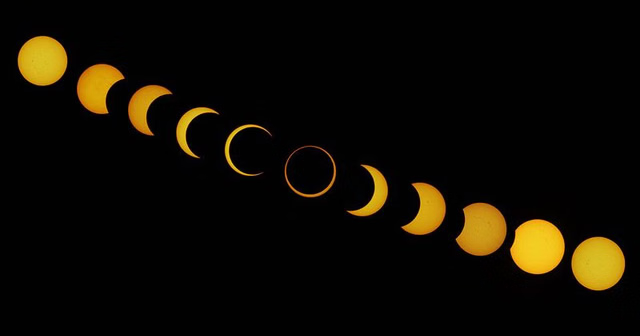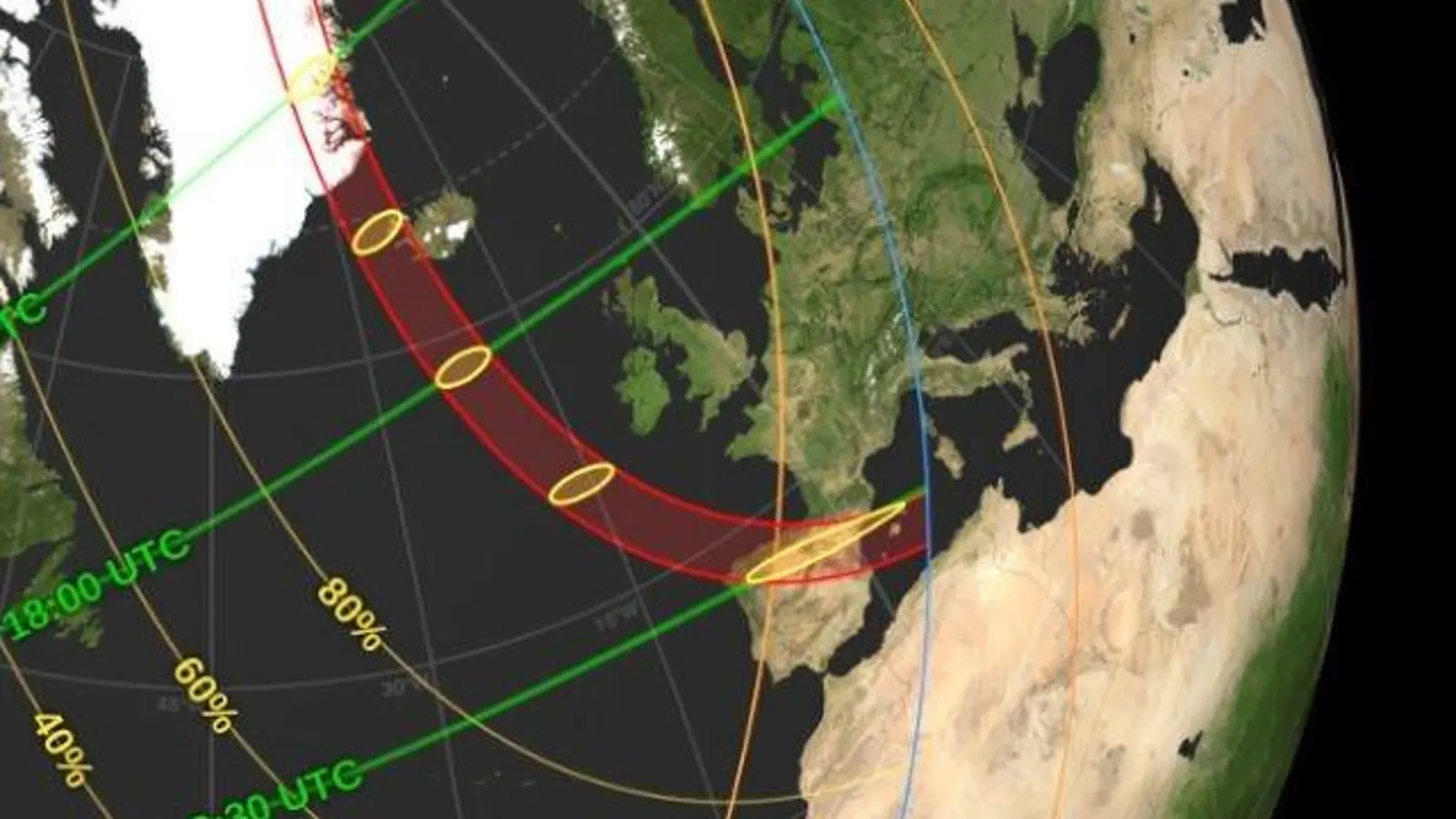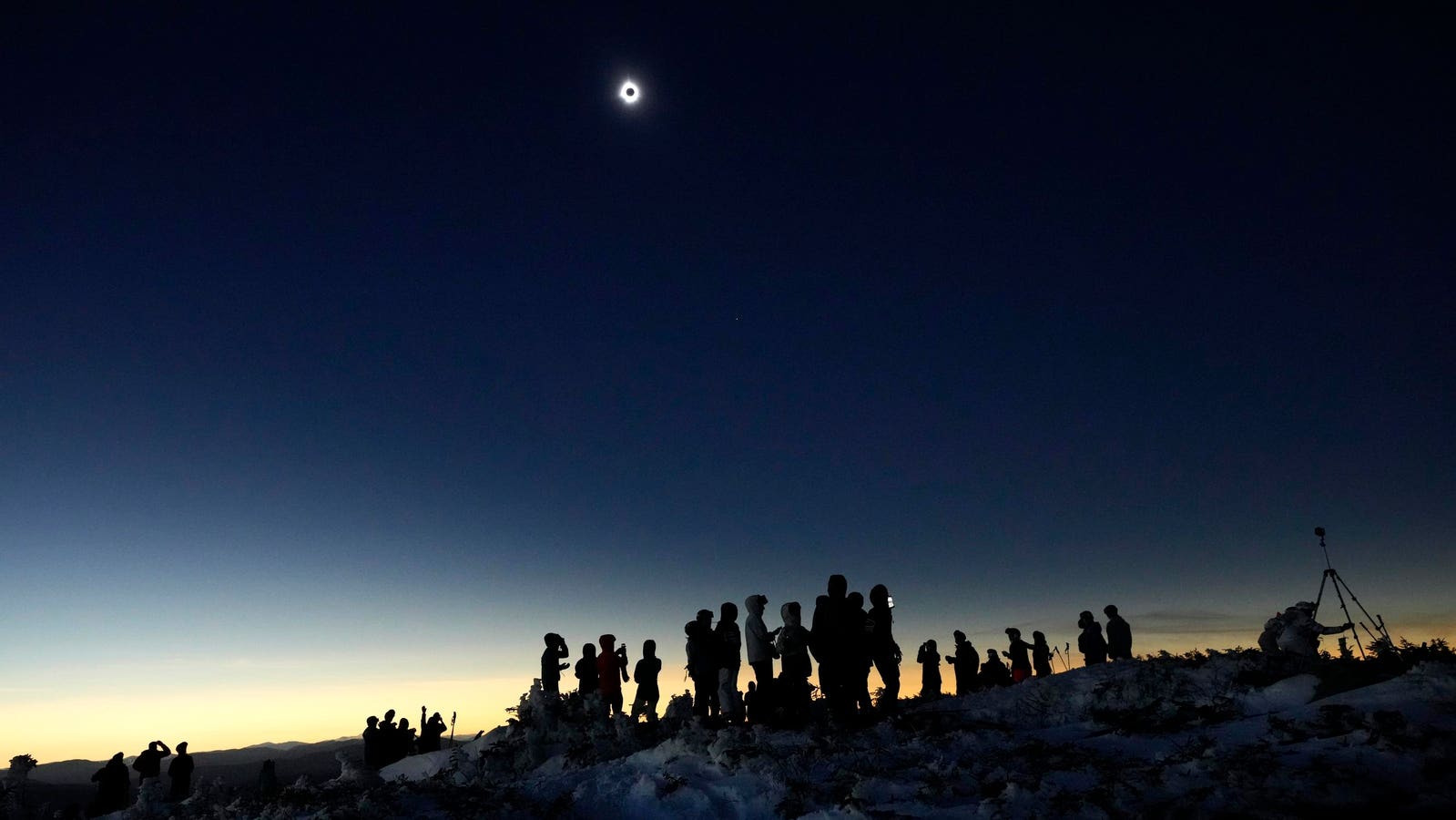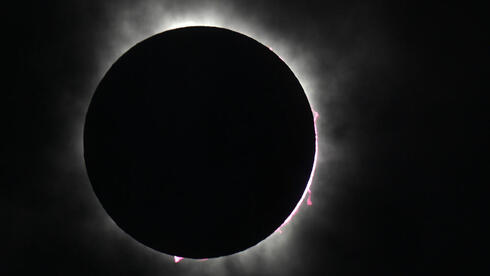
Spain, Iceland and Greenland will see totality as the sun, moon and Earth align near sunset; an even longer eclipse in 2027 will also be visible from IsraelA rare total solar eclipse will sweep across parts of Europe on Wednesday, August 12, as the sun, moon and Earth align shortly before sunset, plunging parts of Spain, Iceland and Greenland into darkness. From the moment totality begins, the sun will remain completely obscured for just over 2 minutes and 18 seconds at the point of maximum eclipse before reappearing.The event will serve as a preview of an even more dramatic eclipse expected in August 2027, when totality will last about 6½ minutes and be visible across a path stretching from Spain through North Africa and into the Middle East.Total solar eclipse seen from Antarctica (Video: NASA TV/Reuters)The moon’s umbra, the darkest part of its shadow, will take about an hour and a half to travel along an 8,260-kilometer (5,130-mile) path, most of it over the Atlantic Ocean. The longest period of totality will occur off Iceland’s western coast. By the time the eclipse reaches a small section of Portugal and then Spain, totality will last about one minute.Elsewhere, observers will see a partial solar eclipse across a much broader area, stretching from Alaska and Siberia to Canada, the northern United States, much of Europe and western Africa. In Dublin, about 94% of the sun will be covered, while Oslo will see roughly 83% coverage. In Montreal, the figure will be about 18%, dropping to 9% in New York and 2% in Norfolk, Virginia.Special eclipse glasses will be essential for anyone viewing the event directly because looking at the sun without proper eye protection can cause permanent eye damage.The celestial spectacle will coincide with another unusual display in the sky. Six neighboring planets will form an arc before dawn, while the Perseid meteor shower is also expected to peak overnight between Wednesday and Thursday.Michael Zeiler, a leading eclipse mapping expert, will be aboard a ship in a Greenland fjord for what will be his 13th total solar eclipse. He also hopes to capture any auroral activity that may appear during totality. “What excites me is seeing rare phenomena,” Zeiler said.GalleryThe moon covers the sun during the 2024 total solar eclipse (Photo: LM Otero/AP)(Photo: Sanka Vidanagama/AFP)The European Space Agency will livestream the eclipse from the Calar Alto Astrophysical Observatory in Spain, while NASA and the Italy-based Virtual Telescope Project will also provide coverage.“For me, it’s not just a scientific moment. It’s not just an amazing alignment of celestial bodies. It’s also a very human moment,” said European Space Agency Director of Science Prof. Carole Mundell. “It is a real human connection between us and the universe.”Board with information on safely viewing the total solar eclipse in Spain (Photo: Jaime Reina/AFP)‘Ring of fire’ solar eclipse in the sky (Photo: REUTERS/Ivan Alvarado)Stages of the solar eclipse (Photo: JOSH EDELSON / AFP)Two ESA space telescopes will observe the eclipse and the sun’s corona, its outer atmosphere. Research teams from academic institutions in the United States will also launch more than 60 high-altitude balloons from Spain and Iceland to study Earth’s atmosphere and other changes that occur during the eclipse as temperatures briefly fall.“A few minutes is not a long time, but it is still enough to affect the atmosphere and create the moon’s cool, dark shadow over Earth,” said Dr. Angela Des Jardins of Montana State University, who is leading the NASA-funded balloon project. An even longer total solar eclipse is expected next year, lasting nearly three times as long as Wednesday’s event.On August 2, 2027, southern Spain will be near the center of the eclipse path, with totality lasting as long as 6 minutes and 23 seconds. Morocco, Algeria, Libya, Egypt, Saudi Arabia, Yemen and Somalia will also experience totality. Israel is expected to see a near-total eclipse, with the percentage of the sun covered increasing farther south.Another solar eclipse will follow on January 26, 2028, when a “ring of fire” annular eclipse will also be visible from Spain. Mundell called the sequence a “fortunate coincidence.” It is particularly unusual given Spain’s eclipse history. The country’s last total solar eclipse, excluding the Canary Islands, occurred in 1912, two days before the Titanic sank.Because that event was a rare hybrid eclipse that shifted between an annular “ring of fire” and only a few seconds of totality over Spain, some astronomers instead regard 1905 as the year of the country’s last conventional total solar eclipse.
Rare total solar eclipse to sweep parts of Europe on Wednesday
Spain, Iceland and Greenland will see totality as the sun, moon and Earth align near sunset; an even longer eclipse in 2027 will also be visible from Israel
748 words~3 min read