Most content about ReactJS and business value follows the same template: virtual DOM makes it fast, components make it reusable, fast and reusable means good for business. The logic isn't wrong, but it's so compressed it's not actually useful for anyone making a real decision.
Here's a more specific version — breaking down each business outcome React affects, explaining the actual mechanism, and including the cases where React isn't the obvious answer.
Virtual DOM → UX → Conversion: The Chain Worth Understanding
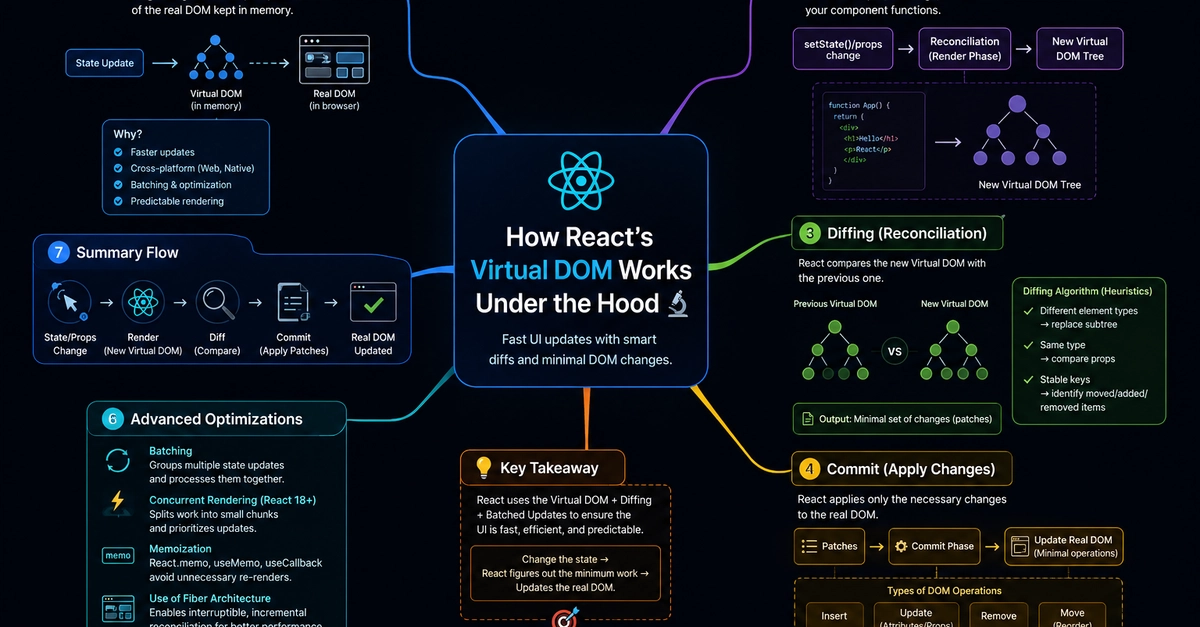
The virtual DOM explanation usually stops at "only updates changed components." The more useful frame is what that means for users.
When a user filters products, updates cart quantities, or fills out a multi-step form, the difference between full-page reloads and surgical DOM updates is the difference between an experience that feels sluggish and one that feels instant. Users don't consciously think "that was 400ms vs 80ms." They think "this feels slow" or "this feels broken" — and they leave.