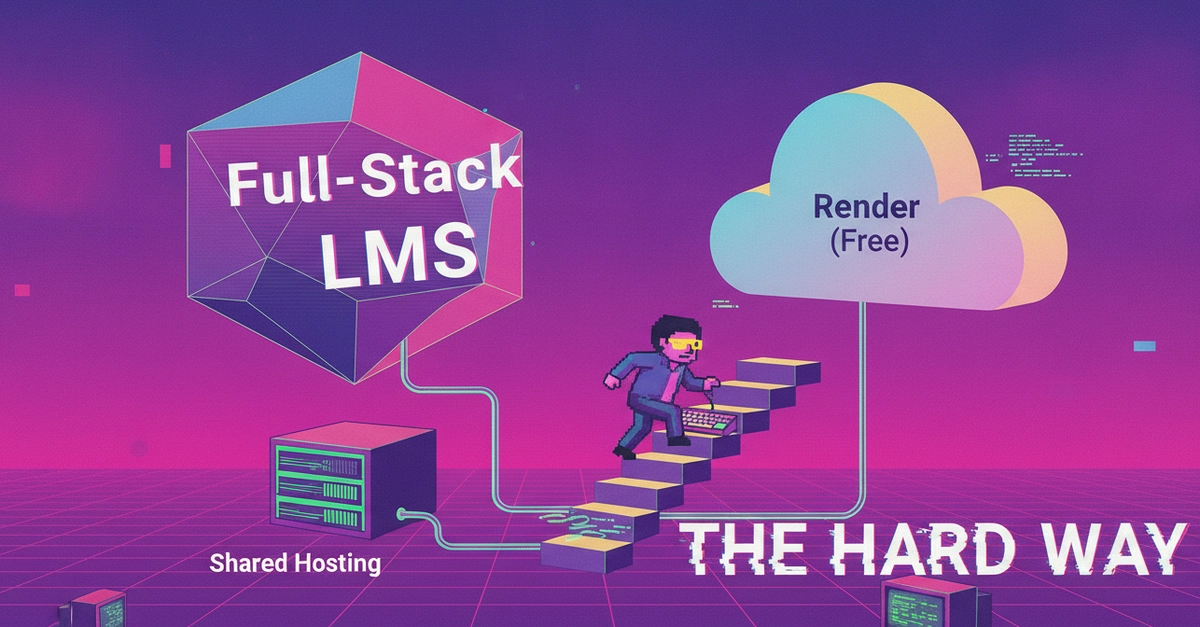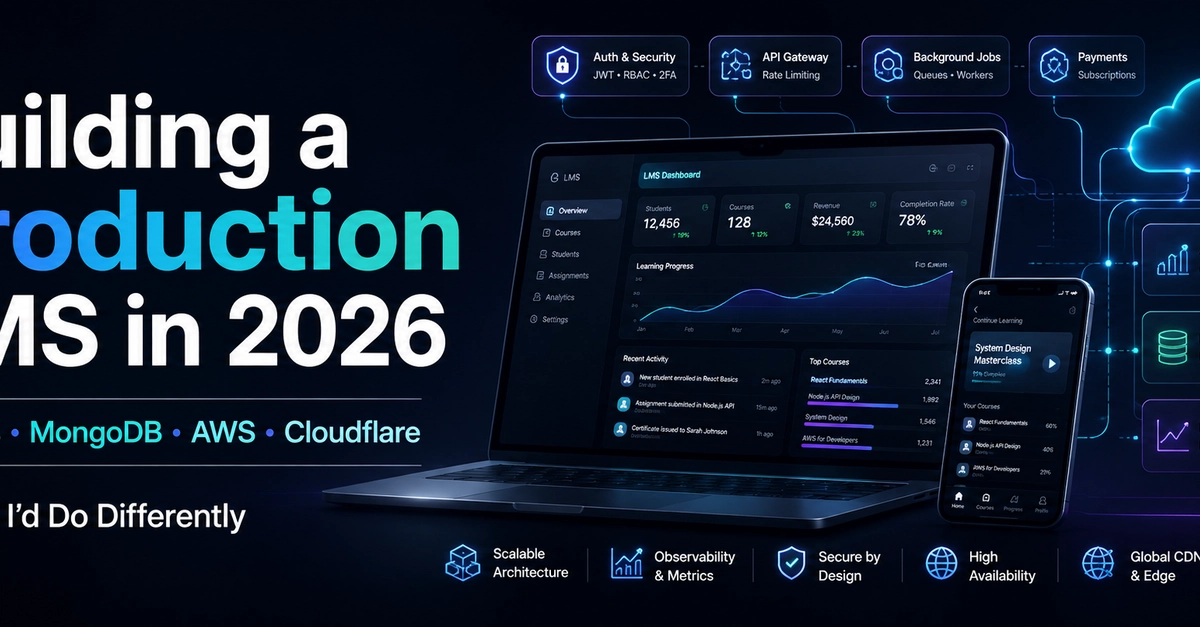
Building an LMS looks simple at the beginning.
You need users, classes, payments, attendance, recordings, homework, notifications, and reports.
Then you move into production.
Suddenly, you are dealing with authentication, permissions, concurrent requests, payment verification, background jobs, database indexes, cloud costs, logging, deployments, backups, and uptime.
I have been working on a production LMS used across web and mobile, where students attend live classes, tutors manage academic activities, payments are processed online, and several services need to work together reliably.