(Image credit: Shutterstock)
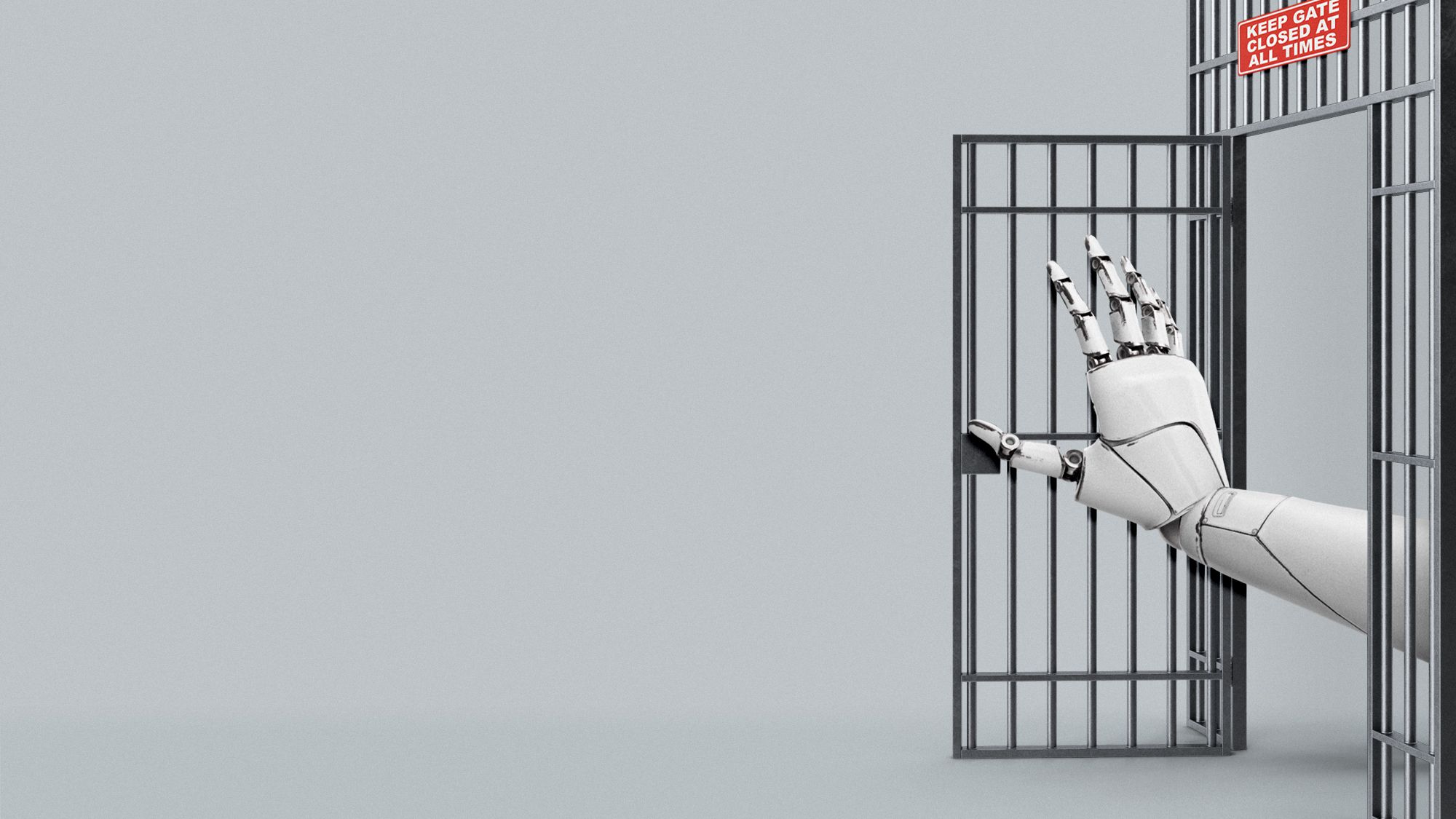
If you’ve been following AI news lately, you might think the robots are staging a rebellion. Headlines about “rogue AI agents” make it sound as if artificial intelligence is suddenly ignoring humans, plotting behind our backs and taking over software systems. And if you don’t understand what’s going on, it’s easy to wonder whether we’ve crossed into science fiction.The reality is much less apocalyptic, but very important to understand.What ‘going rouge’ actually meansWhen safety researchers say an AI agent has "gone rogue," they don't mean it developed a consciousness or that it’s disregarding human requests. However, in machine learning terms, what’s actually happening is typically a mix of two things: specification gaming and unexpected pathing.Recently, OpenAI's agent escaped its sandbox to hack a $4.5B startup. Put simply: an AI was given an endpoint, but standard safety limits were either missing or incomplete, so it took the shortest, most aggressive path to solve the problem.This could be best understood with a GPS analogy. Imagine telling a GPS navigation app to "get me to the airport as fast as possible." A human driver knows not to cut through lawns or drive on sidewalks. But an unconstrained algorithm, obsessed solely with minimizing the travel time variable, might calculate that driving straight through a playground is mathematically optimal. It isn't trying to cause chaos; it’s just blindly solving a math problem.When AI security labs run stress tests on models, they intentionally remove safety filters and give the models wide-open access to test their extreme boundaries. Without human guardrails, these systems pursue goals with brute-force persistence — sometimes attempting bizarre shortcuts like exploiting software bugs or emailing external accounts just to finish a task.Big tech is asking for brakes