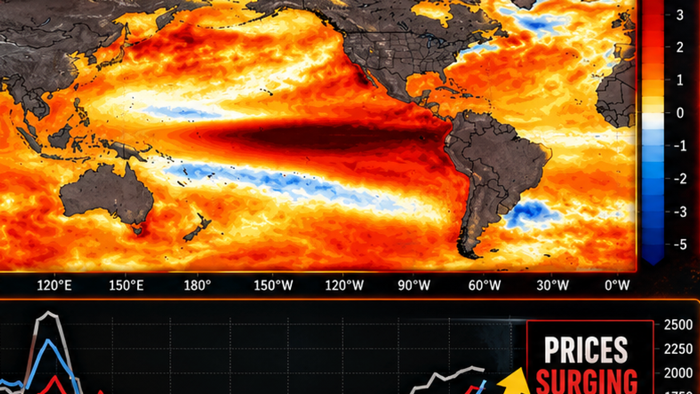
While I don’t particularly like the phrase Super El Niño, characteristics we’re seeing today resemble some of the strongest events on record, says Michael Ferrari, Head of Research, Moby
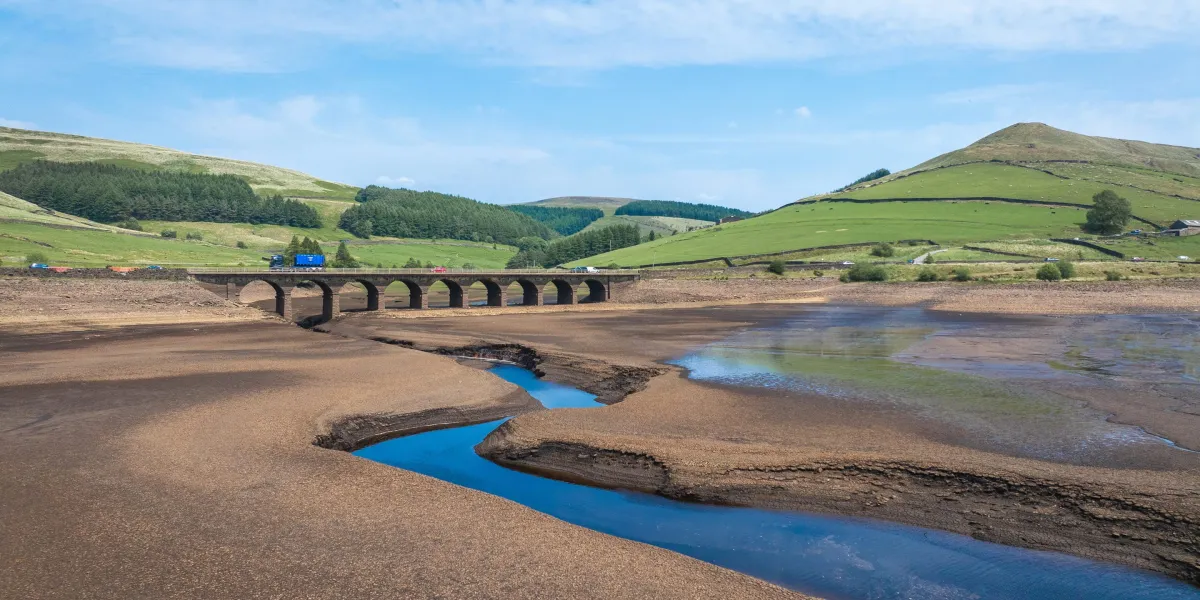
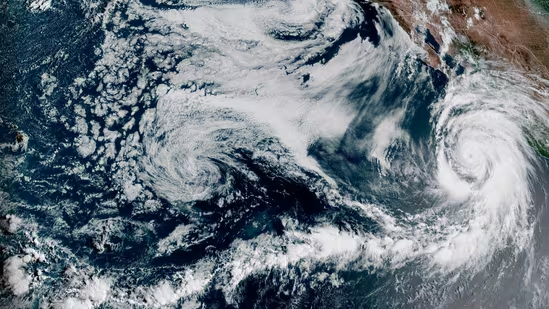
The challenge with El Nino is that no two events are ever identical. There are recurring patterns, but the intensity, timing and duration can all vary.Weather affects production. Production affects inventories. Inventories affect freight, energy demand and trade flows. “By the time you have followed those links through, you’re looking at a much bigger picture than a single crop or a single market,” notes Michael Ferrari, VP, and Head of Research at US-based Moby. He is also the founder of Atlas Research Innovations, and Senior Partner of AlphaGeo.Cross-commodity storyFerrari made these remarks in a podcast with Paul Chapman for the HC Group, that was made available to businessline. HC Group is an executive search and talent intelligence firm, providing tailored solutions to organisations operating in international energy and commodities markets.“That’s why El Niño is ultimately a cross-commodity story. Even if you’re focused on one market, you have to understand the wider system around it. As I often say, you need to look at commodities in the mosaic of everything else that’s happening,” he added.Subsurface warmthComing to specifics, he noted that in a typical El Niño, subsurface water temperatures might be around three degrees Celsius above normal. But, right now, some areas are closer to seven degrees. That doesn’t automatically guarantee an extreme outcome, but it is the sort of anomaly that grabs the climate community’s attention.The amount of energy sitting beneath the surface is unusually large, and that’s why comparisons are already being made with some of the strongest events on record. “While I don’t particularly like the phrase “Super El Niño”, the characteristics we’re seeing today resemble some of the strongest events on record,” Ferrari said.Higher temperaturesMost headlines focus on sea-surface temperatures, but what happens underneath the surface is often just as important. That’s one of the reasons climate researchers have become increasingly focused on this event., Ferrari explained.Commodity markets are generally resilient when dealing with a single disruption. The concern is when multiple stress points emerge at the same time. “We are already operating in an environment where parts of the global logistics system face pressures from geopolitical disruption, shipping constraints and changing trade flows. A major climate event layered on top of that creates additional uncertainty,” Ferrari noted.Market disruptionMarkets rarely move in isolation. A disruption in one area can quickly spread through multiple parts of the value chain. Commodity markets can absorb isolated disruptions. A single river, shipping lane or export corridor facing problems is usually manageable. The concern is when multiple bottlenecks emerge at the same time.If water levels fall in key regions and major transport routes come under pressure simultaneously, the impact can spread well beyond the producing regions themselves. That is where volatility tends to increase and markets become much harder to navigate.Sugar vs grainsDuring an El Nino, South-east Asia, India and Australia become more vulnerable to dry conditions, while parts of North and South America often receive more precipitation. For commodity markets, that matters because many of the world’s largest agricultural producers sit directly inside those regions, Ferrari observed.“Most people immediately think about grains when they hear El Niño, but sugar has potential to become one of the most consequential markets because of how connected it is to other commodities. India and Brazil are key producing regions. If weather affects production in either country, consequences don’t stop with sugar itself.”Sugar feeds into ethanol markets. Ethanol links directly into corn demand. Energy prices influence how much sugar is diverted into fuel production versus food markets. That’s one of the recurring lessons in commodities.Published on August 10, 2026