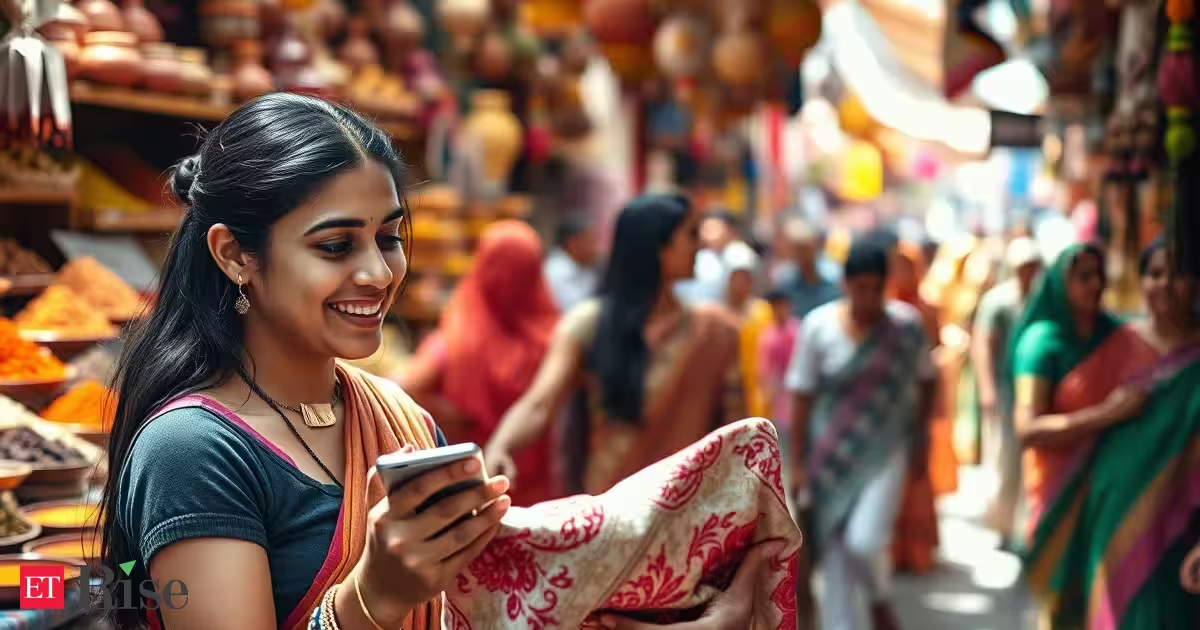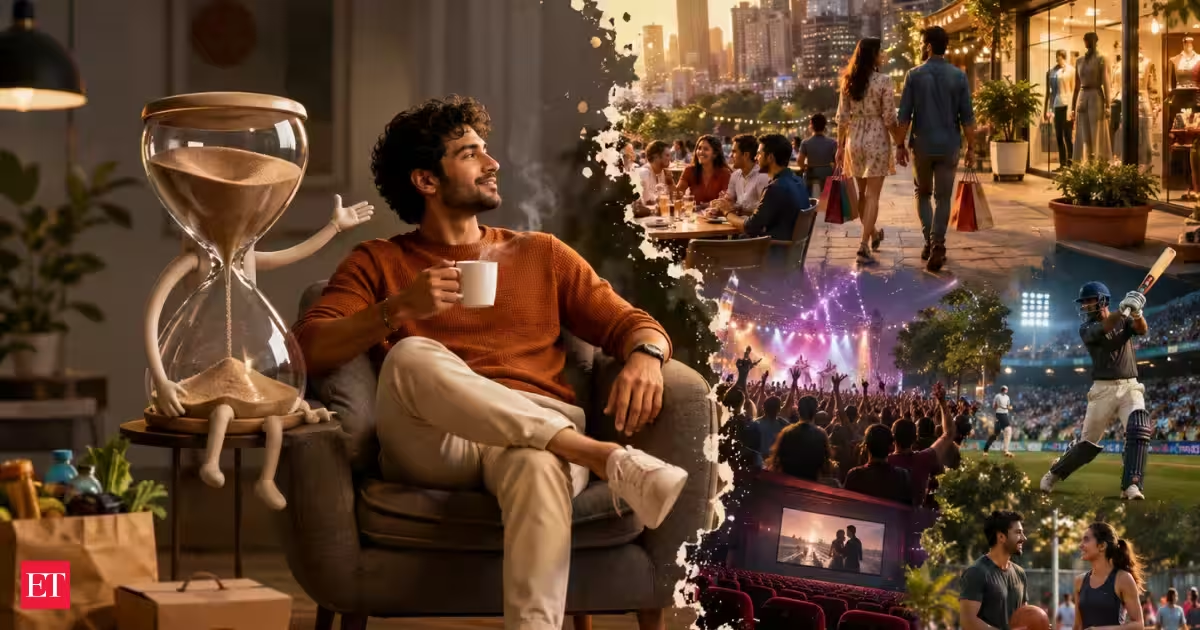
E-commerce in urban Bharat has transitioned from early experimentation to repeat, embedded behaviour, says a new report by DB Group in partnership with Kantar. Titled ‘Urban Bharat — India’s consumption story’, the report maps the changing aspirations, consumption patterns and growth opportunities across India’s tier-2 and tier-3 urban markets.Urban Bharat today accounts for nearly one-third of India’s urban population and has achieved digital reach comparable to the metros, notes the report. In 2016, just over one-fifth of urban Bharat consumers reported shopping online. By 2025, this had risen to nearly one-third. Metro markets have stabilised at a higher base, with roughly one in two consumers shopping online.The proportion of urban Bharat consumers who say online shopping makes life easier has increased from 34 per cent in 2019 to 46 per cent in 2025. Trust in online purchases has improved more gradually, from 39 per cent to 44 per cent, still trailing metros. This shows that utility is driving adoption ahead of full trust, the report observes.Gen Z’s travel vocabularyGen Z is building a whole new travel vocabulary, notes a new report by Airbnb in partnership with YouGov. Spontaneous, personal, experience-led and shaped entirely by mood, identity and the people they bring along, this new generation of travellers is rewriting the rules of how they visit places and where they stay. They are into ‘Room Rotting’, where doing nothing is the whole point. No sightseeing — just the stay, the people and the slow hours in between. Two out of three Gen Z travellers intend doing nothing on a trip, while eight in 10 spend at least half the trip at their accommodation, notes the report. ‘Mirror Tripping’ is another thing on the Gen Z list — choosing destinations, stays and experiences to reflect who they are. Ninety two per cent finds it important that their destination matches their personal taste and 87 per cent believes travel reflects their identity. There is also ‘Side-Questing’ — shifting from saving up for one annual holiday to taking several smaller trips throughout the year. For seven in 10, travel is less of a main event and more of an ongoing part of life.Beyond the boxThere is change brewing in packaging, a brand’s most visible asset and where first impressions are formed. According to VML Intelligence, as geopolitical tensions continue to disrupt global supply chains, companies are increasingly stripping back packaging, “not as a chic design statement, but as a pragmatic shield to protect price-sensitive consumers”. There are several ways in which brands are changing their packaging. 1) Removing colour to combat shortages in naptha, an oil derivative used to manufacture plastics and printing inks. Take Japanese snack giant Calbee, which announced it would temporarily replace the colourful packaging of 14 of its best-selling products, including its signature potato chips, with simple black-and-white packs. 2) Shifting packaging materials, especially aluminium cans. Take D2C bubble tea maker Boba Bhai, which adopted locally sourced plastic bottles, transitioning away from aluminium cans to keep unit costs manageable. 3) Light-weighting — redesigning the product to use less packaging material, as several cola makers are doing.Published on August 10, 2026
Bharat is shopping more online
Urban Bharat's online shopping has surged, with one-third of tier-2 and tier-3 consumers now embracing e-commerce.
520 words~2 min read