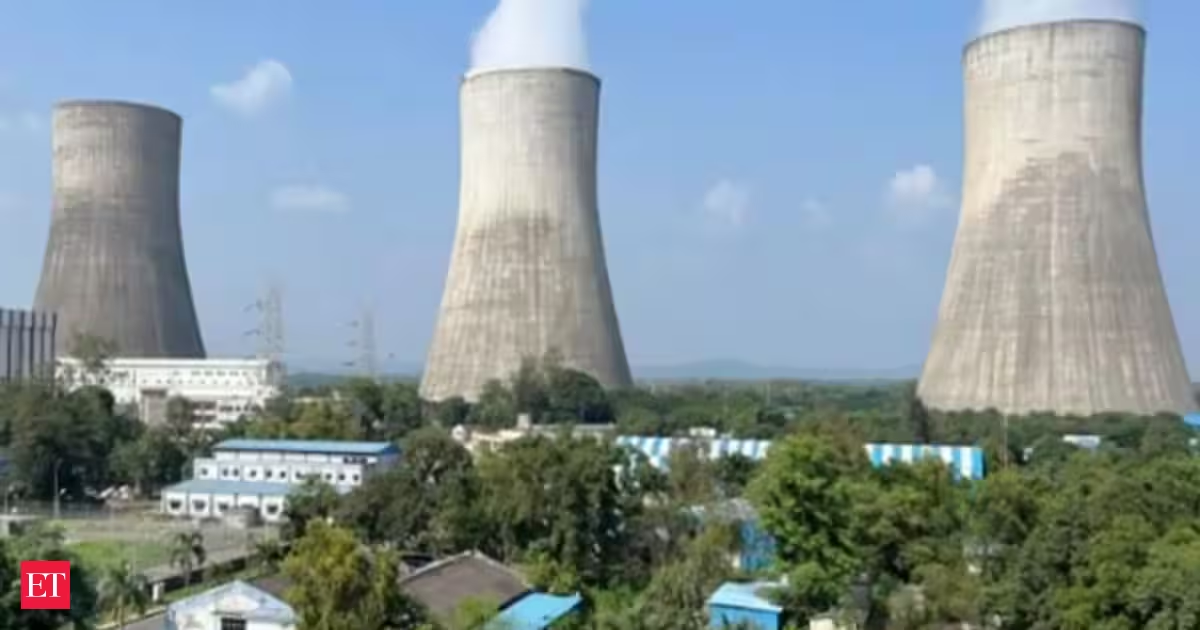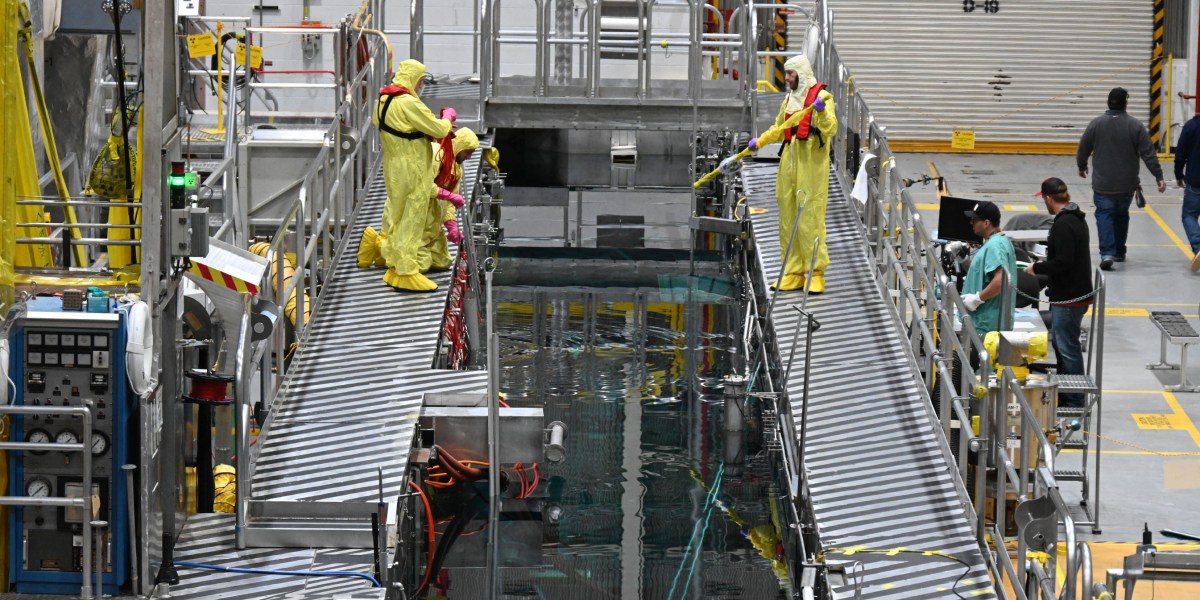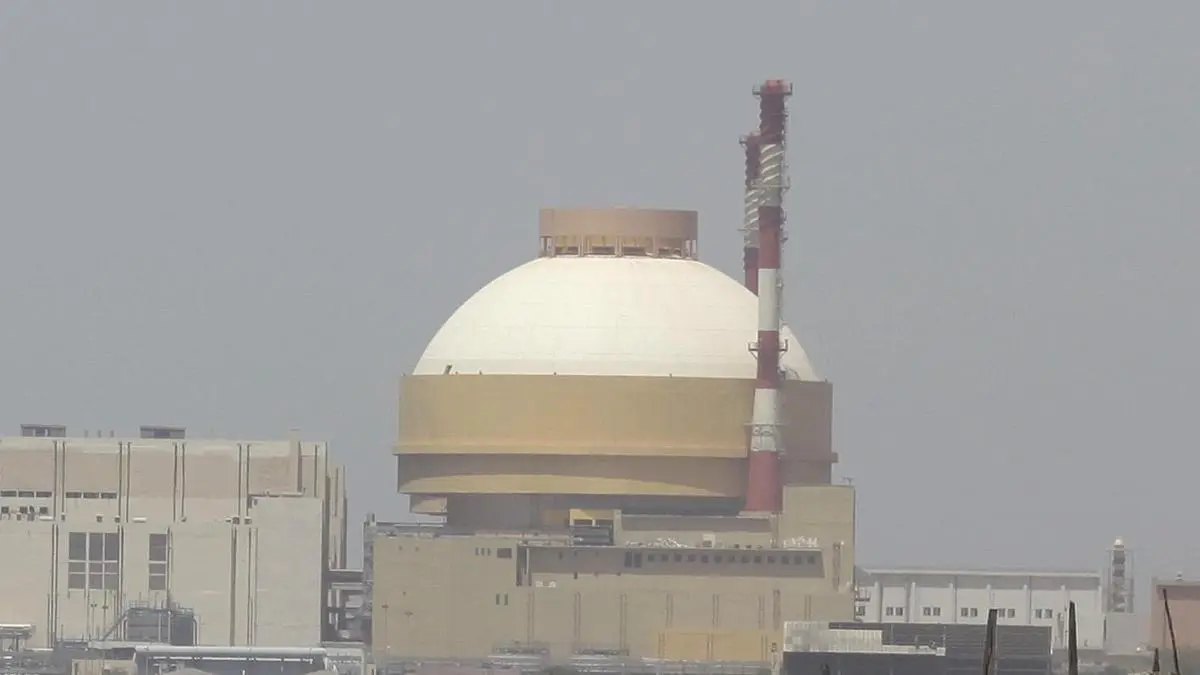
US-based Clean Core Thorium Energy (CCTE) recently announced another milestone in the development of its proprietary thorium-based ANEEL nuclear fuel. It said it has entered into a fuel fabrication agreement with BWXT Canada Ltd, which will supply qualified fuel bundle hardware for assembly into full-scale ANEEL fuel bundles at Canadian Nuclear Laboratories (CNL).The bundles would be used in a demonstration irradiation programme to generate in-reactor performance data.While the agreement with BWXT does not mean ANEEL has been approved for commercial use nor that a Canadian reactor operator will irradiate the fuel, it does show that the manufacturing pathway is in place for full-scale fabrication.Now there are growing calls, including from eminent nuclear scientists, for India to be the first to test ANEEL in its pressurised heavy water reactors (PHWRs), stoking further debate over its use.Former Atomic Energy Commission Chairman Dr Anil Kakodkar (who is associated with CCTE) wrote on X: “CCTE ties up ANEEL fuel supply agreement with BWXT Canada to support commercial reactor demonstration. I wish this had happened in India.”Dr VK Saraswat, former DRDO chief and NITI Aayog member, “strongly agreed” with Kakodkar. “India is missing a great opportunity to achieve early utilization of thorium fuel in existing PHWR plants without waiting for reaching the third stage of nuclear program,” he wrote on X. He added: “DAE should resolve technical controversy and adopt ANEEL fuel.”The “technical controversy” Saraswat mentions began with a paper published in Current Science in January by three scientists from Bhabha Atomic Research Centre (BARC). Without naming ANEEL, the paper argued that fuel comprising a mix of high-assay, low-enriched uranium (HALEU) and thorium would not be suitable for India’s PHWRs due to reactor physics and safety considerations.Rejecting this view, CCTE’s scientists responded through a peer-reviewed paper published in Nuclear Engineering and Design that contended that the Current Science analysis was based on assumptions that are at variance with the proprietary ANEEL fuel design.Experts familiar with the matter told businessline that the Current Science paper theorised the applicability of a generic HALEU-thorium fuel to Indian PHWRs without access to the detailed design of ANEEL itself. They said the Nuclear Power Corporation of India Limited (NPCIL) had not signed a non-disclosure agreement (NDA) needed to access the technical specifications of the fuel.Neither the Current Science authors nor CCTE have demonstrated ANEEL’s behaviour through irradiation in a PHWR.So it appears as if the ongoing debate is based almost entirely on competing calculations rather than empirical evidence. Only testing can offer a clear answer.The first stepA carefully designed irradiation programme — under the supervision of the Department of Atomic Energy (DAE), NPCIL and the nuclear regulator — would be intended precisely to establish whether the fuel performs as claimed.One of CCTE’s backers told businessline that the company is willing to bear the cost of the testing.There are compelling reasons why India should consider taking that step. First, India is home to roughly half of the world’s operating PHWRs — around 20 out of 47. Few other countries possess comparable operational experience with this reactor technology.Second, India has the world’s largest thorium reserves and has for decades pursued the goal of exploiting thorium through a three-stage nuclear programme. At the current pace of development, it would take four decades for India to have an operational fleet of thorium reactors.Therefore, any prospect of introducing thorium into existing PHWRs much earlier than previously envisaged deserves careful scientific examination.Waiting for another country to generate the first irradiation data is certainly a defensible position. If ANEEL fails, India would have avoided unnecessary effort. But if it succeeds, India would find itself evaluating a technology for its flagship reactor based on evidence generated elsewhere. That would be ironic for a country that is the world leader in PHWR technology.Mehul Shah, Founder of CCTE, told businessline that South Korea and Romania had shown interest in testing ANEEL. The company has been trying hard to bring ANEEL to India first.Initially, India did seem to be moving fast. In October 2024, the DAE issued a letter of intent (LOI) to collaborate with CCTE for a demonstration irradiation (DI) of ANEEL fuel bundles in an Indian PHWR. CCTE then applied to the US Department of Energy for a technology transfer authorisation.The same month, L&T signed an MoU with CCTE for collaborative work. In December, India’s largest power company, NTPC, agreed to take a 5 per cent stake in CCTE (which still awaits DAE clearance.)In August 2025 — after receiving government-to-government assurances from DAE, NPCIL and the Atomic Energy Regulatory Board — the DOE granted CCTE authorisation to transfer the ANEEL fuel technology and technical assistance to designated Indian entities for DI collaboration.ResistanceThings have since slowed, particularly after the Current Science paper.A spirited opposition to ANEEL is evident. The motives are speculative — ranging from resistance to change to personal issues with Dr Kakodkar and geopolitics. Some insiders point out that Dr Kakodkar’s AHWR-300 project, which could get India quickly into thorium use, has been awaiting clearance for over a decade. As for geopolitics, CCTE, though founded by an Indian, is an American company. Is it wise to depend on an American company for fuel supply?However, the question asked by CCTE and experts like Kakodkar and Saraswat is: What is the harm in testing ANEEL in India?After all, if the results are bad, then the fuel can be thrown out the window. But if it succeeds, then the benefits are immense to the first mover. Kakodkar said that ANEEL is “definitely” more economical, even though the HALEU part is more expensive. Separation of U-233 — the fissile material — from thorium is certainly tough, but the challenge would have to be met anyway, “ANEEL or no ANEEL”, he said.NPCIL has not responded to businessline’s query on the scope for testing ANEEL in Indian PHWRs.Published on August 10, 2026
Nuclear energy: Why India should test ANEEL fuel in its PHWRs
India must seize the opportunity to test ANEEL thorium fuel in PHWRs for nuclear advancement and energy efficiency.
968 words~4 min read