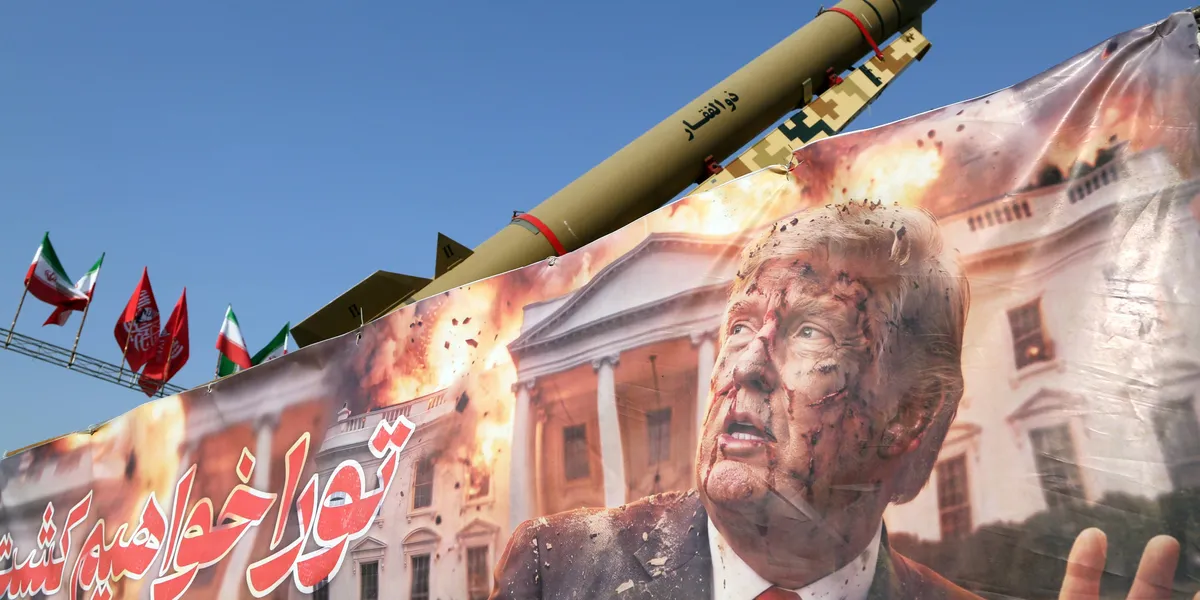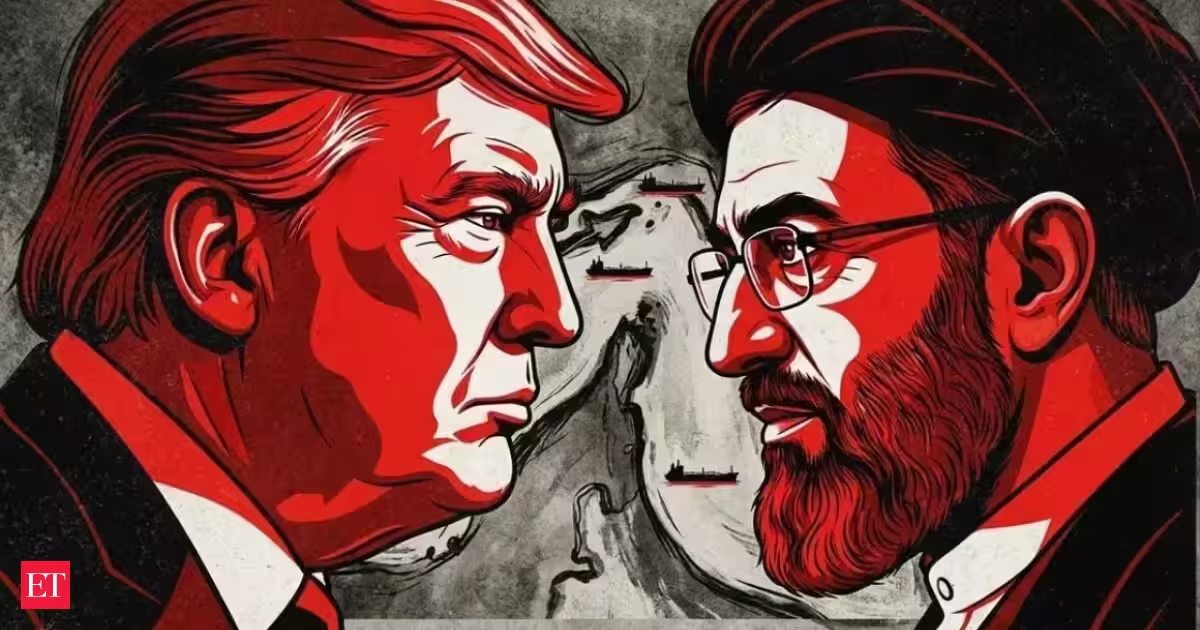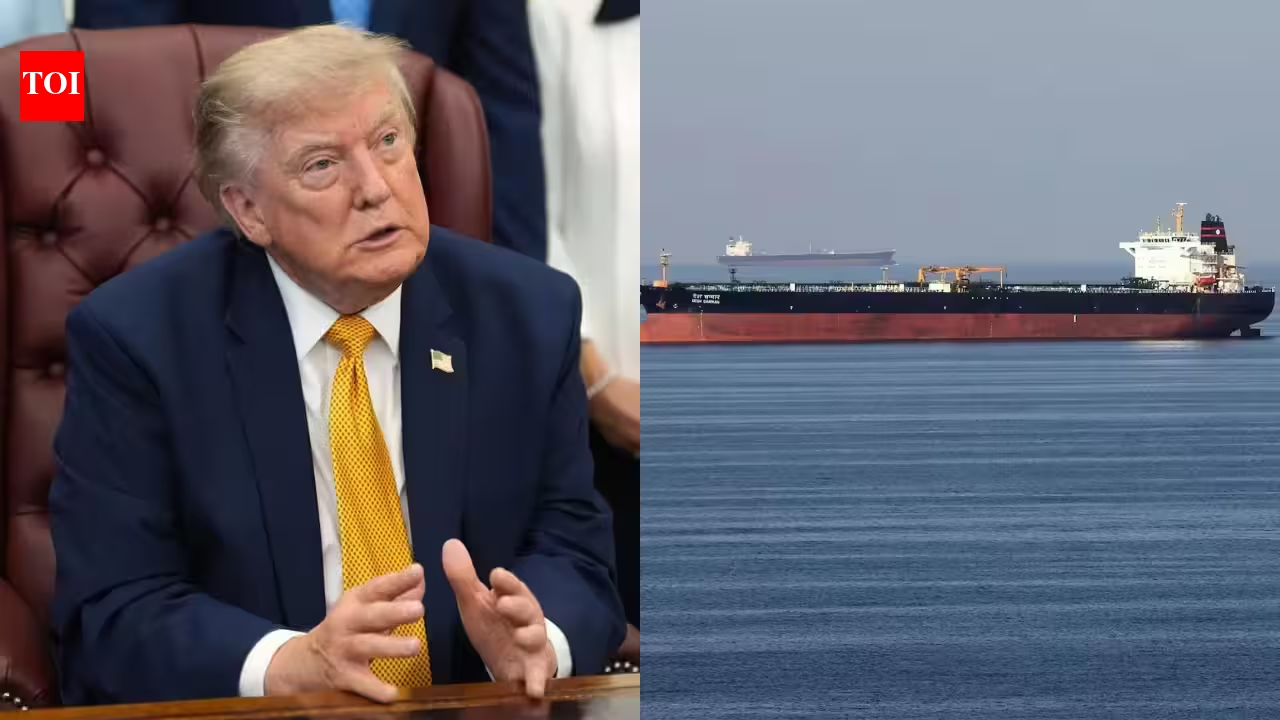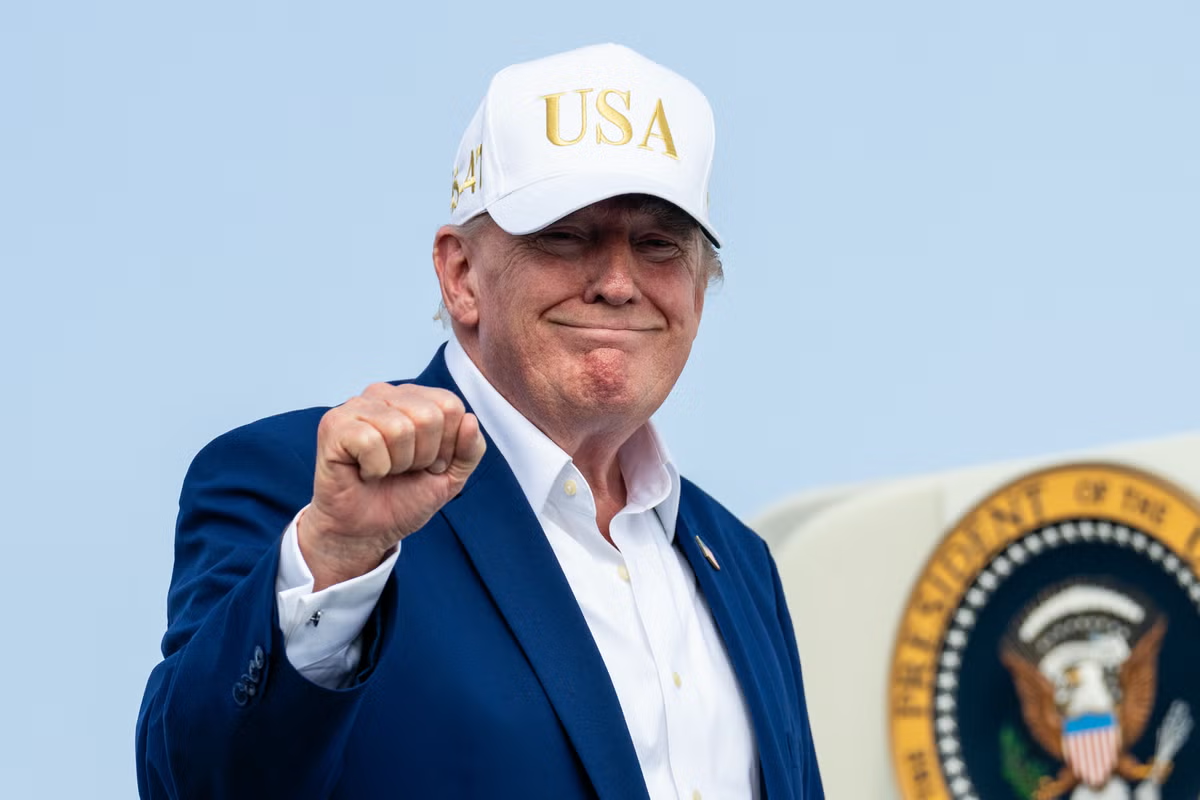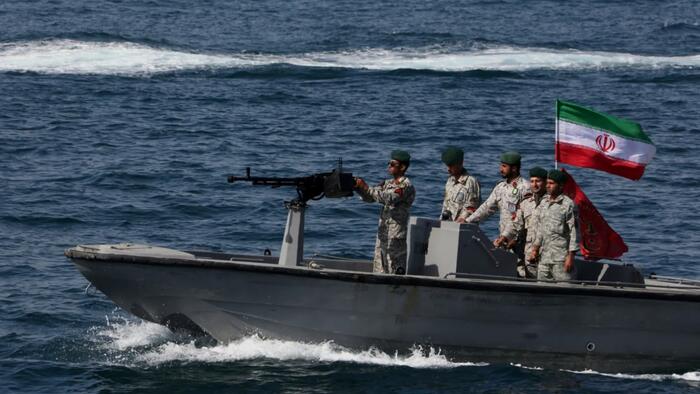
Iran's IRGC is holding the line, reiterating that the Strait of Hormuz will reopen to international shipping only after the United States accepts all of its conditions, which we outlined previously. Also, on Saturday Iran's army spokesman Amir Akraminia stated that Iran's new protocols in the Strait of Hormuz are "irreversible" and shall not be thwarted by the US. "The United States has no choice but to accept the existing situation; otherwise, it will incur costs far greater than those it has faced in the past," Akraminia said. "The United States has no choice but to accept the existing situation; otherwise, it will incur costs far greater than those it has faced in the past," Akraminia had added.On Sunday, a fresh report in The Wall Street Journal states the obvious - that President Trump has fewer and fewer options and is being squeezed, with any opportunity to declare 'victory' and make swift exit more elusive than ever, given Washington would have to make huge compromises, including lifting sanctions and paying war compensation to Tehran. Nearly six months ago when the war started, many non-interventionist critics accurately predicted that the current quagmire and catch-22 the US now finds itself in is precisely where things would end up. "For weeks, President Trump had been laying the groundwork to declare victory in the Iran war should Tehran fully reopen the Strait of Hormuz, even floating the idea privately to senior aides that he’s willing to walk away without a nuclear deal, U.S. officials said," WSJ writes.AFP/Getty Images"But that scaled-back objective became more difficult when Iran insisted Saturday on its highest price yet for permitting the free flow of traffic in the waterway, seeking billions of dollars in U.S. payments, the removal of American troops from the region and an end of the U.S. naval blockade, among other things," the report adds.In a parallel vein to this scaled-back, lower grade conflict, President Trump has freshly told Axios in a brief interview that "We are low keying it" in the Persian Gulf. This comes after a week ago he called off 'planned' 'harder' attacks on Iran, which may have been just a bluff all along. Tehran didn't blink, and it continues to press for maximal demands - as if to put 'maximum pressure' right back on Washington."We are only semi-negotiating with them. We are just watching Iran with its huge inflation and the fact they have no money," Trump claimed. According to more from Axios:He stressed that Iran "is in very bad shape" economically and has no money to pay its troops. The U.S. naval blockade has exacerbated the Iranian regime's economic crisis, Trump said.At the same time, Trump said that with oil down to slightly over $75 a barrel, U.S. consumers are feeling less pain from the war.Ironically, this is simply a return to administration talking points which defended the early days and weeks of a war that officials constantly touted would be 'swift' and limited.The US hope was that Iran and its economy would just collapse from within, the masses would take to the streets, and the government of the Ayatollah would be overthrown. This has proven delusional time and again.Instead, what we see happening is Washington being forced to move its bases back from front line areas in the Gulf, and officials including Trump himself constantly retreating from stated goals, objectives, and red lines. This is on display once again in the Sunday Axios interview:Axios acknowledges that the new list of Iranian demands have gone from being the prerequisite for a nuclear deal to a prerequisite to opening the Strait. Trump now says the US is “low keying it” and focusing on economic pressure. In other words: the Strait will not be opening. https://t.co/AweQabOB8W pic.twitter.com/3TMsxXcfh7
Trump Says "We Are Low Keying It" With Iran As Options For Walking Away Have Drastically Narrowed
US official: Trump even "floating the idea privately to senior aides that he's willing to walk away without a nuclear deal."
953 words~4 min read