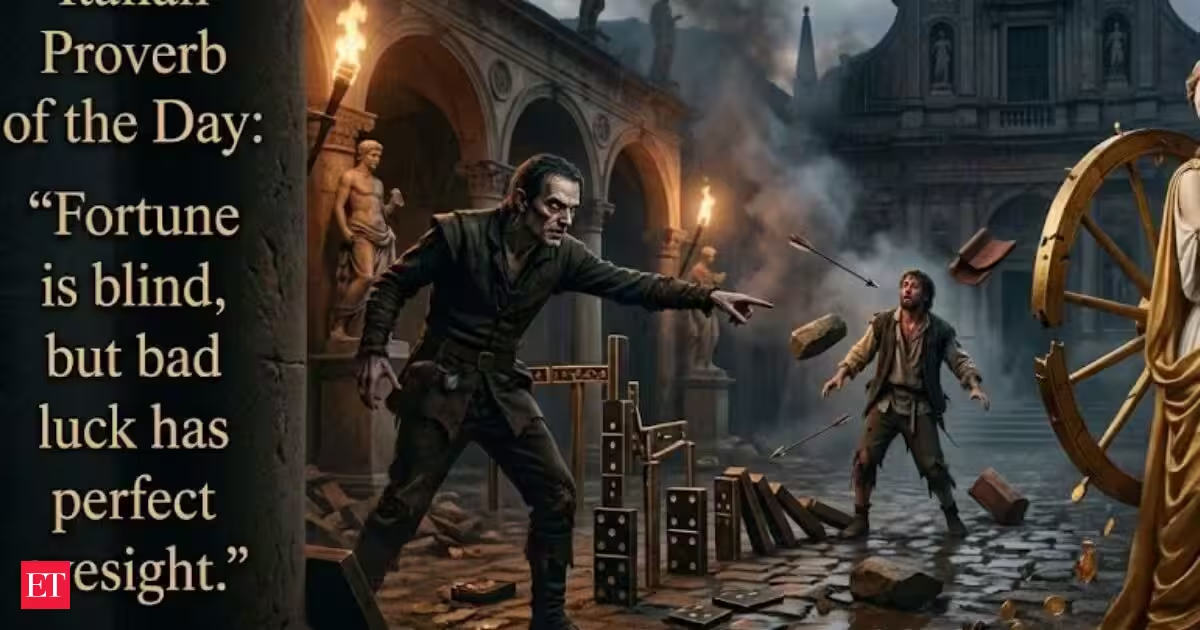
Italian Proverb of the Day: “La fortuna è cieca, ma la sfiga ci vede benissimo” is an Italian proverb that translates to “Fortune is blind, but bad luck has perfect eyesight.” With its sharp contrast between fortune and misfortune, the proverb captures a familiar feeling: good luck can seem difficult to find, while bad luck appears to arrive with remarkable accuracy. Behind its humour is a lesson about resilience, perspective and learning to face life's frustrating moments without losing hope.What does “Fortune is blind, but bad luck has perfect eyesight” mean?The proverb describes the tendency to feel that misfortune finds us more easily than good fortune. When several things go wrong in succession, it can seem as though bad luck is deliberately following us, while opportunities and favourable circumstances remain out of reach.The expression is deliberately exaggerated. Bad luck does not literally have eyesight, of course. The humour comes from giving misfortune an ability that fortune supposedly lacks. The result is a witty observation about how people experience difficult periods in life.Also Read: Mexican Proverb of the Day: “Where the devil stuck his tail, nothing is left alone.” A life lesson on how trouble spreadsWhy bad luck can feel impossible to escapeA single setback may be manageable, but several disappointments occurring close together can make a person feel overwhelmed. A delayed opportunity, an unexpected problem or a simple mistake can sometimes be followed by another difficulty before there is enough time to recover from the first.During such periods, people may begin to notice every negative event while overlooking smaller positive developments. This can make misfortune appear even more dominant.The proverb captures that feeling in a memorable way. By suggesting that bad luck can see perfectly, it turns frustration into humour.The lesson behind the humourAt its heart, the proverb encourages perspective. Everyone experiences periods when circumstances do not go according to plan. The important question is how a person responds when they do.Feeling frustrated by repeated setbacks is natural, but allowing those experiences to define one's outlook can make difficult circumstances even harder to handle. A setback does not necessarily predict what will happen next.The humorous tone of the proverb offers one way of looking at misfortune differently. Sometimes, being able to laugh at an unfortunate situation can make it easier to regain perspective and move forward.Fortune does not always arrive on scheduleThe proverb also reminds us that good fortune cannot always be expected to appear when we want it. Opportunities may emerge unexpectedly, while some efforts may take much longer to produce results.A person who experiences repeated setbacks may be tempted to believe that things will always go wrong. But circumstances can change, and difficult periods are not necessarily permanent.Maintaining patience during such moments can therefore be as important as working to change the situation itself.Why the proverb still matters“Fortune is blind, but bad luck has perfect eyesight” remains relevant because almost everyone can relate to the feeling of having an unusually unlucky day or period. Its appeal lies in the fact that it does not pretend that life is always fair or predictable.Instead, the proverb turns frustration into a joke and reminds us that misfortune is part of the human experience. Not every setback can be prevented, but our response to it remains within our control.The deeper lesson is one of resilience. When bad luck appears to have perfect eyesight, it may be tempting to give up. But keeping perspective, learning from setbacks and continuing forward can prevent a difficult moment from becoming a defining one.Sometimes, the best answer to a run of bad luck is not to take it too seriously. A little humour can make the road ahead easier to navigate.
Italian Proverb of the Day: “Fortune is blind, but bad luck has perfect eyesight.” A life lesson on resilience and perspective
Italian Proverb of the Day: An Italian proverb suggests that we often perceive bad luck as more frequent than good fortune. This insightful remark humorously reflects life's challenges, urging us to cultivate resilience. It indicates that while adversity may feel omnipresent, positive opportunities can eventually arise. Remembering that hard times do not last fosters hope, and adopting a light-hearted attitude can be beneficial during trying times.
614 words~3 min read