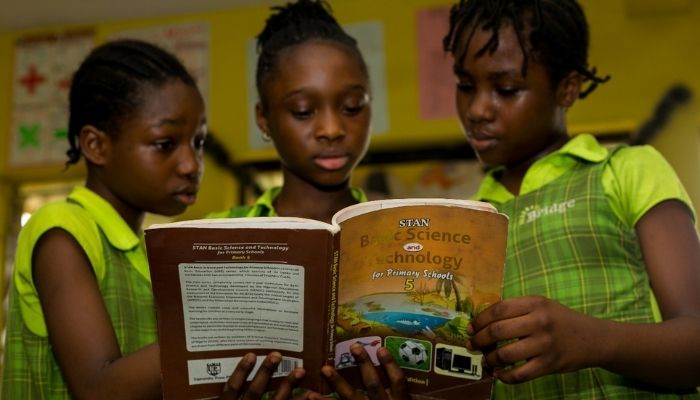
The federal government has intensified its efforts to improve the quality of instructional materials in schools, announcing stricter measures against the use of unapproved textbooks while introducing a merit-based process for evaluating and selecting learning resources.
Tunji Alausa, the minister of education, made this known recently at the unveiling of the National Textbook Ranking System, a policy that restricts public primary, junior secondary and senior secondary schools to nationally evaluated and approved textbooks from September 2026.
The minister emphasised that the federal government will blacklist schools, publishers and authors found using or distributing unapproved textbooks in public schools, as part of a new education reform targeted at lifting learning standards nationwide.
Folasade Boriowo, the director of press and public relations at the Federal Ministry of Education, disclosed this in a statement when she revealed that the minister said that the framework introduces, for the first time, a merit-based and transparent process for selecting instructional materials, aligned with global standards.
“The policy is aimed at strengthening curriculum delivery, improving learning outcomes, weeding out substandard textbooks and rebuilding public trust in the country’s education system,” the minister noted.