Nvidia's reported investment in Lancium looks small next to the numbers usually attached to AI infrastructure. Up to $3 billion is not small money, but it sits beside $500 billion Stargate headlines, $50 billion data-center leases, and the kind of capex guidance that makes a normal industrial cycle look sleepy. That scale can hide the more useful signal. Nvidia sells the accelerators, and now it is buying a claim on the bottleneck that decides whether those accelerators can run.
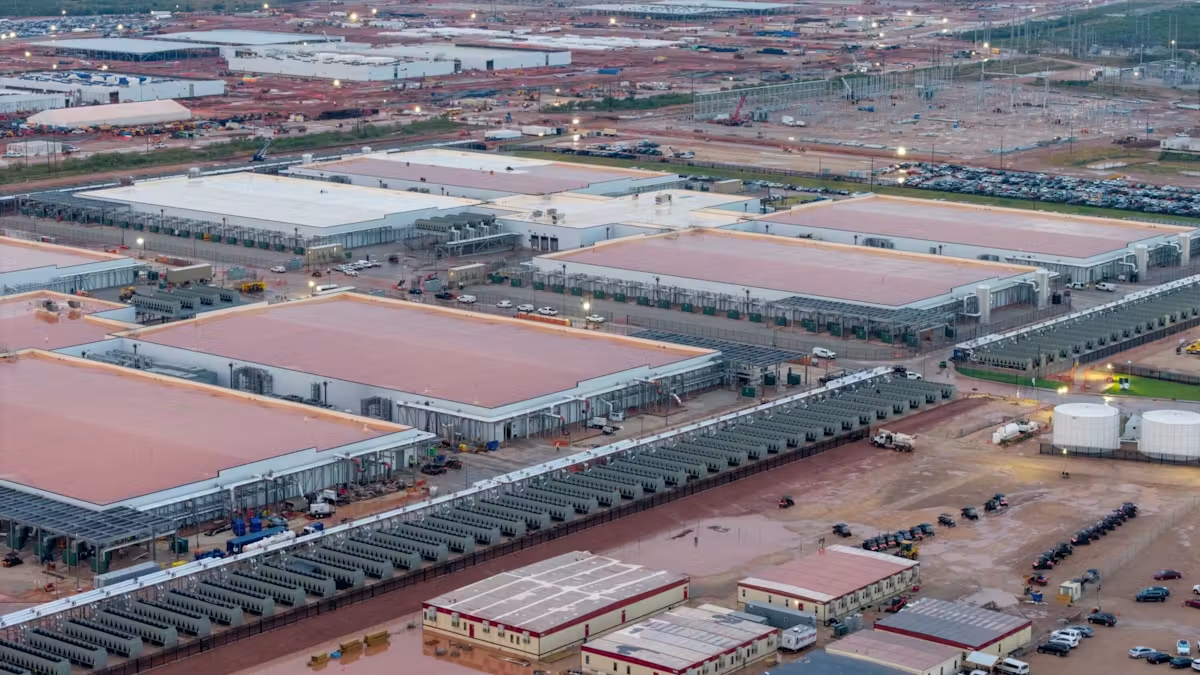
The reported structure is straightforward. Nvidia would put in $2 billion for about 20% of Lancium, a power-infrastructure developer backed by Blackstone. Another $1 billion would follow if Lancium hits conditions tied to grid consolidation or interconnection. The implied value for Lancium and its land-and-power assets is about $10 billion. Lancium owns the roughly 1,000-acre Clean Campus in Abilene, Texas, the first operating site for Stargate, the SoftBank-OpenAI-Oracle infrastructure project. Reuters and ChosunBiz both reported that Nvidia and Lancium did not comment on the deal.
Start with the steelman. If you believe AI demand is still early, this is not mission creep. It is supply-chain finance. A GPU shipment is only valuable if the customer can put it into a facility with enough land, transformers, interconnection rights, cooling, and power contracts. If those pieces lag, the chip order either slips or turns into inventory sitting in a building that cannot draw enough electricity. Nvidia has every reason to reduce that risk. Financing Lancium is cheaper than letting a grid queue become the governor on revenue.