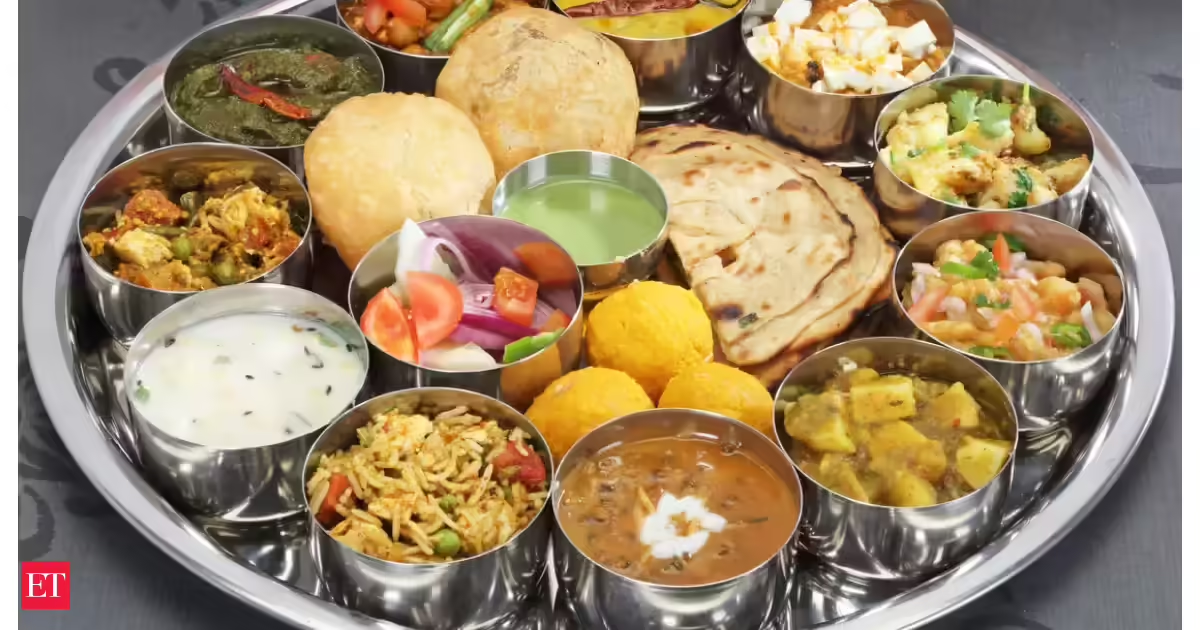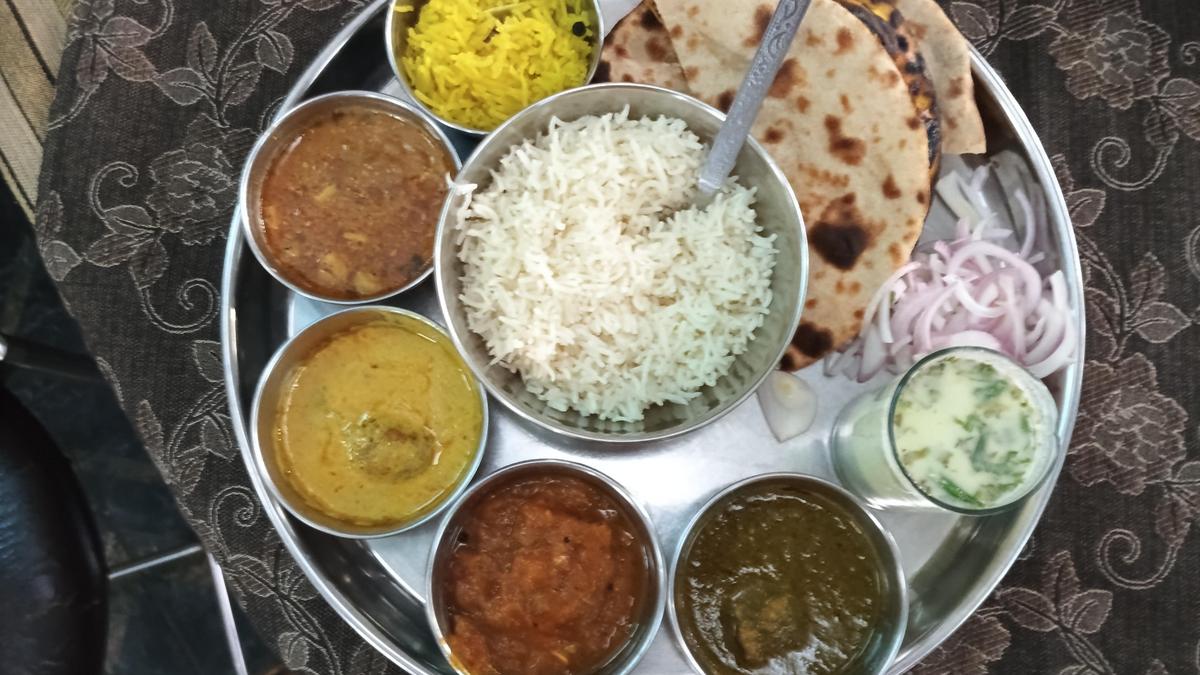
The vegetarian thali cost was 14 per cent lower than in July last year
| Photo Credit:
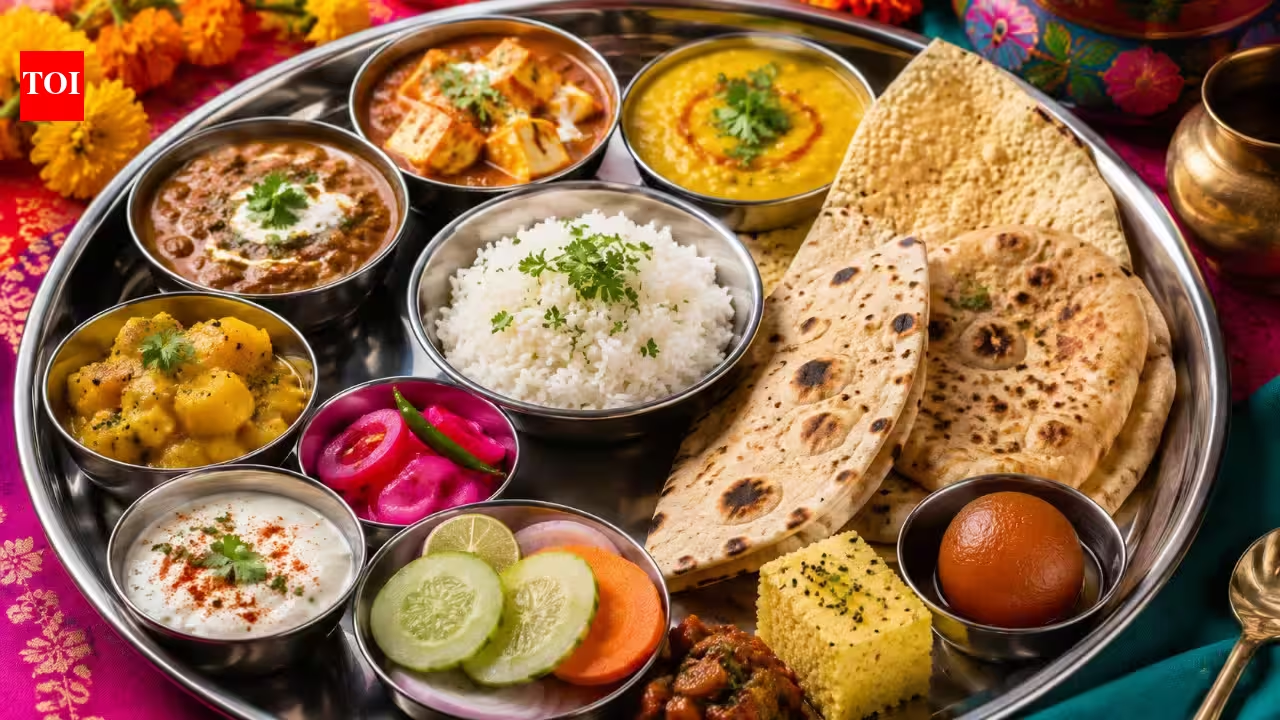
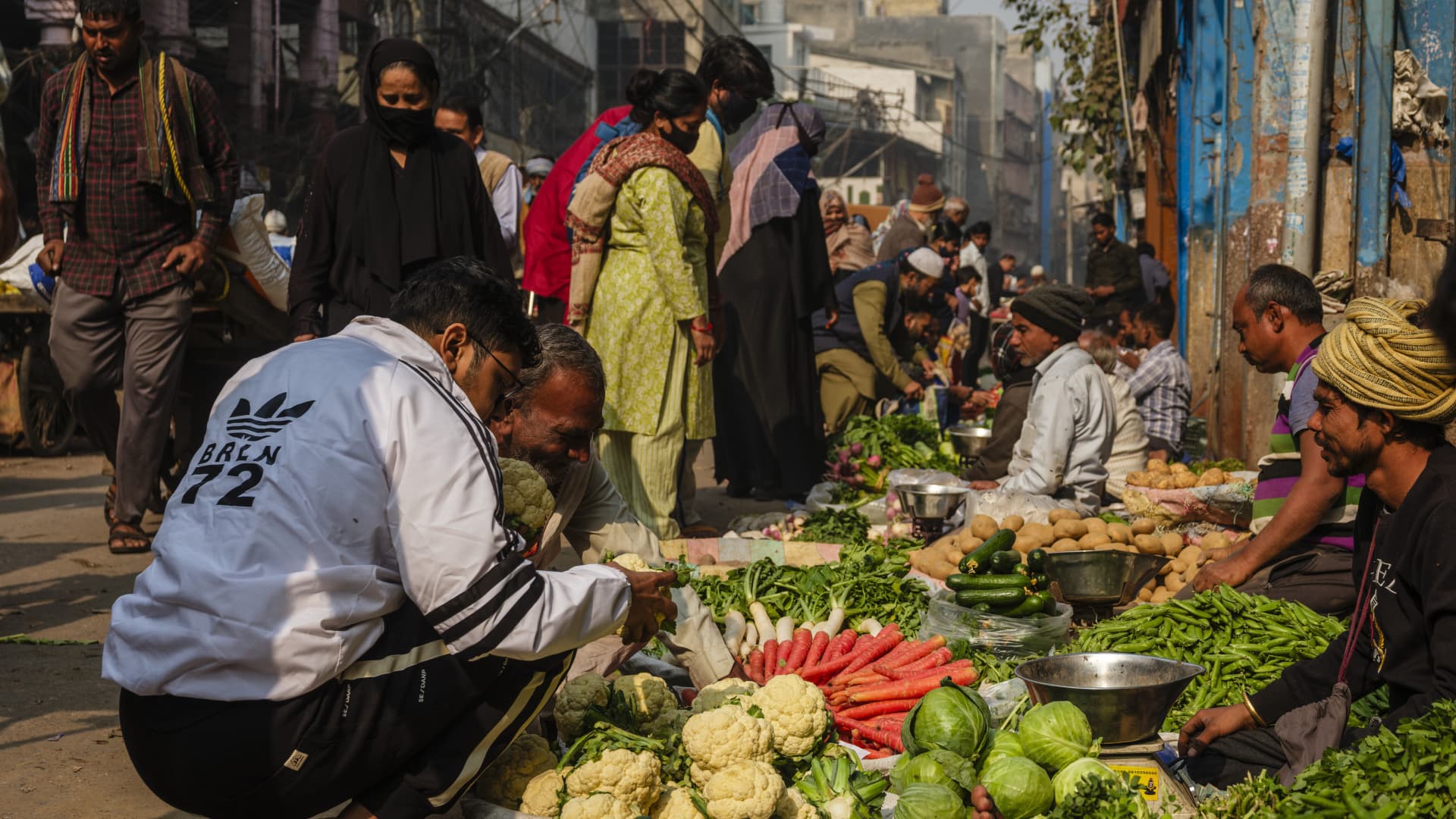
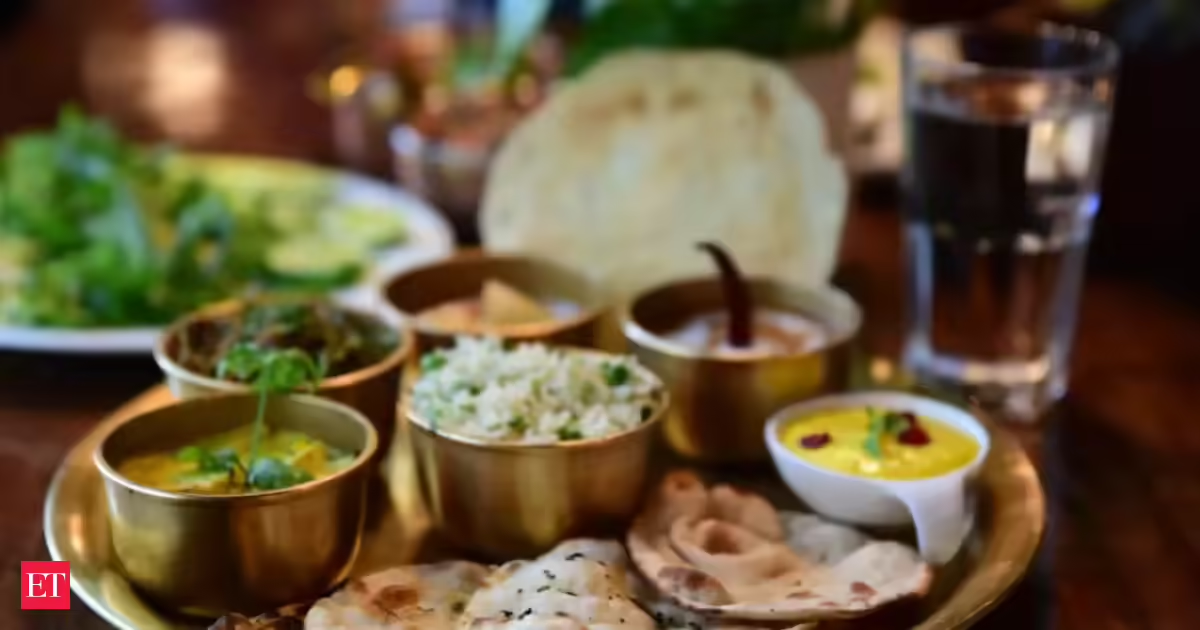
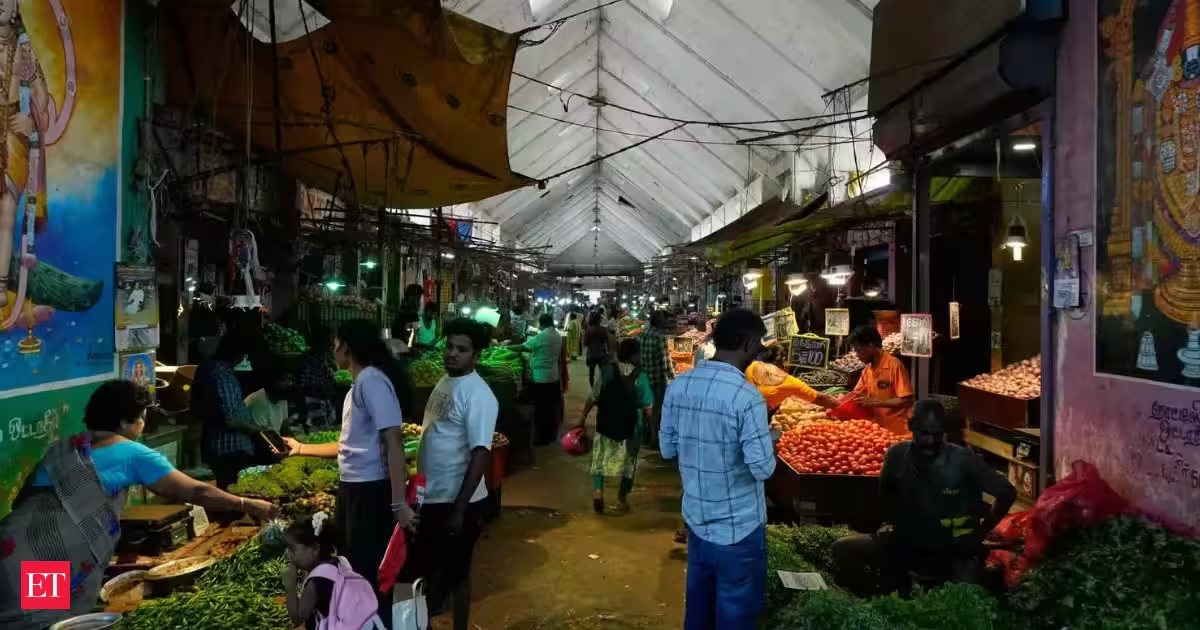
Rising prices of tomato, onion and potato pushed up the cost of a home-cooked vegetarian thali in July, signalling renewed pressure on household food budgets during the monsoon season. However, a sharp decline in vegetable prices and lower broiler chicken rates compared with last year helped keep both vegetarian and non-vegetarian thalis significantly cheaper on an annual basis, according to Crisil’s latest Roti Rice Rate report.The average cost of a vegetarian thali rose 4 per cent month-on-month to ₹28.1 in July from ₹27.1 in June. The index measures the average cost of preparing a thali at home based on input prices prevailing across north, south, east and west India. In contrast, the cost of a non-vegetarian thali fell 2 per cent to ₹53.5 from ₹54.8 in the previous month.On a year-on-year basis, however, the picture was markedly different. The vegetarian thali cost was 14 per cent lower than in July last year, while the non-vegetarian thali was around 13 per cent cheaper, reflecting a broad-based moderation in food prices from elevated levels seen a year ago.Key StaplesThe primary driver of the month-on-month increase in the vegetarian thali was tomato. Prices of the kitchen staple surged 31 per cent in July after market arrivals declined 27 per cent, highlighting seasonal supply constraints that often emerge during the monsoon. Adding to the pressure, potato prices increased 2 per cent while onion prices rose 5 per cent, making everyday meals costlier for households.Despite the recent rise, prices of key vegetables remained substantially below year-ago levels. Tomato prices fell 36 per cent year-on-year to ₹42 per kg, compared with ₹66 per kg in July last year. Potato and onion prices declined 30 per cent and 36 per cent, respectively, aided by improved production and a favourable base effect. Last year, potato prices had risen sharply because of crop losses caused by blight infestations and adverse weather, while higher onion production this year boosted supplies and eased prices.Major ReliefOther food ingredients also contributed to lower annual thali costs. Pulses prices dropped 14 per cent year-on-year due to better output and comfortable stock levels, while rice prices fell 4 per cent, offering some relief to consumers.Not all items became cheaper, though. Vegetable oil prices rose 20 per cent year-on-year, while LPG cylinder prices increased 6 per cent, preventing a steeper decline in thali costs despite softer vegetable prices.For non-vegetarian consumers, lower broiler prices proved a major relief. Broiler chicken, which accounts for nearly half the cost of a non-vegetarian thali, declined an estimated 12 per cent year-on-year and 9 per cent month-on-month. The fall was attributed to weaker demand during the monsoon and the Shravan period, when many consumers traditionally avoid meat consumption.Published on August 9, 2026