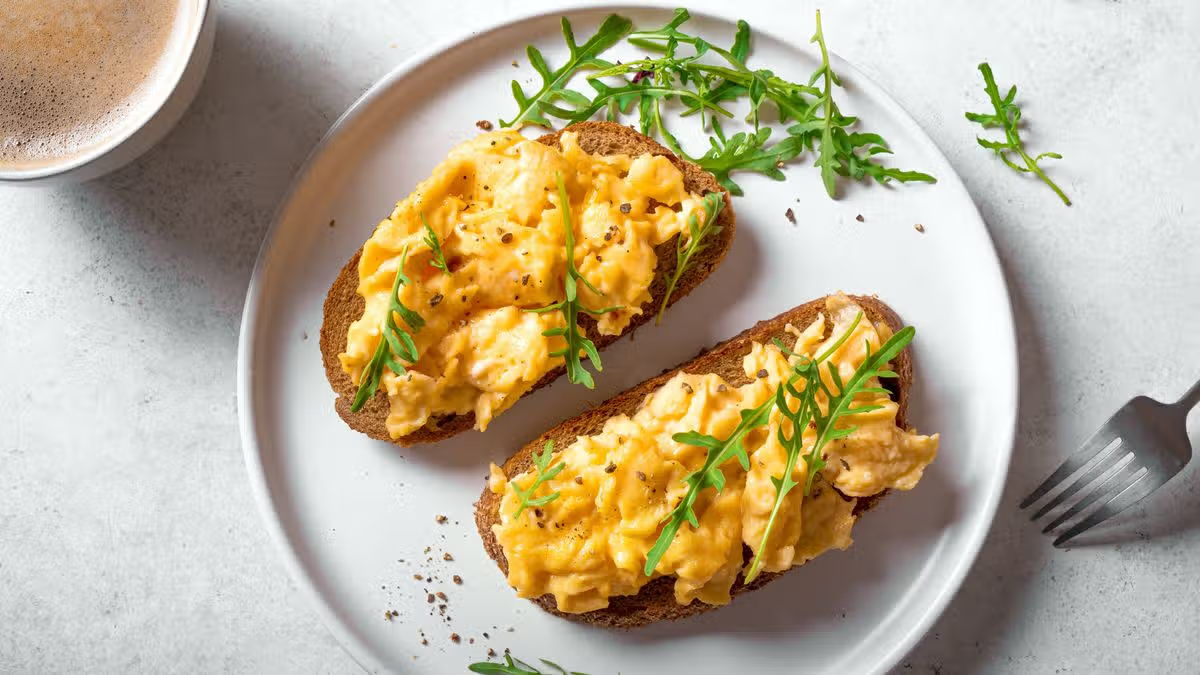
Late chef Anthony Bourdain swore by using one common ingredient in scrambled eggs - and leaving another out14:30, 09 Aug 2026For many of us, scrambled eggs are the one dish we reckon we've already cracked. A few eggs, a splash of milk, a knob of butter in the pan — job done.But according to the late chef Anthony Bourdain, that splash of milk is precisely where most home cooks go wrong. Bourdain's philosophy was refreshingly simple: keep your hands off the liquids. No milk, no cream, no water. Nothing. Just eggs and, crucially, plenty of good butter.The reasoning, he argued, was straightforward — adding liquid to your eggs before cooking dilutes their flavour, robbing the finished dish of the rich, deeply eggy taste that makes a truly great scrambled egg worth eating. It was this method that caught the attention of recipe developer and cookbook author Laurel Randolph, who had long been adding milk to her eggs without much thought.Writing for Simply Recipes, she said: "I've found that a few small tweaks make all the difference, and now I get soft, fluffy scrambled eggs every time."I recently stumbled across an Anthony Bourdain interview that made me think twice about that splash of milk. Turns out that's because Bourdain does not add any liquids to his scrambled eggs. No milk, no cream, no water, nothing. Just plenty of butter. He says that the extra liquid dilutes the flavour of the eggs."How to make scrambled eggsBourdain is not the only culinary heavyweight to hold this view. Legendary French chef Jacques Pépin takes a similar stance, keeping the eggs pure during cooking and introducing butter and cream only at the very end to arrest the cooking process — a technique that produces eggs of extraordinary softness and flavour, reports the Express.Using a generous amount and allowing it to coat the pan fully before the eggs go in creates both flavour and a natural barrier against overcooking. For Bourdain, it was not merely a cooking fat — it was the ingredient doing all the heavy lifting that milk was never really equipped to do in the first place.Randolph turned to Cook's Illustrated, whose methodical kitchen testing shed further light on the matter. While the publication found that a small amount of liquid can help tenderise scrambled eggs, it also found that most home cooks massively overdo it.Their recommendation? No more than one to two teaspoons of liquid per egg — a fraction of what most people pour in without thinking.Anything beyond that, and the eggs turn tough and rubbery, with all the flavour of the original eggs washed out entirely. As Randolph put it: "Too much liquid can make the eggs tough or rubbery — the opposite effect — and, as Bourdain said, dilute their flavour."Randolph outlines several key steps to transform your morning eggs. First, season your eggs while you are whisking them, not once they are already in the pan. Adding salt too late can affect the protein structure and leave you with a less consistent texture.Second, whisk properly. Beating enough air into the mixture before cooking gives the eggs a lighter, fluffier finish — something no amount of milk can replicate.Third, take your time. Cooking eggs over a low heat and resisting the urge to rush is perhaps the single most important step. High heat causes the proteins in eggs to seize up quickly, squeezing out moisture and leaving you with dry, rubbery curds. Low and slow keeps everything tender.Article continues belowWhat other chefs say about perfect scrambled eggsThe world's top chefs have plenty more wisdom to offer when it comes to this deceptively simple dish, and their advice is well worth heeding.Gordon Ramsay is perhaps the most vocal proponent of the low-and-slow method. His signature technique involves cooking scrambled eggs in a pan that is repeatedly moved on and off a low heat, stirring constantly with a spatula rather than whisking. He also stirs in a small amount of crème fraîche at the very end to stop the cooking and add creaminess.
Scrambled eggs will be perfect every time if you ditch common ingredient
Late chef Anthony Bourdain swore by using one common ingredient in scrambled eggs - and leaving another out
672 words~3 min read