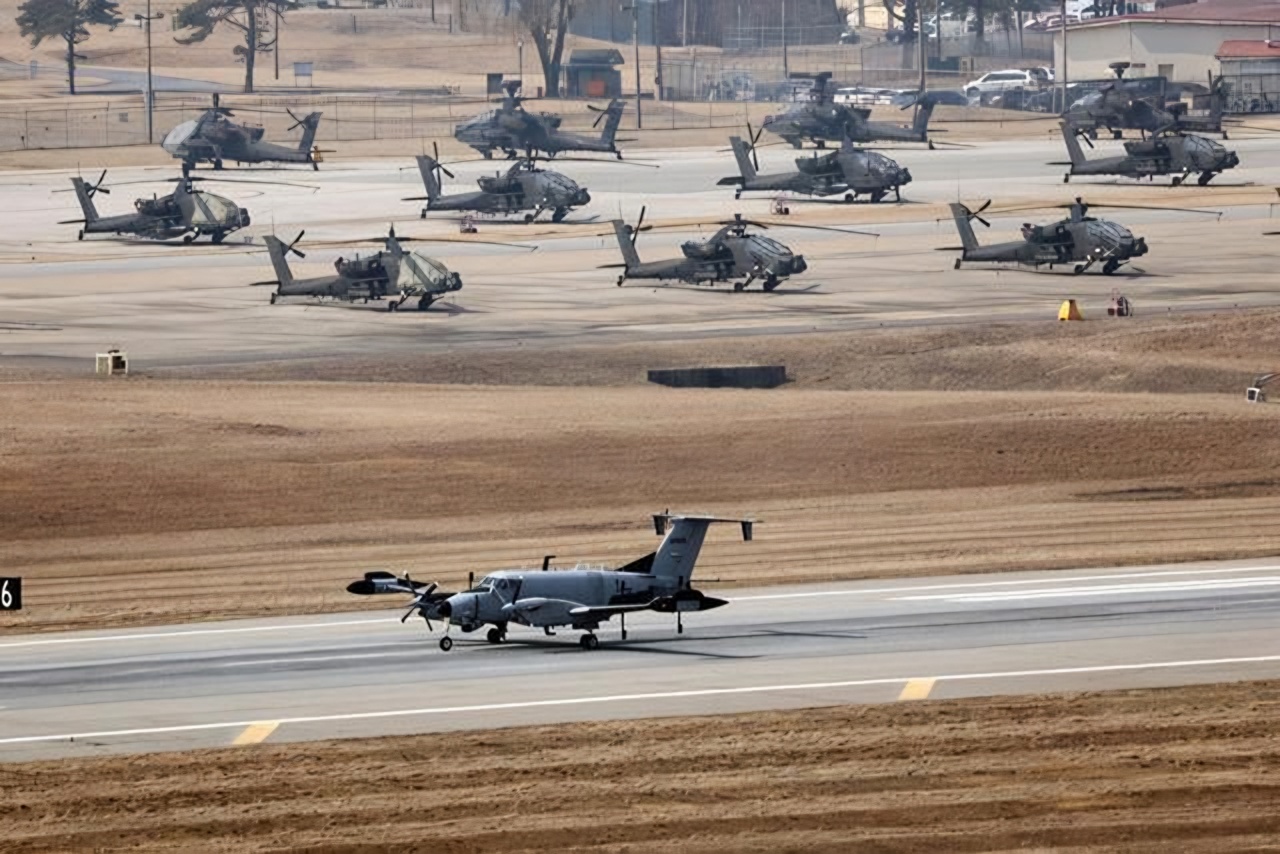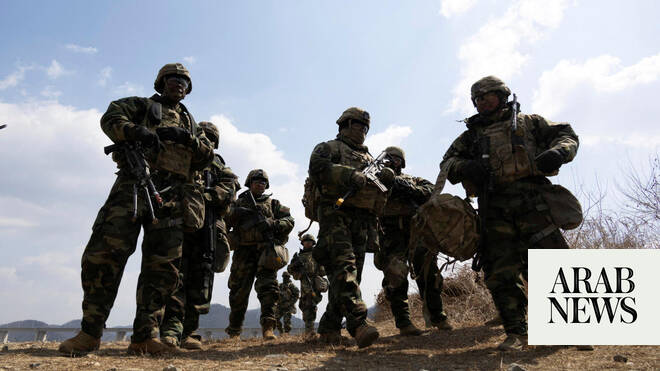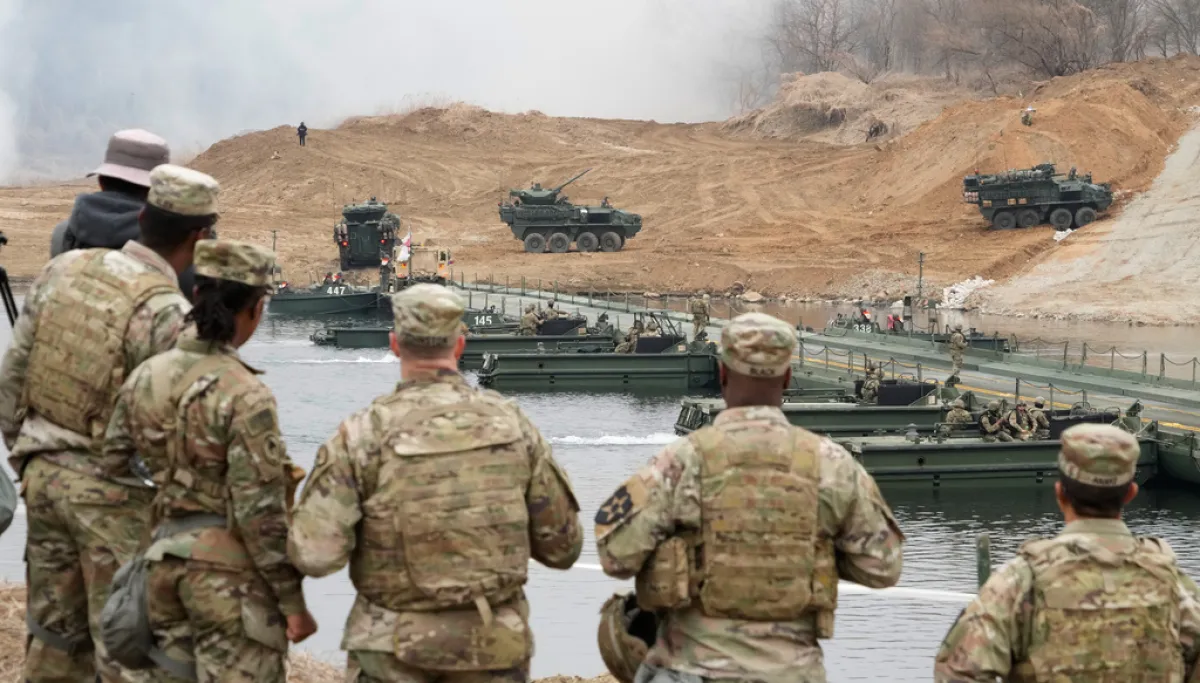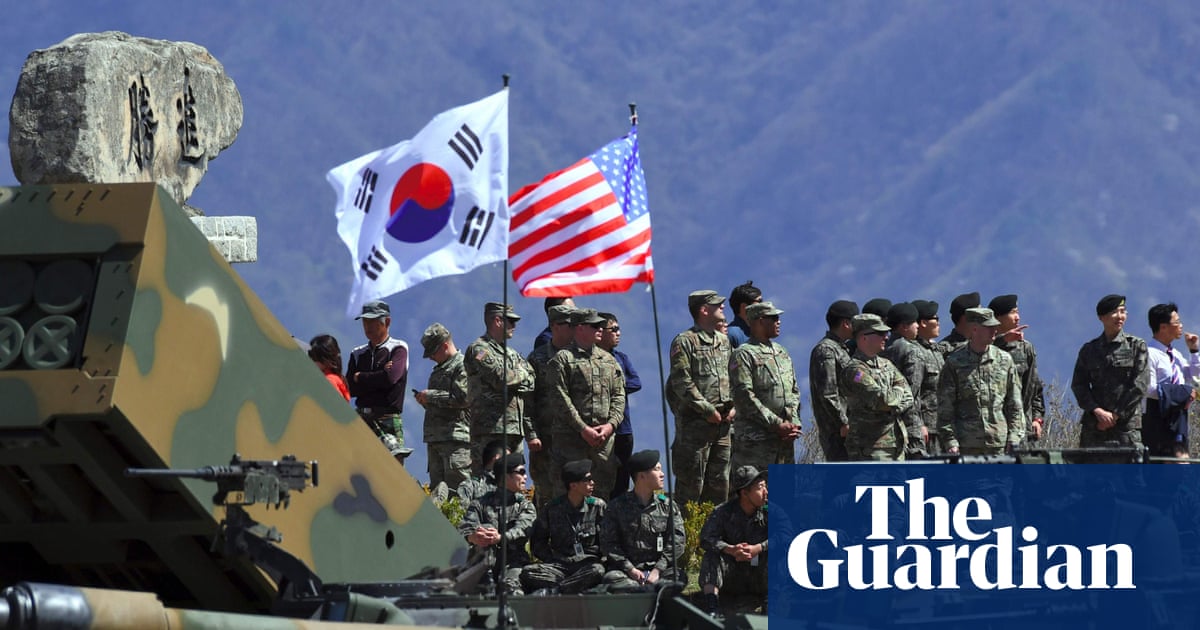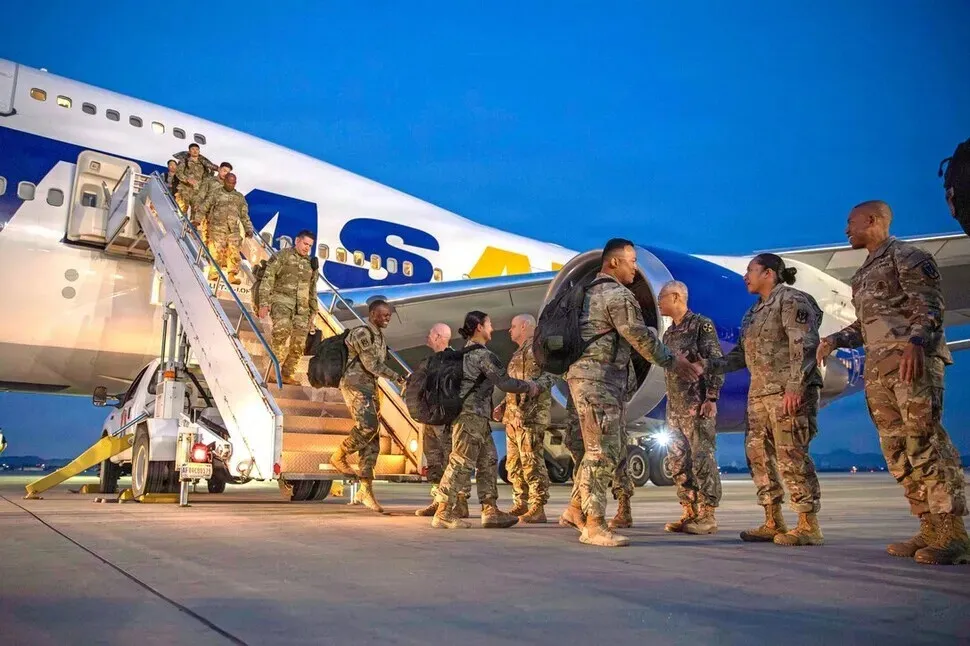
The National Defense Authorization Act recently passed by the US House of Representatives includes a provision that would prevent the expenditure of funds to reduce the US Forces Korea (USFK). The act for fiscal year 2026, released on Dec. 7 (local time), includes a clause that would “prohibit the obligation or expenditure of funds authorized to be appropriated by this Act to reduce the total number of members of the Armed Forces permanently stationed in or deployed to the Republic of Korea below 28,500.” South Korean news outlets believe that this provision demonstrates the US House of Representatives’ determination to retain the size of the 28,500-strong USFK. The joint communique signed at the 57th Security Consultative Meeting, published Nov. 11, failed to mention that the total number of permanently stationed USFK members would not be reduced, leading many to believe that the Donald Trump administration would cut forces. As such, public opinion in South Korea is largely in favor of the National Defense Authorization Act. Ever since the Lee Myung-bak administration, both South Korea and the US have emphasized retaining the agreement, which kept the USFK at its current scale of 28,500. That number soon came to serve as a portent to be used in calculating the changes in size and nature of the USFK. From 2004 to 2006, during the Roh Moo-hyun administration, the US followed its global posture review with a withdrawal of around 9,000 troops from South Korea to concentrate its efforts on the war against terror. In October 2004, during Roh’s administration, an agreement was made to reduce the 38,000 USFK forces to 25,500 by the end of 2008. South Korea and the US agreed to halt further reductions to the USFK and maintain the forces at the current scale of 28,500 following a South Korea-US summit in April 2008, during the early days of the Lee Myung-bak administration. The Lee administration aggressively tooted its own horn, boasting that it had restored the South Korea-US alliance after the Roh administration sabotaged it in an attempted “realignment” through the redeployment of the USFK and asking to regain wartime operational command. Ever since the April 2008 summit, both South Korean and US defense chiefs have always managed to get a word in edgeways about this agreement. Aside from one occasion in 2020, during Trump’s first stint in office, the joint communiques signed by the two countries at their Security Consultative Meeting have never failed to mention that the USFK will maintain force and posture levels. The US-ROK Status of Forces Agreement stipulates that the Korean government will be notified regularly of numbers and categories of USFK personnel entering and departing the country. However, the Korean government lacks the specific means to track the immediate increases and decreases in the USFK. The Korean government has no choice but to take the US government’s word that there are 28,500 USFK troops in South Korea, as USFK troops are exempt from domestic laws and regulations concerning passports and visas, as well as from the registration and management of foreign nationals. USFK personnel do not use commercial flights when entering and exiting the country, but board chartered aircraft to and from the Osan Air Base. During the final days of the Park Geun-hye administration in 2016, the number of US troops stationed in South Korea reached approximately 25,000 and dipped to 23,000 during the Yoon Suk-yeol administration (2023 and 2024), according to a US Department of Defense document from the DoD Personnel, Workforce Reports & Publications site. This document, compiled by the US Defense Manpower Data Center, presents the annual troop strength of USFK as time-series data. Whenever the US faced criticism for not providing the promised 28,500 troops for the USFK, it explained that “training troop levels can fluctuate based on operational needs.” This document shows that the size of active duty USFK personnel increased from 25,772 at the end of December 2008, the first year of the Lee Myung-bak administration, to 27,724 in 2012, 29,683 in 2013, 29,074 in 2014, and 29,113 in 2015, reaching a level of around 29,000. One year later, in 2016, the number decreased by 4,093 from the previous year to 25,020. In 2017, the numbers fell further by 1,440 from the previous year to 23,580. Subsequently, during the Moon Jae-in administration, the USFK troop strength began to increase again, reaching 26,311 in 2018, 26,643 in 2019, 25,430 in 2020, 25,338 in 2021, and 25,372 as of September 2022, maintaining a level of around 25,000 to 26,000. The Yoon administration’s US foreign policy, which involved letting the US do and take whatever it wanted, boasted that it had restored the South Korea-US alliance, which had been destroyed by its predecessors when, in fact, the number of US troops stationed in South Korea actually decreased by about 2,000 during Yoon’s term. Under the Yoon administration, the size of the USFK remained in the 23,000 range: 23,813 in 2023 and 23,291 in 2024. The joint communiques from the South Korea-US Security Consultative Meeting under the Yoon administration repeatedly “reiterated the US commitment to maintain current USFK force levels,” yet the actual numbers fell short by approximately 4,900 troops. Maintaining USFK force levels at 28,500 troops may have found its place as an invaluable indicator of political and military trust between South Korea and the US since 2008, but the number itself is an illusion that South Korea finds difficult to verify.
The reality behind the ‘28,500 US troops in Korea’ number
The Korean government has no choice but to take the US government’s word that there are 28,500 USFK troops in South Korea — which Pentagon numbers show isn’t really the case
903 words~4 min read