Running open-source Large Language Models (LLMs) used to be a luxury reserved for developers with enterprise-grade server rooms. If you didn't have dual A100 GPUs sitting under your desk, running a modern 8B or 14B parameter model was a one-way ticket to Out-Of-Memory (OOM) crashes and frozen systems.
Then came quantization. By compressing 16-bit floating-point weights (FP16) down to 4-bit or 8-bit integers, quantization slashes the VRAM footprint of LLMs by 70% or more, often with barely noticeable drops in accuracy.
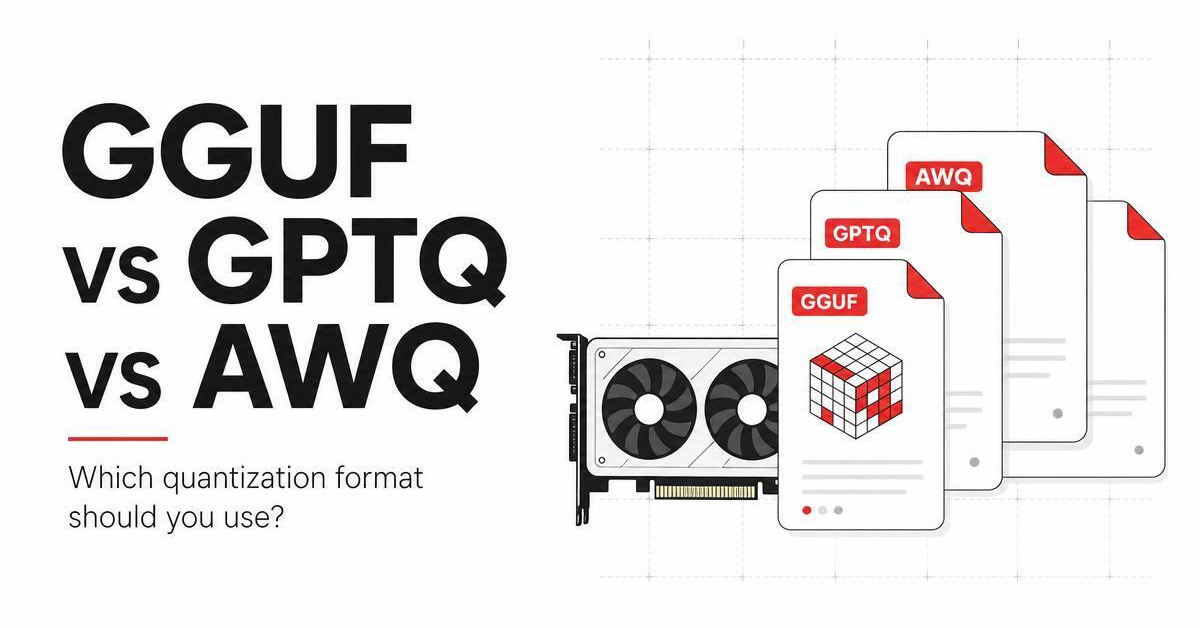
But as you browse Hugging Face for a model, you are immediately hit with a wall of acronyms: GGUF, GPTQ, and AWQ. Which format actually fits your hardware? Which one delivers the fastest tokens-per-second? And how do you generate these files without melting your local machine? Let's break down the definitive differences so you can choose the exact format your pipeline needs.
1. GGUF: The King of Local Hardware and CPU Offloading
Developed by the team behind llama.cpp, GGUF (GPT-Generated Unified Format) completely revolutionized local LLM execution.