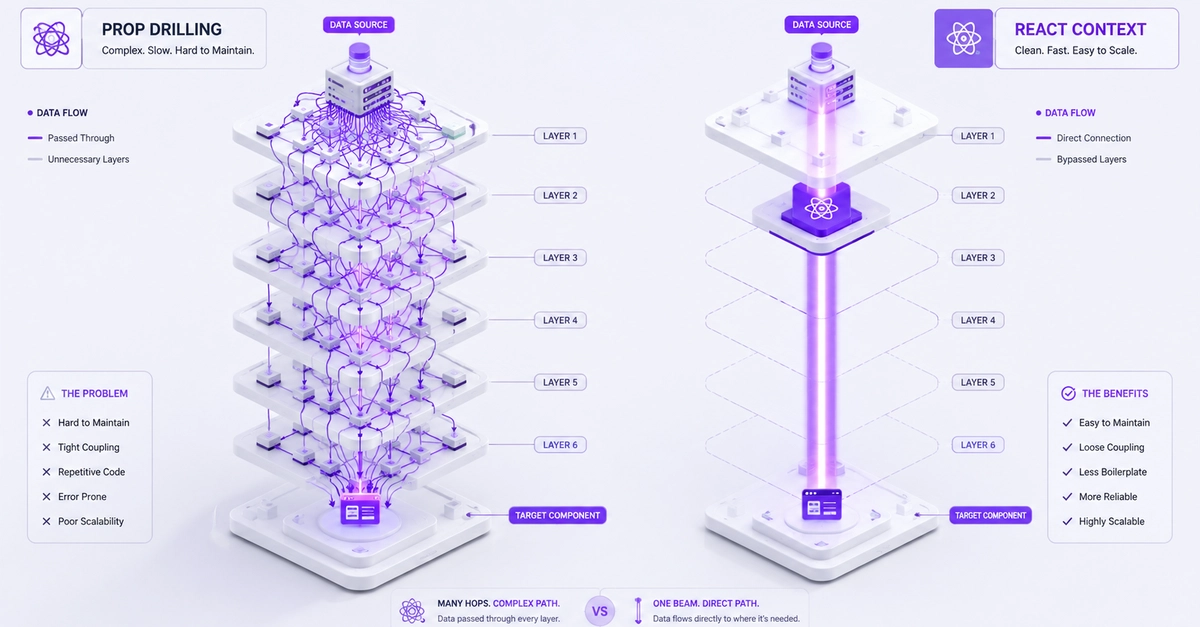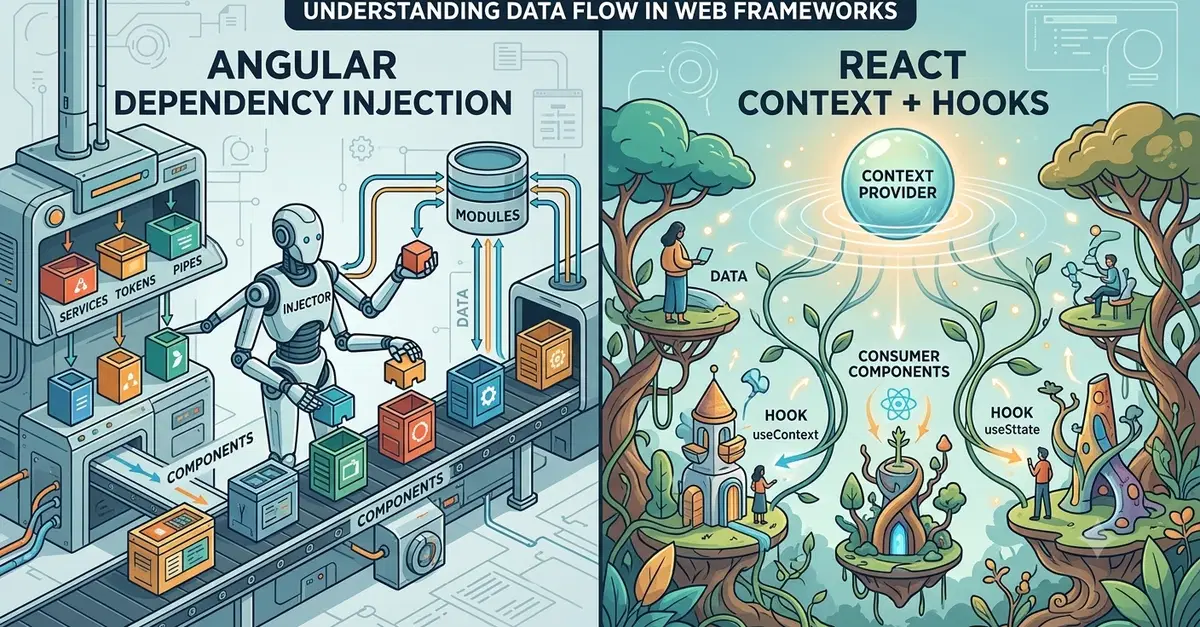
Sharing logic and state across an application is one of the most fundamental challenges in frontend development. Angular and React both solve it — but with dramatically different philosophies.
Angular uses a built-in Dependency Injection (DI) container. React uses Context + Hooks. If you've worked seriously with both, you know these aren't just different APIs — they represent two completely different mental models.
In this article we'll compare both approaches head to head with real code, honest trade-offs, and a clear recommendation for different scenarios.
The Problem They Both Solve
Imagine you have an AuthService that manages the current user. You need it in your navigation bar, your profile page, your settings page, and your API interceptor. How do you share it?