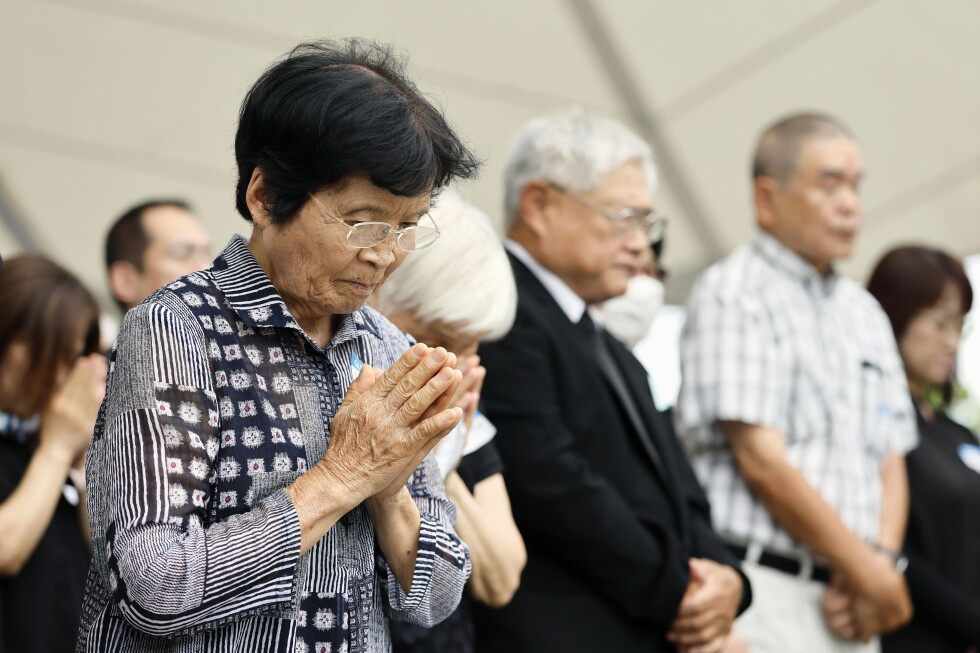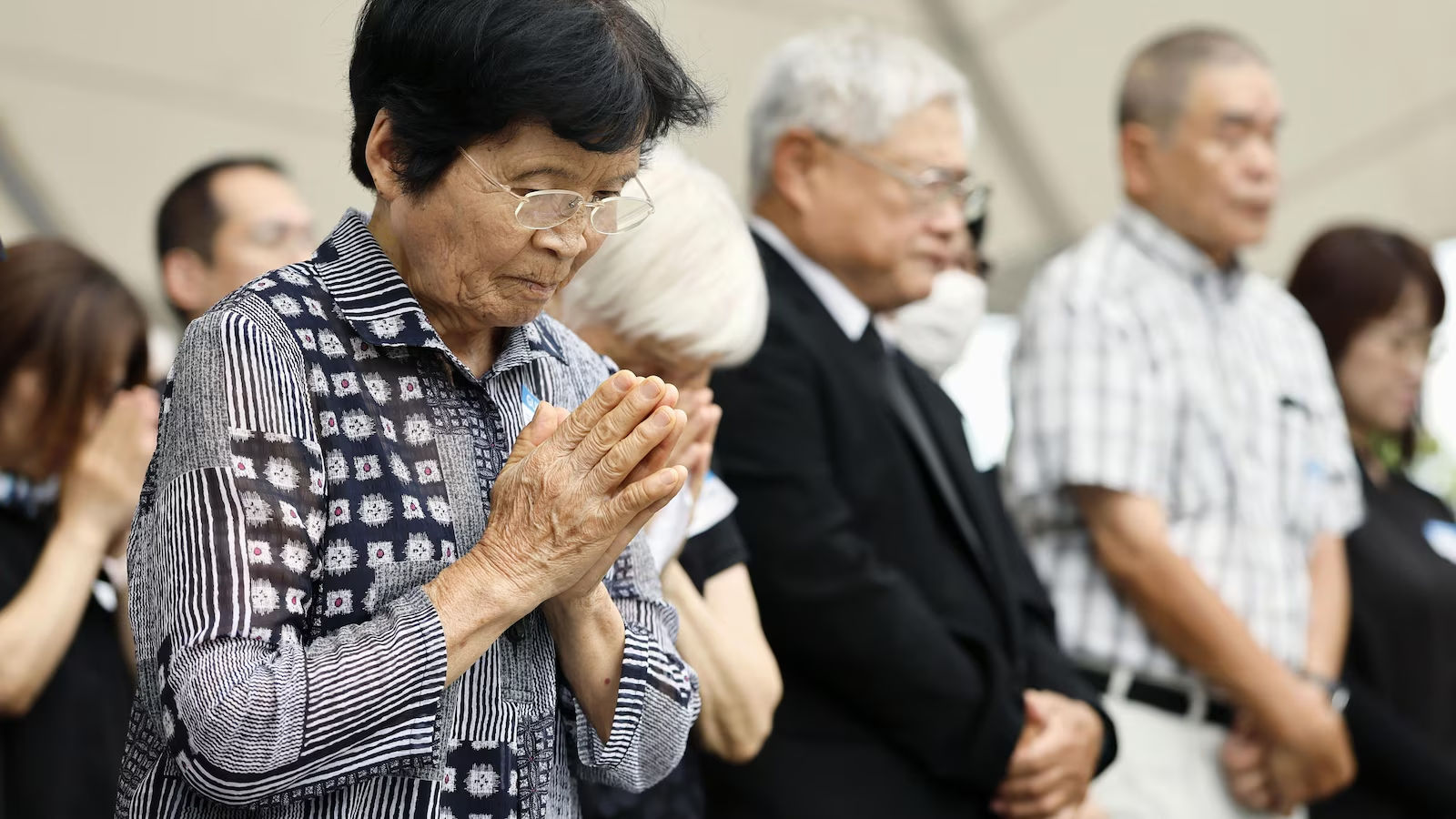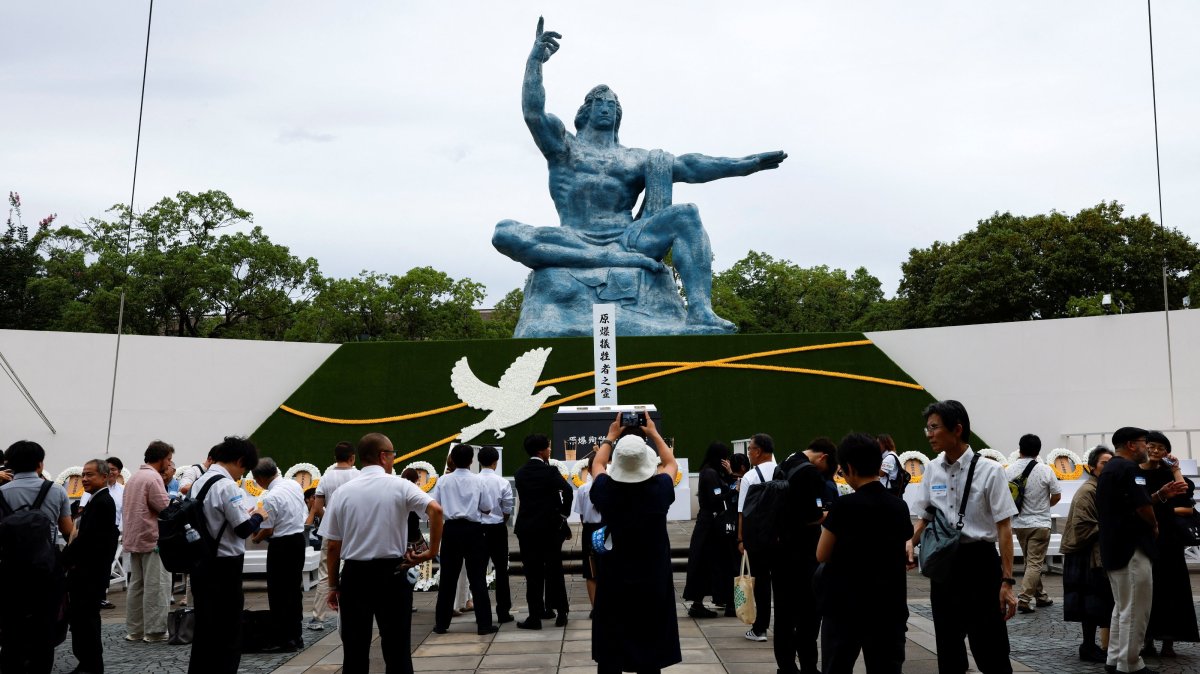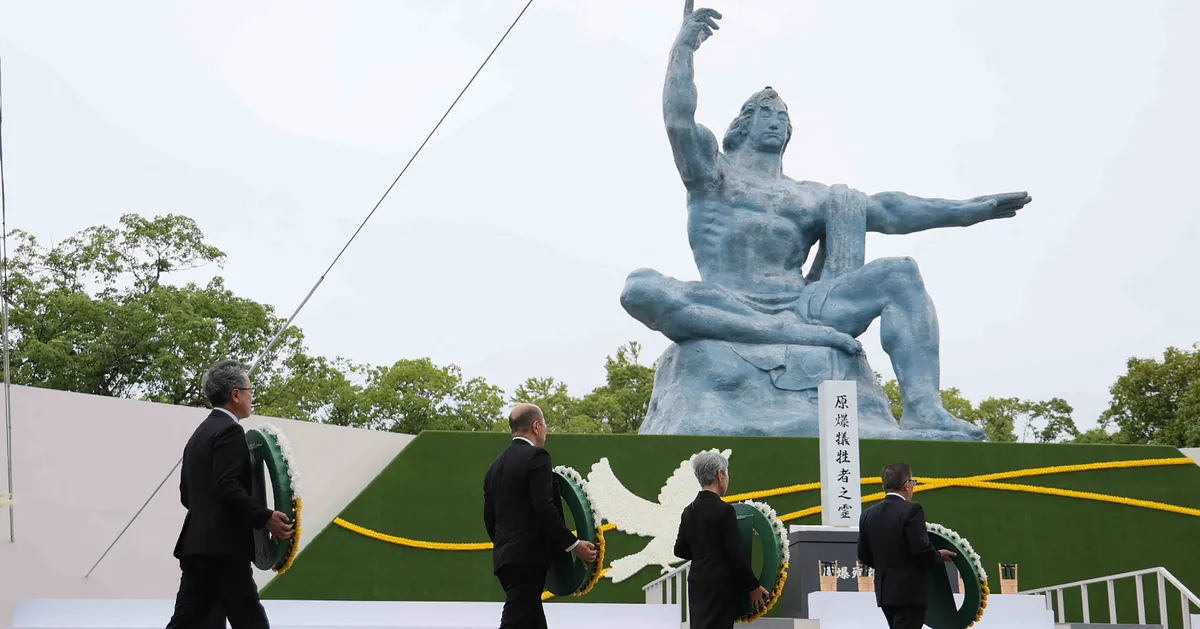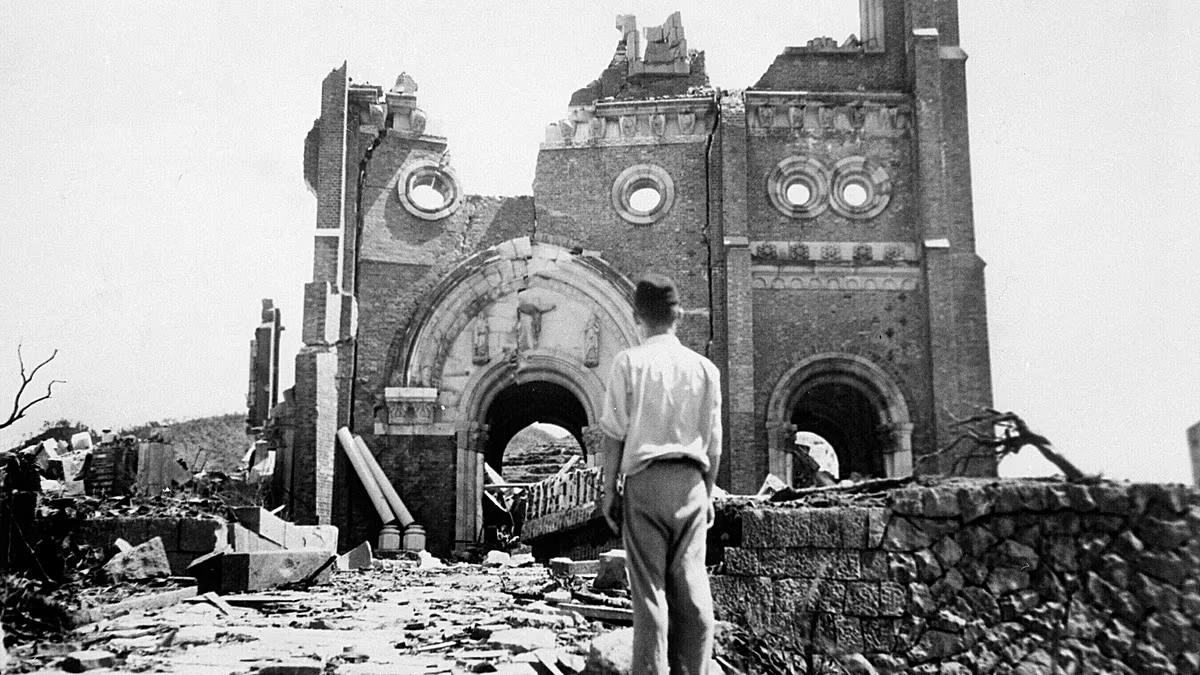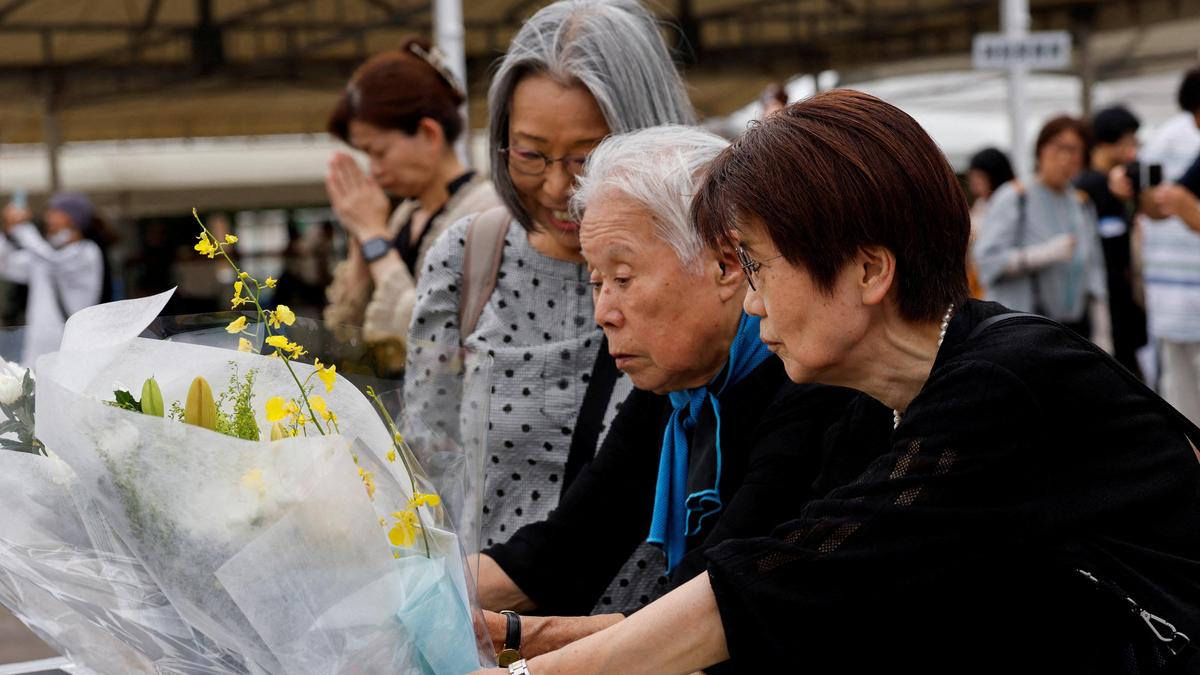
Attendees lay flowers for the victims of the 1945 atomic bombing during a ceremony commemorating the 81st anniversary of the bombing of Nagasaki, at Nagasaki Peace Park in southwestern Japan, on August 9, 2026.
| Photo Credit: Reuters
Nagasaki on Sunday (August 9, 2026) marked the 81st anniversary of the U.S. atomic bombing of the southwestern city, as the Mayor called nuclear weapons “absolute evil”, denounced growing support for nuclear deterrence and called on the Japanese Government to adhere to its three post-war non-nuclear principles.The anniversary coincided with Japanese Prime Minister Sanae Takaichi’s government revising the country’s defence policy to further bolster the military’s offensive capability. Speculation has risen about whether Ms. Takaichi, who supports nuclear dissuasion, may allow nuclear weapons to be brought into the country, going against the third non-nuclear principle.Mayor Shiro Suzuki said that while some countries argue the possession of nuclear weapons helps deter potential attackers, the atomic bombings of Hiroshima and Nagasaki had demonstrated that humans can cross the line.“The theory of nuclear deterrence is extremely dangerous and fragile. Nuclear weapons are ‘not a necessary evil but an absolute evil,’ and can never coexist with humanity,” Mr. Suzuki said.“To all leaders of the nuclear states and nations relying on nuclear deterrence, you must face the reality that the more you rely on nuclear deterrence, the more you increase the risk of a nuclear war.”The United States launched the Nagasaki attack on August 9, 1945, killing 70,000 by the end of that year, three days after the bombing of Hiroshima that killed 140,000. Japan surrendered on August 15, 1945, ending World War II and the nearly half-century of aggression across Asia.