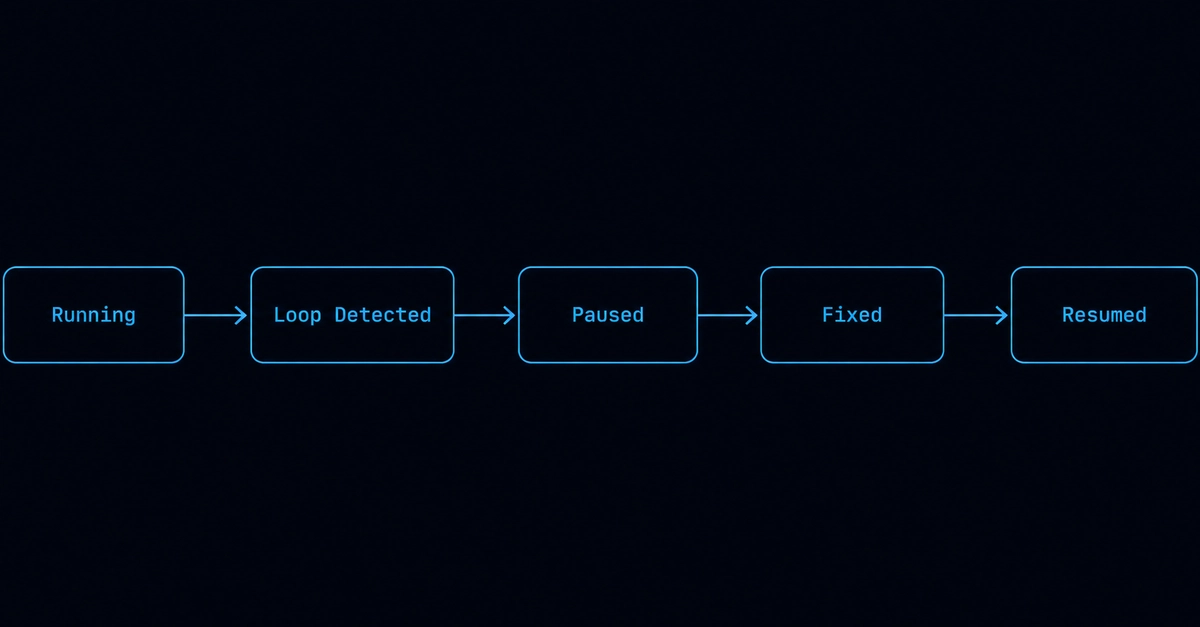
A production AI agent does not always fail loudly. Sometimes it loops, retries the same tool call, waits on missing context, spends tokens on a doomed plan, and still returns a polished update that looks fine from the outside.
That is the risky part. If your agent can call tools, modify records, open tickets, query private data, or run long tasks for customers, it needs more than logs and dashboards. It needs a safe way to raise its hand.
That pattern is an AI agent distress signal: a controlled, auditable mechanism that lets an agent say, "I am stuck, blocked, uncertain, over budget, or about to do something risky. Please route this to the right human or fallback system."
This guide shows how to build one without turning every workflow into a noisy support queue.
Why a distress signal belongs in your agent architecture