Audio By Vocalize
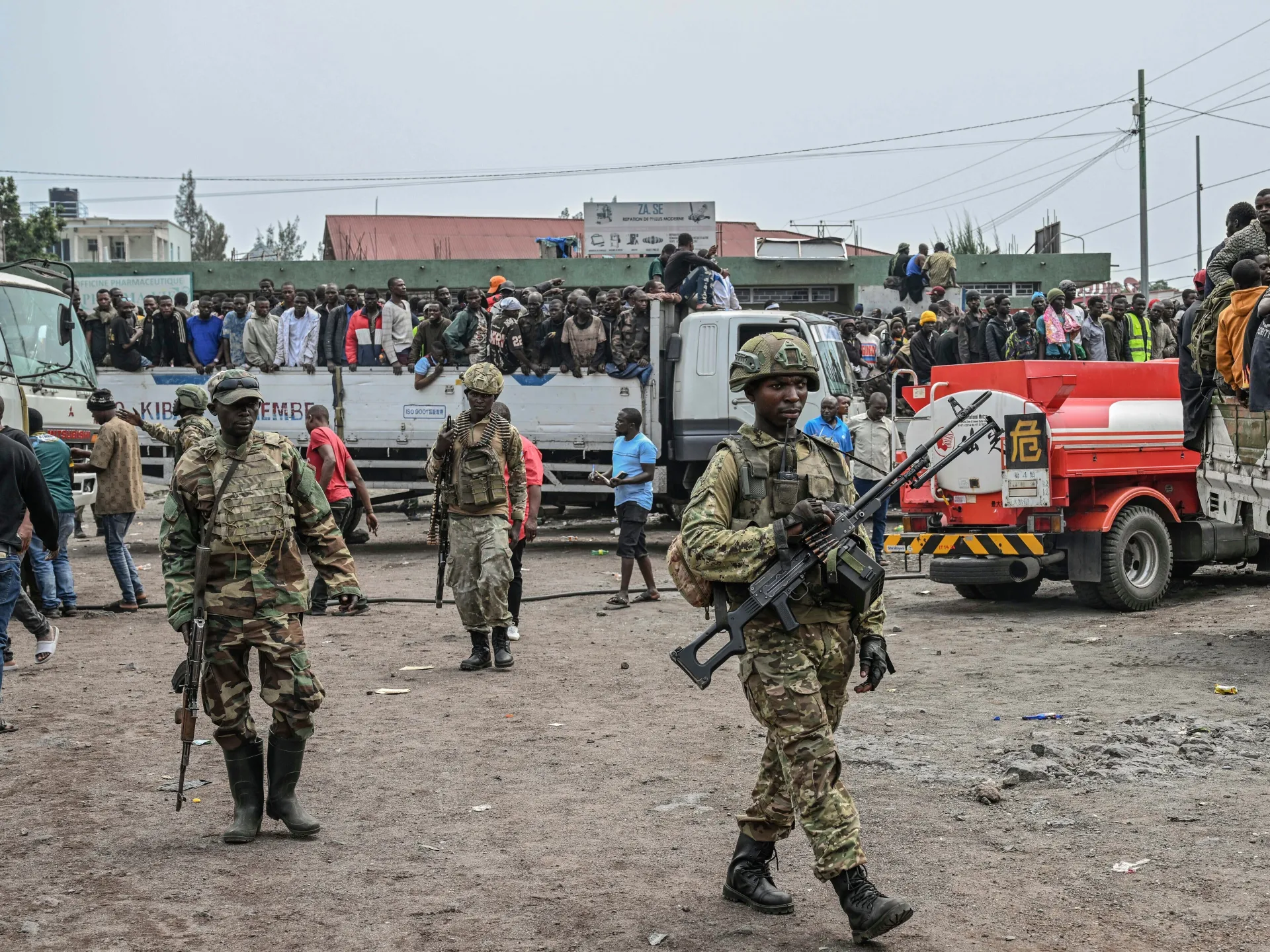
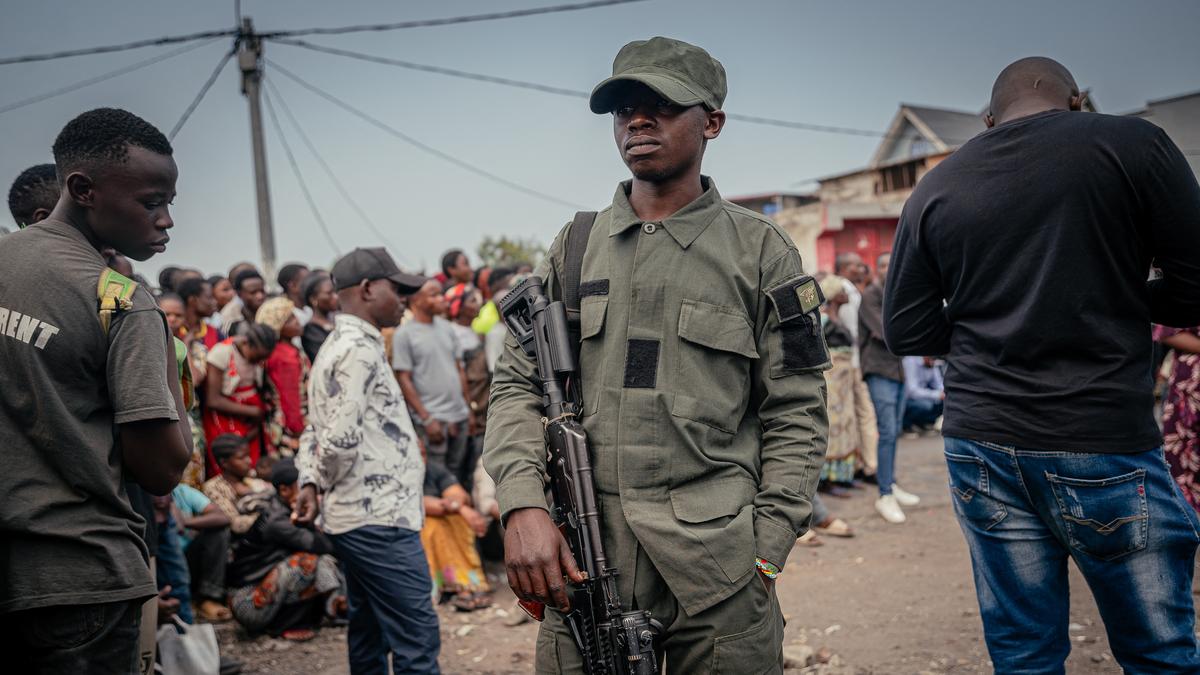
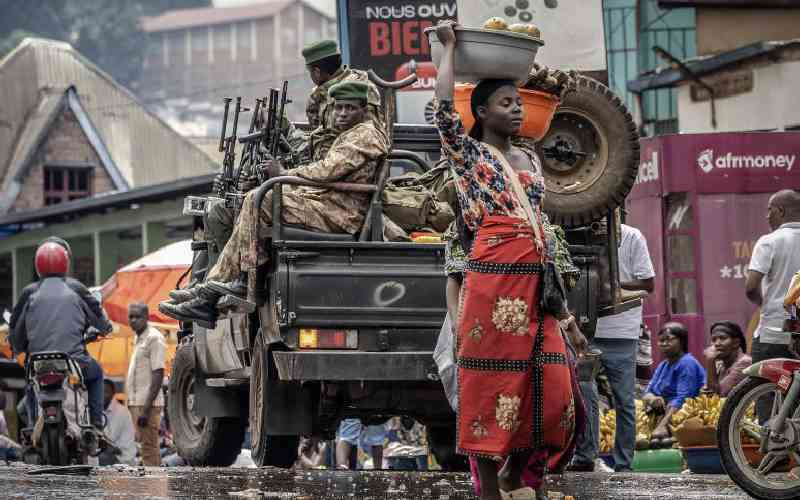
Members of the M23 armed group sit on a pickup truck during a patrol as women carrying fruits walk past a market, following the takeover of the city by the M23 movement in Bukavu on February 18, 2025. [AFP]
For decades, the conflict in eastern Democratic Republic of the Congo (DRC) has been explained through a narrow lens that emphasises mineral resources, foreign interference, and military confrontation while overlooking people's rights and the political failures that have repeatedly driven communities back to war.
That emphasis has led to botched remedies, with peace remaining elusive for over three decades. If Africa is to find a solution to one of the continent's longest-running conflicts, it must confront its underlying causes. In other words, it must move beyond simplistic narratives and rewrite that story.
The M23 maintains that it resumed armed struggle after the Congolese government failed to implement the March 23, 2009 Peace Agreement. The peace deal contained commitments on the protection of Congolese Tutsi communities, citizenship and identity rights, the return of refugees, and the integration of former combatants.