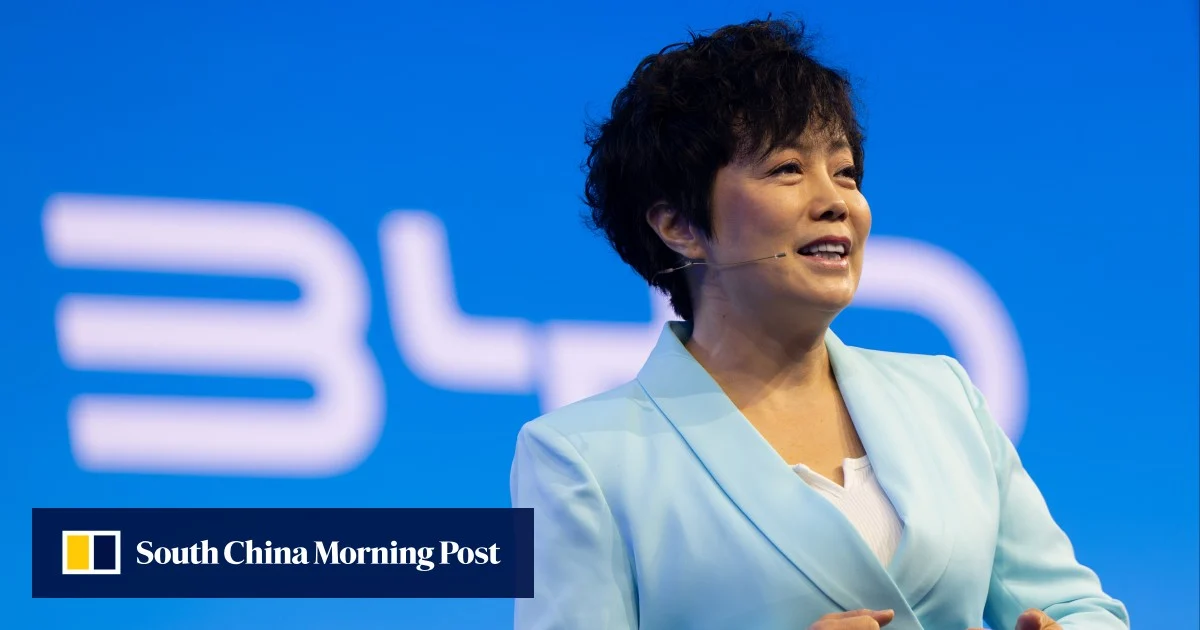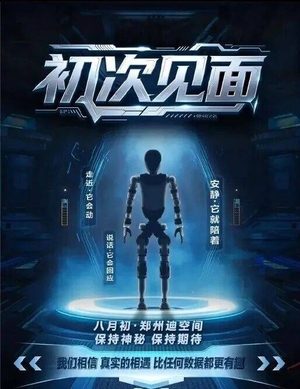
Chinese EV giant takes retail-first approach as Hyundai bets on US factories Teaser image posted on BYD DiSPACE Zhengzhou’s WeChat account (BYD) The world’s largest electric vehicle giant has officially entered the global humanoid robotics race, expected to leverage its fully integrated battery-to-software supply chain to drive down production costs.The move escalates pressure on early movers such as Hyundai Motor Group, which would need to slash manufacturing costs after commercialization to hold onto its lead.BYD’s robotics playbook is straightforward: establish a foothold with retail and service humanoid robots, then scale rapidly into industrial robotics across global markets.In contrast, Hyundai Motor Group faces structural hurdles. Although Hyundai aims to mass-produce its flagship Atlas humanoid robot for factory deployment by 2028, union pushback in South Korea threatens domestic validation — leaving the US as its primary testbed and sales market, shielded by Washington’s ban on new Chinese humanoid robots.BYD to debut service humanoid robotAccording to a recent report by Shanghai-based Cailian Press, BYD confirmed it will showcase its first bipedal humanoid robot, codenamed “Xiao Di,” this month at its DiSpace brand experience center in Zhengzhou.“My goal is to place two or three robots in our dealership stores,” BYD Executive Vice President and BYD Americas CEO Stella Li was quoted as saying. The robots would interact with customers, introduce BYD vehicles and demonstrate their features.Li said robot sales assistants could become commercially viable within one to two years, while humanoid robots for households and the service industry could offer a significant market opportunity.The company has yet to disclose official specifications, but media reports say Xiao Di stands 1.61 meters tall, weighs 58.5 kilograms and has 31 degrees of freedom, including seven in each hand and six in each leg.The robot reportedly offers 1-millimeter hand-positioning accuracy, a 1-kilogram payload, 360-degree vision, multimodal recognition and real-time translation across six Chinese dialects and six foreign languages. Its current capabilities are better suited to controlled settings such as showrooms, while household use would require greater lifting capacity, longer battery life and more advanced AI-powered mobility.Inside BYD’s robotics strategyBYD’s decision to debut its humanoid robots in retail and service settings rather than on factory floors sets it apart from rivals such as Hyundai Motor Group, raising questions about the strategic logic behind its consumer-first approach.Han Jae-kwon, a robotics engineering professor at Hanyang University and chief technology officer of AeiROBOT, said BYD’s “retail-first strategy” may reflect China’s intensely competitive robotics market, where humanoid specialists such as Unitree, UBTECH and AgiBot are already scaling industrial deployments.“China’s factory labor costs remain relatively competitive. That means BYD does not need to speed up the deployment of humanoid robots in its own plants,” Han said. “Beyond China, regulatory barriers and security restrictions complicate exports of Chinese-made factory robots, especially to Western manufacturing hubs.”The US has tightened restrictions on Chinese technology in critical infrastructure, while Europe is also increasing scrutiny of advanced Chinese technologies.“Hyundai could have a significant edge over BYD in the US, where fewer industrial humanoid suppliers face less competition from Chinese players,” Han said.Such geopolitical constraints may be pushing BYD toward alternative commercial opportunities, Han added. Robots used to greet customers or explain products are less likely to raise national security concerns than factory robots, potentially making the higher-margin global service sector a more viable market, particularly in countries with higher labor costs.BYD’s hardware strength vs. Hyundai’s early leadWhile BYD has maintained a low profile for its industrial humanoid robotics program, media reports suggest it is already conducting field tests at plants in Shenzhen and Changsha. BYD has denied those reports but confirmed it is developing humanoid robots for factory use.Industry insiders expect BYD to have a significant cost advantage over rivals such as Hyundai once it begins commercializing industrial humanoids, supported by its vertically integrated supply chain spanning key components including batteries, electric motors and sensors.Han said the similarities between humanoid robots and EVs could allow BYD to replicate its cost-driven EV strategy in robotics, potentially helping it emerge as a major global player.But he said BYD still needs time to strengthen its robotics software. Despite its hardware strengths, the Chinese EV maker continues to trail some peers in autonomous driving, a key test of an automaker’s broader software capabilities.At the same time, Hyundai is pursuing a more software-intensive approach. Alongside securing the hardware supply chain for its Atlas humanoid robot, the group has partnered with Google DeepMind and Nvidia to develop physical AI software aimed at enabling complex real-world industrial tasks.Following pilot verification next year, Atlas is scheduled for deployment at Hyundai Motor Group Metaplant America in Georgia by 2028, with expansion to Kia’s Georgia plant planned for 2029.
BYD’s humanoid push challenges Hyundai’s early lead
The world’s largest electric vehicle giant has officially entered the global humanoid robotics race, expected to leverage its fully integrated battery-to-softwa
TL;DRAI
BYD unveiled humanoid "Xiao Di" targeting retail deployment in 1–2 years via its integrated supply chain cost advantage. Service markets sidestep export barriers on Chinese factory robots, positioning BYD to build margin-rich revenue while Hyundai pursues US manufacturing.
771 words~4 min read