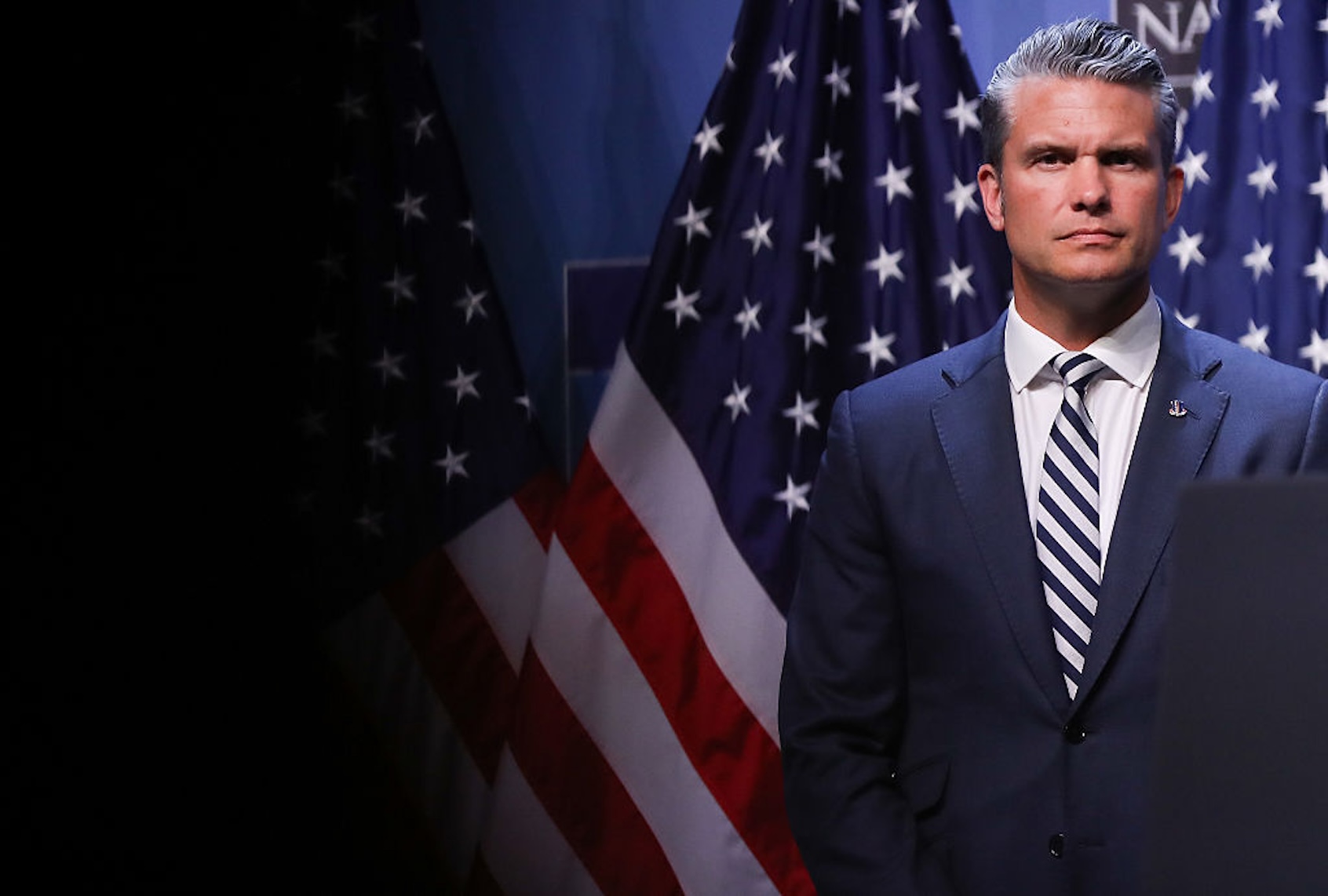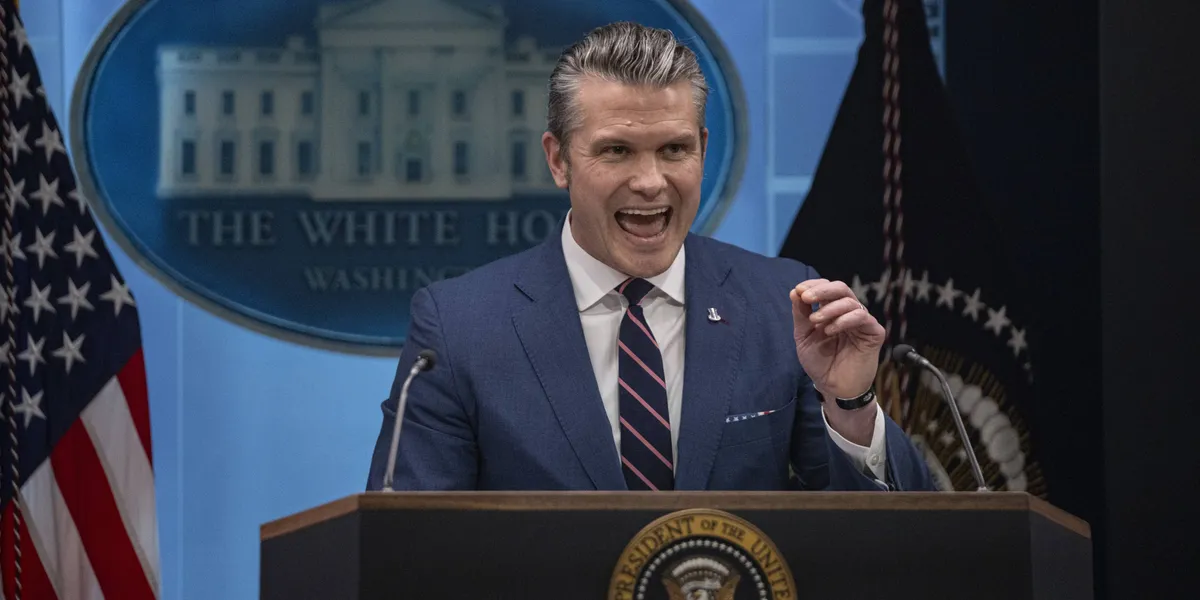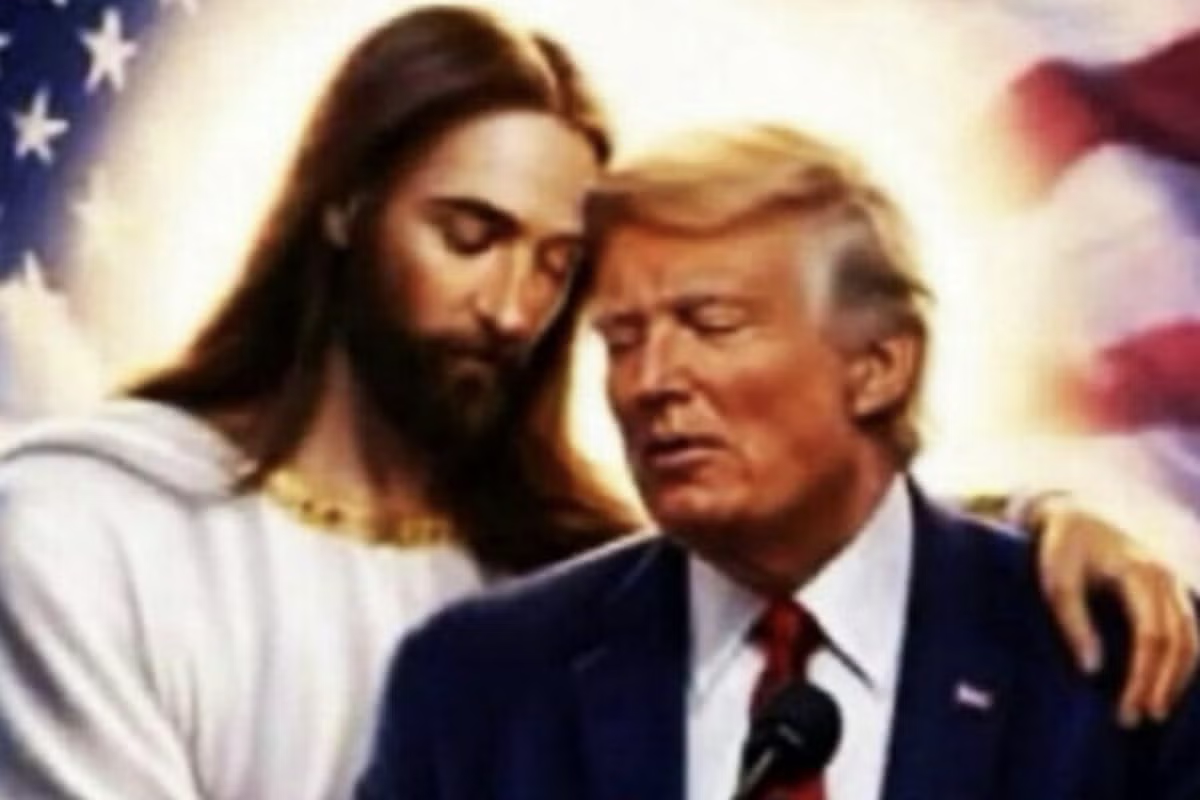
Last week, Donald Trump’s defence secretary Pete Hegseth announced that the US military will begin screening all troops for low testosterone levels and offering hormone replacement therapy to those who qualify. On the face of it, it’s a bizarre policy – testosterone levels fluctuate naturally, and the military isn't known for catering to soldiers’ hormonal profiles – but the announcement makes more sense when you consider that Hegseth’s spiritual mentor is Douglas Wilson, the Idaho pastor who preaches that women shouldn’t vote and who champions a militant, aggressive vision of Christian masculinity.It’s the manosphere entering government through the side door of evangelicalism – and it’s exactly what historian Kristin Kobes Du Mez predicted in her book Jesus and John Wayne: How White Evangelicals Corrupted a Faith and Fractured a Nation.In that book, which was first published in 2021 but which seems even more prescient today, Du Mez traced evangelicalism’s decades-long embrace of militant masculinity and argues that this current moment is in fact the culmination of a 40-plus-year trend, not an aberration. Defense secretary Pete Hegseth, left, prays with Douglas Wilson, cofounder of the Communion of Reformed Evangelical Churches earlier this year (DOW Rapid Response/X)For four decades, she says, evangelicalism has cultivated its own subculture of macho preachers and warrior theology, teaching that God is a fighter and men are made in his aggressive image. The result? A generation of Christian men who find the secular manosphere’s alpha male posturing more compelling than the “gentle Jesus” of the Gospels – and leaders like Hegseth who are now apparently implementing that ideology as national policy.The testosterone screening announcement comes after newly unsealed court documents detailed allegations of violence against Andrew Tate, the manosphere influencer arrested in Miami on rape and trafficking charges. While Tate himself may be radioactive, his ideology has already been baptised into the mainstream. As Du Mez notes, evangelical leaders aren’t so much repudiating Tate’s worldview as refining it.“You’ll hear the kind of rhetoric of ‘Okay, we're not going to condone somebody like Andrew Tate, but [that he’s] spinning in the right direction,” Du Mez tells The Independent. “[That] he’s on to something, and he might take it too far, but there’s truth there, and so they want to kind of channel that, but give it a Christian covering.”Du Mez says that while embracing this militant masculinity may seem like a betrayal of Christian values, it’s something she’s been seeing for decades: “Conservative white evangelicals have been really promoting an aggressive vision of Christianity – one that sees itself as under threat. And then they call on Christians to defend against that; to wage even preemptive war against those who would threaten to destroy Christianity.”It’s easy to miss this when you look at the archetypal man who regularly visits a megachurch on a Sunday, Du Mez explains. “They’re probably wearing khakis and polo shirts and might be carrying a Bible,” she says. But the books they’re reading champion a very different image. Andrew Tate has radioactive on masculinity, but his ideology has become mainstream (Getty)She says a cornerstone of this kind of thinking is Wild at Heart by John Eldredge. To give it its full title, Wild at Heart: Discovering the Secret of a Man’s Soul, was published in 2001 and argues that men should embrace their core desires – that “every man has a battle to fight and a beauty to rescue. The thesis of that book is that God is a warrior god and men are made in his image,” she says. “It elevates this very militaristic conception that then shapes their idea of what a leader should look like.”The book sold millions of copies and was a New York Times bestseller. Du Mez says that it was required reading in male evangelical circles in the early 2000s, and that it spawned a whole industry of copycat books, providing the script for “Christian manhood” for at least a couple of decades.When Donald Trump was first elected in 2016, he was not – to put it bluntly – the poster boy for Christian values. On the campaign trail, he said he could stand in the middle of Fifth Avenue and shoot somebody and wouldn’t lose voters. And then there was the infamous Access Hollywood tape in which he was recorded on a hot mic in 2005 saying, “When you’re a star, they let you do it. You can do anything. Grab ‘em by the p***y. You can do anything.” But, as Du Mez says, despite this, “very early on, even in the primary season, you could see evangelical voters coalescing behind [him]”.Donald Trump has depicted himself as a Christ-like figure – with little backlash from religious groups who support him (@realDonaldTrump/Truth Social)“The logic was that even though he didn't exhibit the kind of traits you would expect a Christian man to exhibit, he was God's surprising choice for this moment precisely because he didn't exhibit those traditional Christian virtues.”In fact he was exactly the warrior they were looking for - someone who would fight those responsible for bringing evangelical Christianity under siege. Du Mez says America had its first black president, a Democrat who so many evangelicals did not believe was a Christian and most did not even believe was an American. Then you had demographic changes taking hold - like a sea change on gay rights with the same sex marriage decision by the Supreme Court. “They started to express alarm over their own religious liberty - whether they would even have the freedom to live as they felt they ought to live and to shape the country and the country's laws the way that they thought they ought to be shaped.”Evangelicals will argue that God has blessed men with testosterone so that they can be leaders … but there's a fine line between that noble calling, if you will, and misogynyKristin Kobes Du Mez, author of ‘Jesus and John Wayne’All of this leads to Trump’s first proper foray into the scene in 2015. Trump, Du Mez says, was a breath of fresh air for evangelicals – someone who didn’t seem to care at all about civility or political norms. “He was this warrior, this aggressive man, and he promised on the campaign trail to defend Christians. He very much used this rhetoric of conservative white Christians being persecuted. … And that was exactly what they wanted to hear. I think it was kind of cathartic to see somebody like him who was not afraid to offend people.”Du Mez says what led her to write Jesus and John Wayne was watching the groundswell of evangelical support for Trump and realising that this was not new. “Evangelicals had been defending abusers in their own churches for decades,” she says. “When I first encountered this in my research, it was really stunning because evangelicals talk so much about sexual purity and about morality and about protecting women.”Trump – though not overtly religious – has represented a golden ticket for factions of evangelicalism (AFP/Getty)She discovered stories of women and children who were abused by pastors and what she says was a consistent response – that when allegations surfaced and it became clear what was happening, “time and again church members would end up defending the predator – the pastor – and ostracising the victims”.Du Mez says parishioners had been indoctrinated into a system that defended those with power; one which trained them to show deference to those with authority and to punish anyone who threatened the system. It was, she says, that pattern that made her realise that this was a feature, not a bug.“Evangelicals,” Du Mez says, “will argue that God has blessed men with testosterone so that they can be leaders and defenders of women and children and of the faith and of the nation … but there’s a fine line between that noble calling, if you will, and misogyny. And there’s always the kind of deal that not all women deserve to be protected. Only good women. Only obedient women. And so women who do not place themselves under a godly man's authority do not deserve protection.”Evangelicals have long cultivated their own subculture – they have their own music, publishing houses, home decor lines. And in addition, they have also had their own “macho preachers” – men like Doug Wilson and Mark Driscoll, a former pastor of a Seattle church who was widely criticised for controversial and often crude rhetoric, including frequent profanity, and who faced allegations of promoting misogynistic views and prioritising discussions of men’s sexual needs in his teachings. Driscoll resigned in 2014 amid accusations of bullying and abusive leadership.“He was known for taking this culture of machismo and incorporating it into ministry spaces … [but today] you have a lot of Christian men having much more access to the secular manosphere.”She says this embracing of aggressive, militant masculinity certainly didn’t begin with Trump, and it isn’t going to end with him either.“I’m not optimistic about the future,” she says. “But I'm a historian, and historians tend not to be super optimistic.” It’s a playbook she’s watched being written for years. The only thing that's changed? It has now audaciously entered the halls of government.
How the manosphere captured Jesus and turned him into a Maga poster boy
As the US military starts screening troops for low testosterone, Alex Hannaford explores how aggressive interpretations of masculinity have proudly entered government through the side door of evangelical Christianity
1,531 words~7 min read