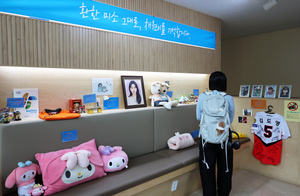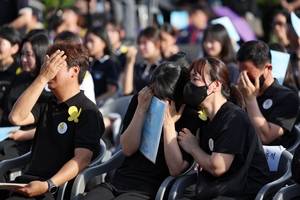
Bereaved family members of Lee Chae-won, the 17-year-old victim in Jang Yoon-gi's alleged rape-murder case, shed tears on June 21, during a memorial service held for Lee in front of the Gwangju Metropolitan Office of Education. (Yonhap) The high school student who was injured while trying to save the victim of a knife attack has officially been recognized as a “person killed or wounded for a righteous cause,” according to Welfare Ministry documents released Sunday.The 17-year-old student surnamed Go received the designation that makes him eligible for state support following a ministry committee review on July 24, according to documents obtained by Democratic Party of Korea Rep. Kwon Chil-seung.During the May 5 attack on the murder victim, Lee Chae-won, Go rushed to her aid after hearing screams in Gwangsan-gu, Gwangju. He found the suspect Jang Yoon-gi standing over Lee as she bled. Jang allegedly told Go to call an ambulance, then stabbed him twice as the student took out his phone.Go suffered injuries to his neck and hand. He pushed Jang back with his right arm and escaped the scene. Even as his consciousness grew faint, he called police and emergency services for Lee. He was taken to Jeonbuk National University Hospital for emergency surgery.He later testified as a witness at Jang’s trial. Jang was also indicted on attempted murder charges related to the stabbing and serious injury of Go.The Gwangsan-gu District Office sought Go's medical records and police records showing that he had attempted to rescue Lee before requesting that the Ministry of Health and Welfare review his eligibility for the designation.Under Korean law, a person killed or wounded for a righteous cause refers to someone who suffers bodily injury while voluntarily attempting to rescue another person despite having no legal or occupational duty to do so.The ministry committee designated Go as a Grade 9 person wounded for a righteous cause, making him eligible for state compensation.He may also apply for an identification card for wounded noble persons, which provides benefits including free admission to certain cultural and public facilities, such as royal palaces, public museums and parks.
Teen stabbed while rescuing Jang Yoon-gi victim receives state honor
The high school student who was injured while trying to save the victim of a knife attack has officially been recognized as a “person killed or wounded for a ri
350 words~2 min read