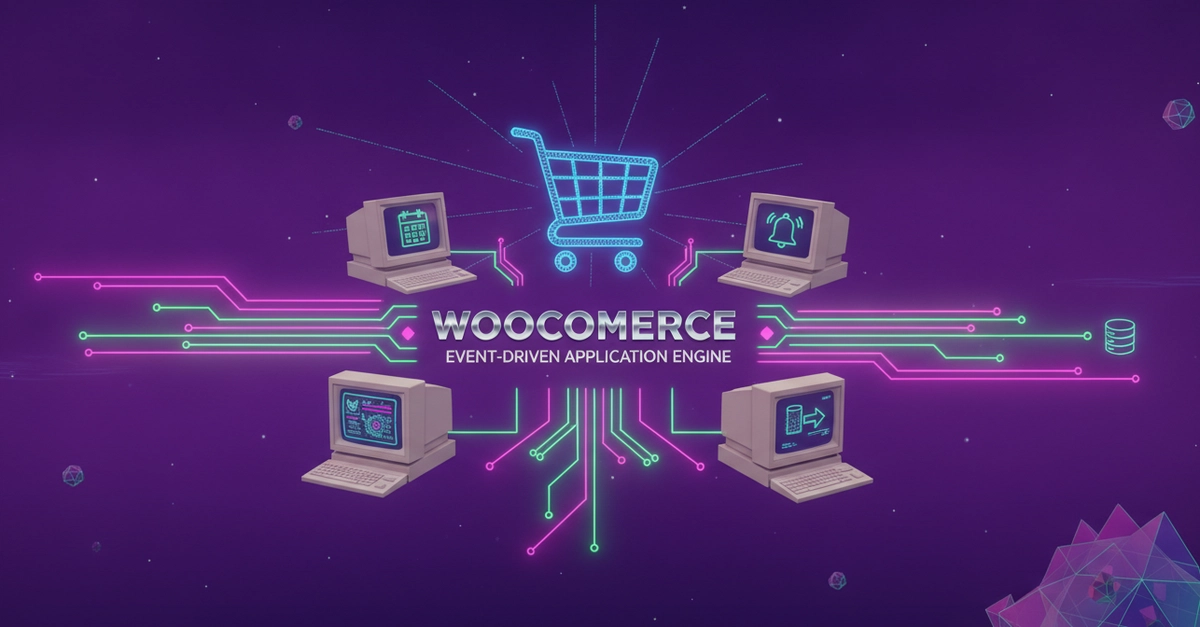
WooCommerce is usually introduced as an e-commerce platform: products go into a cart, customers complete checkout, and orders are created.But in more complex applications, the order is not the end of the process. It is the beginning of a business workflow.
An order might trigger account provisioning, course enrolment, subscription activation, access changes, fulfilment workflows, notifications, reporting, or integration with another system.At that point, treating WooCommerce simply as a shopping cart becomes limiting.A better approach is to view WooCommerce as an event-driven application engine where commercial events can trigger well-defined business processes.This article explores how to design that architecture in a maintainable and reliable way, using WordPress and WooCommerce as the underlying platform.
1. From E-Commerce to Business Workflows
A simple WooCommerce implementation might look like this:
Customer