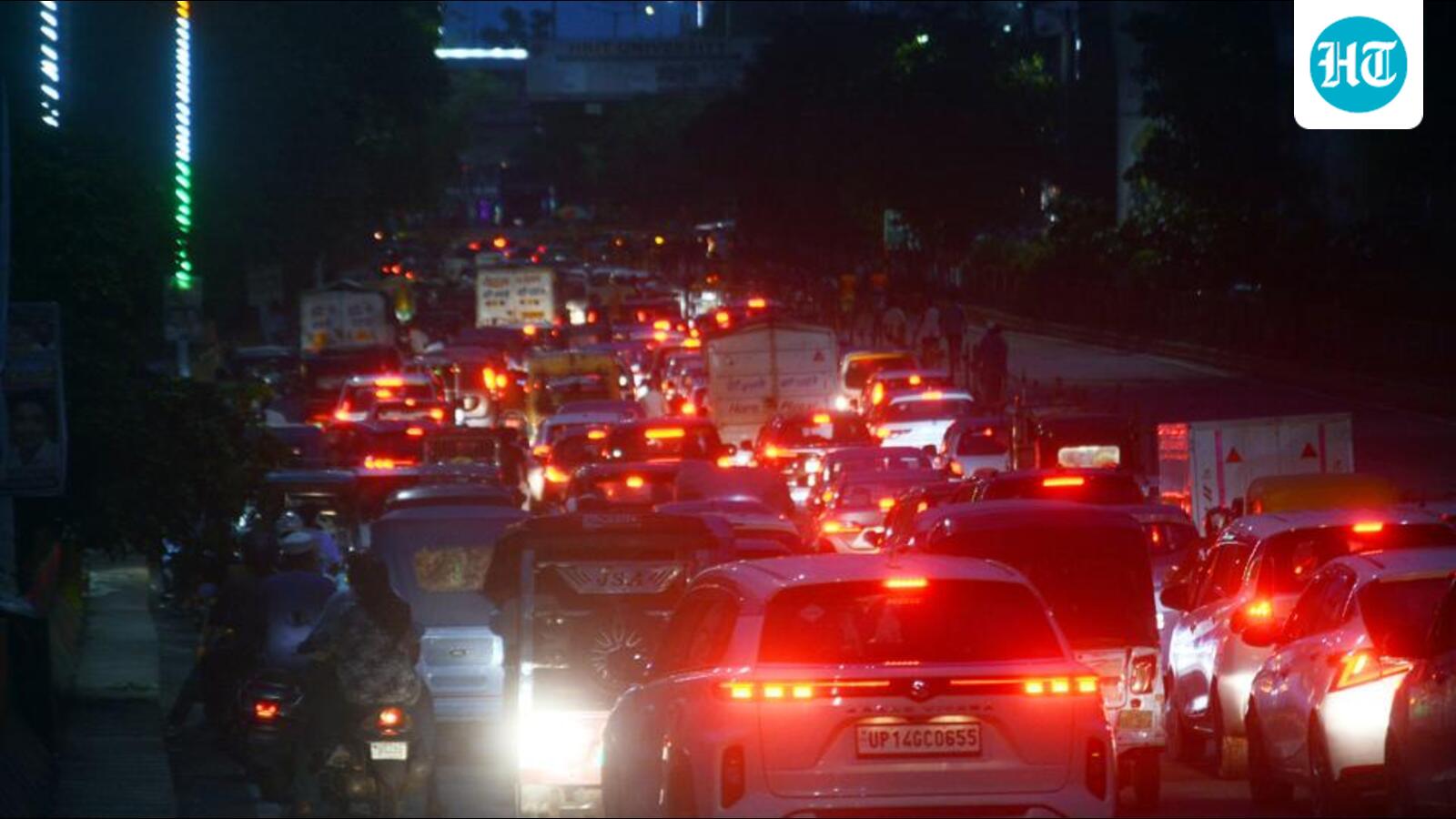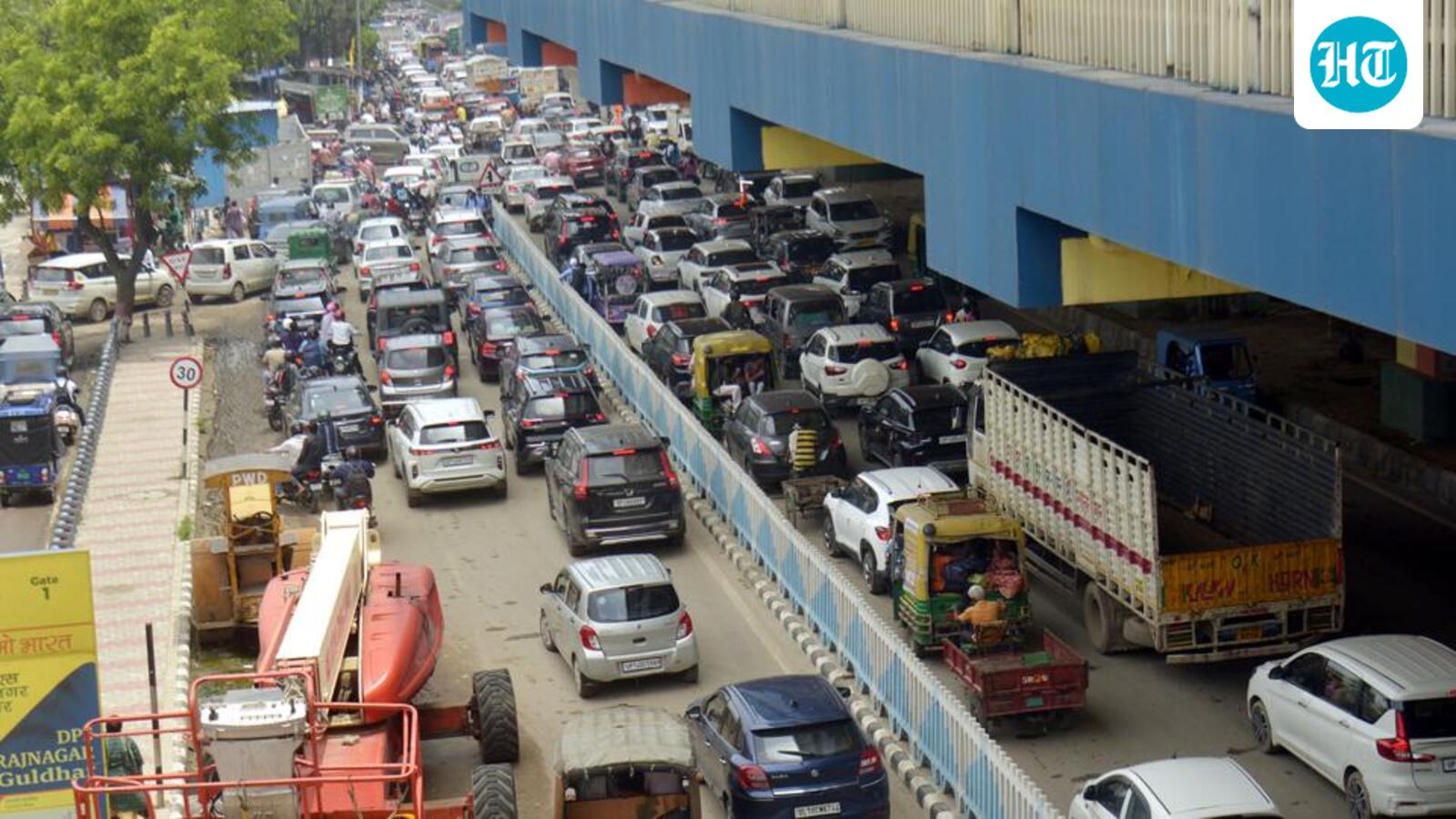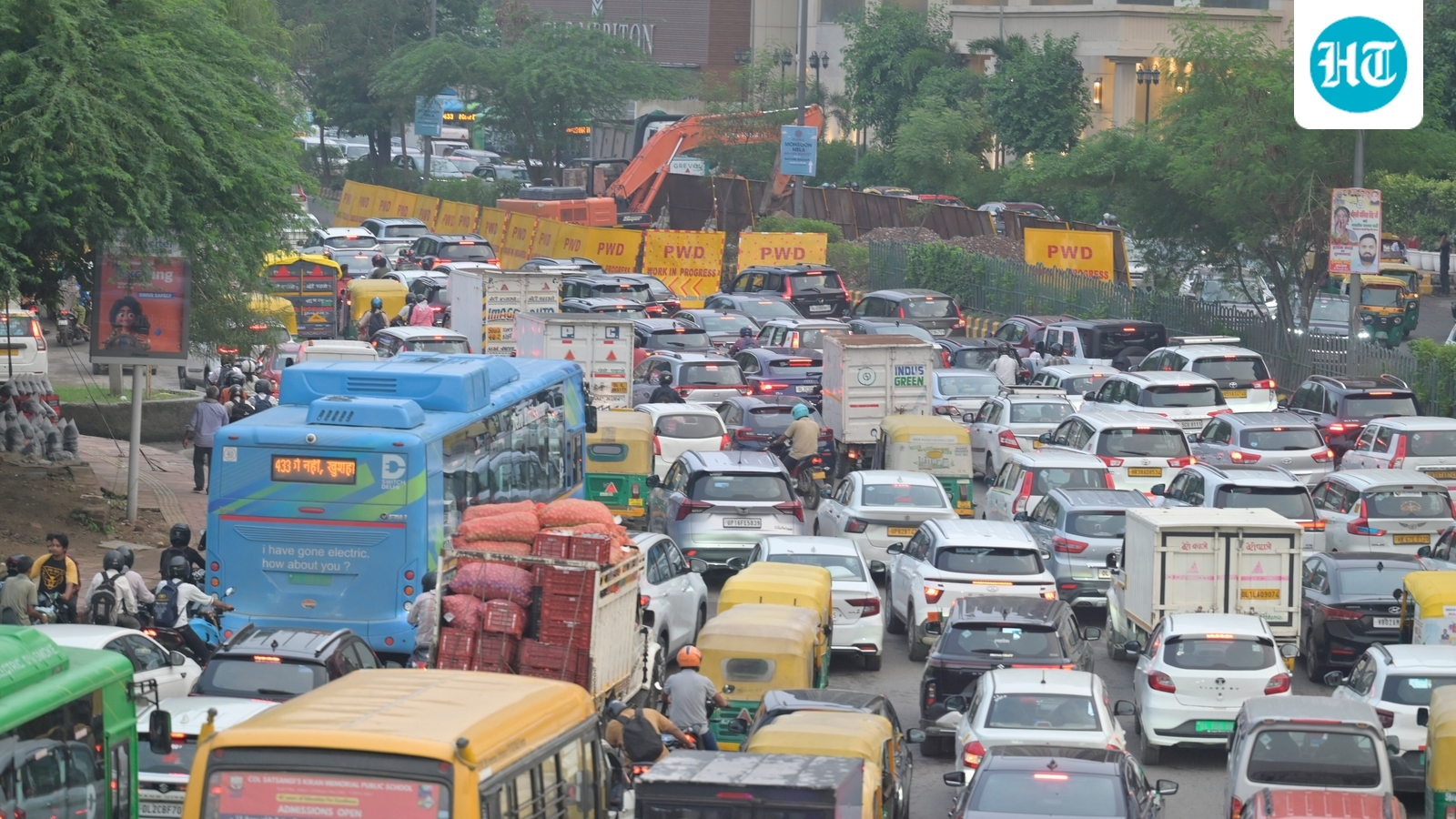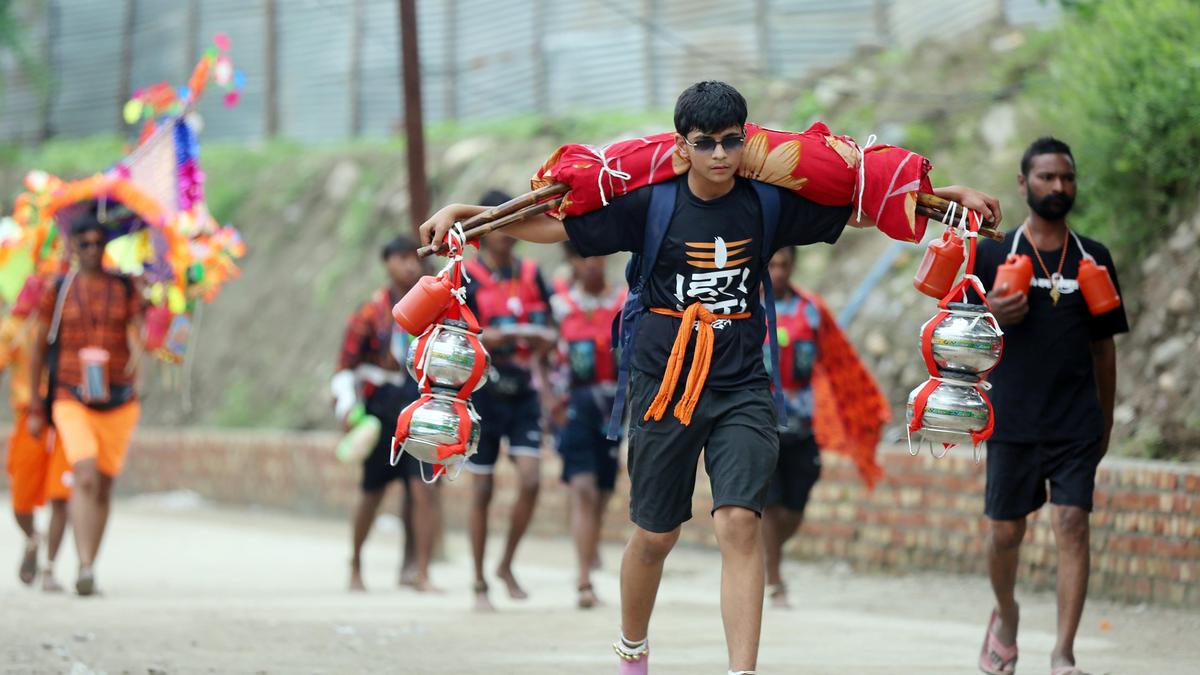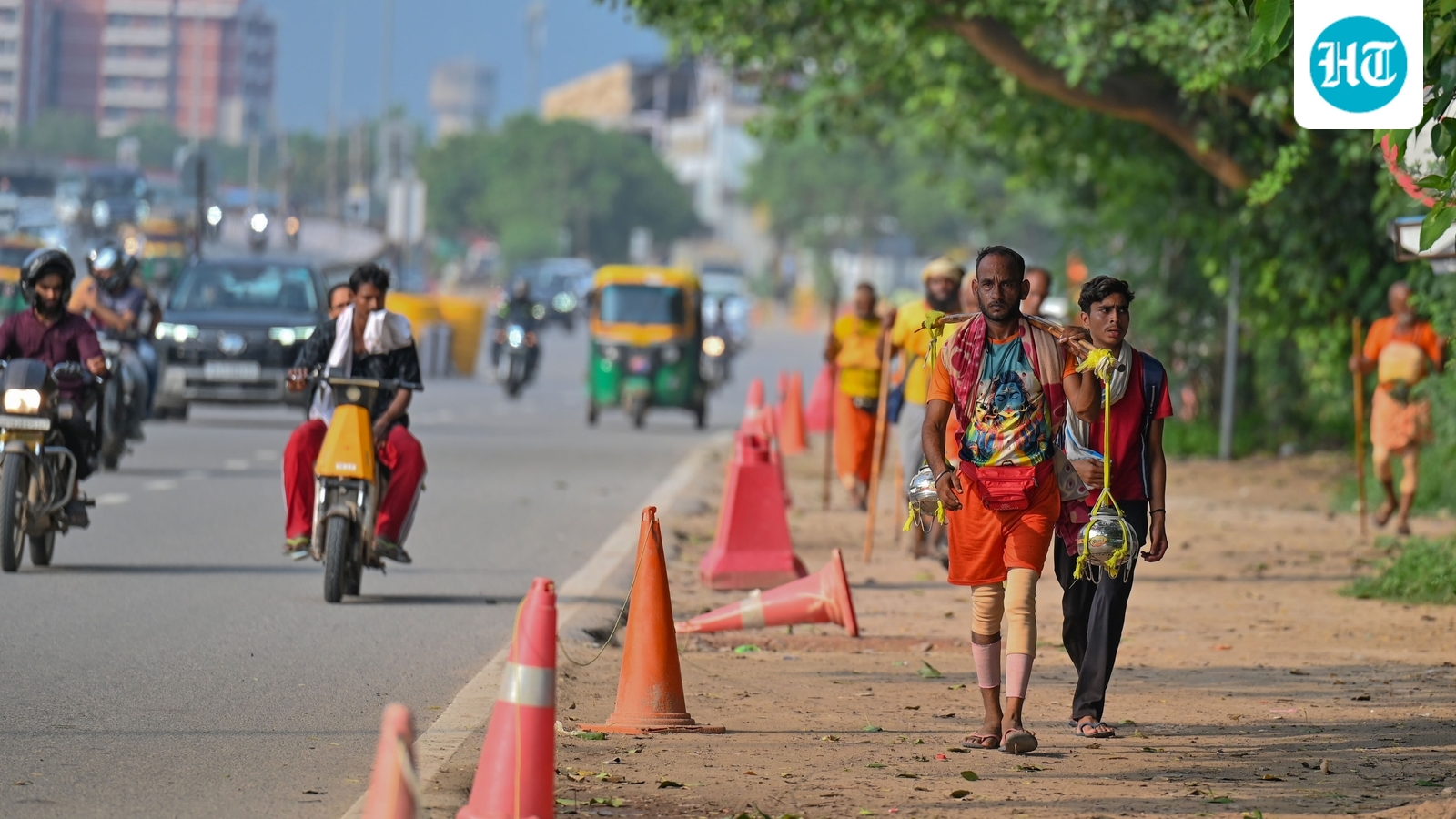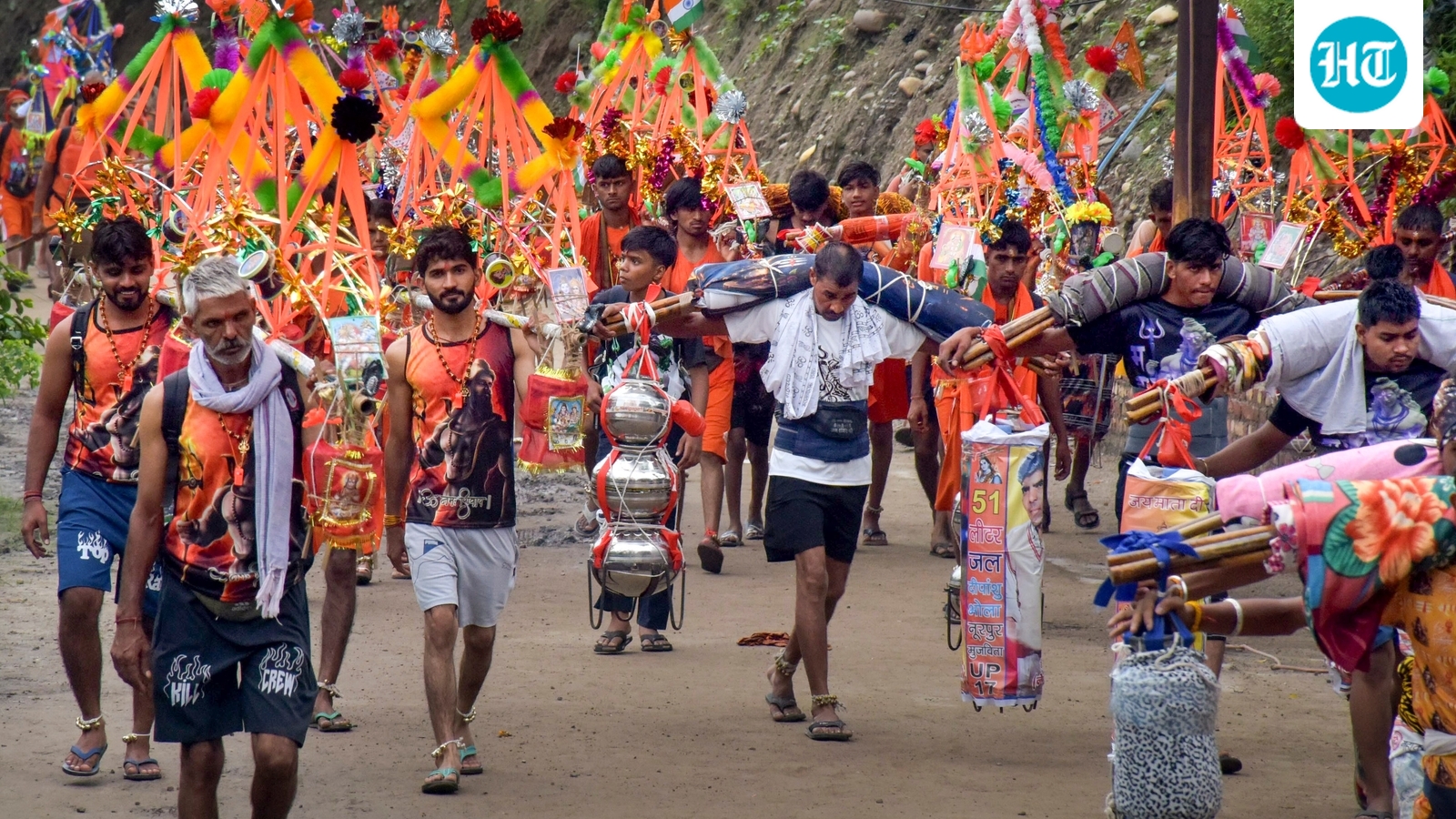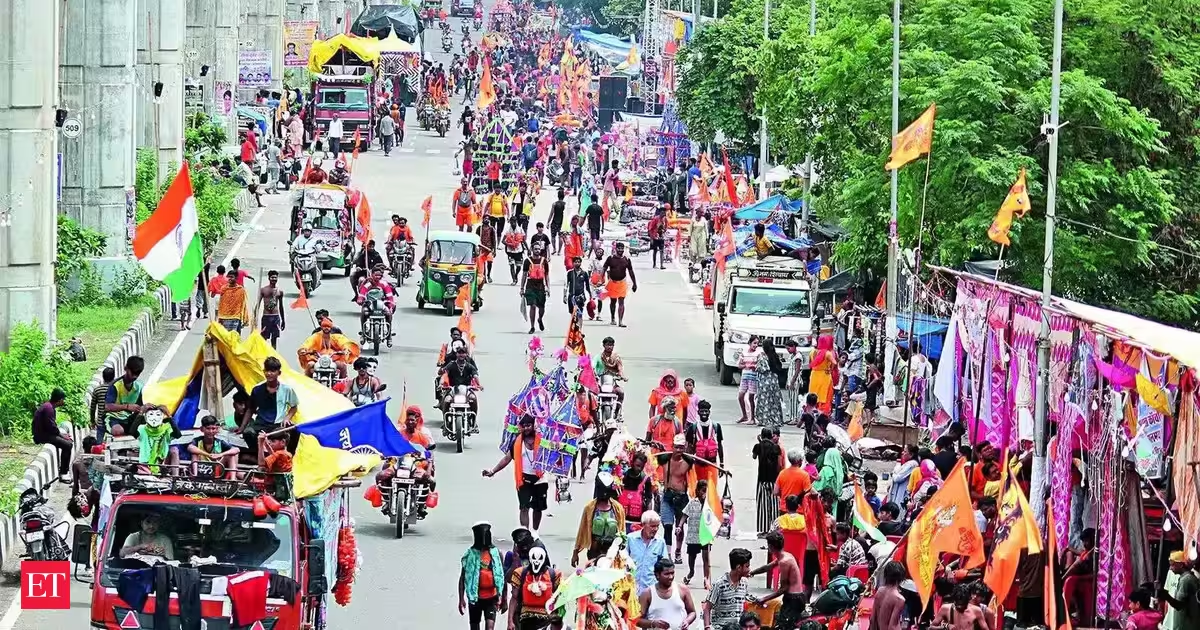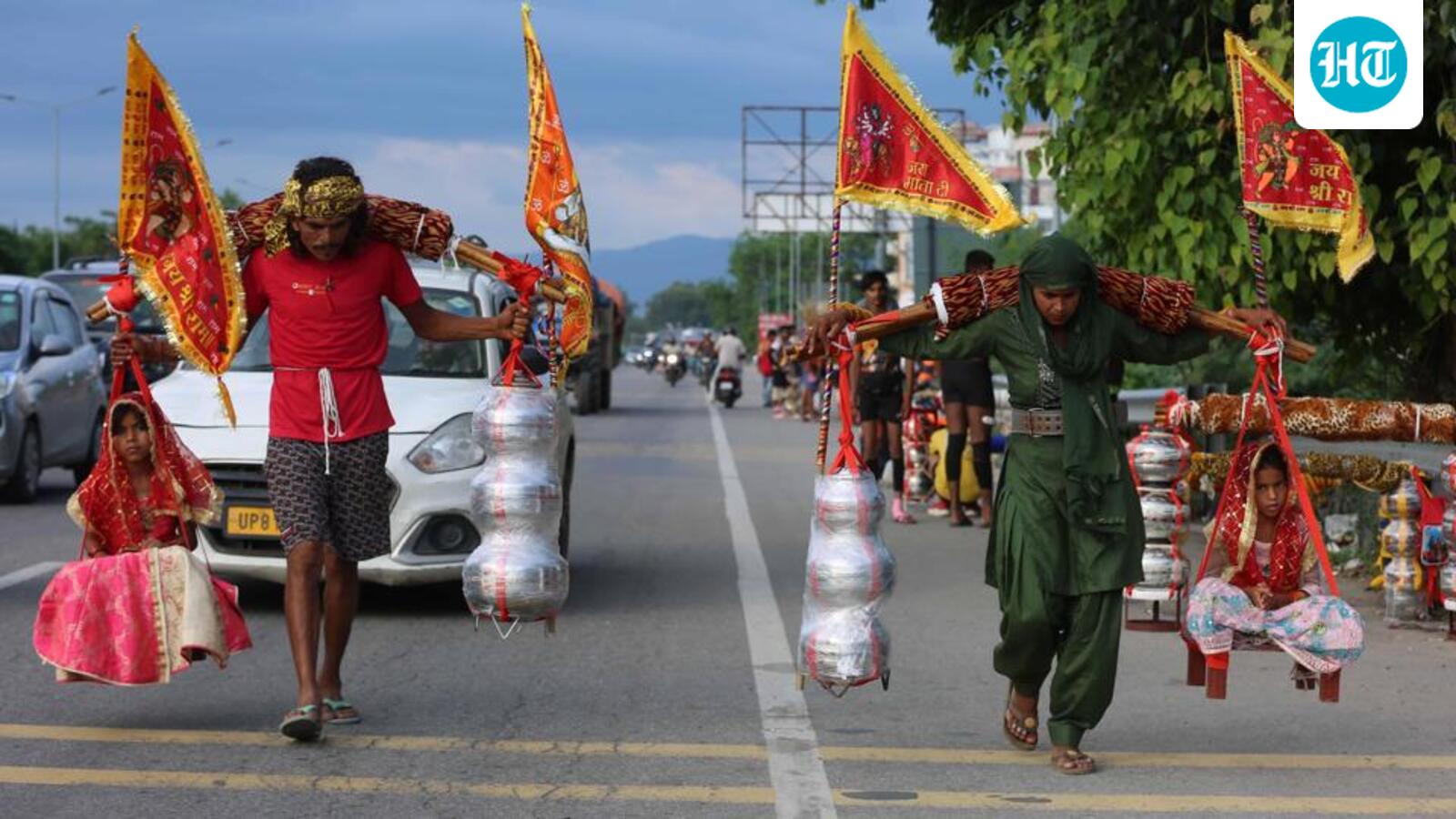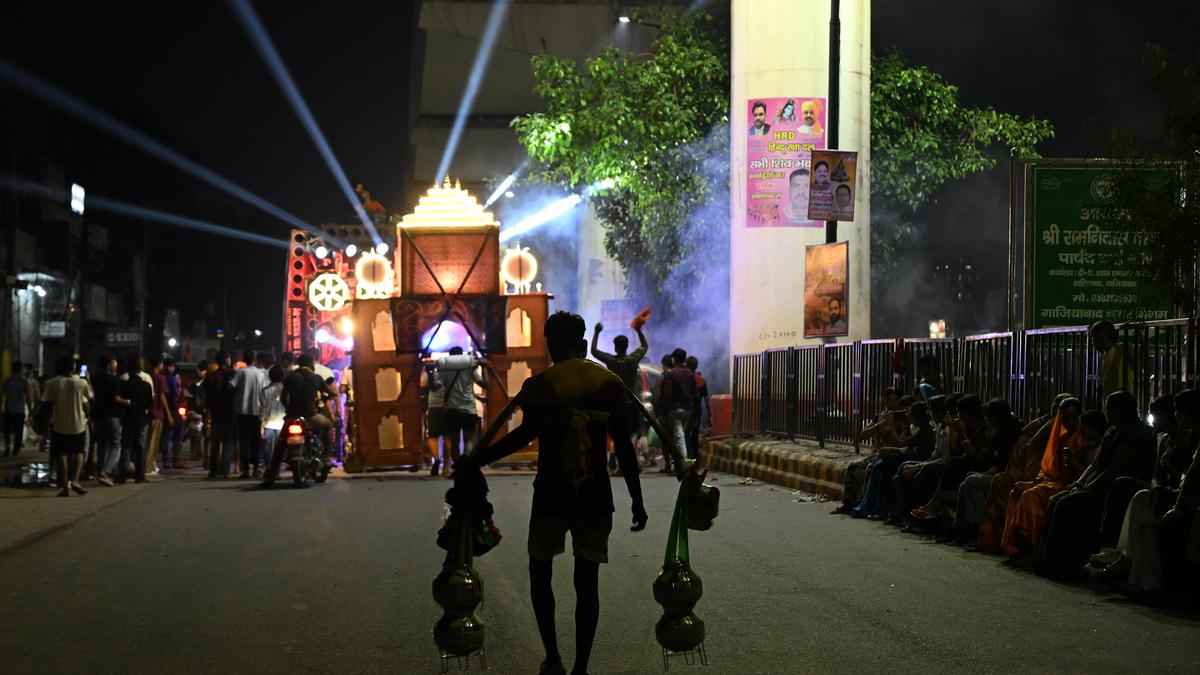
For Kanwaljeet, a 34-year-old coaching teacher, crossing the Grand Trunk Road near Dilshad Garden metro station meant a half-kilometre detour. Huge Kanwar camps have come up along the road, while traffic diversions, road closures and restrictions on flyovers have reshaped the movement of motorists and residents.As thousands of Kanwariyas pass through Delhi, the annual pilgrimage has brought elaborate arrangements and growing inconvenience for those who live and work along its route.“I am pregnant and walking all the way to the other side to find a rickshaw is a hassle for me,” Ms. Kanwaljeet said.On Saturday, saffron-clad Kanwariyas of all ages streamed along the Grand Trunk Road, some stopping at camps set up along the route, as CRPF personnel, Delhi Police and traffic police kept watch and diverted citizens and motorists away from the lanes reserved for the pilgrims.“For 15 days, the area is closed to motorists. Office-goers and residents of Sonia Camp, which falls along the GT Road, have to take longer routes to their workplaces and homes,” said Mohammad Shameem, an e-rickshaw driver.“The area is closed to motorists fearing an escalation and violence if any vehicle even brushes against a ‘Bhole’ (Kanwariya). People have no option but to adjust,” he added.Waseem, a delivery person, echoed similar views. “I had to travel four kilometres further, pass through smaller streets and arterial roads to get here to deliver a parcel. While the space for Kanwariyas passing through seems to expand year by year, the problems faced by commuters and residents are not considered before making such elaborate arrangements,” he said.While some residents said they were inconvenienced, others said they were fine with the changes. “If it helps fellow citizens connect with their religion, minor adjustments can be made,” said Rahul Sharma, an accountant.More pomp than faithWith the commencement of the Kanwar Yatra on July 30, the Municipal Corporation of Delhi directed all unauthorised meat shops to close. Mohammad Shabbir, who runs a licensed biryani shop in Jhilmil Colony, said he had stopped selling biryani since the beginning of the pilgrimage.“Most people voluntarily shut shops fearing challans and action by the authorities,” he said, adding that he only sells vegetables during this period.Muslim residents said that the arrangements also included covering mosques that fall along the route of the Kanwariyas and offering namaz only inside the mosques.Commercial establishments adjacent to the metro station said their businesses had suffered because of the road closures.“Customer inflow is significantly less, despite it being a Saturday,” said a salesperson at a food outlet.‘No the same’Sukhdev Goswami, a 65-year-old tea seller, said that while his business had boomed with the arrival of the Kanwariyas, he did not quite see the charm of earlier days.“DJs, loudspeakers, boom boxes remind me of a time when chanting of ‘saanki’ (religious couplets) was enough to tell the masses that Kanwariyas were here,” he said.“It is a matter of discipline that the whole family follows and not just the person undertaking the pilgrimage. Everything, from how the Kanwar is to be carried to the food and drink the Kanwariya consumes, is defined by rules. Teenagers consuming alcohol and dancing to vulgar songs will not understand this. It shows immaturity to indulge in these things, and indiscipline to let violence prevail,” he said when asked what changes he had observed over the years.Usha Sharma, a schoolteacher in Jahangirpuri, said the size and decoration of Kanwars had more to do with pomp and a display of wealth than faith.“Luxury cars, decoration with currency notes, oversized displays besides loud and vulgar music — is that a reflection of faith or wealth?” she said.“The mahila mandal (women’s organisation) in our area used to organise camps for Kanwars, but in recent times, we have only seen excesses and vulgarities increasing,” she added.
Pilgrim rush, slow traffic: Delhi residents navigate daily life
Delhi residents face traffic challenges and detours due to the influx of Kanwariyas during the annual pilgrimage season.
625 words~3 min read