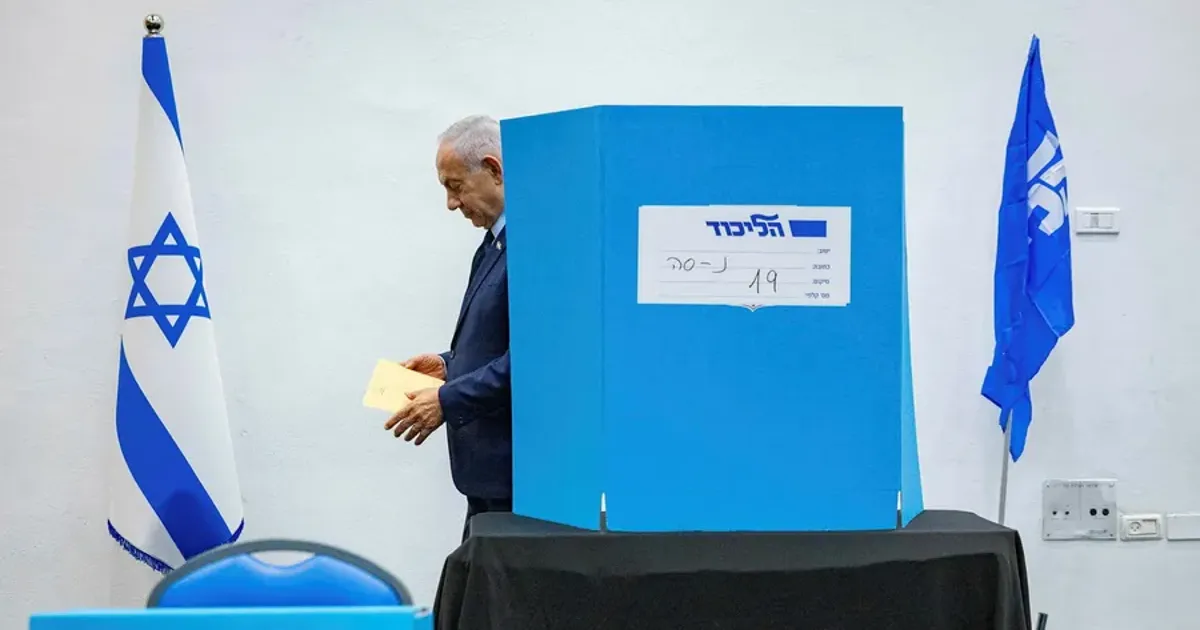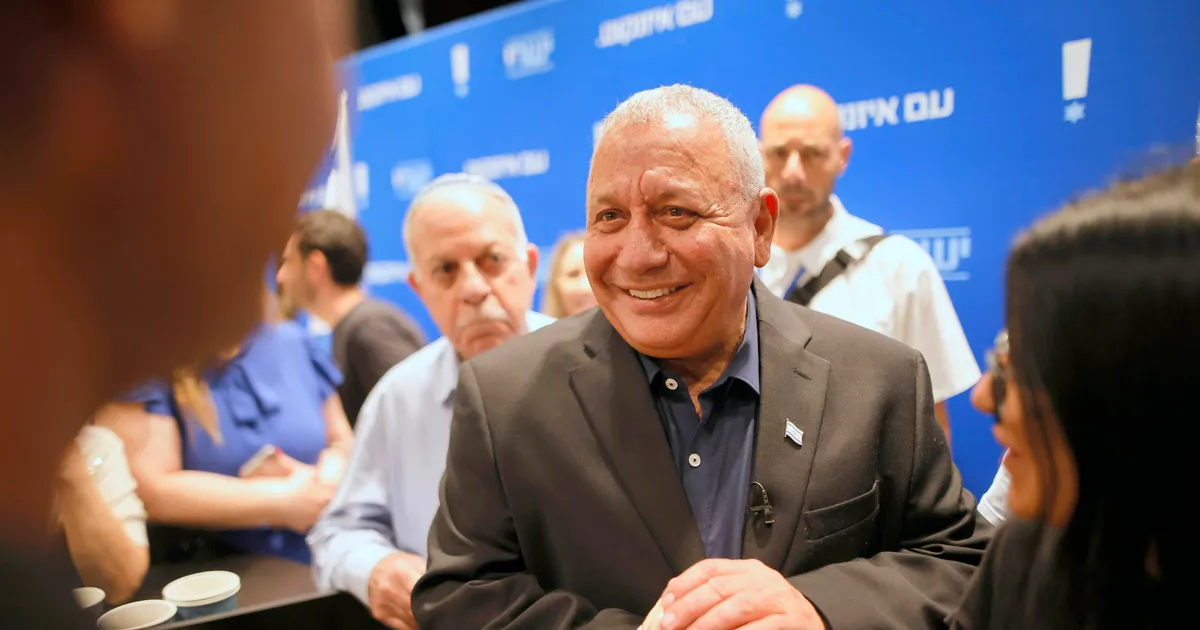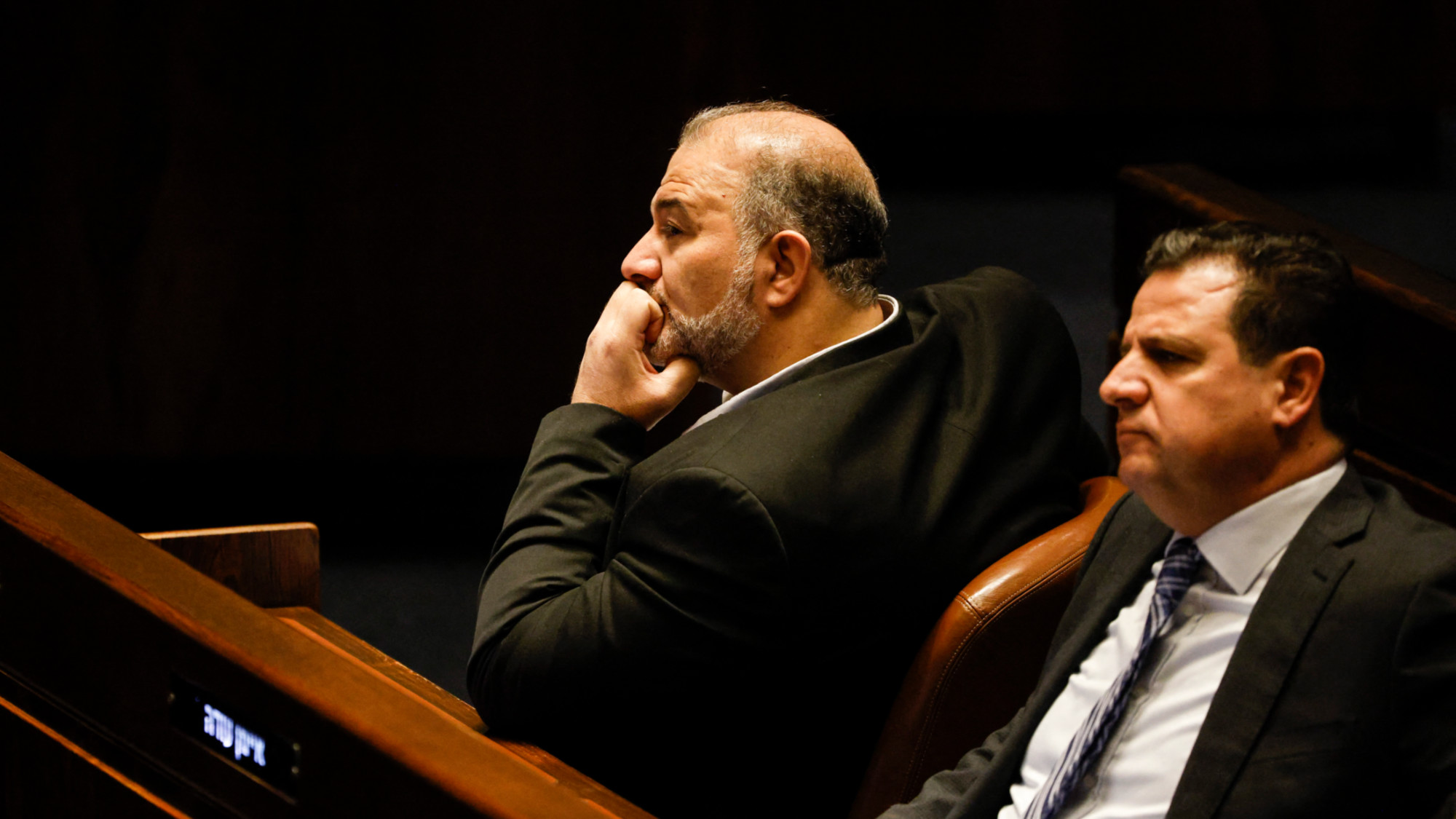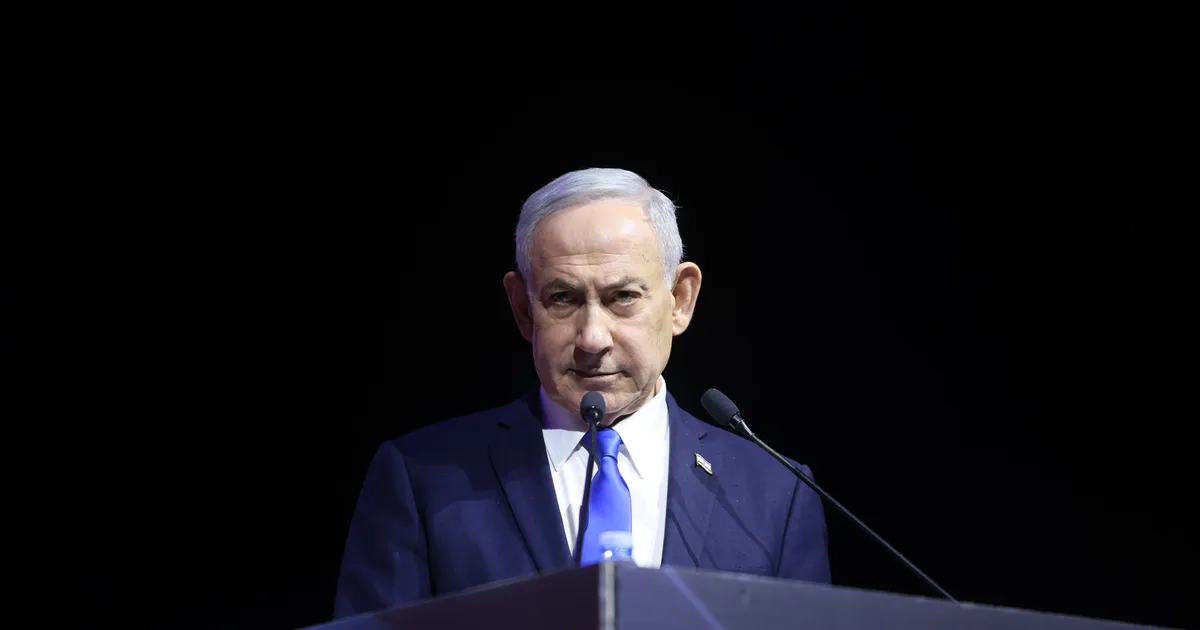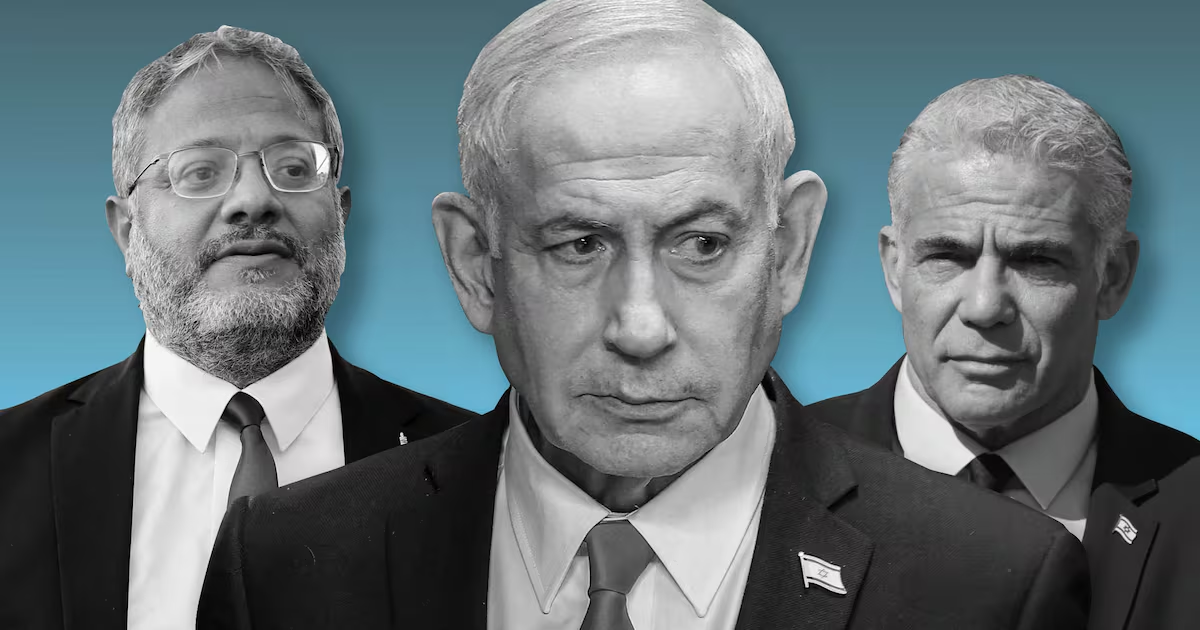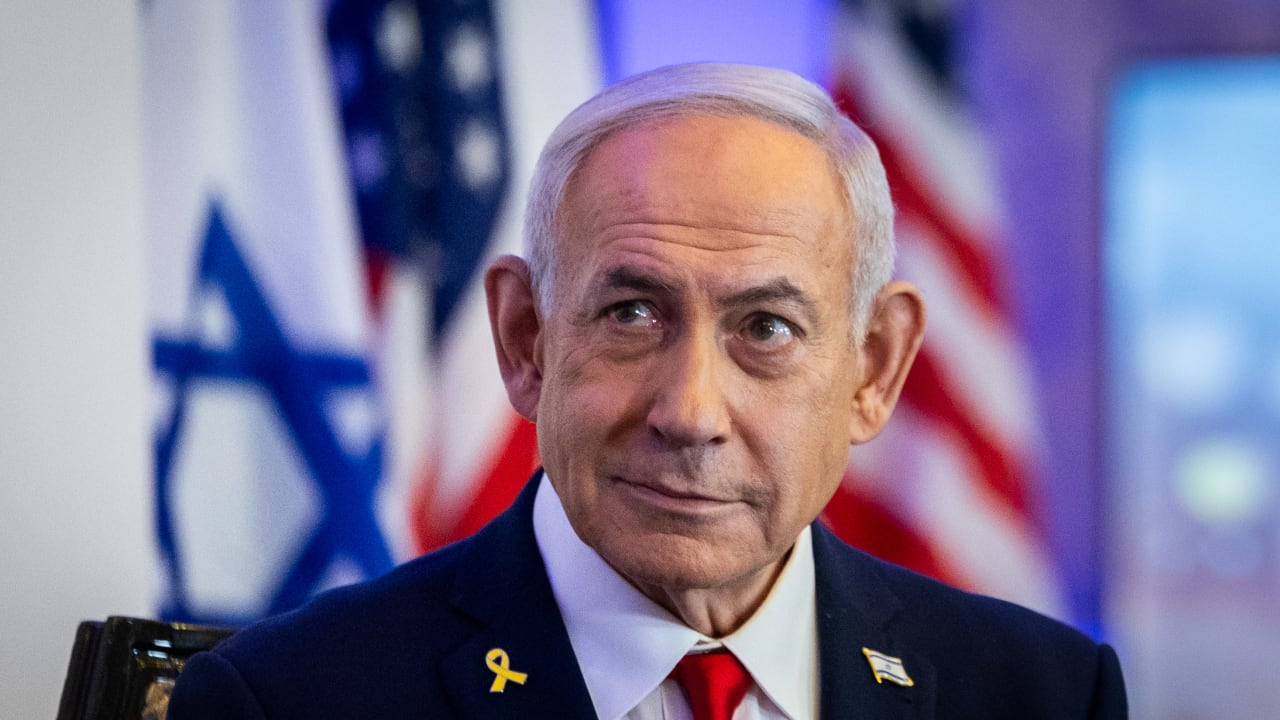
ByMATTI TUCHFELDAUGUST 8, 2026 23:37Updated: AUGUST 8, 2026 23:38Although the Israeli public has shifted to the right following the war, the coalition parties representing the Right are losing ground, leaving an estimated 15 to 25 mandates of right-wing voters searching for a political home as the election campaign gets underway, according to assessments examined by the parties ahead of Saturday.The election campaign is only beginning, but the picture emerging at the headquarters of all the parties is the same: While the public moved to the right after the war, the coalition bloc, which represents the right-wing parties, is weakening. This dissonance is keeping Prime Minister Benjamin Netanyahu and the other leaders of the right-wing parties awake at night, while providing fertile ground for hope among everyone else.The picture points to a clear reality in which between 15 and 25 mandates' worth of right-wing voters, of various kinds, are currently unwilling to vote for any of the three existing right-wing parties: Likud, the Religious Zionist Party, and Otzma Yehudit.The prevailing assessment is that if the situation remains static and only the existing parties make it to the finish line, those votes will be divided. It is still unclear how. Some will return to their original parties in the right-wing bloc. Others will migrate to parties on the other side that have disguised themselves as right-wing.This reality means that, at present, there is almost no value to the polls being published in the media. Too many people have too many doubts. The result is not a stable picture, but rather chaos and disinformation.Defense Minister Israel Katz, government ministers and members of Knesset attend a plenum session and a vote on a bill to freeze arrests of haredi draft evaders at the assembly hall of the Knesset, the Israeli parliament in Jerusalem, July 14, 2026. (credit: CHAIM GOLDBERG/FLASH90)Israel shifts right in security, tradition, and territoryThe Israeli public's shift to the right following the massacre and the war is reflected primarily in three areas: tradition and Judaism; a hard-line security outlook and zero tolerance for the Arab enemy; and support for settlement in Judea and Samaria, together with opposition to relinquishing territory in exchange for agreements.If 68 mandates in the current Knesset believed in these values even before October 7, then according to estimates, there should now be more than 70, and perhaps even 75, mandates on this side. In the polls, however, the trend is the opposite. In the most favorable poll, conducted by Momo Filber for Channel 14, these parties receive 62 mandates. Other polls give them considerably fewer.In recent weeks, parties from across the political spectrum have sent their polling advisers to analyze the gap. Who are these veteran and newly right-wing voters who currently refuse to support the parties in the present government? What is deterring them, and how can they be won over?The findings are not particularly surprising, but they are unequivocal: the composition of the Likud list and the alliance with the haredi parties. Other, less prominent factors include anger at the government because the October 7 disaster occurred on its watch, its failure to address the cost of living, disappointment over the failure of the judicial reform, and more.There is a direct and clear connection between these findings, which the parties see every week in their in-depth polling, and the campaigns and principal messages they have adopted in recent weeks.The opposition has adopted a tough, combative line, seeking to outflank the government from the right while demanding victory and a decisive outcome. It has also attacked the government's ties with the haredi parties and promised mass recruitment of haredim into the IDF.In doing so, the parties of Gadi Eisenkot, Naftali Bennett, Avigdor Liberman, and Benny Gantz are attempting to provide an answer to at least two of the three values that matter to right-wing voters.On the third value, however- Jewish tradition, which also incorporates the desire to change the judicial system so that it, too, takes on a more Jewish and traditional character- these parties have little or no real answer.From time to time, Liberman mentions that his wife is religious and that his party has a religious-Zionist campaign headquarters, while Eisenkot has sought to emphasize his Moroccan background. At least for now, however, these are weak and not particularly convincing answers. Their hope is that the other two issues will resonate strongly enough to bridge the gap among right-wing voters who may be attracted to them despite this conspicuous deficiency.But what works for a campaign does not necessarily reflect reality. Despite a supportive media environment and attempts to conceal and blur the evidence, Eisenkot, Bennett, Yair Lapid, and Liberman have each fallen into hard-line leftism when it mattered.Despite the new image he is trying to promote, Eisenkot was and remains a man of concessions and agreements. He is a committed supporter of the two-state solution and was among the architects of the concept of reducing the size of the IDF, avoiding friction, and rejecting efforts to seek contact with the enemy, both during his years as a senior military officer and afterward.Eisenkot now demands that the IDF remain in the Gaza Strip until Hamas's disarmament has been verified. But when it mattered, and afterward, during the period when he did not believe the Right would become a target constituency for him, he took pride in being the first to press for a withdrawal, an end to the war, and leaving Hamas in power in Gaza.He even left the government after Netanyahu refused to implement the hostage agreement that included a complete withdrawal to the line of the Israeli communities, effectively returning to the situation before October 7. At the time, half of Gaza, including Rafah and the Philadelphi Corridor, had not yet been captured, and Yahya Sinwar, Ismail Haniyeh, and Mohammed Deif still ruled the Strip with an iron fist.Liberman, who is regarded as the most right-wing of the group, also promoted for years, including while serving in right-wing governments, his plan to relinquish territory for the establishment of an Arab state on parts of the Land of Israel. His well-known plan called not only for large parts of Judea and Samaria to be transferred to the Arabs, but even Umm el-Fahm and communities in the Triangle.Bennett initially tried to present himself as a man of the Right, and he has several achievements to show for it. But his partnership with Lapid destroyed any possibility of attracting a right-wing constituency. In doing so, he effectively did the work for everyone else, who no longer had to convince anyone that he was not right-wing and could devote their resources to dealing with others.It is not only their past statements that stand in the way of this group of political masqueraders, but also their plans for the future, particularly their expected partnership with Yair Golan's Democrats and Mansour Abbas's Ra'am.Liberman, for example, expressed his considerable frustration in an interview this week, saying the bloc could win, but only if Yair Golan kept quiet. He did not attack the Democrats chairman or make clear that he would never sit with him because of his policies. Instead, he merely pleaded with him to stop interfering with Liberman and his partners as they complete their disguise, to stop tearing it off their faces and allow them to continue the deception uninterrupted.Will Winter save the day?Yoav Segalovich's planned move to Ra'am has also brought back to the forefront the already familiar possibility of the radical Islamist party joining a left-wing government.For the day after the election, it is a brilliant move. What could better legitimize Abbas and the Shura Council than a Jewish, Zionist former senior police officer serving as a minister on the party's behalf?But during an election campaign, it is no less than destructive. After all the denials of any intention to rely on an Arab party in the next government, this constitutes a practical step preparing the ground that cannot be interpreted as anything other than a clear intention to break that promise yet again.In recent days, the right-wing parties in the coalition have been targeting exactly the same constituency, but their own response is far from perfect.On tradition, the Land of Israel, and security, they have something to offer. But they will find it very difficult to sever their bond with the haredi parties.Itamar Ben-Gvir, incidentally, does not have this problem. His party actually enjoys haredi support, and most of his supporters are pro-haredi voters to whom the military recruitment campaign does not appeal. Likud and the Religious Zionist Party, however, face a serious problem on this issue.It is no coincidence that Netanyahu is working to dispel the impression that the haredi factions will be an inseparable part of the next coalition under his leadership.Among other things, he sent a forceful message this week that in the next government, anyone who does not study in a yeshiva will be arrested under the law he intends to advance.It is unclear how many right-wing opponents of the haredi parties will buy this message. It is reasonable to assume that few will be convinced Netanyahu can recruit haredim when his government depends on Shas and United Torah Judaism.Amid all this, a third possibility has emerged: The solution to the dilemma may not lie with any of the existing parties, but with a new party.Such a party would necessarily have to be made up of right-wing figures, provide an answer to undecided right-wing voters across the range of issues, including haredi military recruitment, and consist of people who were outside the political system on October 7.Netanyahu would like such a party, but he fears the high electoral threshold. On the one hand, it has significant potential to capture the lost votes on the Right. On the other, it could cause several mandates to be wasted, exactly as happened to Meretz in the last election and to Bennett in the first round of the 2019 elections.Beyond crossing the electoral threshold, Netanyahu also cares about such a potential party's commitment to the bloc. He wants its members to see a right-wing government under his leadership as a value in itself, rather than stubbornly pursue a hopeless run or refuse to unite even at the cost of wasting votes.Gilad Erdan and Yuli Edelstein, for example, are not there at all.During the campaign, they would likely refuse to hold any discussions with Netanyahu and his people about withdrawing, merging, or any other step concluded to be in the right-wing bloc's interest.Even after the election, if they cross the electoral threshold, the two could make it difficult to form a government, demand that other parties from the left-wing bloc be brought in, insist that the haredi parties be removed, and perhaps demand even more.They are indeed right-wing figures, but their motivations are personal. They are against Netanyahu. Otherwise, they would have run in Likud.Ofer Winter is an exception.He is unequivocally right-wing, a security man and a man of the Land of Israel. He is committed to tradition to the point that he was branded and labeled an enemy of the people when he dared to include words of prayer in his battle orders to Givati soldiers during Operation Protective Edge.Winter did not demand a withdrawal from Gaza in exchange for a hostage deal, as Eisenkot, Bennett, and Liberman did. On top of all that, he is an enthusiastic supporter of recruiting haredim into the IDF.Unlike the opposition's political masqueraders, who attack the government while protecting one another, Winter has no problem doing both.This week, he launched a full-throttle attack on the defense minister over remarks made on The Patriots, where the minister announced live on air that Maj.-Gen. Avi Bluth, head of the IDF Central Command, would be replaced by Dado Bar Kalifa.Winter did not accept what he viewed as the false campaign claiming Bluth had been dismissed live on air, but in his view, even announcing his replacement in such a manner was inappropriate.The incident brought back memories for Winter. Only a few years ago, he found himself in exactly the same situation when then-IDF chief of staff Herzi Halevi fiercely opposed his appointment as the prime minister's military secretary.For a year, Netanyahu tried to overcome the chief of staff's opposition, but eventually had to give up and appoint Roman Gofman instead.Less than a week after Halevi, together with Yoav Gallant, succeeded in thwarting the appointment, Winter learned from a newspaper headline that he would be retiring from the IDF.Winter attacked not only the defense minister this week, but also Netanyahu over the emerging arrangement in Gaza.But there should be no misunderstanding about Winter. He has nothing whatsoever in common with the opposition figures, neither Eisenkot nor Bennett and Liberman, for whom he served as military secretary when they were defense ministers.Winter does not want them with their hands on the wheel of government and does not trust a word they say.This week, he sharply attacked Eisenkot and called him a man of the Left. Of Liberman, he said: "He is a man of the Right, but he has proven that he will be willing to do anything to prevent a right-wing government, including sitting with Ra'am and the Shura Council, just to remove Netanyahu and the right-wing government from power."Yisrael Beytenu's campaign talks about a decisive outcome, but it is not clear how, with Yair Golan, who opposes the pioneers on the farms and believes security comes through the two-state plan? Liberman needs to explain how he intends to defeat Hamas and the Arab enemy, ensure settlement in Judea and Samaria, and fulfill everything he promises when he gives the diplomatic Left more than one hand on the steering wheel of government."Benjamin and Sara Netanyahu at a memorial dinner for late Republican senator Lindsey Graham, July 28, 2026. (credit: MAAYAN TOAF/GPO)He wants it, and he will get itBetween diplomatic and security consultations and dozens of fateful decisions placed before him over the past week, including two security cabinet meetings and constant discussions with the Americans and the Gaza Board of Peace, Netanyahu has increasingly immersed himself in developments inside Likud, which has begun to bubble and churn as the picture ahead of the party primaries becomes clearer.Netanyahu understands that beyond the military recruitment issue and his alliance with the haredim, the composition of the Likud list also carries enormous significance.Unlike what the article characterizes as the Democrats' extreme group, which includes a lawyer who represents terrorists and raises money for Arabs in the hostile Palestinian town of Huwara, Netanyahu knows he will not receive even a single day of grace after the list is unveiled, and that the media will do everything it can to make the list unpalatable and highlight its shortcomings.He therefore demanded, and received, eight reserved slots. It is an enormous and unprecedented number that will give him room to maneuver and make corrections if necessary.That is why, after returning from the US, Netanyahu threw himself fully into questions of procedure, petitions, and the district provision that passed by a narrow majority. He will not relent until he gets everything he wants.So far, he has received the two provisions he sought: reserved slots and the rules governing the primaries. But those were not his only achievements.During negotiations to bring those provisions before the party convention for approval, Netanyahu succeeded in breaking up what could have been the strongest deal in Likud ahead of the coming internal elections, between David Bitan and Haim Katz.After negotiating jointly with both men, Netanyahu chose to work only with Katz and leave Bitan out of the picture.Bitan was furious, but ultimately lost. On the district provision, the margin was only five votes, but on the two provisions that truly mattered to Netanyahu, the prime minister defeated him by an overwhelming majority.The vote and the appeal over the provision allowing MKs to run in the districts intensified the rivalry within Likud, with Bitan forced to identify not only Netanyahu as a rival but Katz as well.The divide-and-rule strategy succeeded beyond expectations.Amid all this, Netanyahu managed to recruit all the party's senior figures to support his proposals at the convention. Even Tally Gotliv backed his two most important proposals, while opposing the district proposal that was actually important to Haim Katz.The defense minister, the Knesset speaker, Yariv Levin, and other senior ministers released videos supporting Netanyahu's proposals, making clear to Likud members that there is one man in charge of the party.For Israel Katz, at least, it has already paid off.Several Netanyahu associates pressed the prime minister to attack the defense minister over what was perceived as the live dismissal of Maj.-Gen. Bluth.In the past, Netanyahu would not have missed an opportunity to flex his muscles against Katz, particularly when it involved defending an IDF general who has been carrying out the government's settlement policy in Judea and Samaria with distinction. This time, however, Netanyahu refused.For many years, the winning axis inside Likud was in the hands of the two Katzes, Haim and Israel. In the last election, however, the two went their separate ways, contributing to Israel Katz's decline as he fell out of the top 10.Recent events have brought the two closer again, and indications are that in the coming primaries they will work to restore their former alliance.The partnership with Netanyahu, including the decision to send party legal adviser Ilan Bombach to fight for the district provision in the district court, has strengthened Haim Katz's position. Israel Katz's senior ministerial position, meanwhile, is serving his political standing well.A renewed alliance between the two would reestablish the powerful Likud axis, at least until the next confrontation with Netanyahu, which could once again bring the divide-and-rule strategy to the forefront.Follow us on Google
Why Netanyahu's right-wing coalition falters despite Israel's right-wing shift | The Jerusalem Post
The Israeli public has moved right, but the parties of the Right are losing support, creating a battle for millions of voters who could determine the next government.
2,945 words~13 min read