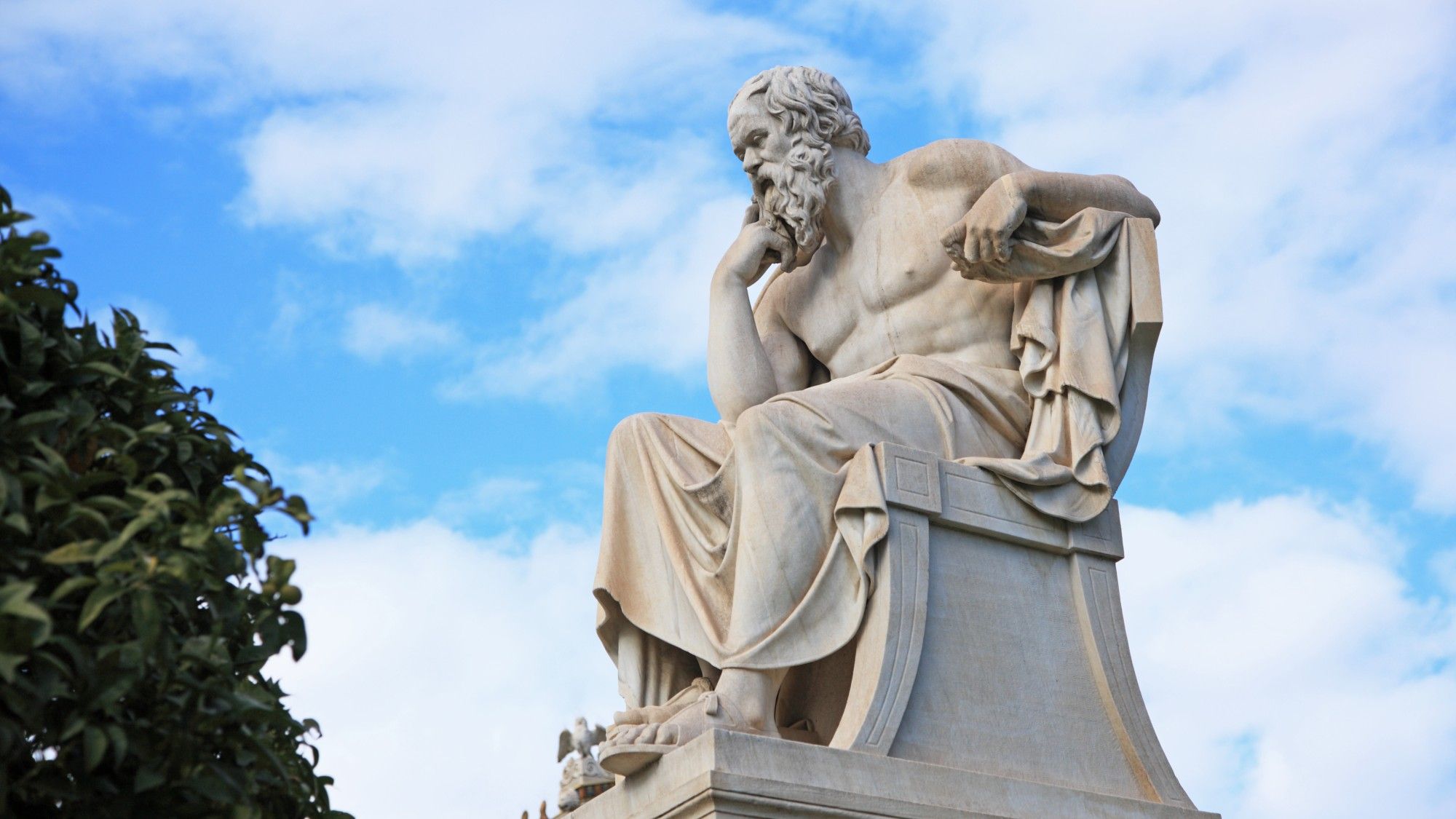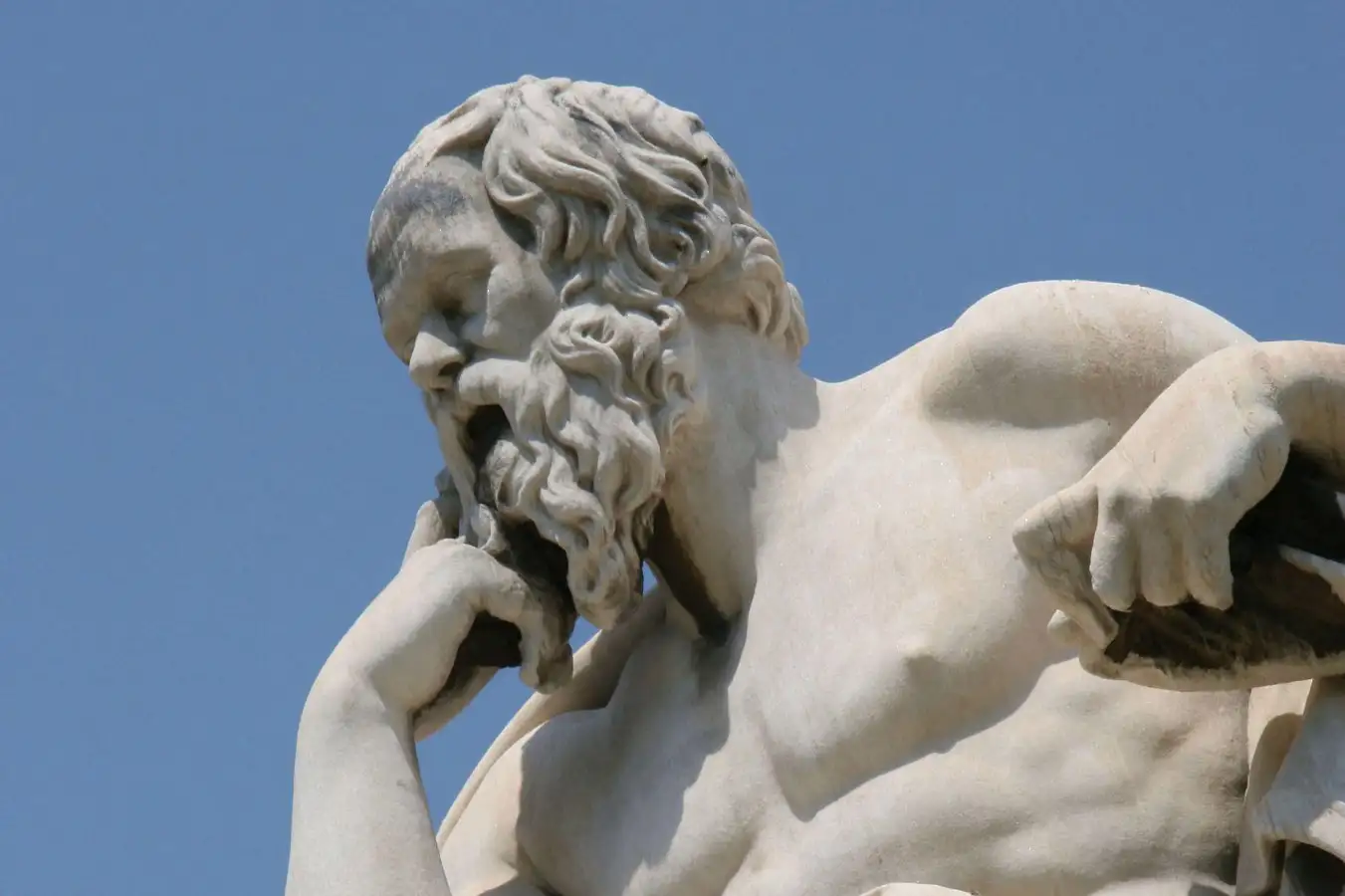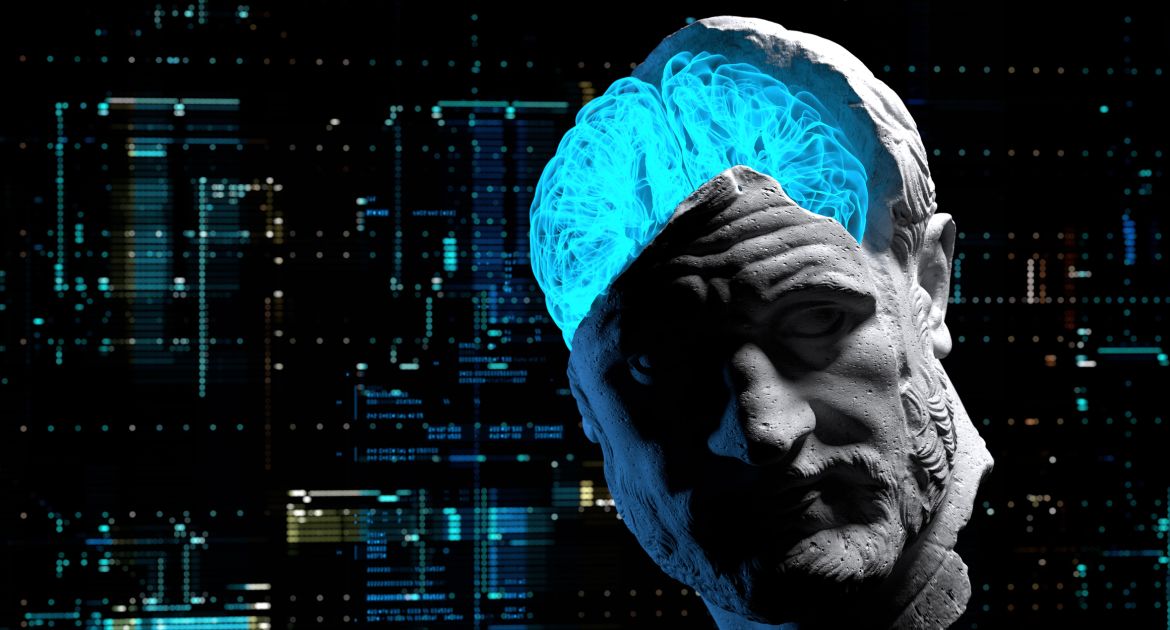
Long before computers existed, people wondered whether thought itself could be built. In Homer’s Iliad, Hephaestus is helped in his workshop by autonomous golden handmaidens described as having understanding and speech. It is one of the earliest images in Western writing of a manufactured mind. Millennia later, J. Krishnamurti posed a similar question in his own way: if a machine can do everything thought can do, what then is man? His concern was not with gadgets, but with the human habit of reducing intelligence to memory, repetition and response — the very operations machines now perform at scale. The debate around artificial intelligence, then, goes beyond technology to an older question: can thinking be made?(Sign up for THEdge, The Hindu’s weekly education newsletter.)Before that question could become code, it had to be defined. In a very real sense, philosophy helped build the machine. Aristotle formalised the logic of valid inference, the framework behind every conditional program. Descartes treated the body as machinery but insisted that no machine could use language responsively or apply reason across unfamiliar situations, framing a challenge that Turing was still answering three centuries later. Leibniz worked out binary notation in the seventeenth century, creating the arithmetic on which digital computing still rests. India’s contribution to formal method sits in the same lineage.Join THEdge LinkedIn groupThat lineage carried into the field’s first decade: the Logic Theorist, an early AI program from the mid-1950s, proved theorems from Whitehead and Russell’s Principia Mathematica. Pāṇini’s Aṣṭādhyāyī specified Sanskrit through some four thousand ordered rules with metarules governing their application, a generative system close enough in spirit to modern grammar formalisms that Peter Ingerman proposed in 1967 that Backus-Naur Form be renamed Pāṇini-Backus Form. As the Stanford Encyclopedia of Philosophy notes, major AI formalisms — including logic, probability and reasoning — came directly out of philosophy and remain central to the field today.Join THEdge LinkedIn groupToday’s dominant large language models are often described as black boxes. They generate plausible text by predicting the next token, but they cannot yet reliably explain in human-understandable terms why they arrived at a specific conclusion. That gap is now clashing with a growing regulatory push, as lawmakers and standard-setters demand systems that can be traced, audited and justified. Examples include the EU AI Act, whose transparency obligations under Article 50 apply from 2 August 2026. Closer home in India, MeitY released the India AI Governance Guidelines on 5 November 2025, built on seven sutras including accountability, fairness and transparency, with “Understandable by Design” named among them.The approach is deliberately sectoral, leaving individual regulators to frame rules for their own domains. The RBI’s FREE-AI report of August 2025, chaired by Professor Pushpak Bhattacharyya of IIT Bombay, advises regulated entities to keep models explainable, disclose when consumers are dealing with an AI system, and provide grievance redressal. Market and regulatory pressures are therefore driving a stronger demand for transparency, though unevenly.One response is the growing interest in Neurosymbolic AI, which combines statistical pattern recognition with explicit symbolic reasoning. Michael Schrage and David Kiron, writing in MIT Sloan Management Review in early 2025, argued that philosophy is eating AI — and their point was broader than ethics. They contend that the ethics and responsible-AI framing captures only a small part of philosophy’s influence, and that questions about what systems should achieve, what counts as knowledge, and how models represent reality shape commercial value as much as any guardrail does. AI is no longer only about scale and prediction; it is about the assumptions built into what systems optimise and how they justify their outputs.None of this means a philosophy degree is an automatic ticket to a technology career. The real value of the discipline is a way of thinking: breaking complex problems into parts, spotting hidden assumptions, and defining vague terms carefully. Those skills can come from physics, mathematics, computer science or law. Dario Amodei of Anthropic studied physics and biophysics. Alex Karp of Palantir studied philosophy and social theory. Their paths are different, but both show comfort with abstraction and systems thinking.Sensational claims about a philosophy comeback in tech are easy to overstate. New York Fed data for 2023 put unemployment among recent philosophy graduates at 3.2 percent, below finance at 3.7 percent, but the Fed’s 2024 figures, published in February 2026, put philosophy at 5.1 percent — a reminder that the sample for any single major is small enough to swing. The hiring picture inside AI is more modest with outliers in Amanda Askell at Anthropic and Henry Shevlin at Google Deepmind.A snapshot taken on 25 June 2026 by Aaron Kagan and the philosopher Charles Lassiter, published on the philosophy site Daily Nous, examined 1,815 open roles across eleven AI labs and found none requiring a philosophy credential. Roughly a quarter of postings mentioned ethics, safety, alignment, governance or policy, but once generic mission language was stripped out, the share substantively involving that work fell to about five percent. While similar job data is not available for India, there is a growing opportunity for Indian talent to contribute to an emerging need for AI Safety/Ethics/ Responsible AI specialists within large multinational corporations, young AI Labs and Forward Deployed Engineering arms of IT consulting companies.For students who want to work in AI research or policy, the best advice is not simply to major in philosophy. A better path is to study formal logic, argument analysis and evidence evaluation, and then pair those tools with technical fluency. Learn the reasoning skills philosophy teaches, but combine them with coding, statistics, machine learning or public policy.Companies are unlikely to hire philosophers at scale just for their titles. But they will continue to need professionals who can think clearly, unpack difficult systems and design the logical guardrails required to make those systems trustworthy. Philosophy is being pulled back into relevance because AI has revived one of the oldest questions in intellectual history.(The author is an Energy and Emerging Technologies expert.)
Hot AI jobs await philosophy grads: Myth or reality?
Explore the evolving role of philosophy graduates in AI careers and the skills needed for future opportunities.
989 words~4 min read