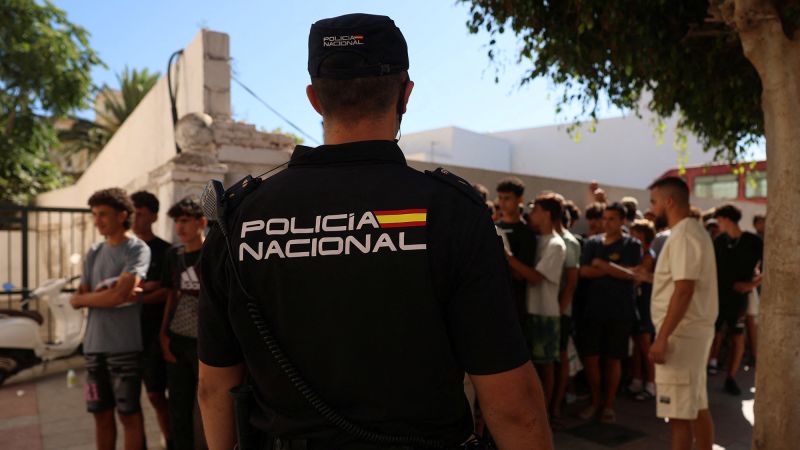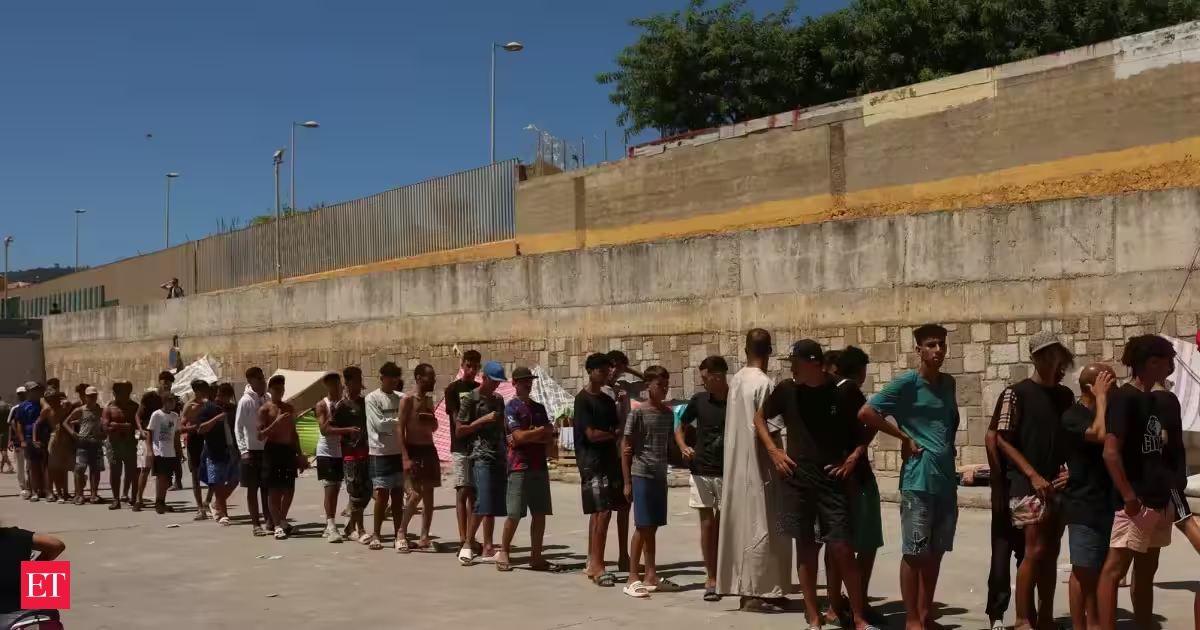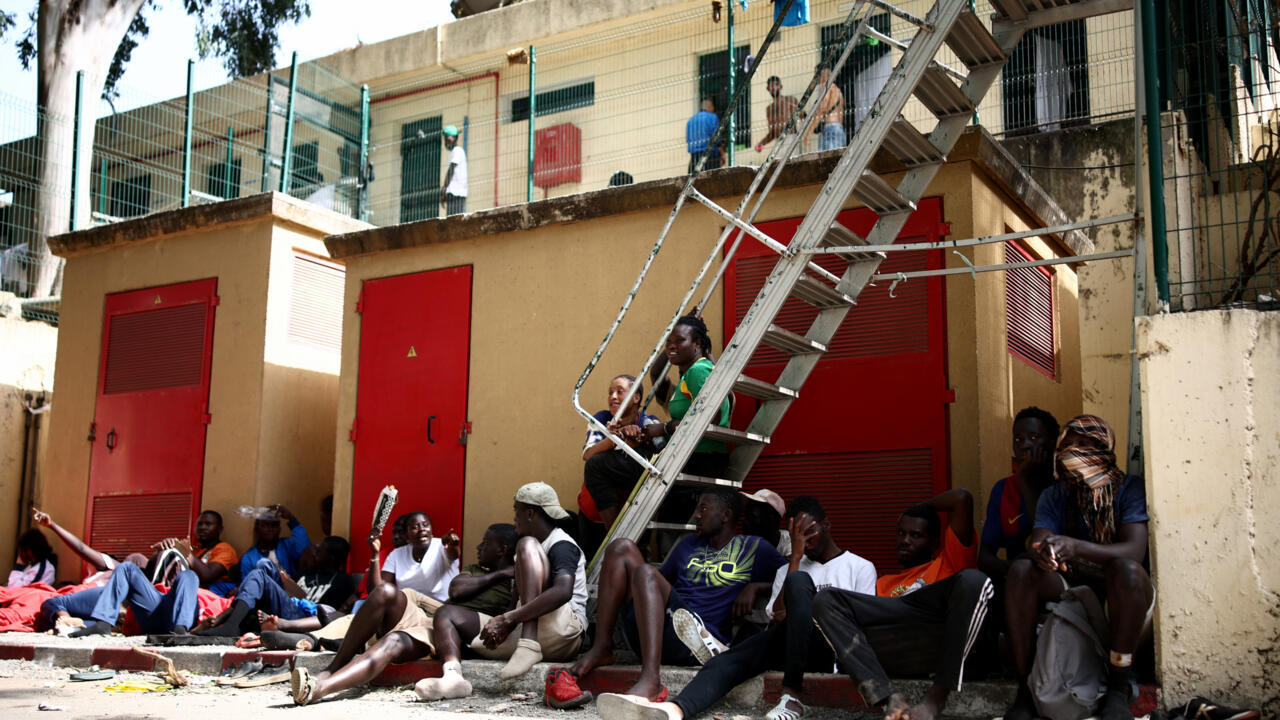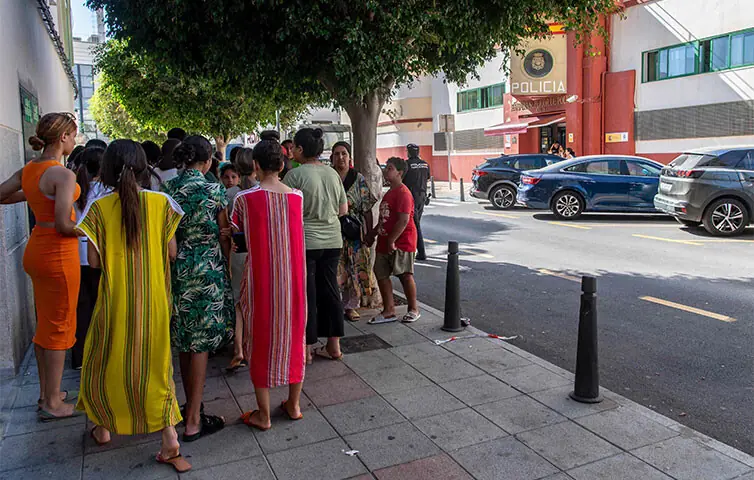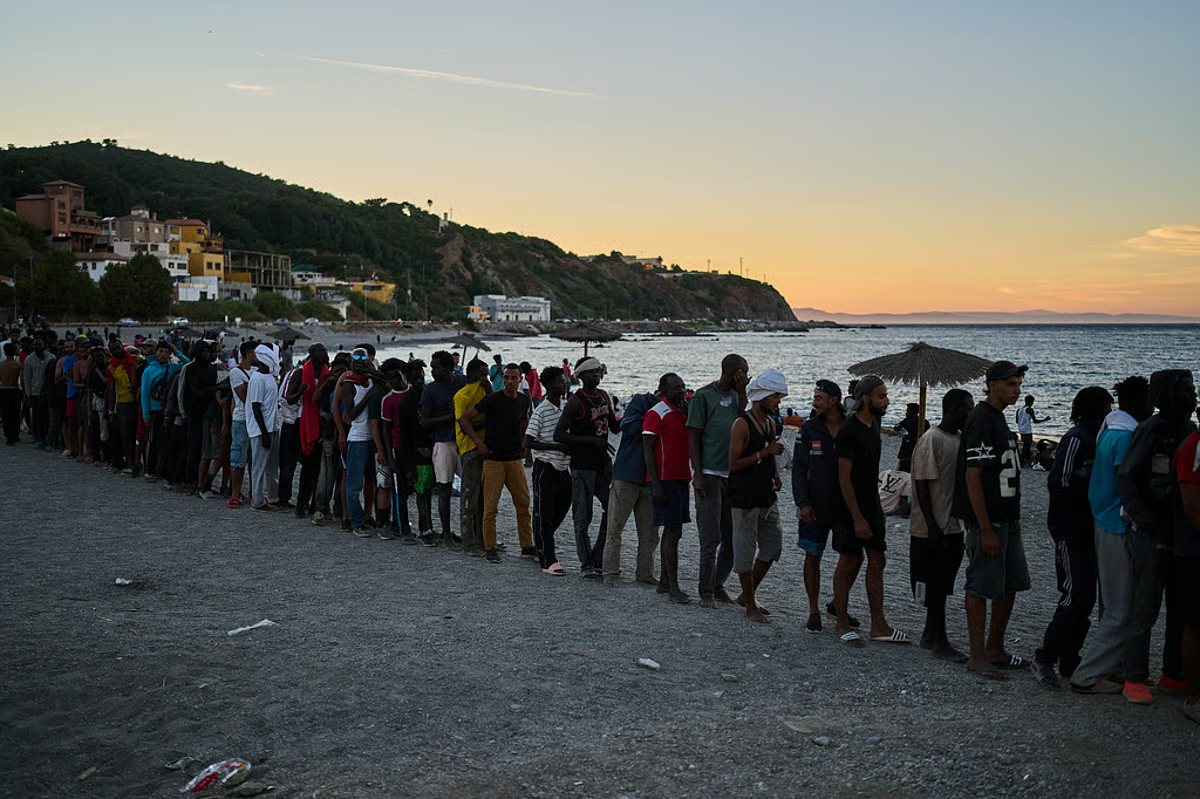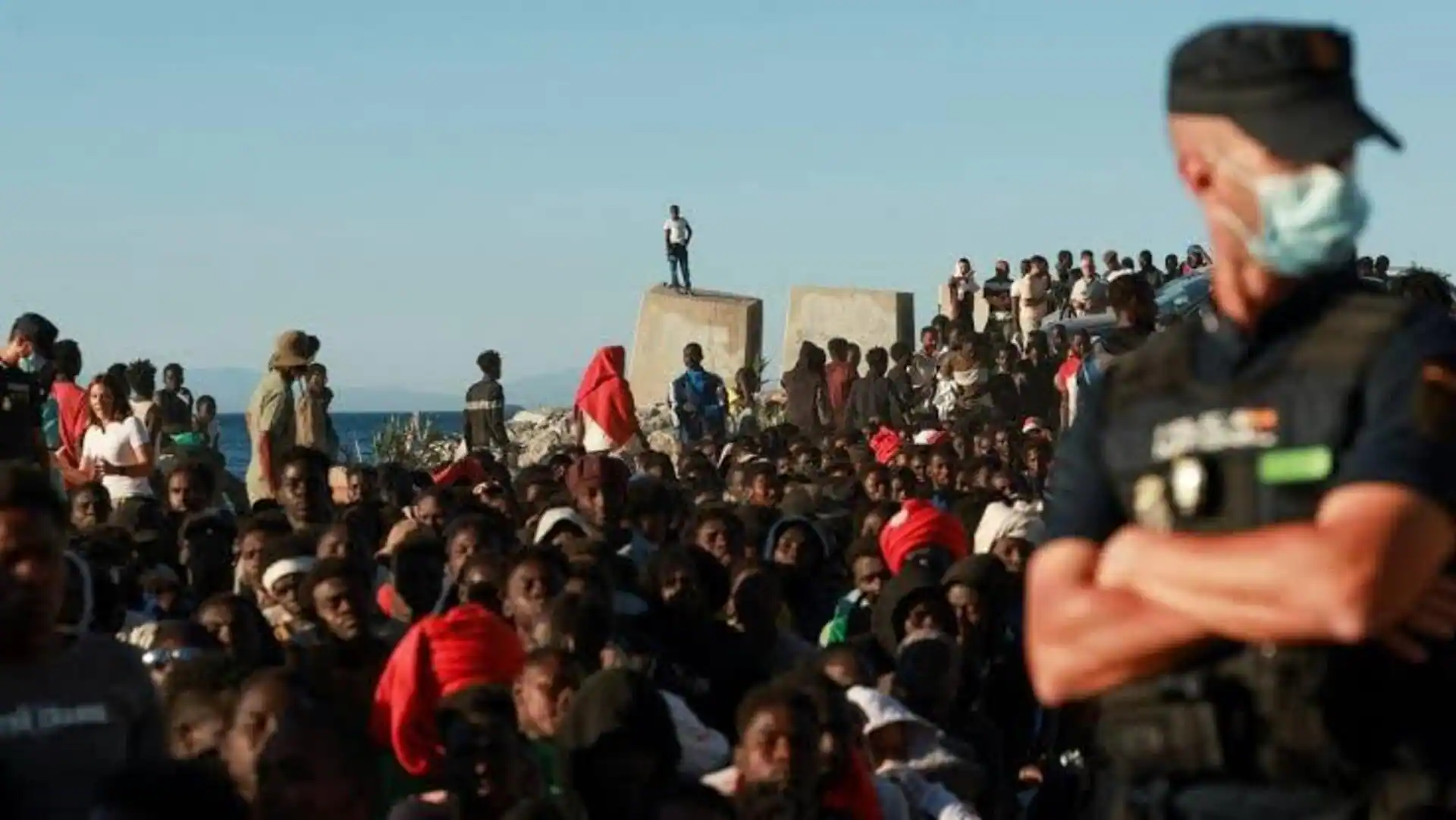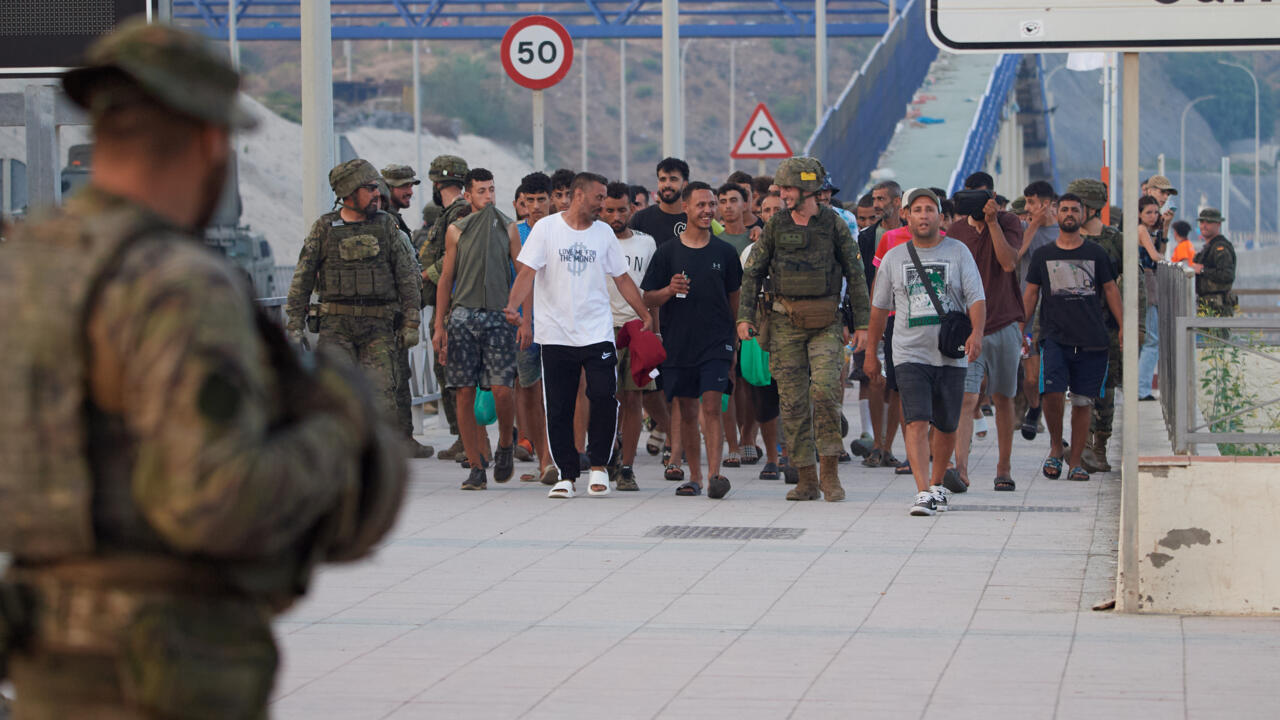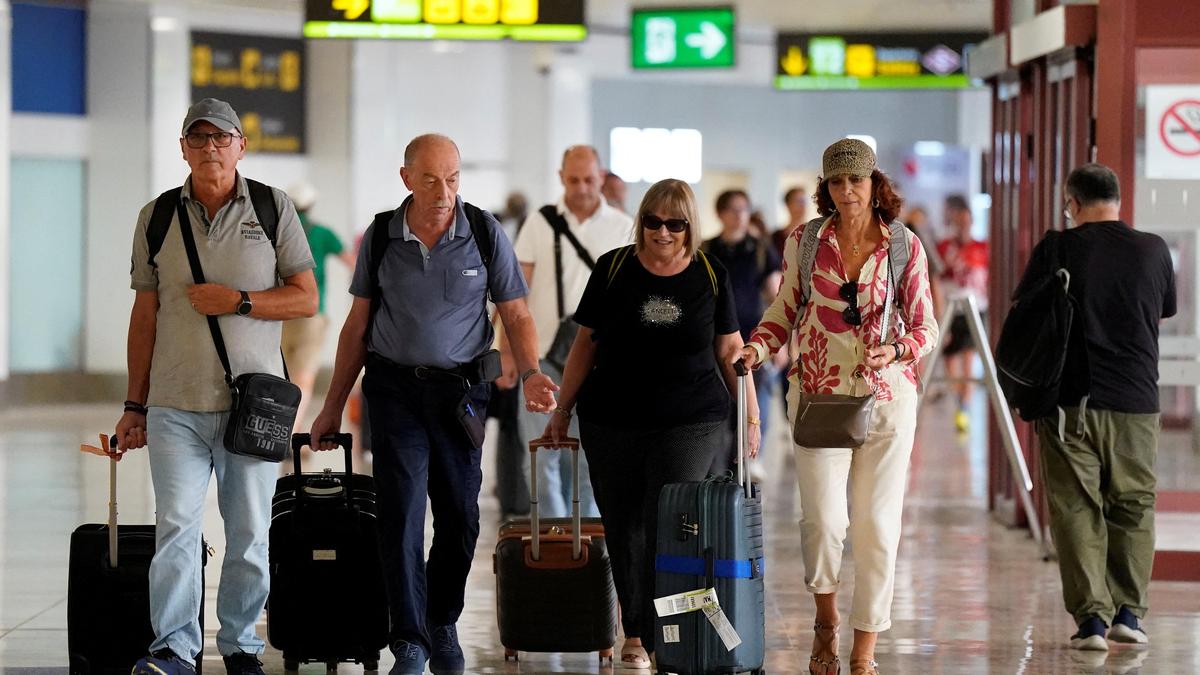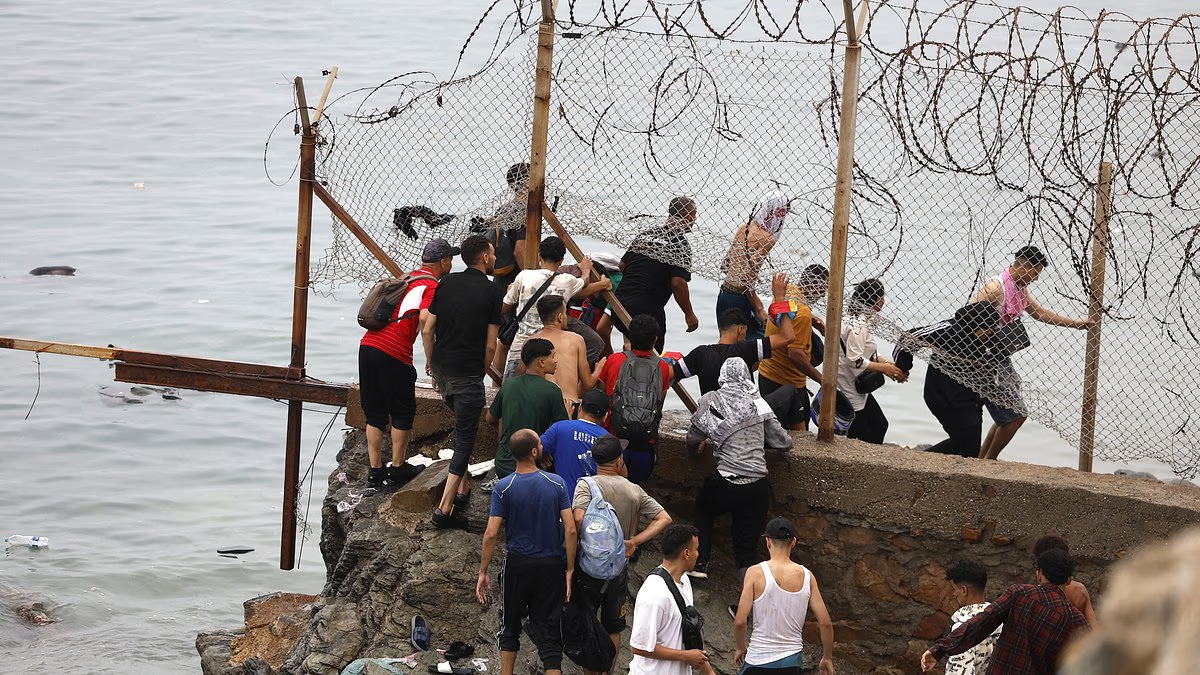
Spain's government said on Friday it would impose restrictions on travellers from Italy from midnight on Saturday until September 7. The move comes after Rome introduced border controls following a mass influx of migrants into the Spanish enclave of Ceuta. Passport, nationality and visa checks would be conducted for Italian passengers and visitors from other countries arriving from Italy 'amid the persistent irregular migratory pressure' from the country, the Spanish government said.The measures would apply until Italy lifts its own measures, which were motivated by the mass migration rush of 72,000 people to Ceuta last week. Earlier on Friday, Italy said it would not bow to 'ultimatums or impositions' from Spain and would maintain border controls on arrivals from the country until at least August 15.In a statement, the Italian government said it would only reconsider its decision once it was certain there were no security or terrorism risks, no new migration wave and no irregular migrants heading towards European territory.Italian Prime Minister Giorgia Meloni's conservative government had previously said the more robust travel checks would remain in force until the end of the month.The Spanish government said Italy's decision to reintroduce controls on arrivals from Spain was 'unjustified, contrary to the interests of the European Union and discriminatory against the Spanish population'. Spain's government said on Friday it would impose restrictions on travellers from Italy from midnight on Saturday until September 7. Pictured: Spanish PM Pedreo Sanchez The move comes after Rome introduced border controls following a mass influx of migrants into the Spanish enclave of Ceuta. File image: People gather along the fence close to the site of clashes near Fnideq, on the Morocco-Spain border, on July 31, 2026 Italian Prime Minister Giorgia Meloni's conservative government had previously said the more robust travel checks would remain in force until the end of the monthIt promised to adopt 'proportionate measures' against Italy unless Meloni rolled back the new constraints by Sunday.However, in a toughly worded statement, Meloni's office said that Spanish authorities had themselves warned of a new influx of migrants into Ceuta on August 15.It said it would only reconsider its decision once it was certain there was no new migration wave, no security or terrorism risk to Italy and no irregular migrants heading towards European territory.Spain's Civil Guard has said it is aware of online calls for a fresh attempt to cross the border at Ceuta on August 15; however, it is unclear how many people might take part. Talking about the escalating migration row between Italy and Spain and the restrictions Spain has now placed on Italy, Emanuele Loperfido, an ally of Italian PM Giorgia Meloni from Meloni's Brothers of Italy Party, defended Italy's tough approach.Mr Loperfido, secretary of Italy's foreign affairs committee, said that '15 illegal migrants from a third country' had already been detained in the last week trying to cross from Spain into Italy, showing they were right to impose border restrictions and suspend free movement.'Our main objective was to secure the borders of our country and by doing that we are also doing our duty with the European Union,' he told the BBC, saying that it was accepted that the Schengen Agreement – which allows free movement across EU borders – could be 'suspended for some temporary control at the border for a security risk'.'Our ambition is to be sure that every subject entering Europe has some identification and we want to protect it from secondary movement and migrant smuggling, terrorism and organised crime because there are all those kinds of threats,' said Mr Loperfido, who also insisted Italy was doing nothing different from 'Germany, Austria and France in imposing controls on Spain'.'Temporarily suspending Schengen is an option. That has happened almost 500 times, and it is not a big issue for us.'Asked whether Italy would act to try and prevent tourists being held up at the borders, he said he agreed 'absolutely' that talks to resolve the situation would be a good idea but added:'On the other hand, we aim to ensure that the threats from Spain and a new wave entering Ceuta from Morocco are faced properly in order to be sure that only those with valid documents can enter because once they are in Ceuta they can also go to Spain.' As many as 72,000 people rushed to cross the border last week, and dozens died in the attempt Most have since returned to neighbouring Morocco, but hundreds of unaccompanied minors remain in Ceuta Migrants wait in line to receive food and beverage from the Red Cross, following mass crossings of migrants on foot and by sea from Morocco into Spanish territory, in Ceuta, Spain, August 3He told Radio 4's Today programme: 'In the last five days of controlling borders we have found 15 people coming in from Spain who are not Spanish but from a third country and are illegal.'We want to be sure who is entering Italy, and we want to allow people coming for tourism, but we have to do it properly, and we have to find them [illegal migrants] and send them back.'As many as 72,000 people rushed to cross the border last week, and dozens died in the attempt. Most have since returned to neighbouring Morocco, but hundreds of unaccompanied minors remain in Ceuta.Italy, which does not share a land border with Spain, justified its decision to partially suspend the EU's border-free Schengen arrangements to prevent any of the migrants who entered Ceuta from travelling to Italy.There has been no indication that any of them want to travel to Italy, or have the money to pay for an airline ticket.Madrid said the Italian move was based on 'spurious arguments' that lacked any factual basis because the migrants who entered Ceuta irregularly could not gain access to the Schengen area.Hundreds of migrants have since set up camp on beaches in Ceuta, as local authorities struggle to cope with the thousands still in the tiny territory. Ceuta and Spain's other North African enclave, Melilla, sit on Morocco's Mediterranean coast and periodically face attempted crossings by migrants seeking to reach Europe. Italy, which does not share a land border with Spain, justified its decision to partially suspend the EU's border-free Schengen arrangements to prevent any of the migrants who entered Ceuta from travelling to Italy Migrants sleep in a construction site amid recent mass crossings from Morocco into the Spanish territory of Ceuta by land and sea, in Ceuta, Spain, August 7, 2026Pictures and videos this week showed scores of migrants, most of them from sub-Saharan Africa, lying on the sand of El Trampolin beach. Many were wrapped in towels to shield from the wind, while army and police vehicles patrolled the road behind them. Ceuta's leader Juan Jesus Vivas told broadcaster Telecinco that between 3,000 and 5,000 migrants remained in the enclave, adding that its two migrant reception centres — one for adults and another for minors — had 'collapsed'. Local official Alberto Gaitan said the city was processing 862 migrant minors, who enjoy special legal protections from deportation.
Spain announces border controls on Italians
Spain's government said on Friday it would impose restrictions on travellers from Italy from midnight on Saturday until September 7.
1,173 words~5 min read