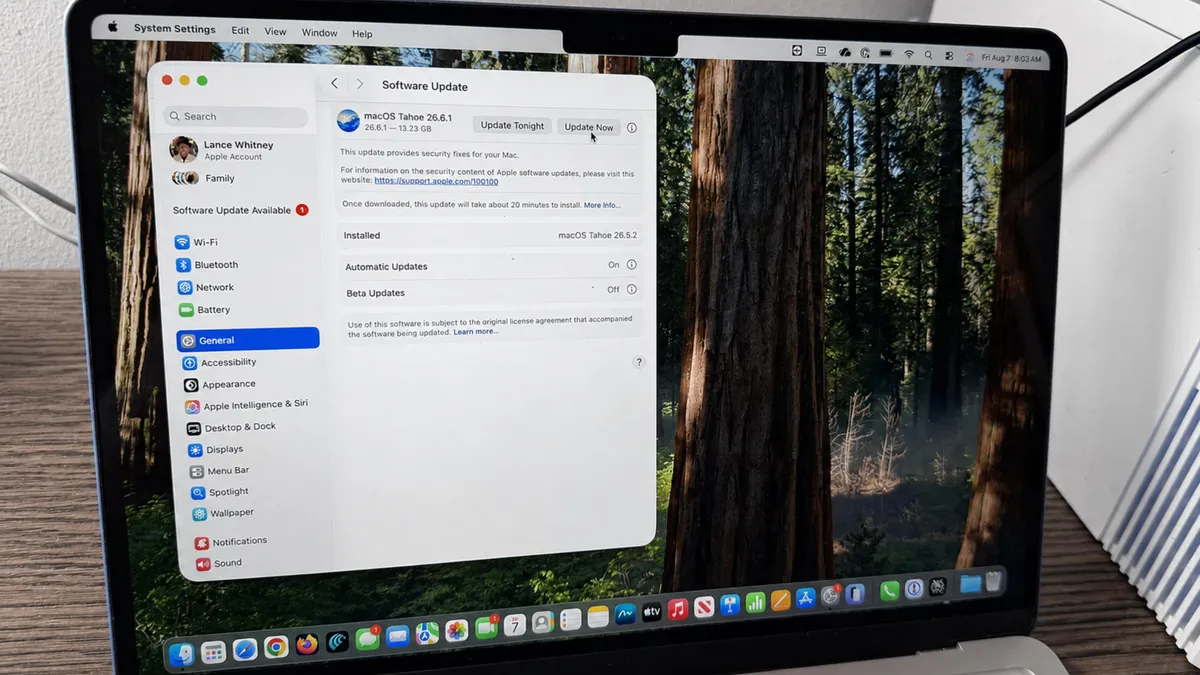
Why This Patch Stands OutApple typically bundles fixes for dozens of components into a single point release, and it rarely issues a patch for just one operating system while leaving iOS, iPadOS, watchOS, and tvOS untouched. macOS 26.6.1 breaks both patterns. According to [Apple's own security release notes] (https://support.apple.com/en-us/148170), it addresses exactly one issue, and it applies to macOS only, a strong signal that engineers judged the Screen Sharing flaw serious enough to skip the usual beta-testing cycle and release notes filled with feature language, shipping instead with a terse "important security fixes" description.That urgency tracks with how screen sharing works. Built on the industry-standard VNC (Virtual Network Computing) protocol, the feature is designed to let one Mac fully view and control another over a local network or the internet, moving the mouse, typing on the keyboard, opening apps, and transferring files, exactly as if someone were sitting in front of the machine. It's a staple tool for IT departments, schools, and anyone doing remote tech support for a family member. A hole in its authentication layer effectively turns a convenience feature into an open door.What the Flaw Actually DidApple's advisory attributes the bug to a state-management error in how the authentication process was handled, rather than a missing password check outright. The company's fix note reads: The issue "was addressed with improved state 'management'" engineering shorthand for tightening how the system tracks a login attempt's progress so it can't be tricked into treating an unauthenticated session as verified.Security researchers who reviewed the disclosure note two things worth keeping in perspective:No confirmed exploitation. Apple has stated there is currently no evidence the vulnerability was used against real users before the patch shipped.Network access is still a prerequisite. The attacker has to be on the same network as the target Mac, the same Wi-Fi router, the same corporate LAN, or the same shared network segment rather than being able to reach in from anywhere on the internet. That doesn't make the bug harmless (public Wi-Fi, university networks, and shared coworking spaces all count), but it does narrow the realistic attack surface compared with a fully remote, internet-facing exploit.Who Found ItThe flaw was reported to Apple by security researcher Alfredo Pesoli, who goes by @__rev online, working through the Bynario Atlas vulnerability research programme. Bug submissions of this kind typically go through Apple's coordinated disclosure process, in which a researcher privately reports the issue and Apple ships a fix before any technical details are made public, which is why the vulnerability only became widely known once the patch itself appeared.Every Affected Version, at a GlanceBecause the same underlying Screen Sharing code exists across several still-supported releases of macOS, Apple issued matching patches for each one on the same day, August 6, 2026.
Apple Rushes Out macOS 26.6.1 to Patch a Screen Sharing Flaw That Let Attackers Skip the Login Screen
Apple has announced an immediate security update for macOS after discovering a significant vulnerability in the Screen Sharing feature. This flaw could permit unauthorized network access without a password on versions Tahoe, Sequoia, and Sonoma. Users are urged to promptly install this crucial patch to safeguard their systems against potential threats.
460 words~2 min read