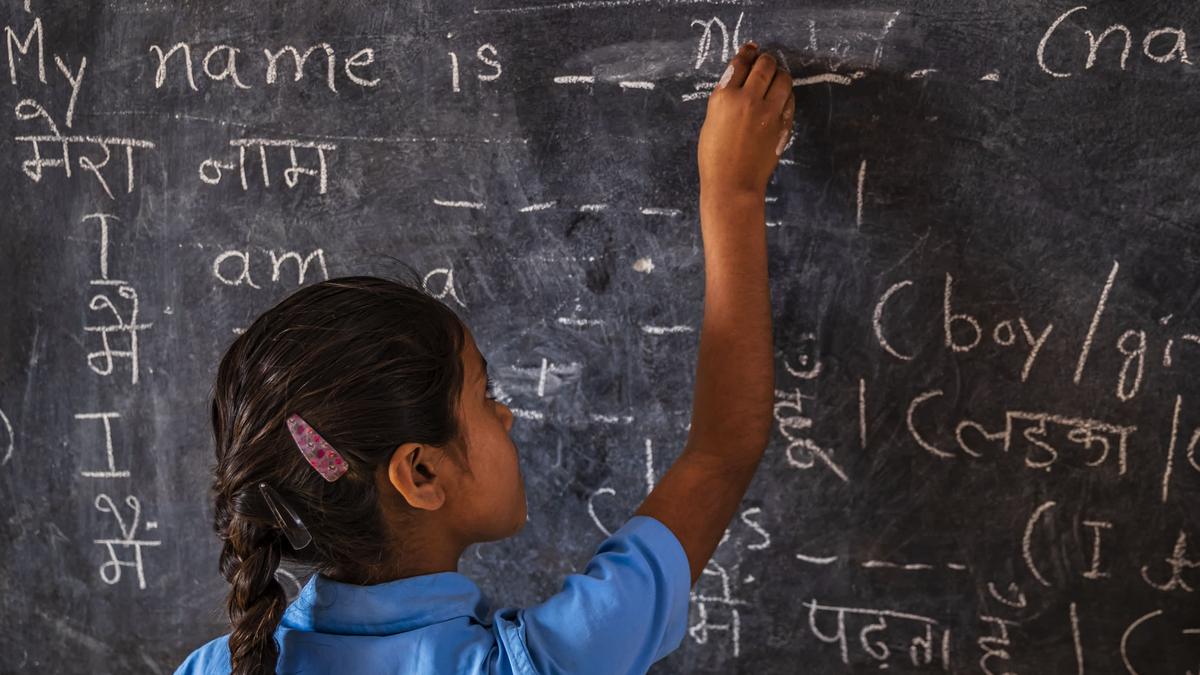
“Nani, aaj kya banaya?” (”Grandma, what did you cook today?”)It’s a simple question that millions of Indians ask every day. But what if you asked it to an AI assistant? Would it understand the language? The accent? The mix of Hindi and English? What if the question was asked in Tulu, Bundeli, Kodava or Santali instead?Artificial intelligence has become more advanced at answering questions, translating languages and even writing stories. But there’s a catch. Most AI systems learnt these skills from enormous amounts of digital data — books, websites, videos and conversations, much of it in English. For many Indian languages and dialects, especially those spoken by smaller communities, that kind of digital treasure trove simply doesn’t exist.So how do you teach a machine to understand a country where languages change every few hundred kilometres, accents shift from district to district, and some words are spoken every day but have never been written down?That’s the challenge researchers at AI4Bharat, a research lab at IIT Madras, have taken on. Their mission is ambitious: to build AI that can understand, speak and translate India’s many languages, making technology more accessible to millions. We spoke to Kaushal Bhogale, a PhD researcher at AI4Bharat, to find out how his team is teaching AI to speak India, one voice, one conversation and one language at a time.Why are Indian languages harder for AI?When people think of artificial intelligence, they often assume it can understand every language equally well. In reality, AI is only as good as the information it learns from.Languages like English have a huge advantage. The internet is filled with English books, websites, subtitles, podcasts, news articles and videos. This gives AI billions of examples to learn from.Many Indian languages, however, don’t have the same amount of digital content. Researchers call them “low-resource languages” because there simply isn’t enough data available for AI to learn from. As Kaushal explains, “Many Indian languages are considered low-resource languages.”The challenge doesn’t end there. India is one of the most linguistically diverse countries in the world. The way people speak can change from one district to the next. The same language may have different accents, dialects or local words. In some communities, certain words and expressions are spoken every day but have no standard written form.
Teaching AI to speak India
IIT Madras researchers are teaching AI to understand India's linguistic diversity by collecting speech data from various languages and dialects.
1,463 words~7 min read