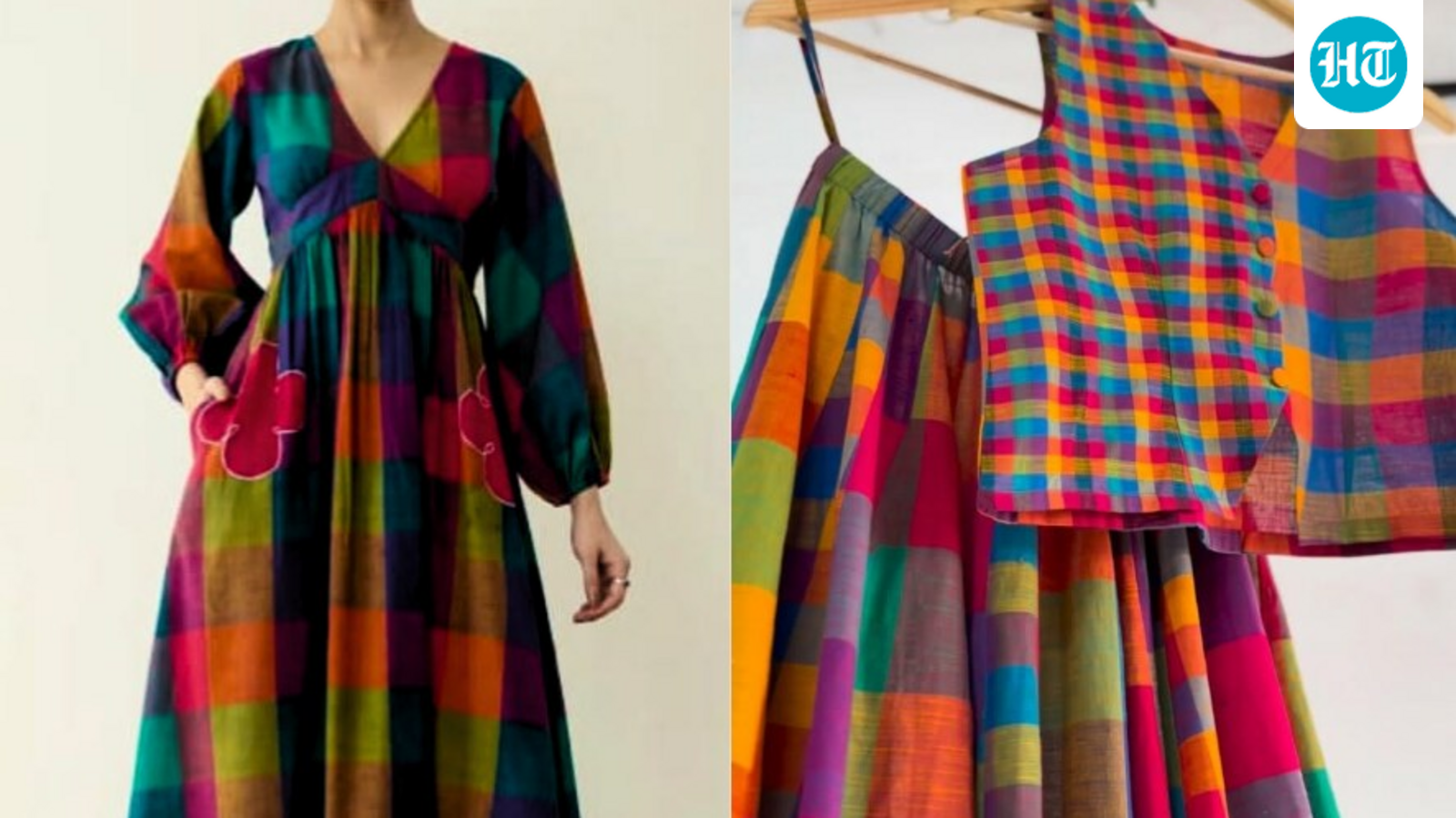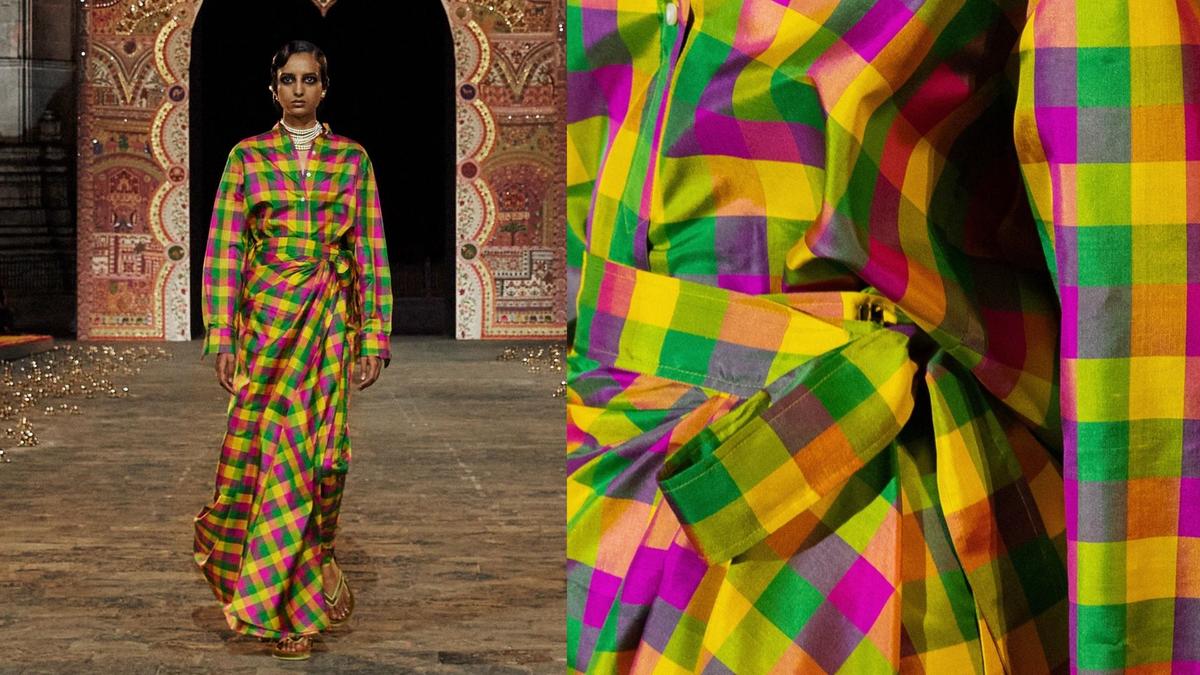
My introduction to Madras checks came during an unhurried walk along Velankanni beach in 2010, when my family had travelled there to visit the shrine. What caught my eye was the effortless elegance of the checked lungis worn by many of the men walking along the sand. The cloth had a remarkable lightness. I remember remarking that it would make a rather handsome shirt.A family friend burst out laughing. “Why would you want to make a shirt out of it?” he asked, genuinely puzzled. “It’s worn by the poor.”The comment lingered long after the conversation ended. Something about it felt strangely reductive, as though a textile so vibrant in colour and character could be dismissed simply because of the social status of those who wore it.
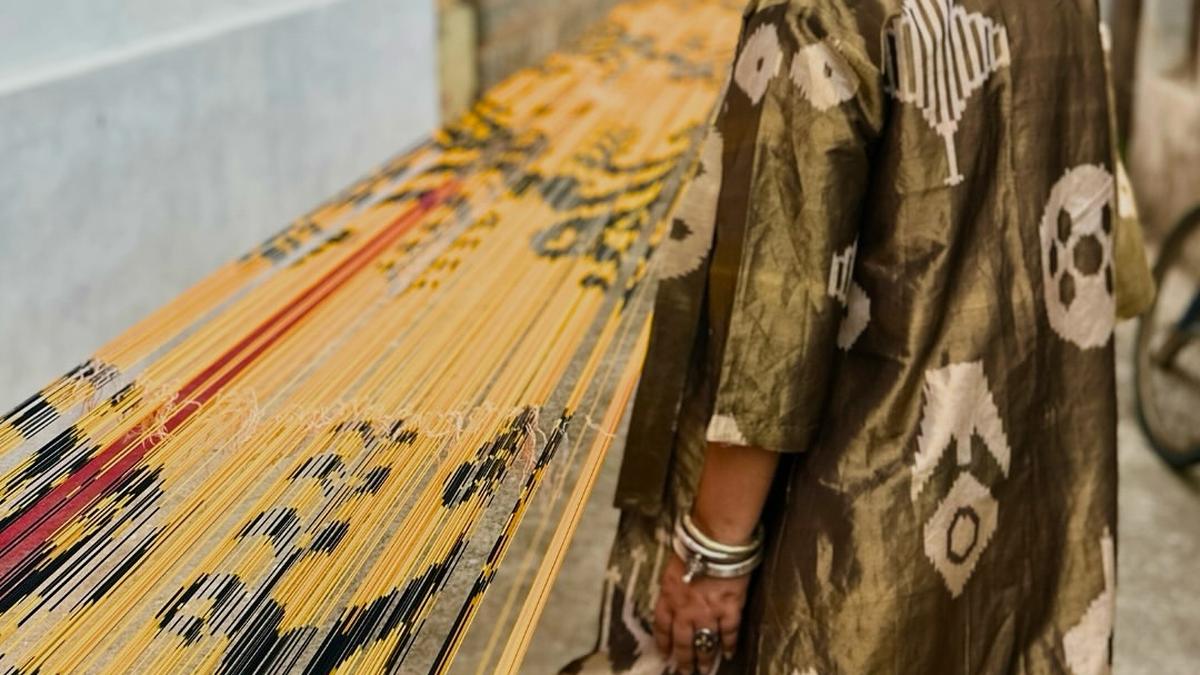
Artisans working with the fabric
| Photo Credit:
Original Madras Trading Company
For Original Madras Trading Company, revisiting Madras checks is less a rediscovery than a continuation of a family legacy. The initiative is led by Chennai-based Ranvir Shah, whose family has worked with the fabric for decades.“Madras checks are what we’ve been doing for over 50 years,” Ranvir says. His father exported Madras check garments to major American labels, but over time he began to question India’s role in the global supply chain.“At some point, it struck me that we were being garment coolies. We needed to create something of our own,” adds Ranvir.The answer was to return to the source. The initiative began modestly, with two handlooms in Chennai weaving authentic Madras cloth, reviving traditional practices that had steadily declined as machine-made imitations spread across the world.“We realised that Madras made on looms in China and elsewhere is not real Madras,” he says. “If the craft was to survive, we had to go back to the origin.”