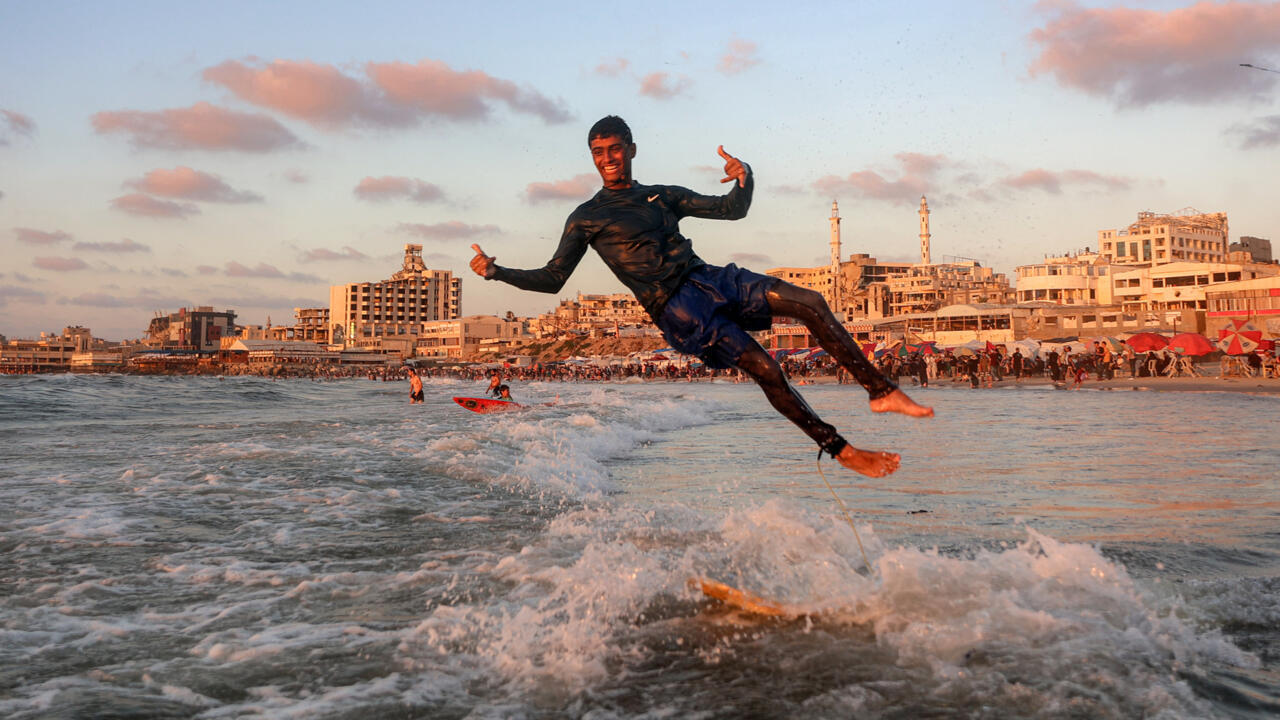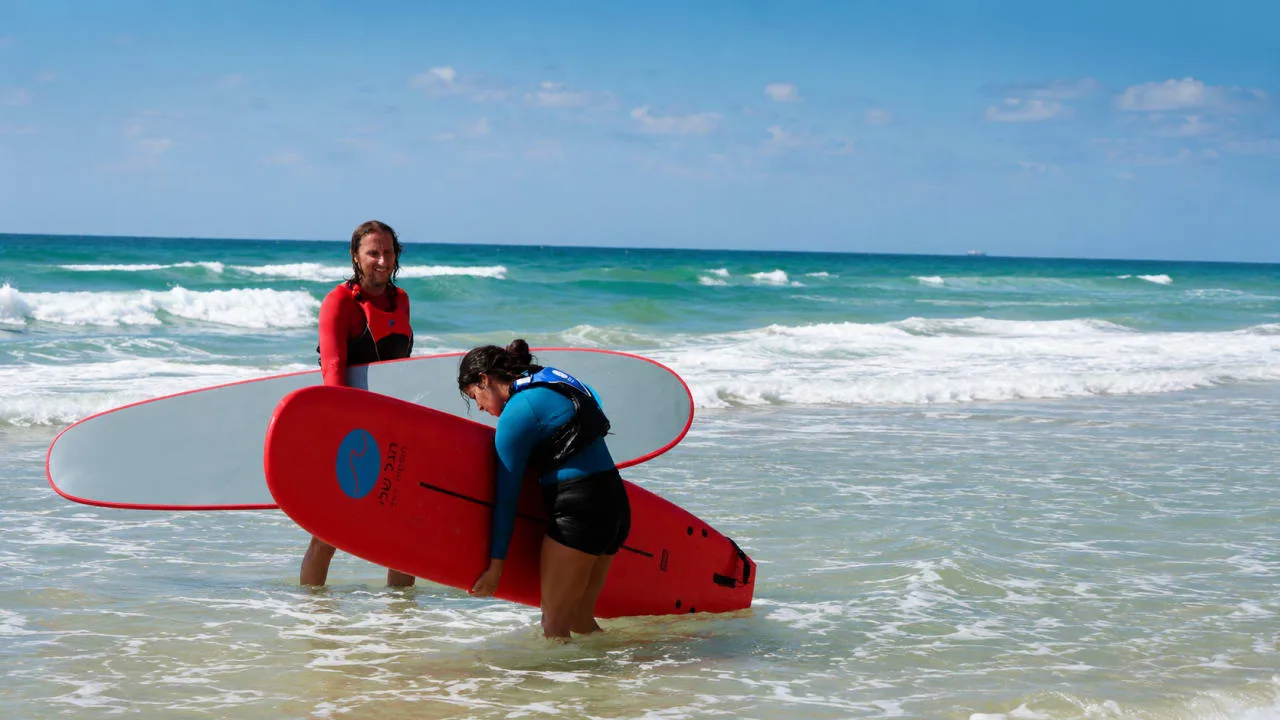
Once seen as a pastime for troubled teens skipping school for the beach, surfing is now one of Israel’s fastest-growing sports, with tens of thousands of surfers, new schools, a wave park, a multimillion-dollar industry and booming surf tourismAt 6:30 a.m., when most Israelis are still dozing in bed or getting ready to make their first cup of coffee, Nati Badash of Tel Mond is already deep in the sea. A 52-year-old high-tech executive and father of three, he refuses to start his day before catching a few waves.“It’s a feeling an outsider can’t understand,” he says. “I come out of the water after two hours full of energy. It’s much cheaper than a psychologist.”GalleryNati Badash and his partner, Gal
(Photo: Netanya Sheli Derech HaAdasha)Badash is just one of tens of thousands of Israelis who have fallen in love with surfing in recent years. Once saddled with the image of a pastime for teenagers who skipped school to head to the beach, surfing has become a way of life and, since October 7, a powerful tool for healing and coping with trauma.Surfers come from across the spectrum, from 4-year-old children to retirees in their 80s, from senior executives and doctors to combat soldiers suffering from post-traumatic stress. Between the waves, they find not only sport and enjoyment but also community, healing and peace of mind. Along the way, dozens of surf clubs have sprung up from north to south, Israel’s first artificial wave park has opened, surf tourism has flourished and a multimillion-shekel industry has emerged.“It’s an addiction,” Badash admits. “My best friends today are from surfing. I even met my partner between the waves and, coincidentally, her name is Gal,” the Hebrew word for wave. “We surf together and make sure to fly every year for our dream vacation in Sri Lanka. Surfing is life.”Like Badash, Shira Firstenberg, 37, of Jaffa, who holds a doctorate in education, also starts her mornings in the sea. For her, it is the way to arrive at the office focused.She began surfing eight years ago. “The inspiration came from a film I saw about surfers in Iceland,” she says. “I took a few lessons, bought a surfboard and since then I’ve been in the sea every morning. If the sea is flat, I swim or dive, and if there are waves, I surf. Only afterward do I go to work. For me, surfing is much more than a hobby. It’s how I start my day and arrive at work sharp and energized.”Do you surf abroad as well?