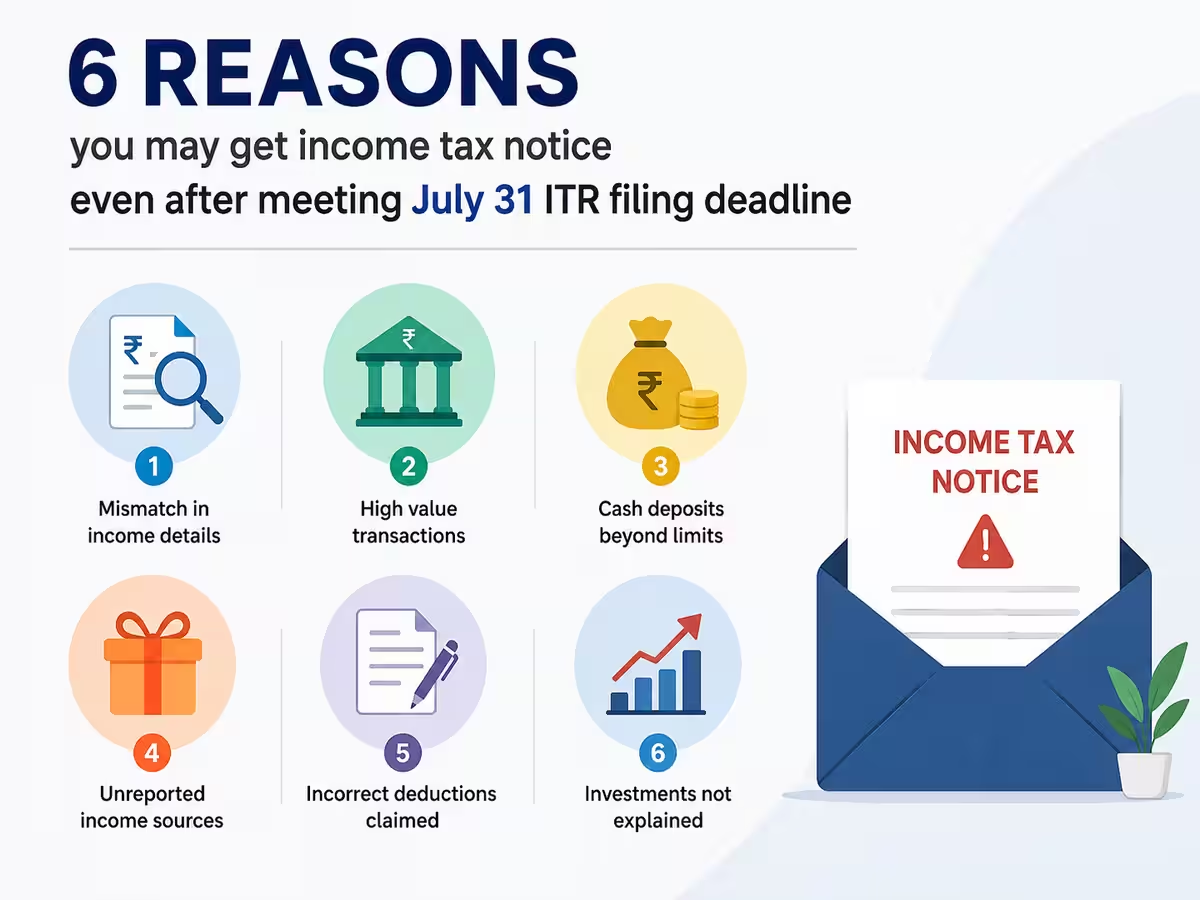
SynopsisFiling your income tax returns punctually doesn't guarantee immunity from tax department notices. Often, discrepancies arise between reported earnings and the data the department holds. Additional sources of income, misreported TDS or TCS credits, and large cash transactions lacking corresponding declared income can trigger further scrutiny.ET Online6 reasons you may receive income tax noticeFiling your income tax return (ITR) before the July 31, 2026 deadline was an important step towards staying tax-compliant. However, submitting your return on time does not necessarily mean that you may not receive an income tax notice. Every year, the Income Tax Department sends notices to taxpayers for various reasons, including mismatches between the information reported in the ITR and the data available with the department.Here are the six common reasons why you may receive an income tax notice even if you filed your ITR before the July 31 deadline.Before you continue readingHow financially free are you?Most people overestimate their financial freedom. Discover your Financial Freedom score through a quick surveyIncome mismatchOne of the most common reasons for an income tax notice is a mismatch in income details. For example, if the salary reported in your ITR differs from the salary mentioned in Form 16, tax deducted at source (TDS) returns filed by your employer or the information available in your Annual Information Statement (AIS) mismatch, the Income Tax Department may ask you to explain the difference.Interest income not reportedMany taxpayers forget to include interest earned on savings accounts, fixed deposits (FDs), recurring deposits (RDs) or even income tax refunds. Banks and financial institutions report this information to the Income Tax Department, and it is reflected in your AIS. If the interest income shown in the AIS is missing or only partially reported in your ITR, it may trigger a notice asking you to explain the reason.TDS/TCS mismatchClaiming a higher Tax Deducted at Source (TDS) or Tax Collected at Source (TCS) credit than what is reflected in Form 26AS or the AIS can also trigger an income tax notice.Higher cash transactionsThe Income Tax Department receives information about several high-value financial transactions from banks and other reporting entities. If these transactions appear in your AIS but are not supported by the income declared in your ITR, the Income Tax Department may seek an explanation.Capital gains mismatchIf you have sold shares, mutual funds, property or any other capital asset during the financial year, the details may already be available with the Income Tax Department through brokers, registrars or other intermediaries. Incorrect calculation of capital gains, failure to report the transaction or the omission of taxable gains in the ITR can lead to a notice. (Join our ETWealth WhatsApp channel for all the latest updates)...more
6 reasons you may get income tax notice even after meeting July 31 ITR filing deadline - The Economic Times
Filing your income tax returns punctually doesn't guarantee immunity from tax department notices. Often, discrepancies arise between reported earnings and the data the department holds. Additional sources of income, misreported TDS or TCS credits, and large cash transactions lacking corresponding declared income can trigger further scrutiny.
446 words~2 min read