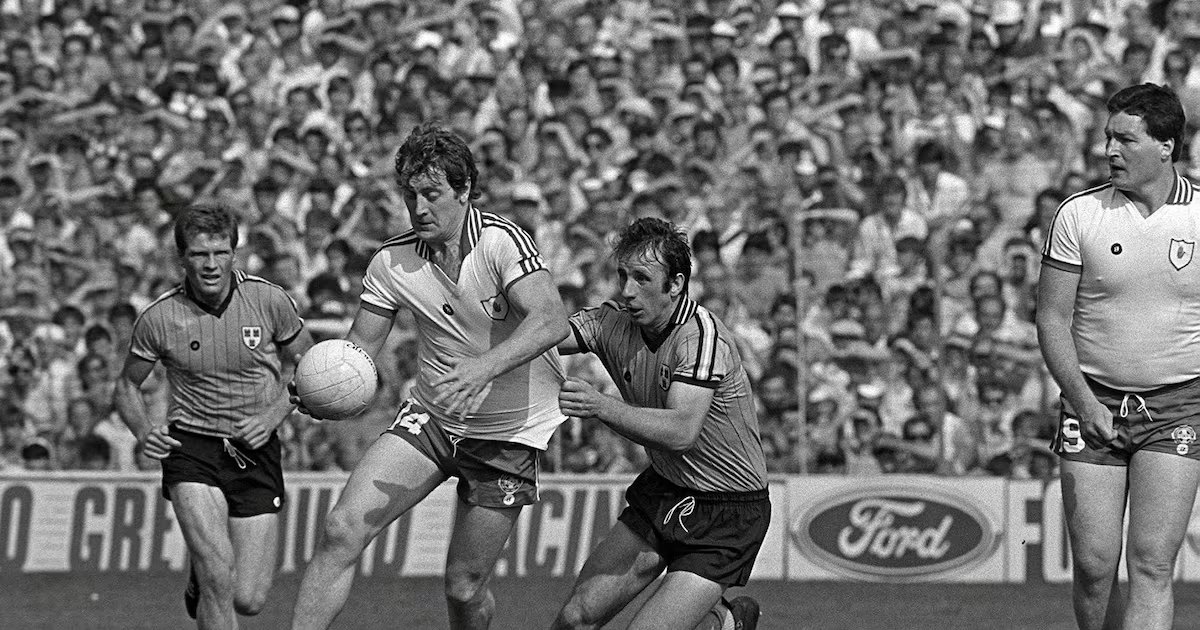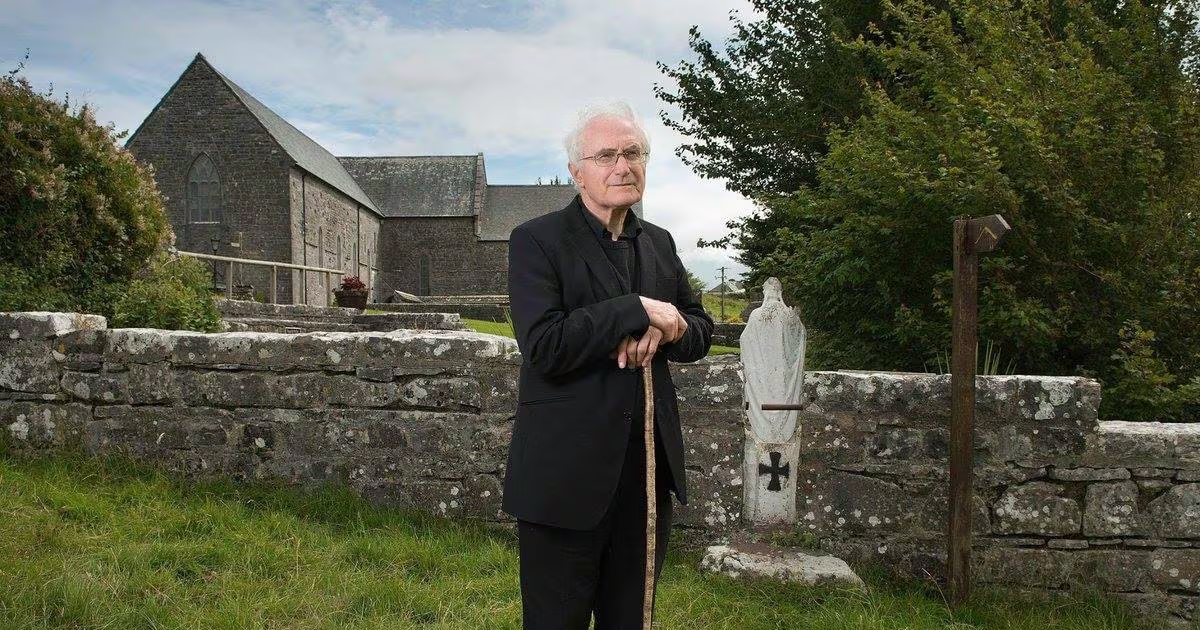
Born: February 19th, 1936Died: July 16th, 2026There is a certain symmetry to pilgrim priest Fr Frank Fahey passing away on the day work commenced on a project close to his heart. Progress at Ballintubber Abbey is the culmination of four decades of his steadfast dedication. It was known as the abbey that “refused to die” because of a litany of cross-century challenges since its foundation in 1216. Fahey also refused to capitulate to the many survival challenges faced by this significant medieval abbey in Co Mayo since he took over its ministry in 1986.Ultimately, his campaign for the restoration and development of the east wing bore fruit when Minister for Rural and Community Development Dara Calleary announced a €6.4 million grant earlier this summer. The funding is to go towards the abbey’s culture and heritage visitor centre.Responding to news of his death, Fine Gael TD and Ballintubber native Alan Dillon spoke warmly about the community’s “greatest champion”. “He was much loved in the village and further afield, but it is for his tireless and unwavering work on the 800-year-old abbey that he will be remembered,” said Dillon. “Fr Frank was a remarkable figure. A priest, historian, guardian of heritage and above all, a man of profound faith and imagination.”Dillon, an All Star Gaelic footballer who starred for Mayo for more than a decade, has something else in common with this remarkable man. During his teenage years, Fahey had enjoyed a distinguished football career with his native Ballyhaunis and St Jarlath’s College Tuam, where he attended secondary school. He also lined out for the celebrated Mayo minor team of the early-to-mid 1950s.Frank Fahey was born in Lavallyroe, Ballyhaunis, Co Mayo to parents Martin and May on February 19th, 1936. He outlived his two brothers, Des, also a priest, and Jarlath, a secondary schoolteacher. After attending Logboy NS, boarding at St Jarlath’s College, he studied to be a primary school teacher at St Patrick’s Training College, Drumcondra, from 1953. After teaching in Moyard in north Connemara, he went to England and joined the Salesian order. He also undertook a degree at Oxford University during this time before returning to join the national seminary in Maynooth to study to be a priest.He was ordained a priest in Westport in 1973 and after a brief ministry on the Co Galway island of Inishbofin, he was dispatched to the US. There he worked alongside fellow Mayo man Fr Patrick Peyton – known universally as “the rosary priest” – in Los Angeles and New York.On his return in 1976 he was appointed a curate at Knock Shrine. He spent a decade working with Msgr James Horan, a time span covering the visit of Pope John Paul II to Ireland, the development of the basilica and the Ireland West Airport project. His move to the village of Ballintubber, near Castlebar, would go on to define his legacy as a radical and pilgrim priest whose determination helped put the abbey on the world map. He once observed: “The notion of pilgrimage as a human concept resonates with all nations and peoples. There is something in the human heart – in every tradition and religion – that searches for meaning and wholeness.” During his long tenure as the abbey’s curate, he oversaw the restoration and development of parts of the abbey and its grounds. The community-run Passion play was presented on the grounds annually. Significantly, he also led a project developing the pilgrim path, namely the Tóchar Phádraig, which was trodden by St Patrick in 441AD. He created a narrative linking this ancient chariot route from the seats of the kings of Connacht in Crúachán, Co Roscommon, to Cruachán Aigle – now known as Croagh Patrick or the Reek.The abbey was reputedly founded in 1216 by one of these kings, Cathal Croibhdhearg Ua Conchobair, or Cathal Mór of the Wine-Red Hand. It is a matter of record that the abbey has survived the regal edicts of Britain’s king Henry VIII, Cromwellian destruction and the Penal Laws. In 1603, Britain’s king James I confiscated all the lands of the abbey which was then run by Augustinian friars.It wasn’t only its medieval history that Fahey researched and interpreted; he brought alive the religious rituals of our Celtic forebears and the manner in which they were colonised by Christianity. This rich cultural history is told to students and pilgrims from all over the world in the nearby Celtic Furrow and in the grounds of the abbey.This pilgrim priest lived a simple life in the nearby presbytery, allowing half his home to be taken over for a time as offices while developing many of his projects. He was honoured with the title of Mayo Man of the Year by the Mayo Association, Dublin, in 1994, in acknowledgment of his dedication to the abbey.Celebrations marking its 800th anniversary in 2016 coincided with the creation of a “pilgrim paths passport”, issued when people complete five of the country’s way-marked medieval pilgrim paths.On his retirement from active ministry in 2020, the then Archbishop of Tuam, Michael Neary, said of Fahey: “In his ministry, he very successfully highlighted the things that do not change and at the same time responded positively and constructively to things that change and need to change.” Fr Frank Fahey died at his home, in the shadow of his beloved abbey, surrounded by friends and family shortly after the Angelus bell rang on Thursday, July 16th. On the same date 40 years earlier, he had just begun his ministry in Ballintubber Abbey.
xxxxxx Fr Frank Fahey obituary: Pilgrim priest was a dedicated guardian of local heritage
Mayo-born clergyman spent four decades securing the future of Ballintubber Abbey
919 words~4 min read