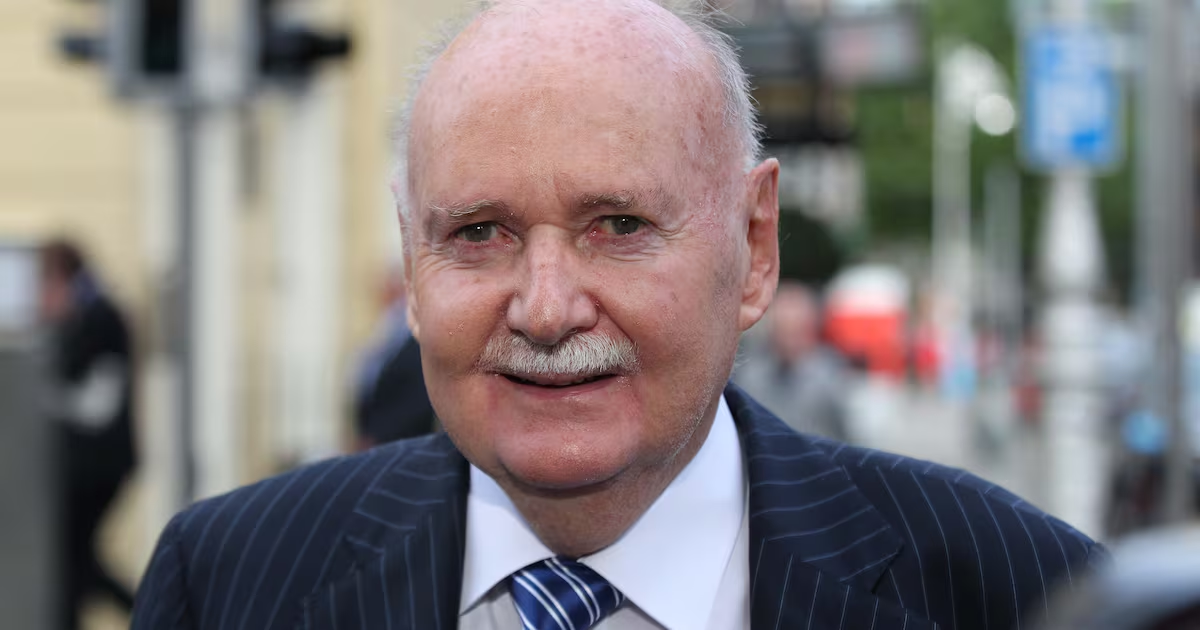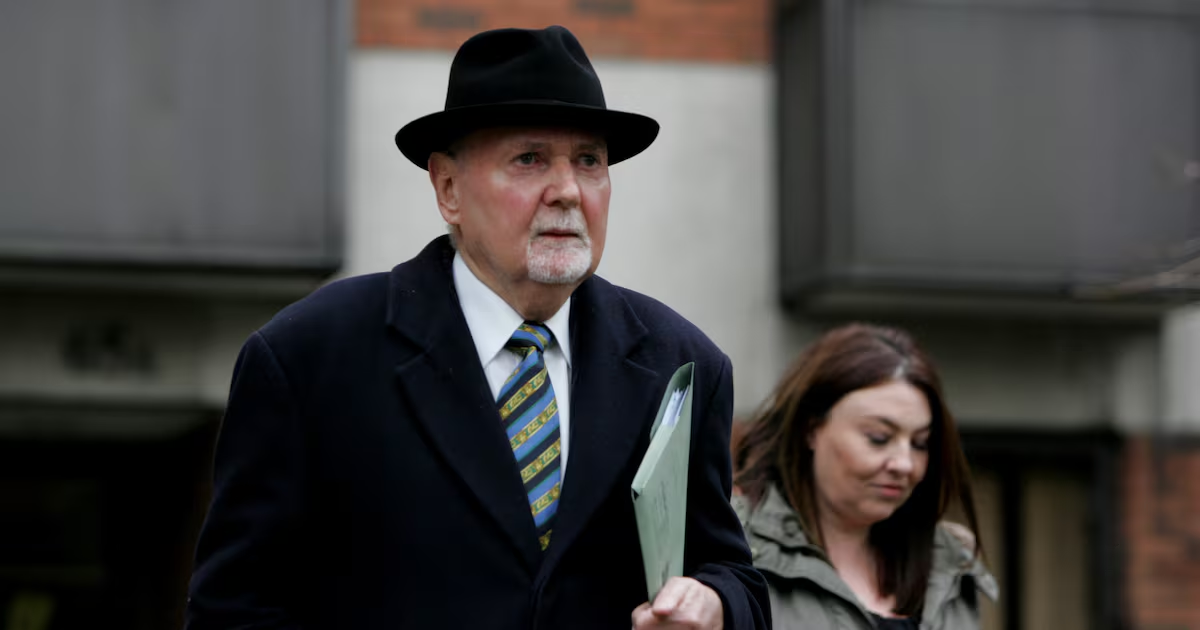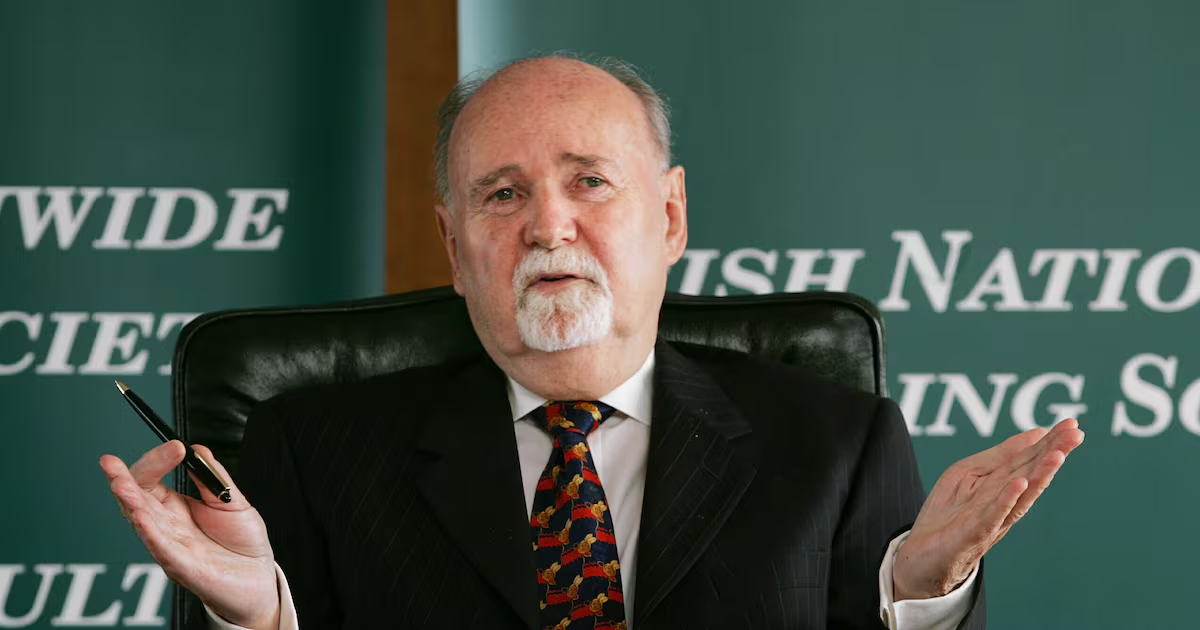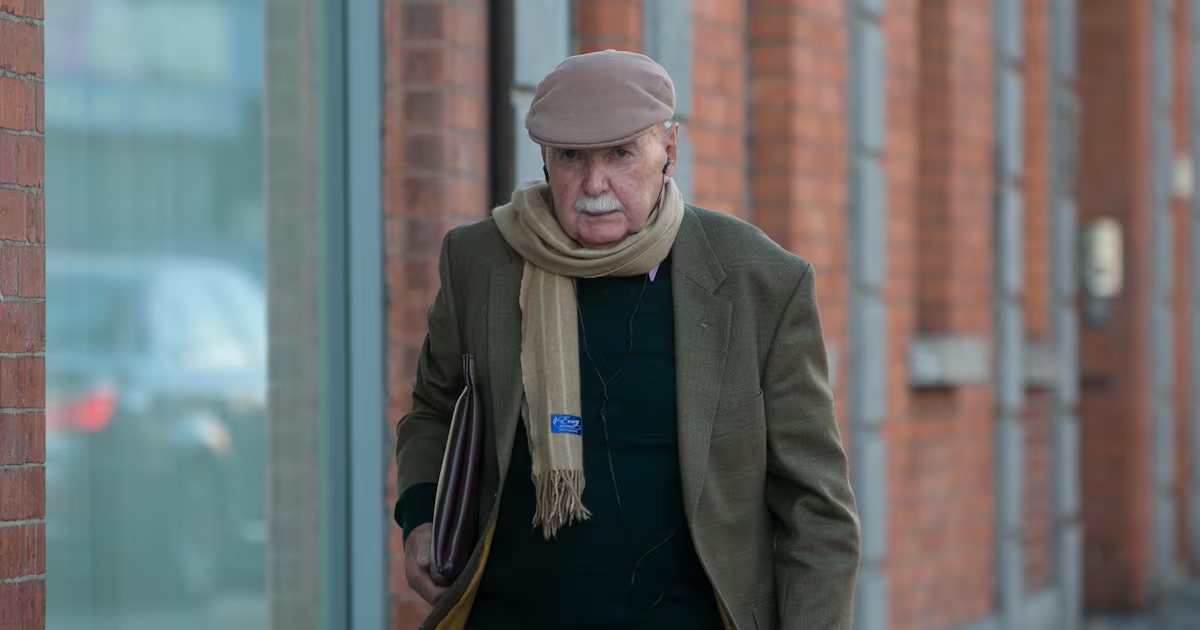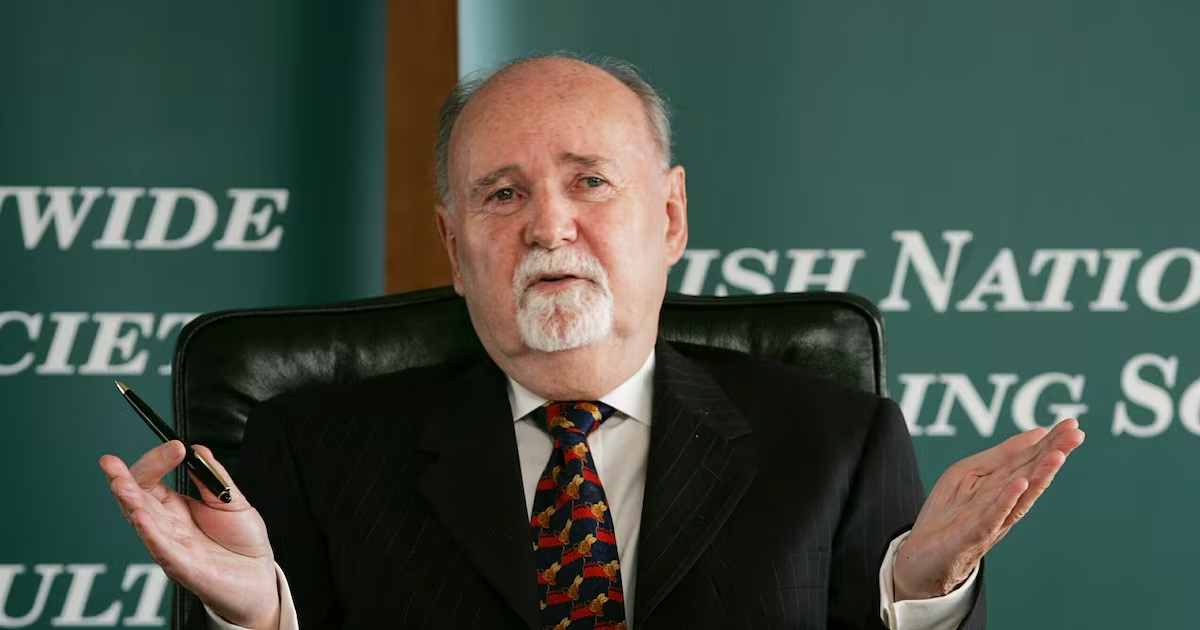
Born: January 26th, 1938Died: August 2nd, 2026Michael Fingleton, who has died aged 88, led Irish Nationwide Building Society from obscurity to a central role in Irish commercial lending, and then to its implosion following a financial crisis in 2008.Fingleton frequently appeared in the news as he turned up at inquiries or court cases stemming from the collapse of Irish Nationwide, along with other finance institutions, after a property lending bubble burst in the opening decade of this century.His business career attracted its share of headlines too, but they were associated with the previous success of the building society he ran for 38 years, first as managing director, then as chief executive, growing assets from IR£2.3 million in 1971 to €16 billion 36 years later.Michael Fingleton was born in Tubbercurry, Co Sligo in January 1938, the son of a garda. Those who knew him say he remained loyal to those roots throughout his life. He attended boarding school at St Nathy’s College in Ballaghadereen, Co Roscommon, after which he entered All Hallows, a seminary run by the Vincentian order of Catholic priests in Dublin. Fingleton left before taking vows.In 1961, he joined Allied Irish Finance, studying commerce at night in University College Dublin, before qualifying as a certified accountant. A stint followed with State body the Dairy Disposal Agency, which ran creameries in the west of Ireland. Then he worked for a time in Nigeria with the charity Concern.On his return in 1971, Fingleton joined the Irish Industrial Benefit Building Society. Established a century earlier to provide mortgages to working people, it had five employees, one branch and IR£2.3 million in assets.He also found time to qualify as a barrister. Combining his knowledge of the law with a head for figures helped as he set about realising his ambition for the modest lender. Fingleton convinced the board to rename it Irish Nationwide Building Society and allow it expand outside Dublin.Irish Nationwide focused on mortgages, growing the business through the 1970s and 1980s while creating a branch network around the Republic. That was a different era. The country was locked in recession, with stubbornly high unemployment. Nationwide loaned to people who would have struggled to borrow elsewhere, but at higher rates than the banks.“He was very proud that he gave mortgages to a lot of people who would not have got them off the big institutions,” says one person who dealt with him. That included working people, and journalists, who called him “Fingers”. Many people who worked in newspapers right up through the 1990s tell stories of how he approved home loans for themselves or colleagues when they had difficulties getting the money elsewhere.[ How did Michael Fingleton get away with it?Opens in new window ]Fingleton not only cultivated relationships with the media, but also with politicians, business people and government. Associates say he regularly traded gossip with this network, absorbing a lot of information useful to his own enterprise.Irish Nationwide’s break came in 1992, when part of the Building Societies Act, 1989 came into force, along with new European regulations. They lifted constraints on those institutions, allowing them to convert to stock market-listed companies. Politicians wanted them to provide cash to tackle a looming housing crisis “by investing directly in residential development”.While Irish Nationwide had always loaned money to small commercial ventures, this allowed it take the gloves off. The society began working with developers. Its first venture was with Sean Mulryan’s Ballymore in Lucan, west Dublin, where they built more than 500 homes and a shopping centre.Other deals followed, many involving profit shares, which became a feature of the way Irish Nationwide did business, particularly as it moved with clients to the UK.Many of the developers who rose to prominence around the turn of the century got loans from the institution. Typifying the “relationship banking” of the time, Fingleton knew most of them and oversaw many of the deals. “A lot of the top builders, they would have borrowed from him,” says one of that group.His west of Ireland background, love of the GAA and knack for networking and gossip, meant he had plenty in common with the emerging generation of developers. “He was good company,” recalls one former client.Irish Nationwide shared this approach with Anglo Irish Bank. Their success prompted the “established” institutions, AIB and Bank of Ireland, to follow suit. British lenders joined in too. By the middle this century’s first decade, a property lending spree was in full swing.Banks loaned cash to developers to build homes, then gave people 100 per cent mortgages at tight margins to buy them. Fingleton later pointed out that Irish Nationwide switched focus to commercial deals as it would not offer home loans on those terms.By the 2006 peak, Fingleton’s own wealth was calculated at €75 million. It emerged later that he had a €27.5 million pension, which he subsequently told an inquiry cost the building society just €3 million.Most sources agree that “from the middle of the 1990s”, Fingleton was keen to sell Irish Nationwide. He lobbied for a change to the law to allow this. That arrived in 2006, just as the property lending bubble was most inflated.It was too late. A credit squeeze in 2007 became a crisis in 2008. Irish Nationwide ultimately found itself with €6 billion losses, stemming mostly from €8.18 billion in commercial loans. Taxpayers had to pay €5.4 billion to bail it out.The State-run National Asset Management Agency (Nama) took over those debts in 2010. The following year, the government merged Irish Nationwide with Anglo Irish Bank and established the Irish Bank Resolution Corporation (IBRC) to oversee the remains of both.[ The Irish Times view on Michael Fingleton: nobody shouted stopOpens in new window ]Government ministers and civil servants joined Fingleton in nailing the blame for the Republic’s woes on the September 2008 failure of US bank Lehman Brothers. But most assessments of the Irish collapse listed multiple domestic causes, led by lax regulation and poor controls within the banks.Fingleton fought his corner, challenging Nama’s view of Irish Nationwide’s loans at the Joint Oireachtas Committee of Inquiry into the Banking Crisis, then representing himself at a Central Bank inquiry into Irish Nationwide, when it began public sessions in 2017.The regulator dropped its investigation of Fingleton after he suffered a stroke in 2019 which left him severely incapacitated, but it continued to pursue other society executives.However, the IBRC’s liquidators took High Court civil proceedings alleging he negligently mismanaged Irish Nationwide before its collapse. That case concluded in October with Justice Michael Quinn reserving judgment.Using powers of attorney, Fingleton’s wife Eileen Fingleton and son Michael Fingleton jnr had tried to halt the IBRC trial on the grounds that he could not give evidence. During those appeal hearings, it emerged that the former finance chief had €25,000 in two personal bank accounts and, and as of late 2022, outstanding judgment debts of more than €10.7 million.Michael Fingleton is survived by his wife Eileen, children Anne, William, Eileen jnr and Michael jnr, grandchildren Liam, Elena, Cordelia, Ava, Gracie and Elsie, brother Billy and sister Nancy.
Michael Fingleton obituary: Banker who led Irish Nationwide from boom to bust
Sligo-born former seminarian’s love of GAA and knack for networking meant he had plenty in common with emerging generation of developers he lent to
1,176 words~5 min read